
Many users struggle to make the right choice when purchasing transparent LED displays, worrying that the chosen display won’t suit their needs, or complaining about poor transparency or installation difficulties. As an LED display manufacturer, we can help you avoid these pitfalls. Transparent LED display typically include three types: transparent LED film, transparent LED glass, and transparent LED mesh displays. Each has its specific advantages, but choosing the wrong type can lead to losses. Therefore, when selecting, focus on application, transparency, installation, and durability.
The three core types of transparent LED display are film, glass, and mesh
Each type of transparent LED display differs in design, installation methods, and performance, making them suitable for different applications:
Transparent LED Film: A flexible PET film only 3-5 mm thick, embedding miniature LEDs. It can be directly attached to existing glass (e.g., shop windows, office windows) using adhesives or magnetic strips without any structural modifications. This film has 85-90% light transmittance and is virtually invisible when closed.
Transparent LED Glass: LED chips are integrated into a laminated glass panel (can replace existing glass or be installed as a new panel). This is a permanent solution with 80-88% transparency, combining display functionality with the performance of structural glass.
Transparent LED Mesh: A mesh structure composed of LED modules connected by fine wires. It is lighter, has ultra-high transparency (90-95%), good ventilation, and is designed for large outdoor installations (stadiums, building facades).
The key difference is that transparent LED films and glass are suitable for indoor/outdoor glass integration, while mesh materials are suitable for large outdoor structures.
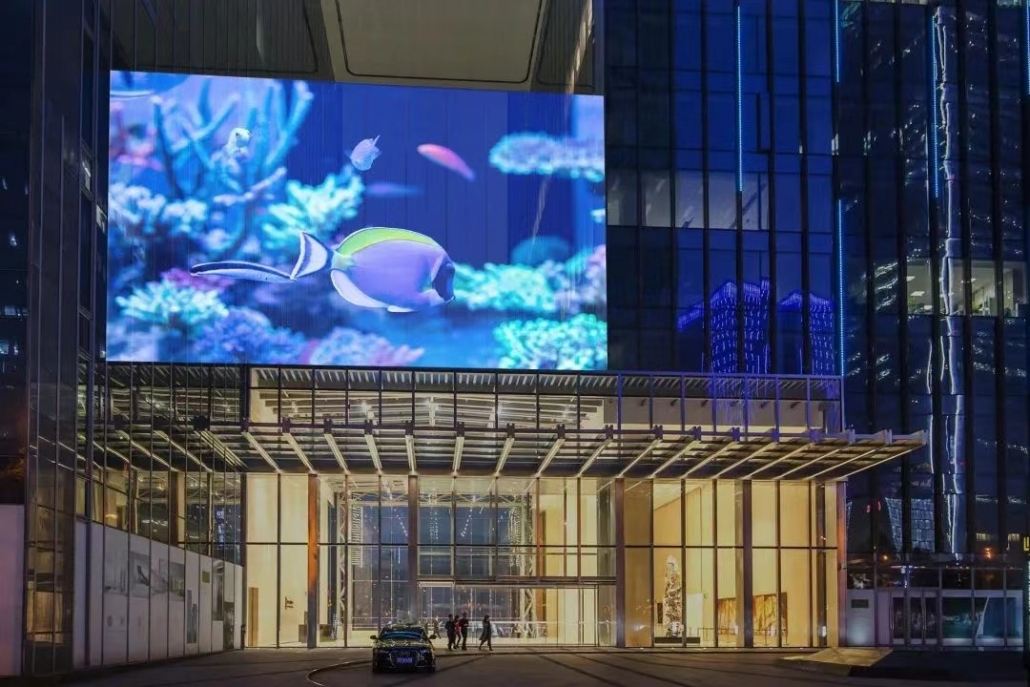
Key Factors and Buying Guide for Choosing a Transparent LED Display
A suitable transparent LED display needs to meet four key factors; ignoring these factors will ultimately lead to a mismatch in the solution. Here are the priorities for each factor when making your selection:
Application Scenarios: Indoor applications, such as lobbies and retail windows, often utilize films or glass; in contrast, large outdoor projects, including stadiums and skyscrapers, typically require mesh materials. Retailers who prioritize product visibility tend to choose films/glass, while event venues requiring large, wind-resistant displays choose mesh materials.
Transparency Requirements: For applications where a transparent LED display needs to be “invisible” when closed, such as luxury retail stores or company lobbies, choose materials (film or mesh) with a transparency of 85% or higher. For applications where transparency is not a primary concern, such as outdoor billboards, transparent LED glass is sufficient.
Budget and Lifespan: Film is the most economical option, glass is mid-range in price, and mesh is suitable for large-area installations and is considered a high-end product. Film has a lifespan of 3-5 years, glass has a lifespan of 10-15 years, and mesh has a lifespan of 8-12 years.
When to Choose Transparent LED Film?
Transparent LED film is the most versatile and cost-effective option, ideal for businesses with existing glass facades and short- to medium-term needs. Here are some application scenarios where it shines:
Retail Storefronts: Can be applied to existing shop windows, allowing customers to see promotional information while viewing merchandise. Its 85% to 90% light transmittance ensures ample natural light, preventing the store from being dark.
Pop-up Stores and Exhibitions: This film is removable and reusable, installation takes only a few hours, and removal will not damage the glass. It is ideal for short-term promotional campaigns or trade shows where portability is paramount.
Office lobbies and meeting rooms: Dynamic branding can be added to windows or glass walls without obstructing views or requiring structural modifications. It has low power consumption and can be synchronized with content management systems for easy updates.
Advantages: Low cost, easy installation, high transparency, and removable. Disadvantages: Less durable than glass, limited to flat glass.
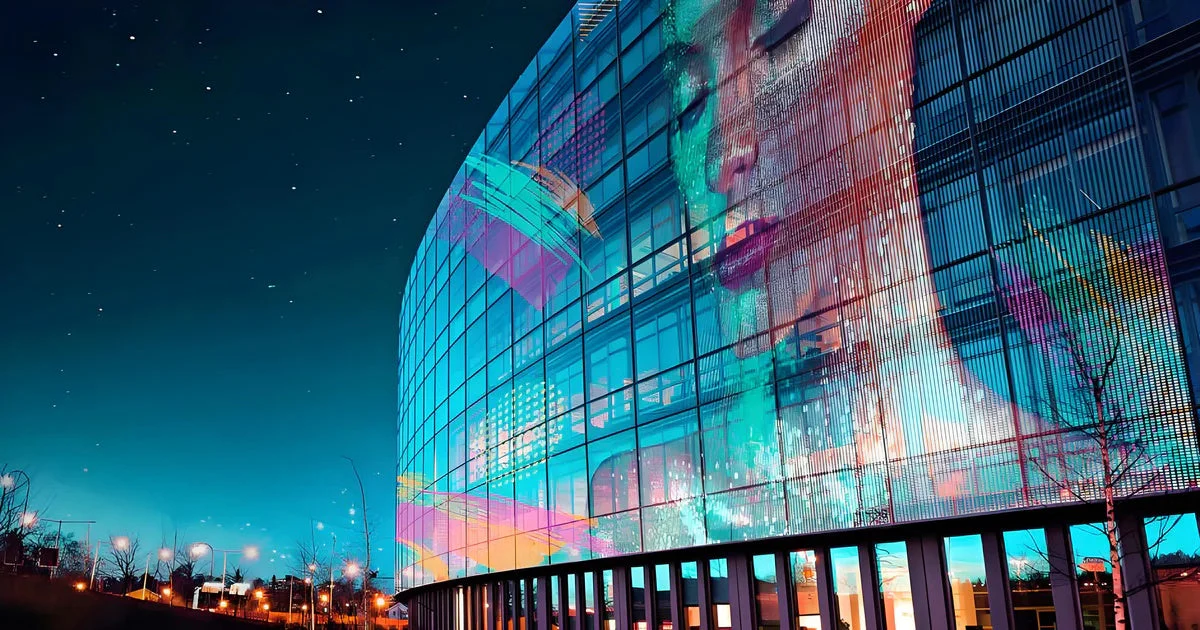
When to Choose LED Glass?
Transparent LED glass is a permanent, high-end transparent LED display solution suitable for businesses that prioritize durability, seamless integration, and long-term performance. Suitable applications include:
Corporate buildings and luxury brands: Replaces existing glass in lobbies, entrances, or facades, seamlessly integrating display functionality with architectural design. Its scratch-resistant, weather-resistant laminated glass withstands outdoor environments and high foot traffic.
Museums and art galleries: Overlays information onto glass display cases or walls, ensuring exhibit visibility while enhancing visitor engagement. Its 80%–88% transparency ensures exhibits remain the focus of attention.
Suitable for high-traffic outdoor storefronts: More durable than film, resisting vandalism, rain, and UV rays—ideal for busy urban areas. It can also support larger sizes without sagging.
Advantages: Durable, seamless design, weatherproof, supports curved glass. Disadvantages: Higher cost, requires professional installation, and is heavier.
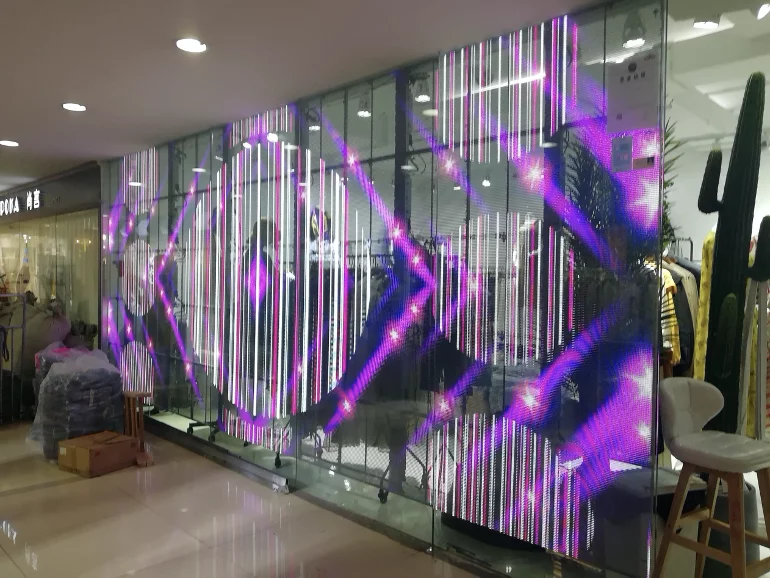
What Scenarios are Suitable for Mesh Panels?
Transparent LED mesh covers are designed for large outdoor applications where wind resistance, lightweight design, and ultra-high transparency are crucial factors. It is the preferred choice for the following applications:
Sports Venues: Can cover large facades, roofs, or scoreboards, with 90-95% light transmittance, allowing spectators to enjoy views outside and passersby to view dynamic content. Its mesh design allows wind to pass through, making it suitable for high-rise buildings.
Skyscraper Facades: Create giant digital billboards around building facades without obstructing windows or adding weight to the building structure. Its lightweight design avoids costly structural upgrades.
Concert venues and music festivals: Suitable for temporary or permanent installations requiring coverage of large areas (stages, tents) and easy mobility. It is easy to hang and dismantle, making it ideal for events.
Advantages: Ultra-high transparency, wind resistance, lightweight, and large-scale application. Disadvantages: Higher cost per square meter for small-scale projects, and lower resolution than film/glass.

Select options that align with your space, goals, and long-term needs.
These three types of transparent LED displays—transparent LED film, glass, and mesh material—each have their own advantages; there is no absolutely best choice, only the choice that best suits your needs. Transparent LED film is suitable for existing glass, short-term projects, and situations with limited budgets. Transparent LED glass is ideal for permanent, high-end installations. Meanwhile, transparent LED mesh materials are designed for large outdoor structures.