
Curved retail storefronts have become a design choice for a reason: they stand out in bustling commercial areas, soften harsh architectural lines, and attract customers to explore. However, this unique shape has long been a challenge for traditional signage—static posters wrinkle easily, rigid LED screens crack, and vinyl films fade. A flexible LED panel solves these problems perfectly. Their bendable design allows for seamless fitting of curved surfaces, dynamic content adapts to any brand, and they are durable. Data clearly shows that stores with flexible LED displays on curved storefronts experience 31% higher foot traffic and 27% higher conversion rates than stores using static signage. Therefore, this article provides a detailed guide to designing, installing, and optimizing flexible LED panels for curved storefronts.
Why are flexible LED panel explicitly designed for curved retail storefronts?
Unlike rigid LED screens or static signage, flexible LED panels are designed to move with the building structure without sacrificing image quality or durability. Flexible LED panels have a bendable core material. They perfectly fit curved surfaces and are not easily damaged. Our flexible LED panels, backed with lightweight carbon fiber, can be smoothly bent along both horizontal and vertical curves. They can handle a wide range of curved surfaces with radii ranging from 50 mm to 5000 mm, such as the facades of anchor stores in shopping malls. In contrast, rigid LED panels fail at radii below 1000 mm, while vinyl films crease at radii below 200 mm.
Pixel pitch determines the sharpness of a flexible LED display. For curved facades where customers walk within a 3-5 foot radius, we recommend P2.5 or P3 panels for sharp product details. For larger curves viewed from 10 feet or more (such as the facades of large shopping malls), P4 or P5 panels strike a balance between sharpness and cost. Curved facades, especially those made of glass or plaster, often cannot support heavy signage. Our flexible LED panels weigh only 2.2 pounds per square foot, making them more lightweight and ideal for installation on curved retail facades.
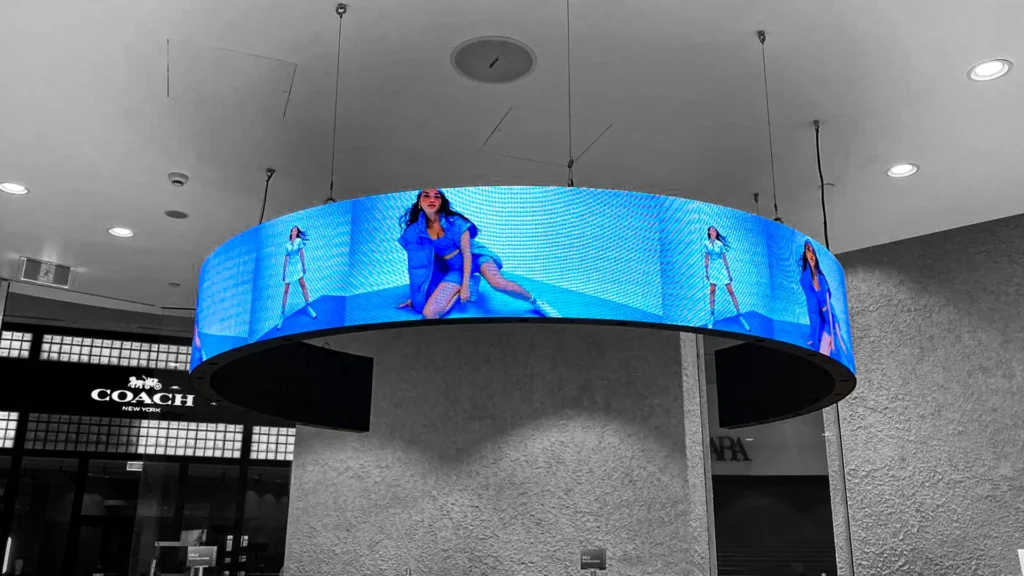
Creating Eye-Catching Curved Facades with Flexible LED Panel
The advantage of flexible LED panels lies in their ability to seamlessly integrate with the architectural style of curved facades while presenting content that attracts passersby. Poor design can result in mismatched curvature or cluttered content. Therefore, we typically employ a four-step design process to ensure that the flexible LED display enhances, rather than overshadows, the storefront, adding visual appeal.
First, measure the radius, height, and width of the facade’s curvature. For irregular curvatures, take photos with a grid overlay to create a shape map. Our design team will cut the flexible LED panels to these dimensions and pre-bend them to ensure a perfect fit. Second, avoid using flashing advertisements or fast-paced videos in the displayed content—these can be overwhelming for passersby. Instead, focus on 3-4 core content types. Finally, adjust the brightness according to the location. Our flexible LED panels offer adjustable brightness from 600 nits onwards. For sunny urban areas, using 3000 to 5000 nits can reduce glare. For shaded areas or indoor curved facades, a brightness of 800 to 1500 nits is sufficient.
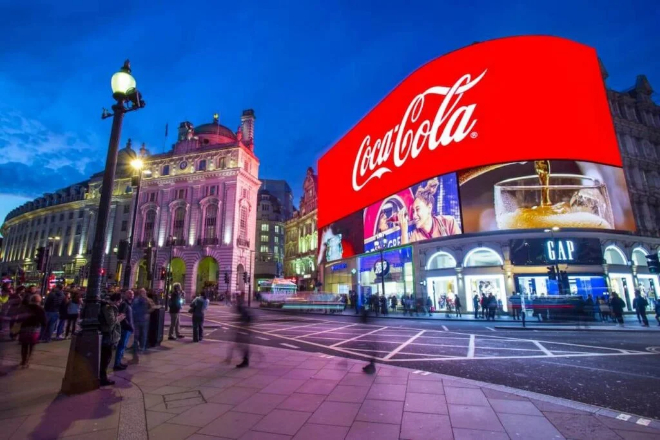
Flexible LED Panel Installation Guide
Installing flexible LED panels on curved facades is much simpler. First, clean the facade surface to remove dust and debris; this ensures the mounting hardware adheres firmly. For uneven surfaces, lay a smooth backing plate to create a flat base for the panel. Next, check the electrical wiring connections. Mark the installation area before starting installation, using a level and tape measure to mark the panel’s position, ensuring it is centered on the curved surface. Using mounting clips, screw the clips into the front (or back) of the panel every 12 inches (approximately 30 cm)—these clips securely hold the panel without damaging it. For glass curtain walls, use suction cup clips to avoid drilling.
Then, with some assistance, lift the panel and snap it into the clips. The flexible core will bend to conform to the curve; you may need to press gently to ensure each part is securely fixed. Plug the panel into a power source, then connect the controller to your Wi-Fi network. Test the panel to ensure all pixels are lit. If the panel feels too tight or too loose during this process, readjust the clips.
How to Develop a Content Strategy for LED Panels?
The effectiveness of flexible LED panels depends on their content. Our most successful retail clients update their display content 2-3 times per month and leverage data to optimize effective strategies. Here are some content strategies our clients have shared with us:
1. Balance Dynamic and Static Content
Fast-paced videos can be eye-catching, but too much video can lead to viewer fatigue. Combine 15-second dynamic clips with 30-second static images to increase engagement.
2. Integrate Content with In-Store Promotions
Your flexible LED display content should align with in-store promotions. If you’re running a “buy one get one free” jeans promotion, highlight the jeans in your content and include promotional details.
3. Leverage the “Selfie Effect.”
Curved flexible LED displays are inherently photogenic. Create content that attracts users to take selfies: Use eye-catching, brightly colored backgrounds and subtly place brand logos in corners.
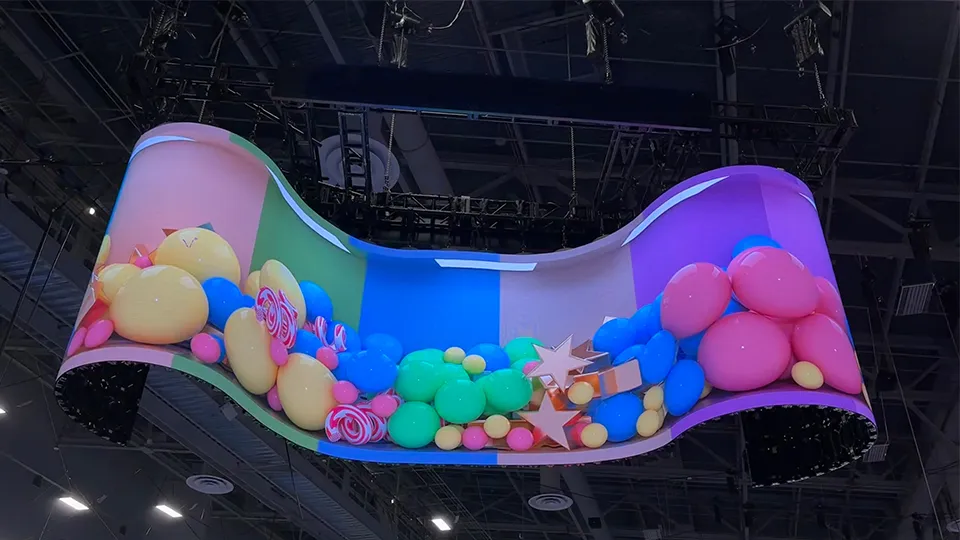
Maintain the aesthetics of curved retail facades through regular maintenance.
Flexible LED panels have low maintenance costs, but regular maintenance can ensure their lifespan reaches 8-10 years. The good news is that monthly maintenance takes only 15-30 minutes, and most of it can be done with basic tools. You can clean them quarterly, using a soft microfiber cloth and mild soap to wipe away dust, fingerprints, and bird droppings. Avoid using strong chemicals or abrasive sponges—they can scratch the LED surface. Additionally, walk around the curve to check that all mounting clips are secure. Tighten any loose screws by hand to prevent the panel from shifting in the wind. Finally, check the power connections: ensure the power cord is securely plugged in and undamaged. For outdoor panels, check that the waterproof caps on the power cords are closed.
Create compelling retail facade designs
Curved retail facades offer a unique architectural advantage that static signage cannot fully leverage. Flexible LED panels can effectively increase foot traffic and brand exposure. When the natural beauty of the curved facade is combined with the dynamic content of the flexible LED display, it can stand out in a bustling commercial district.