
In indoor applications, where viewers are very close to the screen, even the slightest differences between modules become immediately apparent. Therefore, selecting the right LED display module depends not only on pixel pitch but also on flatness control, magnetic precision, and heat dissipation. These factors collectively determine whether the display maintains a seamless appearance or exhibits fragmentation over time.
At JR Visual, our indoor high-definition projects heavily rely on modular precision. Products such as the iFlex series of LED displays are specifically developed to meet the visual and mechanical requirements of small-pitch indoor environments.
Structural Consistency and Visual Stability in High-Definition Environments
Structural consistency is a key factor in long-term visual stability. On indoor high-resolution video walls, even slight height discrepancies between adjacent pixels can result in visible dark lines or uneven brightness. Therefore, the mechanical precision of the LED display module is as important as the LED chip’s optical performance.
Flatness depends on the secure mounting of each module within the cabinet and the uniformity of pressure distribution on the mounting surface. Precision systems such as the iFlex LED display module utilize a strong magnetic design that ensures each module is tightly and evenly aligned with the steel cabinet frame. This magnetic structure ensures the display surface remains flat even in curved installations.
Over time, indoor environments experience temperature fluctuations, vibrations, and changes in airflow. Carefully designed LED display modules, equipped with reinforced back covers and high-dust resistance, help prevent deformation and contamination. This structural integrity directly translates into years of stable image quality.
The LED display module adapts to curved surfaces and creative interior designs.
Modern interior projects increasingly favor creative shapes over traditional flat screens. Shopping malls, exhibition halls, and corporate lobbies now require curved displays.
The iFlex flexible LED display supports unidirectional bending up to 169 degrees. This controllable curvature ensures consistent pixel spacing on curved surfaces. Therefore, viewers see a continuous image without distortion or brightness loss during bending.
Another critical factor is cabinet thickness. The iFlex LED display has a minimum cabinet thickness of only 80 mm for curved installations, ensuring both structural strength and heat dissipation. This design, combining flexibility and durability, is ideal for curved interior environments. 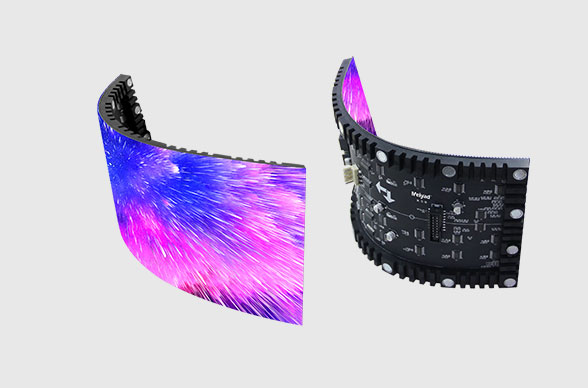
Heat management and indoor operational reliability
Heat is one of the most critical factors affecting the long-term performance of LED display modules. In indoor environments, where displays often operate for extended hours, efficient heat dissipation directly impacts brightness stability and component lifespan. Poor thermal design can cause color drift, brightness decay, and early LED failure.
The ventilated plastic rear cover used in advanced LED display module designs allows internal heat to escape efficiently while blocking dust intrusion. This dual-function design is essential in indoor spaces such as shopping centers and control rooms, where air circulation patterns vary widely.
In addition, strengthened rear covers protect sensitive driver components from dust erosion. By stabilizing internal temperature and preventing contamination, the LED display module maintains a consistent electrical load, preserving both color accuracy and grayscale performance over extended service periods. 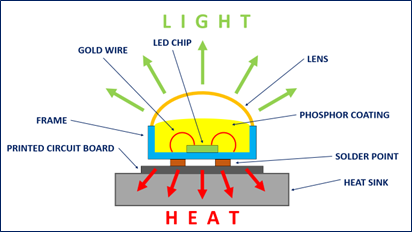
Led Display Module Precision and Magnetic Alignment Performance
Magnetic alignment defines how precisely each LED display module fits into the cabinet. In fine-pitch indoor projects, even minimal gaps or height mismatches between modules can disrupt the entire visual plane. High-precision magnetic alignment eliminates this risk by pulling each module into an exact, preset position.
Each iFlex LED display integrates thirty-six adjustable magnets. These magnets are engineered to self-calibrate the module into perfect alignment with the cabinet structure. This ensures uniform pressure and contact across the whole mounting surface, producing a truly flat viewing plane.
Because the magnets are adjustable, installation crews can fine-tune each LED display module during assembly. This reduces on-site correction time and prevents the accumulation of tolerance errors across large screen areas. The result is a consistently seamless image across the entire video wall.
Pixel pitch selection and image refinement in indoor HD systems
Pixel pitch defines how much detail an indoor display can physically render. For an indoor high-definition system, the LED display module must support fine pixel pitch without compromising heat control or drive stability. Smaller pixel pitch enables sharper images, smoother edges, and more realistic textures at close viewing distances.
The iFlex LED display offers pixel pitches ranging from 1.5 millimeters to 2.6 millimeters. This range allows engineers to match pixel density precisely to viewing distance and screen size requirements, ensuring a natural image without high cost or power density.
Fine-pitch LED display module designs also rely heavily on uniform LED binning and precise current control. When these electrical characteristics are matched correctly, the display produces smooth grayscale transitions and accurate color reproduction across the full brightness range. 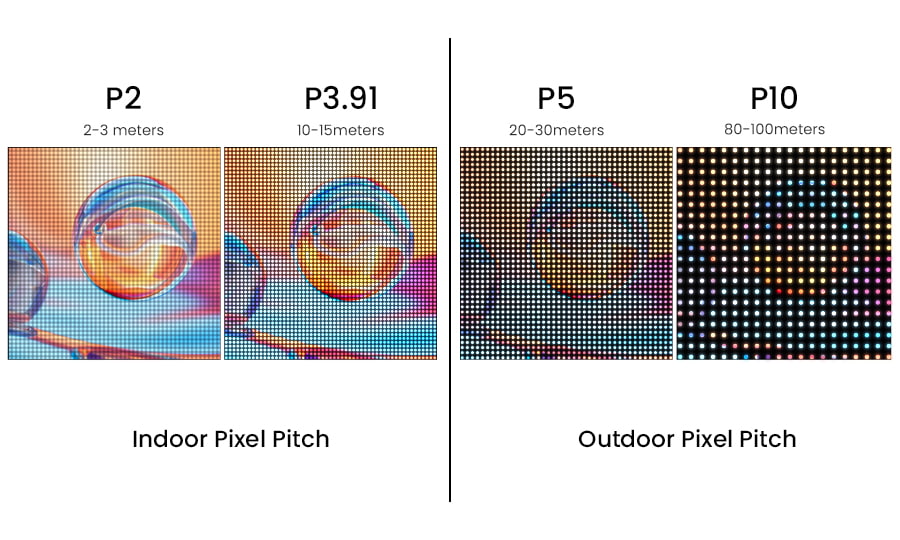
Long-term value of the LED display module in indoor environments
Long-term performance is ultimately determined by how well the LED display module resists mechanical fatigue, thermal stress, and environmental exposure. A module that performs well in the first year but degrades structurally after several seasons creates visual inconsistency and maintenance burden.
The modular 250 millimeter by 250 millimeter design of the iFlex LED display enables fast replacement without disturbing adjacent units. This modular standardization preserves screen uniformity even after years of maintenance.
In real indoor operating conditions, the combination of magnetic flatness, high dust protection, and controlled heat dissipation allows the LED display module to maintain stable brightness and color consistency. This stability protects image quality over long operational periods without frequent recalibration.