
When viewers stand before a modern glass curtain wall and see vivid digital images suspended in mid-air, while the cityscape behind them remains clearly visible, they are often looking at a transparent LED screen. This unique display format perfectly combines light transmittance and visual performance, something traditional LED displays cannot achieve. Transparent LED technology allows light, space, and architecture to coexist harmoniously with digital content, creating a captivating visual experience.
Transparency is not a vague concept, but a measurable and controllable characteristic. It directly affects brightness requirements, viewing comfort, installation conditions, and the overall visual effect. You’re probably wondering how the transparency of a transparent LED display is achieved; the following article will explain in detail.
Structural Design as the Foundation of Transparency
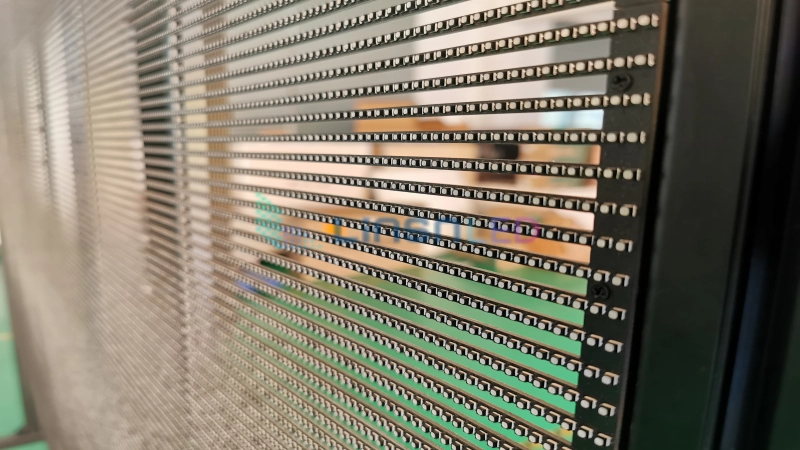
Transparency begins with the display’s physical structure. A see-through LED display does not rely on a solid background panel. Instead, it uses an open-frame or grid-based design that leaves a large portion of the screen area unobstructed. The LED light-emitting points are mounted on slim support bars or transparent substrates, allowing natural light to pass through the gaps.
The spacing between LED pixels plays a central role. Wider pixel pitch generally increases transparency because fewer components block the background. However, excessive spacing can reduce image clarity at close viewing distances. High-quality transparent displays strike a balance by optimising pixel distribution so that the human eye perceives a complete image while still recognising the environment behind it.
At the same time, Thin profiles, lightweight materials, and minimal framing reduce visual blockage. In premium designs, structural elements align vertically or horizontally to match architectural lines, further reducing visual interference. This careful structural planning provides the physical foundation for transparency.
Light Transmission Principles in a Transparent LED Screen
The transparency of a transparent LED screen depends on how much visible light can pass through the display surface without distortion. This is typically expressed as a transparency ratio, often ranging from 60% to over 90%, depending on design and pixel pitch. It requires precise control over light interactions.
Each LED pixel emits light forward while allowing ambient light to pass around it. Unlike LCD-based transparent displays, which rely on light-modulation layers, LED transparency is achieved through physical openness. This allows transparent LED displays to maintain high brightness even in daylight, as they do not block sunlight and do not rely on backlighting.
Optical alignment also matters. LEDs are positioned to minimise light scattering and reflection. When properly engineered, the display content appears crisp and bright, while reflections from surrounding glass surfaces remain low. This balance ensures that transparency enhances, rather than competes with, the displayed content.
Role of LED Packaging and Component Miniaturisation
LED packaging also improves transparency. Modern transparent displays use compact LED packages that integrate red, green, and blue chips into tiny footprints. By reducing the physical size of each pixel, more open space is preserved between light sources.
Miniaturised components also reduce visual clutter. Smaller driver ICs, thinner wiring, and integrated power designs keep the display visually light and unobtrusive. In some designs, transparent conductive materials are used to reduce the visibility of electrical connections further.
This evolution in component design allows transparent LED displays to achieve higher resolution without sacrificing light transmission. As a result, screens can be used at closer viewing distances while still maintaining a clear background view.
Material Selection in a Transparent LED Screen
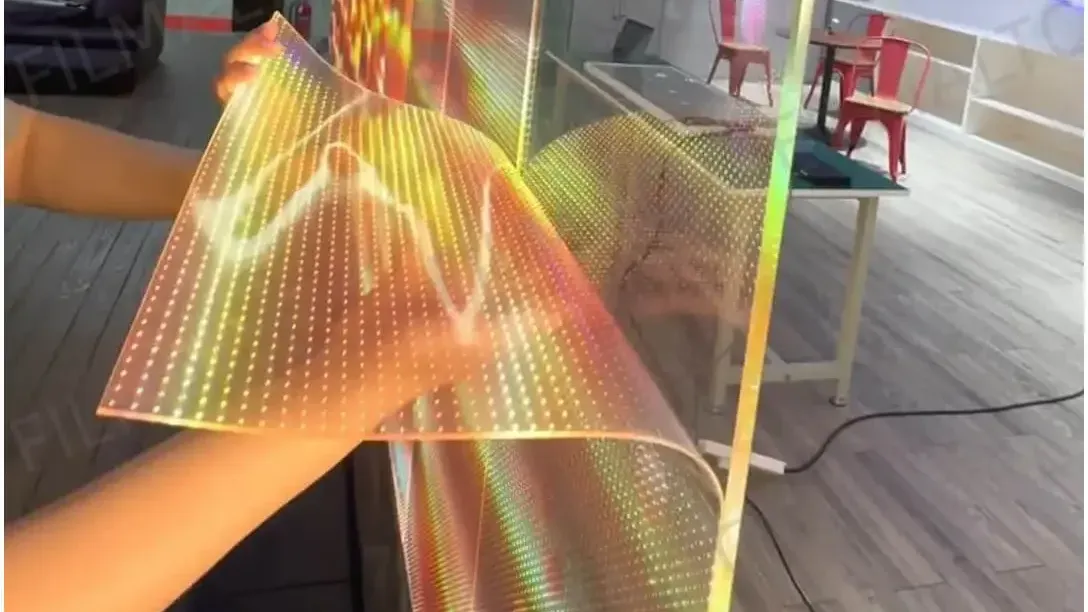
Material choice directly affects transparency and durability. High-transparency substrates such as clear PC or tempered glass are commonly used to mount LED modules. These materials offer excellent light transmission while providing mechanical strength and environmental protection.
Meanwhile, the anti-reflective coating reduces glare from ambient light, and the anti-yellowing treatment ensures long-term optical stability. These surface treatments also improve visual clarity. In outdoor or semi-outdoor applications, materials must resist UV radiation, humidity, and temperature changes while maintaining transparency.
Metal components, when required, are carefully minimised or finished in neutral tones to reduce visual presence. The result is a display that integrates seamlessly with glass architecture, appearing almost invisible when not in use and vibrant when content is active.
Pixel Pitch Optimisation for a Transparent LED Screen
Pixel pitch is one of the most discussed parameters when evaluating transparency. Larger pixel pitch generally increases transparency because fewer LEDs occupy the display area. However, the relationship is not linear. A well-designed transparent LED screen uses pixel-pitch optimisation rather than simple enlargement.
Engineers consider viewing distance, content type, and ambient brightness. For example, a storefront window viewed from several meters away can use a larger pitch without compromising image perception. In contrast, indoor installations with close viewing distances require a finer pitch.
By matching pixel pitch to application requirements, transparent LED displays deliver both clarity and openness.
Installation Methods and Environmental Integration
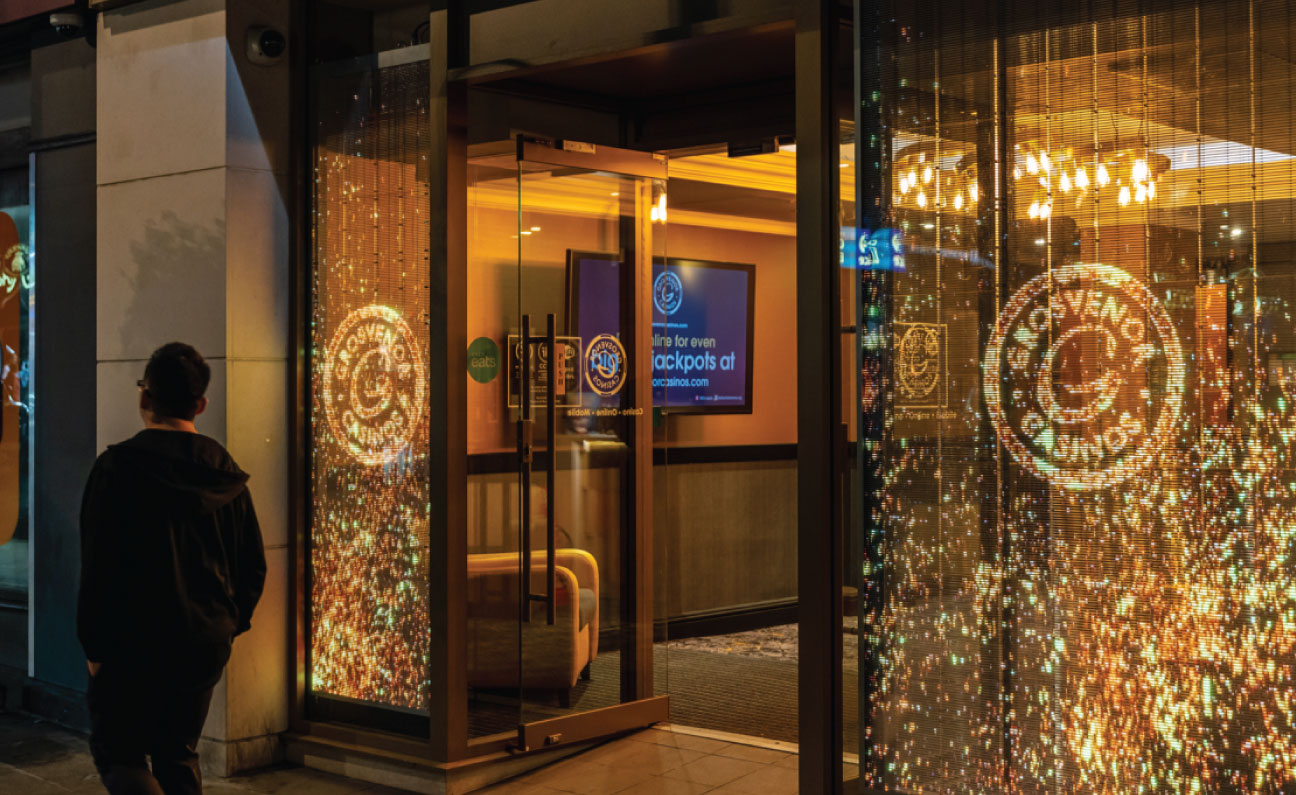
Transparency does not end at the module level. Frameless or cable-suspended mounting systems preserve the display’s open look. These systems reduce the need for bulky support structures that could block light or distract viewers.
Integration with existing glass walls or windows further enhances transparency. When properly aligned, the display becomes part of the architectural surface. Power and signal cables are routed discreetly, often along structural lines, to maintain a clean appearance.
Environmental factors such as ambient light, reflections, and background movement are also taken into account during installation. Correct positioning ensures that displayed content remains legible while the surrounding environment remains visible and engaging.
Measuring and Evaluating Transparency in a Transparent LED Screen
Evaluating a transparent LED screen requires more than reading a single specification. While transparency can serve as a reference, brightness must also be considered. A display with slightly lower transparency but higher brightness may deliver better visibility in daylight environments.
First, there’s the visual testing. Observing the screen’s performance with and without content displayed reveals how well it blends into its surroundings. High-quality transparent displays are virtually invisible when not in use, minimising visual obstruction.
Second, there’s long-term reliability. Stable materials, consistent LED output, and precise assembly processes ensure stable transparency over years of use. This stability guarantees both visual quality and investment value.
The transparency of a transparent LED screen is achieved through structural openness, optical design, advanced components, and meticulous integration. It strikes a perfect balance between light transmittance and image performance through a coordinated approach.