
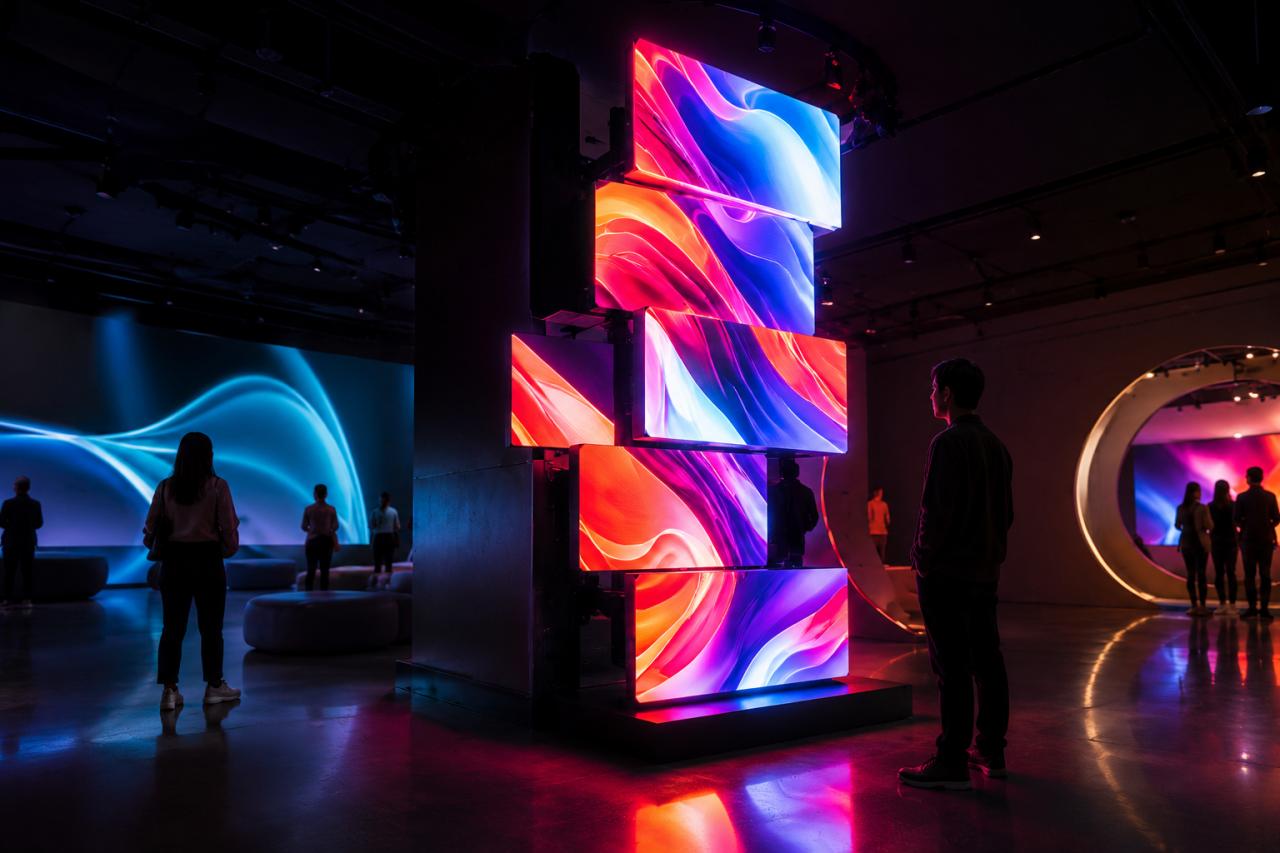
A custom kinetic LED screen can turn a museum display from a flat visual surface into a moving part of the exhibition. In museums, science centers, art spaces, and brand experience halls, visitors do not only look at content. They move through space, follow a story, stop at key moments, and remember what feels different. This type of display integrates digital content, controlled motion, and spatial design into a single installation.
Why Use a Custom Kinetic LED Screen in Museum Spaces?
Museums and experience spaces often need more than a large screen. A standard LED wall can display video, images, and text, but it usually remains in a fixed position. A 3D kinetic LED display adds movement, making it part of the visitor journey rather than just sitting quietly on a wall.
Creating Stronger Visitor Attention
Many visitors move quickly through exhibition halls. A moving LED structure can slow that movement down. It gives people a reason to stop, watch the display change, and connect the visual effect with the exhibition theme.
Supporting Spatial Storytelling
Museums are not only about showing objects. They also create experiences for education, enjoyment, reflection, and knowledge sharing, as reflected in the ICOM museum definition. In a science museum, the screen can support topics such as robotics, energy, aerospace, or future cities. In an art space, it can work more like a digital sculpture. In a brand experience center, it can help present product history, launch moments, or themed customer journeys.
Where Can a Custom Kinetic LED Screen Be Used?
A custom kinetic LED screen works best in areas where visitors naturally stop, gather, or look upward. It should not be placed randomly just because it looks impressive. That is how expensive projects become decorative noise, a proud human tradition.
Entrance Lobby
An entrance lobby is a strong position for a kinetic display. It can introduce the exhibition theme, show a welcome sequence, or create a visual landmark before visitors enter the main hall.
Immersive Exhibition Rooms
Immersive rooms often combine light, sound, video, and spatial design. A moving LED structure can support scene transitions, guide attention, and make the space feel less static.
Science Museums and Experience Centers
Science museums can use a motorized LED screen to explain movement, systems, and transformation. Brand experience centers can use it for product storytelling, launch zones, and interactive photo points. For projects that need more unusual screen forms, creative LED display solutions can also support curved, shaped, or space-integrated display designs.
What Should Be Customized for the Project?
A museum project should start with the space, not with the screen model. The right solution depends on ceiling height, viewing distance, visitor flow, installation structure, content type, and maintenance access.
Screen Shape and Motion Type
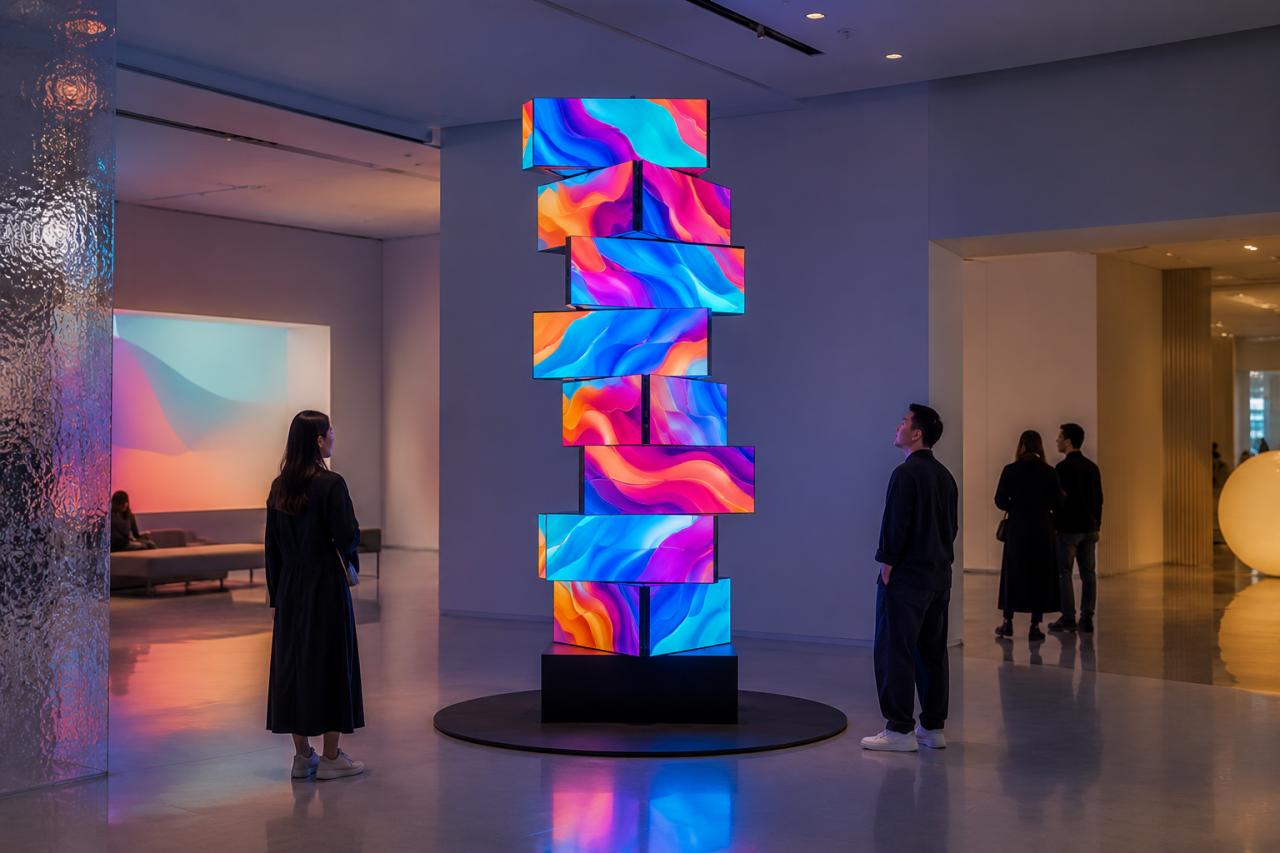
Some projects need a flat moving array. Others may need curved panels, suspended modules, rotating elements, or a wave-like structure. A DNA rotating LED display can be considered when the project needs rotating motion, double-sided viewing, or a stronger centerpiece effect. Slow movement can work for cultural exhibitions, while sharper movement may fit technology halls or launch spaces.
Pixel Pitch and Viewing Distance
Museum visitors often stand close to the display, so that the screen may need a finer pixel pitch than a large outdoor display. If visitors view the screen from several meters away, the project can use a different pixel pitch without wasting budget on details the audience will not see.
Brightness and Control System
Indoor museums do not need the same brightness as outdoor LED screens. Too much brightness can create glare and visual fatigue. The control system also matters because LED content, movement, lighting, sound, and sensors may need to follow the same timeline.
What Should Buyers Check Before Ordering?
Before ordering a custom kinetic LED screen, buyers should first check the installation structure. Moving displays place different demands on ceilings, walls, frames, and support points. The structure must handle screen weight, mechanical parts, cables, and movement over time.
Safety and Visitor Protection
Museums serve public visitors, including children, tourists, and groups moving through narrow areas. Buyers should confirm the motion range, protective distance, emergency-stop design, cable routing, and public-safety needs before production.
Maintenance Access
Technicians may need to reach LED modules, motors, power supplies, controllers, and signal cables. If the design looks clean but blocks service access, every repair becomes slower and more expensive. Beautiful disasters are still disasters, just better lit.
Content Production
A kinetic LED screen usually cannot rely solely on standard 16:9 video. The content should match the screen shape, movement pattern, viewing angle, and visitor path. Buyers should plan content early because the best hardware cannot save content made for a normal flat screen.
Is a Custom Kinetic LED Screen Suitable for Museum and Experience Spaces?
A custom kinetic LED screen is suitable when a museum or experience space needs movement, visual memory, and spatial storytelling. It works well for entrance halls, immersive rooms, science museums, cultural spaces, and brand experience centers where the display needs to do more than play standard video. It is not necessary for every project. If the goal is only to show schedules, basic information, or simple video loops, a fixed LED wall may be easier to install and more cost-effective. A kinetic system makes more sense when the screen plays a clear role in the exhibition concept.
For buyers, the main question is not whether the display looks impressive. The real question is whether the movement supports the story, fits the space, and can be maintained after installation. When those conditions are clear, a custom kinetic LED screen can become a central part of the visitor experience rather than just another display in the room.