
A spherical display can look simple after commissioning, yet its mounting method affects structural support, viewing height, cable paths, maintenance, and floor use. Choosing too early can create extra rigging work, blocked walkways, or inaccessible modules. Compare both methods before approving the sphere diameter and site layout. Related LED display products may define the application, but verified site conditions should lead the decision.
How Do Hanging and Floor-Standing LED Sphere Systems Differ?
The main difference is the load path. A hanging system transfers weight to approved suspension points and an overhead structure. A floor-standing system transfers it through a frame and base. This changes the equipment, space, cable routing, and service method.
Support Structure
A suspended sphere needs approved lifting points connected to its internal frame. Overhead support may be a building structure or a rated truss. A ground-supported sphere needs a base that spreads the load and keeps the center of gravity inside a stable footprint.
Display Position
Hanging clears the floor and places content above crowds, booths, or stages. Floor mounting brings the display closer to eye level and usually simplifies maintenance, but the base occupies usable space.
Project Type
Rental projects prioritize repeatable assembly and cable access. Fixed projects focus more on concealed wiring and maintenance. JR Visual’s rental and fixed-installation LED sphere supports both configurations, indoor and outdoor use, and customizable diameters.
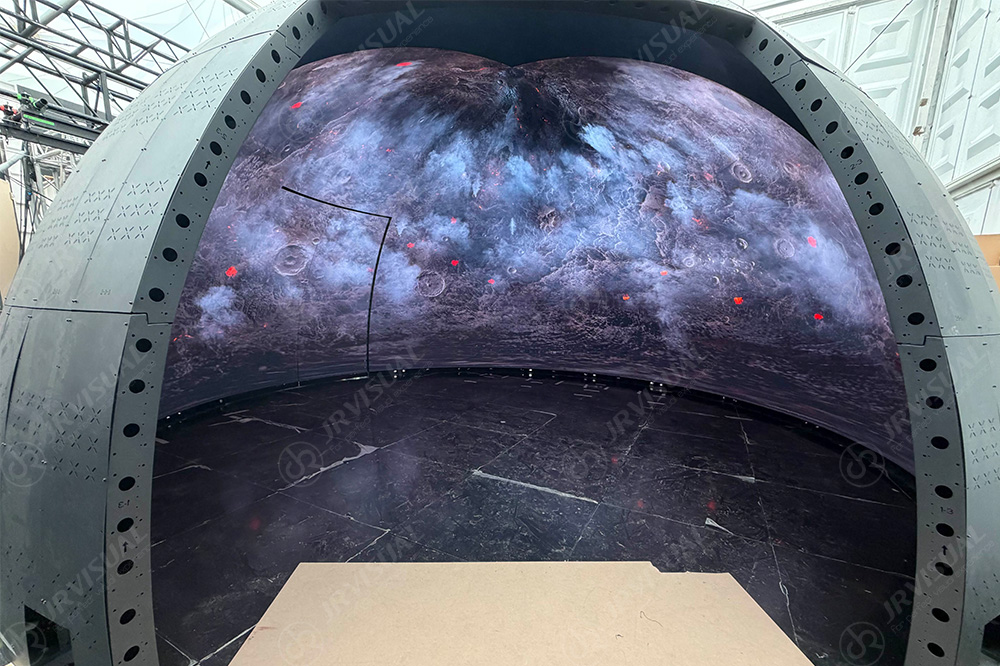
How Does a Hanging LED Sphere Transfer Structural Loads?
A hanging LED sphere removes the floor base but adds an overhead load path. The supplier, venue, rigging contractor, and engineer need the same final drawings and weight data.
Confirm Weight and Balance
The assembled weight includes the LED modules, frame, power supplies, control hardware, suspension parts, cables, and attached accessories. Installers also need the center of gravity and approved lifting-point locations. The symmetrical outer shape does not guarantee balanced internal weight.
Verify the Rigging Path
Every connection must lead to a structure approved for the calculated load. Sling angles can change the force at each point. Inspect all hardware before use. OSHA publishes requirements for rigging equipment for material handling, while local rules and qualified engineers govern the final method.
Plan the Lift
Define the assembly area, lifting sequence, exclusion zone, and final height. A controlled trial lift near the floor can reveal balance or connection issues. The installed sphere also needs clearance from ceilings, lights, sprinklers, ventilation equipment, and scenery.
How Does a Floor-Standing LED Sphere Use Its Base?
A floor-standing installation avoids overhead rigging but still needs an engineered support. The base determines stability, display height, cable entry, and occupied floor area.
Check the Floor and Base
The frame should spread the load without damaging the floor or exceeding site limits. Raised floors, temporary stages, access panels, and soft outdoor ground require extra review. Installers also need a level reference because an uneven base can create visible tilt or irregular module seams.
Control Stability and Access
The center of gravity must remain inside the stable base area. Audience contact, cable tension, vibration, and outdoor wind may require anchoring, ballast, barriers, or a larger footprint. Protect connectors from traffic, and place service openings where technicians can reach them without removing nearby scenery.
Which Site Conditions Should Be Checked Before Installation?
A site survey often settles the mounting decision. Record structural limits, dimensions, delivery routes, audience movement, environmental exposure, and maintenance access.
Structural and Spatial Limits
For hanging, confirm the overhead support, lifting access, installation height, and surrounding clearance. For floor mounting, confirm floor capacity, levelness, base footprint, and nearby traffic. Door sizes and assembly space may also limit the frame sections you can deliver to the site.
Viewing and Operating Conditions
Viewing distance affects pixel pitch and useful display height. A sphere placed too high can hide upper content from nearby viewers. A low unit may provide better close-range detail but needs a larger protected zone.
Project duration also matters. A short event needs a repeatable build-and-dismantling sequence. A permanent display needs access for cleaning, power isolation, and module replacement. These details help a professional LED display supplier prepare a suitable configuration.
Indoor and Outdoor Exposure
Outdoor sites add wind, rain, drainage, temperature, and corrosion concerns. Outdoor-rated equipment still needs site-specific support calculations and protected connections. Indoor venues may set rules for fire routes, sprinkler clearance, overhead work, and installation hours.
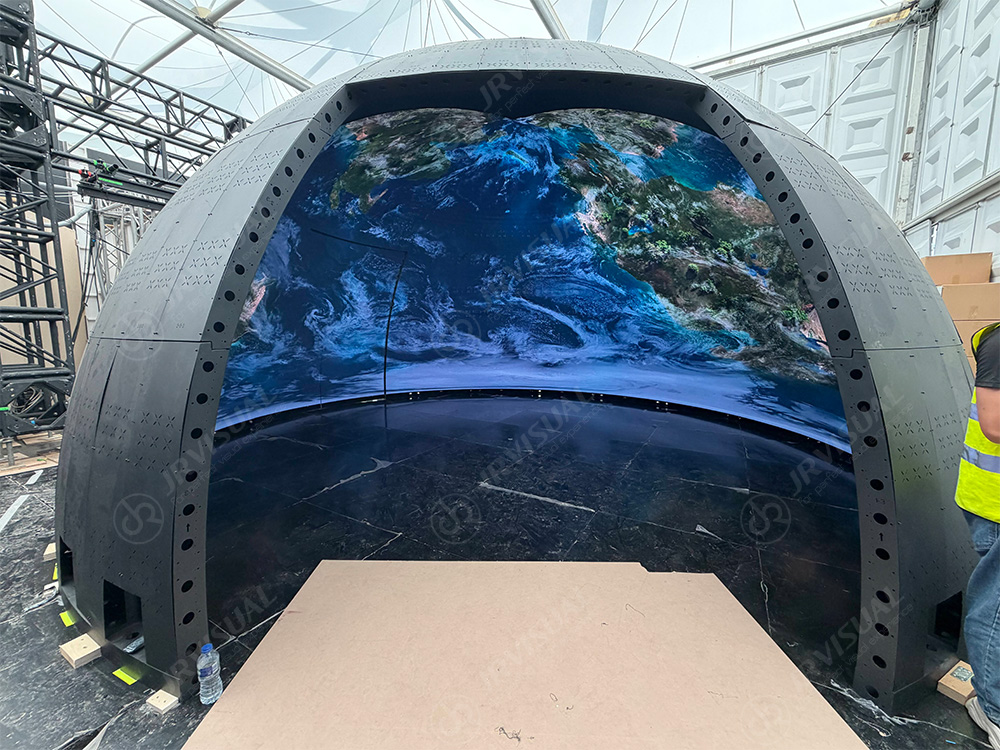
How Should LED Sphere Power, Signal, and Maintenance Be Planned?
Develop electrical and mounting plans together. The installed position changes cable length, connector access, controller placement, and the time needed to isolate a fault. Use values from the approved product configuration instead of early estimates.
Power and Cable Routing
Confirm supply voltage, circuit arrangement, protection devices, power demand, and connection locations. Hanging installations need protected overhead cable paths and strain relief. Floor-standing units can route cables through the base if the connections remain accessible.
Signal and Content Mapping
Place the controller within the approved signal range and label data lines before assembly. Complete a ground-level system test before lifting or opening the site. Spherical content also needs the final pixel map, resolution, and orientation to prevent stretching near the poles or visible joins.
Maintenance Planning
Identify access panels, spare modules, tools, and isolation points. A hanging sphere may need lowering equipment or an approved work-at-height method. Record module positions and calibration data so technicians can restore uniform color after replacement.
Hanging vs Floor-Standing LED Sphere Comparison
Neither mounting method fits every site. Buyers, designers, and installers should compare structural requirements and operating conditions.
| Decision Factor | Hanging Installation | Floor-Standing Installation |
|---|---|---|
| Primary support | Approved overhead structure or truss | Engineered base and suitable floor |
| Floor space | Keeps the area below open | Requires space for the base and setback |
| Viewing position | Visible across larger spaces | Easier eye-level placement |
| Installation | Requires lifting and rigging | Requires base assembly and leveling |
| Cable route | Usually follows an overhead path | Usually enters through the base or floor |
| Maintenance | May require lowering or access equipment | Usually easier to reach from floor level |
| Main risk | Unverified overhead load path | Inadequate base stability or floor capacity |
Ask the supplier to document the final weight, dimensions, support points, power requirements, and maintenance method. Purchase price alone does not show the complete installation cost.
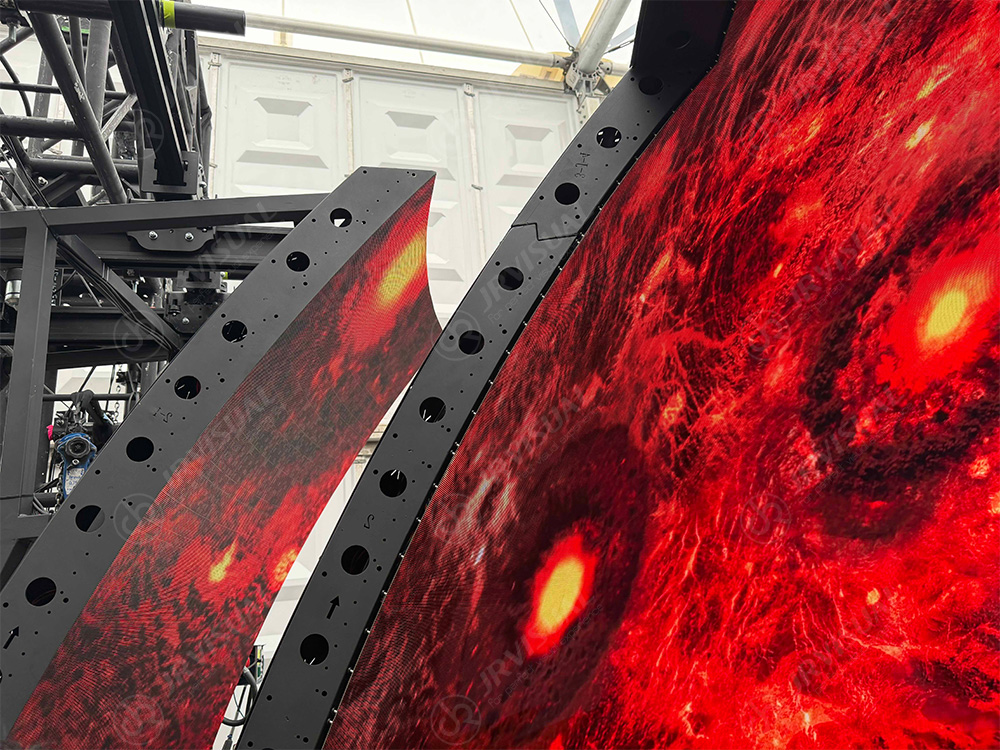
Which Installation Mistakes Create Safety or Service Problems?
Many installation problems begin with incomplete information or late coordination. The display may work during testing and still fail the site’s structural, access, or maintenance requirements.
Common mistakes include:
- choosing the mounting method based only on appearance;
- using estimated weight instead of the final supplier drawing;
- attaching rigging to unapproved points;
- underestimating the base footprint or floor load;
- leaving no clearance for module replacement;
- hiding connectors behind permanent finishes;
- ignoring outdoor wind and drainage conditions; and
- skipping a complete power, signal, mapping, and color test.
The installation drawing should show the load path, cable route, service opening, technician position, and power isolation method. Test access before the venue closes the surrounding ceiling, floor, or scenery.
The Site Structure Should Determine the LED Sphere Installation Method
A hanging LED sphere suits sites with verified overhead support, controlled rigging access, and a need to preserve floor space. A floor-standing sphere suits projects with dependable ground support, easier service access, and enough room for a stable base. Before approval, confirm the diameter, assembled weight, pixel pitch, installation height, support points, base dimensions, power demand, environmental exposure, and maintenance method. Teams can request an LED display project consultation with site dimensions, photos, operating conditions, and viewing distance so the supplier can evaluate the configuration before production.