
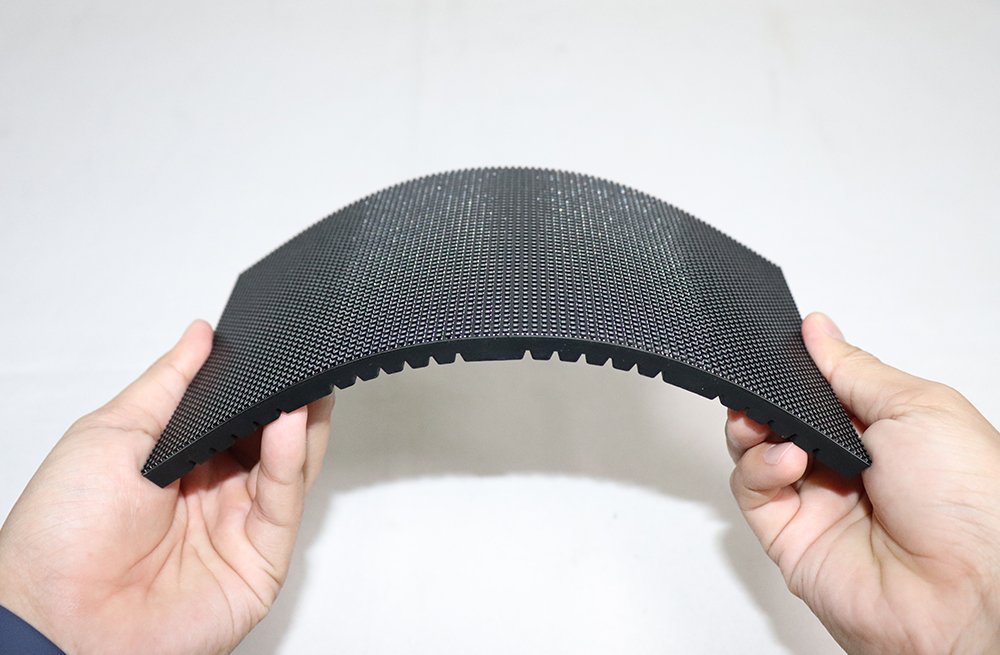
The flexible LED display, also known as a rollable LED screen, is a type of LED display. It combines the brightness and clarity of traditional LED technology with adaptable materials to produce screens that bend, fold, or curve. These displays extend the possibilities of visual presentation far beyond conventional rigid LED panels, allowing installations on curved walls, cylindrical pillars, or even spherical surfaces. maintain crisp visuals and vibrant colors across shapes, ensuring content is consistently displayed without interruption. They are particularly suitable for environments that require innovative designs. The adaptability of these screens enables visually stunning installations and creative use of space.
In addition to their visual appeal, flexible LED screens offer practical advantages. The modular design allows for easy replacement of individual sections, reducing downtime and maintenance costs. High-brightness panels ensure readability in both indoor and outdoor environments, while energy-efficient LEDs lower operational costs compared to traditional displays.
Advanced Structural Technology of a Flexible LED Display
The construction of a flexible LED display is a key factor in its performance and durability. Flexible screens are built on substrates such as rubber, flexible PCBs, or other pliable materials that allow bending without damaging the internal circuitry. Each panel consists of multiple LED modules carefully mounted on these substrates, and a transparent protective layer is applied to shield the LEDs from mechanical stress, dust, and moisture. This layer not only protects the components but also preserves the screen’s ability to curve, ensuring consistent visual quality regardless of installation shape.
Modular design Panels can be connected seamlessly, forming large, continuous displays that eliminate visible bezels or gaps. This enables designers to create expansive video walls, panoramic curves, or even cylindrical columns without compromising image integrity.
LED Modules and Pixel Technology
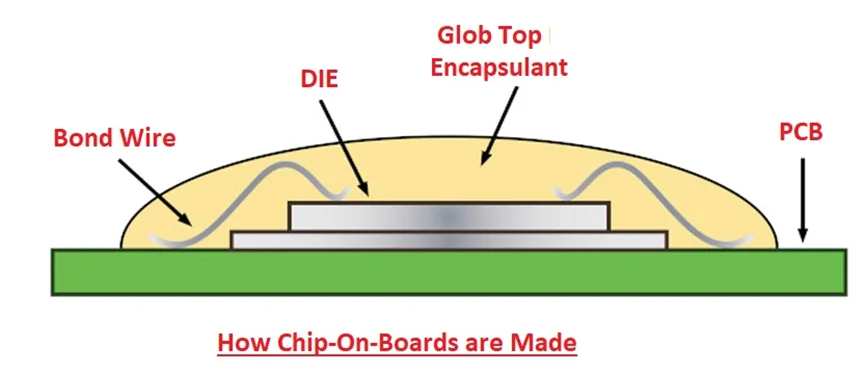
the LED modules are the heart of flexible LED displays, which determine the screen’s resolution, brightness, and color accuracy. Each module contains multiple LED pixels arranged to form high-resolution images. Advanced technologies, such as mini 4-in-1 LED packages and COB (Chip-on-Board) technology, enable pixel pitches as small as 0.9mm to 3mm. Smaller pixel pitches enhance visual clarity, especially in indoor applications where viewers are close to the screen. By employing these advanced pixel technologies, flexible LED displays can achieve high levels of detail, smooth gradients, and consistent color reproduction across curved or irregular surfaces.
The modularity of LED panels also allows for customization in screen size and shape. Flexible LED modules can be interconnected to form curves, circles, cylinders, or even spherical displays. This enables unique visual experiences, from a seamless wraparound video wall in a corporate lobby to a 360-degree immersive display in an exhibition hall. Lightweight and slim construction ensures that even large-scale installations are manageable. In contrast, the precision alignment of pixels ensures uniform brightness and accurate color reproduction across all sections of the screen.
Power Supply and Control Systems
Each pixel requires a stable and consistent power supply to maintain brightness and color accuracy. Flexible LED screens often employ advanced driver circuits that regulate voltage distribution across the panel, even when modules are bent or installed on irregular surfaces. These circuits prevent flickering, color inconsistencies, and other visual anomalies, ensuring smooth, uninterrupted playback.
Sophisticated video processors manage data transmission to each module. They maintain uniform brightness, color accuracy, and refresh rates across the display. Intelligent calibration systems automatically adjust brightness, color temperature, and contrast based on ambient light. This ensures optimal image quality in any environment.
Types of a Flexible LED Display
Flexible LED technology has expanded to include several distinct types, each offering unique advantages for specific use cases. Flexible LED mesh panels allow transparency and airflow. They are ideal for stage backdrops or large installations where ventilation is essential. Flexible LED curtains offer lightweight, easily deployable solutions for touring events or temporary setups. They enable quick installation and dismantling without compromising visual quality.
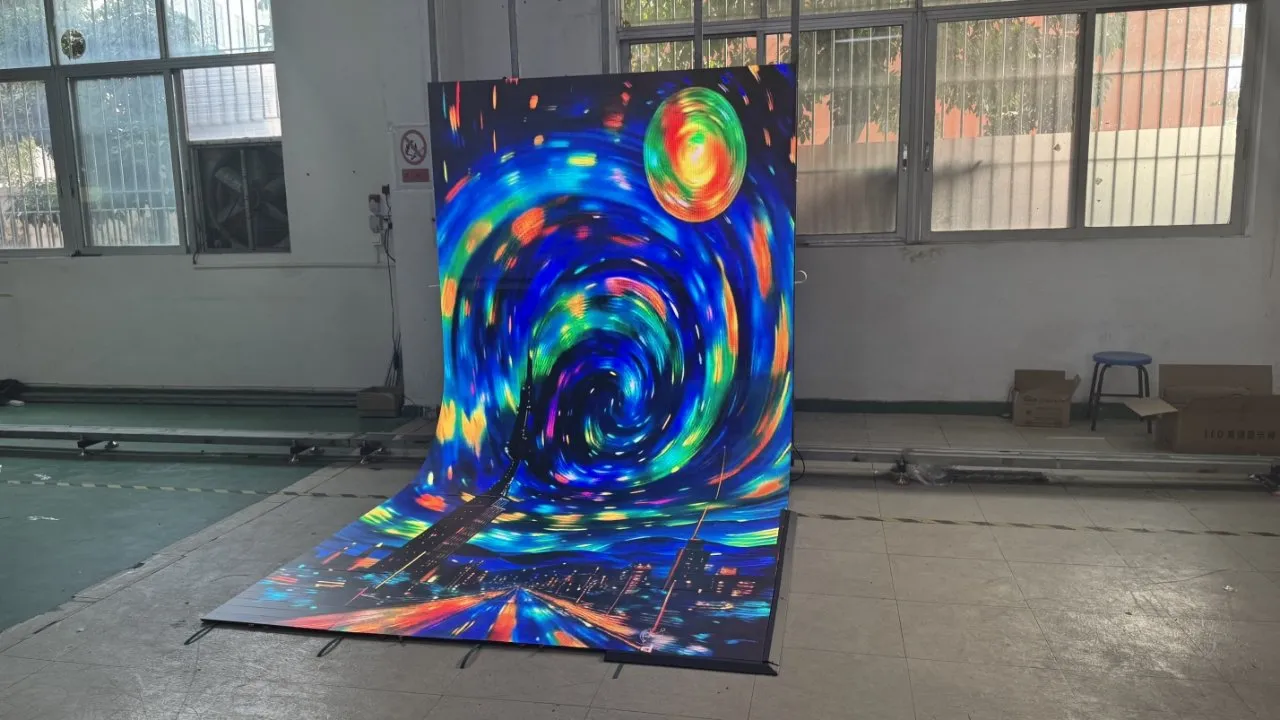
Curved LED displays create immersive experiences in corporate lobbies, retail spaces, or entertainment venues by forming panoramic screens that wrap around walls or corners. Cylindrical LED displays, also known as LED halos, offer a 360-degree viewing experience and draw attention in high-traffic areas such as casinos and shopping centers. Spherical LED displays provide fully immersive, 360-degree visuals suitable for exhibitions, educational installations, or interactive environments. Regardless of type, all flexible LED screens maintain high-resolution visuals, consistent brightness, and reliable performance, demonstrating the adaptability and creative potential of this technology.
Core Technologies and Working Principles of Flexible LED Display
The working principle of a flexible LED display centers on the combination of modular design, advanced LED pixel technology, and flexible substrates. Each panel is engineered to allow bending without breaking electrical connections or misaligning pixels. The use of mini 4-in-1 and COB technologies enhances pixel density, enabling high-resolution visuals on curved surfaces. Flexible substrates, reinforced with protective coatings, provide mechanical strength and durability while allowing repeated bending and installation adjustments.
Magnetic or modular mounting systems contribute to the screen’s flatness and stability, ensuring a uniform visual experience. Integrated control systems manage video content, adjust brightness, and calibrate colors across all modules. They also compensate for variations in shape and curvature. By combining these core technologies, rollable LED screens and flexible panels deliver seamless visuals, high brightness, and accurate color reproduction. These features make them suitable for a wide range of indoor and outdoor applications.
Advantages and Future Outlook of Flexible LED Display
Flexible LED displays combine adaptability, high-resolution performance, and ease of installation. Their core technologies enable seamless, vibrant visuals even on curved or irregular surfaces. These displays offer practical advantages, including energy efficiency, durability, and cost-effective maintenance through modular repairability.
The versatility of it allows creative installations in corporate environments. Improvements in pixel density, brightness, and material flexibility will expand the creative potential of these displays. The future of flexible LED displays promises even more immersive, high-quality visual experiences, offering designers, architects, and event planners unprecedented freedom to innovate in space utilization and audience engagement.