
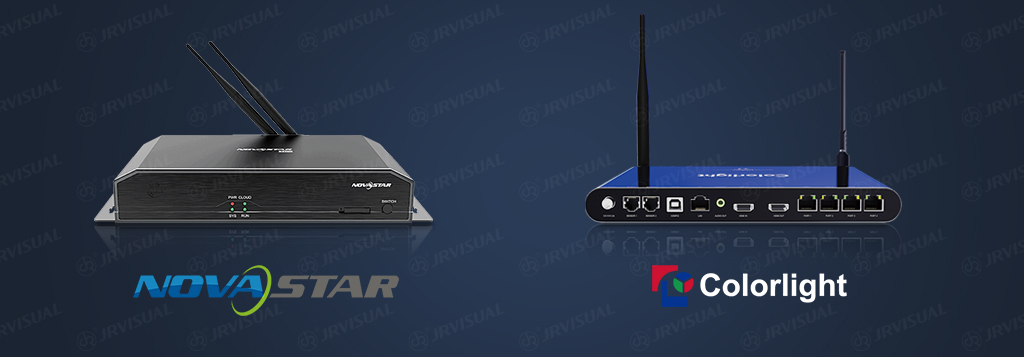
While the visual appeal of transparent LED film displays is captivating, smooth playback and stable control are crucial for the long-term success of a project. Without a robust control system, even the most advanced transparent LED film screens can suffer from latency, flickering, signal instability, or configuration limitations. At JRVISUAL, our StarLink transparent LED film displays offer hardware flexibility that matches the precision of control. By integrating industry-leading control systems from NovaStar and Colorlight, our transparent LED film display solutions enable reliable content management, smooth playback, and easy configuration—even for custom sizes and irregular architectural shapes. These control units, equipped with wireless connectivity antennas, multi-port interfaces, and a compact, streamlined design, perfectly complement the lightweight and modular nature of transparent LED film displays.
Transparent LED Film Display Control Architecture and System Integration
Transparent LED film displays differ fundamentally from traditional indoor LED displays. Instead of rigid modules, they utilize ultra-thin, flexible LED strips embedded in a transparent substrate. This design reduces structural load while preserving natural light transmission, making it ideal for glass curtain walls and shop windows.
However, this flexibility also brings complexity. The installation of transparent LED film displays often involves custom sizes, curved glass, or irregular geometries. Therefore, signal distribution must be precisely designed. NovaStar and Colorlight’s transmit and receive cards act as the control backbone, ensuring synchronized data transmission from the media source to each LED pixel.
In a typical architecture, content originates from a media server or cloud content management platform. The transmit card processes the video signal via HDMI, DVI, or Ethernet interfaces. The data is then transmitted via network cable to the receive card embedded in the transparent LED film display module. Notably, the integrated wireless connectivity antenna in modern NovaStar and Colorlight controllers simplifies commissioning. Technicians can remotely configure the transparent LED film display, reducing installation time and improving operational efficiency.
Compatibility of Transparent LED Film Display with NovaStar and Colorlight
Compatibility is crucial when integrating control systems with transparent LED film displays. JRVISUAL validates each StarLink transparent LED thin-film display series using NovaStar and Colorlight receive cards to ensure optimal signal mapping, pixel calibration, and refresh rate stability.
NovaStar controllers are renowned for their advanced image processing algorithms and support for high refresh rates, typically exceeding 3840 Hz. This eliminates flicker in camera recording environments and ensures smooth playback during live broadcasts. The Colorlight control system offers cost-effective scalability and robust networking capabilities, making it suitable for multi-screen transparent LED film display networks.
Both control platforms support multi-port outputs and cascading configurations. This allows transparent LED film displays of varying shapes to operate as a unified visual surface. Furthermore, the streamlined physical design of these controllers simplifies their integration into compact housings, meeting the minimalist aesthetic requirements of architectural glass projects.
Transparent LED Film Display Performance Optimization and Playback Stability
Smooth playback is not accidental; it is carefully designed. Transparent LED film displays require synchronized frame rendering between distributed LED strips. Any inconsistency in data buffering or signal transmission can lead to screen tearing, jitter, or brightness fluctuations.
NovaStar and Colorlight devices optimize playback through frame rate conversion, adaptive brightness adjustment, and intelligent grayscale compensation. When integrated with transparent LED film displays, these features ensure consistent visual output even under varying ambient lighting conditions. Furthermore, reliable content management is crucial. Transparent LED film display projects typically rely on centralized content management systems (CMSs). NovaStar’s ViPlex software and Colorlight’s LEDVISION management system enable operators to remotely schedule content, monitor system status, and deploy updates.
Configurations for Custom Sizes and Special Shapes
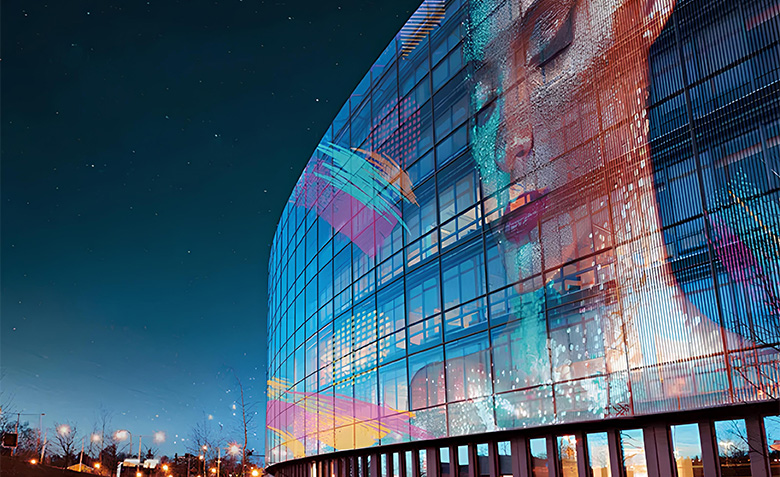
The appeal of StarLink transparent LED film displays lies in their architectural design freedom. However, custom sizes require advanced mapping capabilities. NovaStar and Colorlight controllers support flexible pixel mapping and irregular cabinet configurations.
For example, in curved glass installations, technicians can define custom display areas in the control software. This ensures precise alignment of video content with the physical structure. Transparent LED film displays configured in segmented modes can operate independently or as continuous screens. Additionally, redundancy options enhance operational reliability. Dual-signal backup and power redundancy prevent display interruptions in mission-critical applications such as transportation hubs and corporate headquarters. These features ensure that JRVISUAL’s StarLink transparent LED film display maintains uninterrupted performance during peak operating hours.
Installation Efficiency and Commissioning
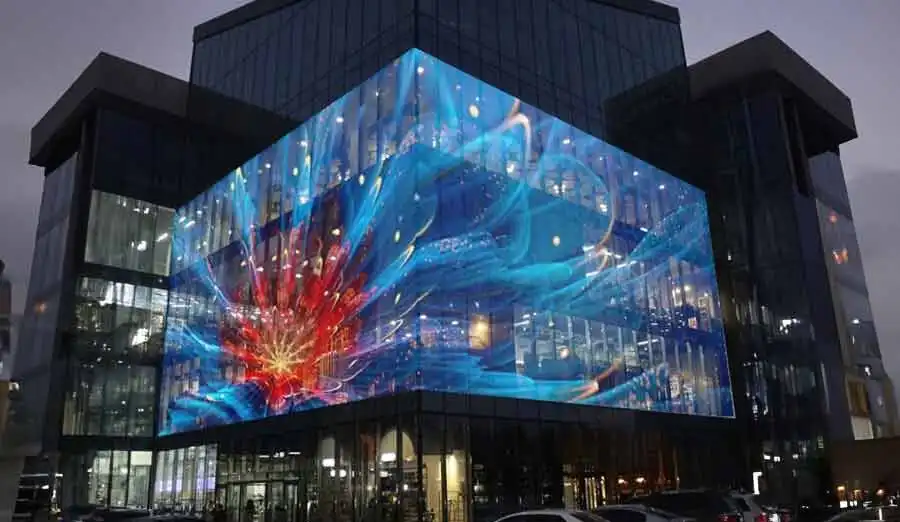
The NovaStar and Colorlight controllers feature a compact design and support multiple interfaces, reducing wiring complexity. Wireless configuration accelerates commissioning, especially in high-altitude glass installations. During installation, signal integrity testing ensures stable communication between all receiver cards. Automatic module detection simplifies setup and minimizes manual configuration errors. Furthermore, the lightweight nature of the transparent LED film display reduces the need for structural reinforcement. Combined with an intelligent control system, its installation time is significantly shorter than that of traditional LED video walls. This efficiency directly translates to lower labor costs and faster project completion.
Intelligence and Stability
The true performance of a transparent LED film display depends not only on its transparency but also on the intelligence and stability of its control system. Ultimately, smooth playback, accurate color reproduction, and reliable content management depend on the synergy between the display hardware and the advanced controller. StarLink transparent LED film displays integrate NovaStar and Colorlight control devices, which feature high refresh rates, wireless configuration, multi-port interfaces, and intelligent mapping tools, enabling seamless operation in standard-, custom-, and irregularly shaped installation environments.