
Choosing a digital canvas for an indoor environment is both a technical and a business decision. This guide aims to answer a practical question: How do indoor LED displays compare to LCD video walls in applications such as retail mall advertising, corporate lobbies, control rooms, and experiential venues? We will analyze the differences in technology, image quality, viewing distance planning, installation and maintenance, total cost of ownership, and real-world use cases to help you choose the right display type for your goals.
Technology and Image Quality of Indoor LED Displays
At the heart of any display comparison is image quality. Indoor LED displays are emissive systems, with each pixel acting as a light source. At the same time, LCD video walls are transmissive technology, producing light through a powerful backlight filtered by liquid crystals. This distinction leads to practical differences in color saturation, contrast, black levels, and brightness handling.
At the heart of any display comparison is image quality. Indoor LED displays are emissive systems, with each pixel acting as a light source. At the same time, LCD video walls are transmissive technologies, using liquid crystals to filter a powerful backlight to generate light. This distinction leads to practical differences in color saturation, contrast, black levels, and brightness handling.
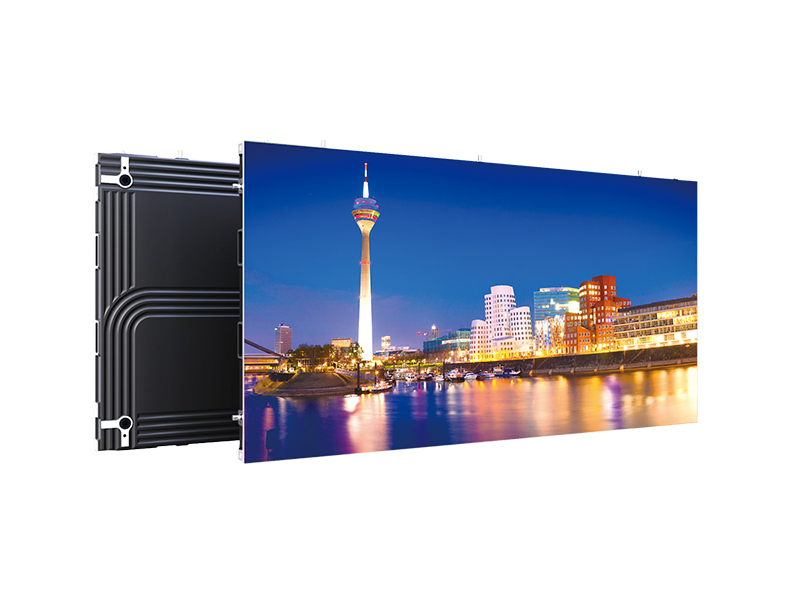
Because LEDs emit light only where needed, indoor LED displays achieve deep blacks and exceptional contrast, whereas LCD panels often experience backlight leakage through pixels. In dimly lit retail corridors or upscale hotel lobbies, the deep blacks and vibrant saturation of indoor LED displays enhance visual impact and color depth. This native luminescence advantage creates a high-end look for cinematic, high-impact content.
Brightness and Ambient Adaptability, Color Accuracy
LCD video walls typically support high peak brightness with powerful backlights, but unless you invest in advanced LED backlighting systems, brightness uniformity and local dimming can be challenging. Indoor LED display designs offer a wide brightness range and local dimming, allowing you to adjust brightness for large, open atria or reduce brightness to avoid glare at night.
High-end LCD panels typically offer excellent color calibration out of the box, and their pixel density may be higher than that of coarse-pitch LED walls when viewed at close distances. However, indoor LED displays offer improved color rendering and support sophisticated calibration tools (3D LUTs, per-module color correction) that consistently reproduce brand colors even on huge screens. When you require precise proof-grade color matching of product images at close distances, LCDs can sometimes produce more predictable results without the additional LED calibration effort.
Comparison of Pixel Pitch and Viewing Distance
One of the most common purchasing errors is mismatching pixel pitch with viewing distance. For indoor LED displays, pixel pitch defines the minimum distinguishable feature. For LCD video walls, the panel’s native resolution and bezel width determine readable detail. Both require tailoring content strategies based on actual eye contact and viewer dwell time, especially in indoor environments like retail malls, where passersby browse quickly.
More precisely, the minimum readability distance is approximately 3.4 × 1.5 mm. Therefore, a P1.5 indoor LED display offers reasonable clarity at approximately 5 meters, making it suitable for locations where viewers stand close together, such as flagship stores, showrooms, and interactive installations. For indoor LED displays used for retail advertising, where viewing distances are typically 10 to 30 meters, P2.5 to P4.0 are cost-effective and provide excellent visual quality.
For LCD video walls, effective pixel density is calculated by dividing the physical dimensions of the wall by the total number of horizontal pixels in the tiled panels, accounting for the bezel. LCDs are well-suited for high-fidelity, close-viewing applications, where viewers typically sit or stand within one to two meters. However, joining multiple LCD panels into a large billboard creates seams and disruptive bezels, reducing the sense of immersion.
Differences in Installation, Maintenance, and Serviceability of Indoor LED Displays
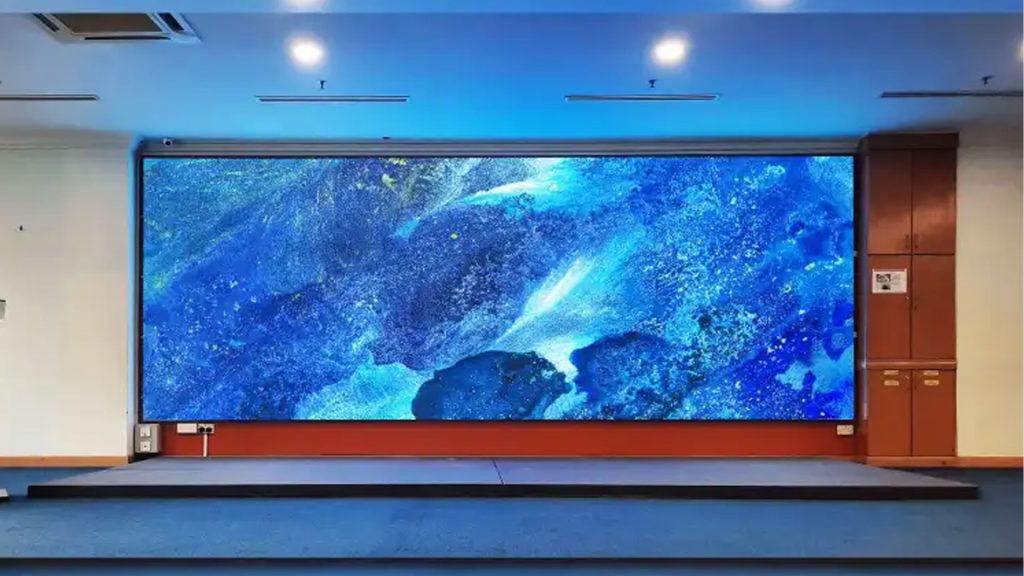
Indoor LED displays are modular in nature, consisting of numerous cabinets or modules. LCD video walls, on the other hand, use individual consumer-grade or professional panels. This modularity impacts installation speed, maintenance methods, and long-term operating costs.
Regarding maintenance and access, many indoor LED displays support front-accessible access, allowing modules to be removed and replaced from the front without accessing the rear access. This simplifies integration with stores without rear access. This feature reduces downtime, as technicians can replace modules in just minutes without dismantling the entire cabinet. In contrast, LCD video walls often require replacing faulty panels from a rear access; in cramped mall backrooms or glass-fronted storefronts, this can result in more complex installation procedures and increased downtime.
Secondly, there are issues with failure modes and redundancy. In LED displays, problems with a single LED or module are often localized and rarely catastrophic. In contrast, in LCD array displays, a single panel failure can cause a large area of the display to go offline until a replacement arrives. If your indoor LED display for retail mall advertising is using modular indoor LED displays with a spare module library, it can reduce field service inventory and expedite repairs. Finally, due to weight, mounting, and architectural constraints, outdoor or heavy-duty framed LCD panels require sturdy brackets and often increase structural loads. For suspended installations in shopping malls or with limited ceiling loads, indoor LED display cabinets offer the advantage of being thinner and lighter.
Differences in Cost and Return on Investment
Price comparisons often focus on hardware metrics, but actual value can only be revealed when the total cost of ownership and expected return on investment are factored in. Compared to commercial LCD panels, the initial hardware cost per square foot for indoor LED displays can be higher, especially when the pixel pitch is excellent. However, at actual viewing distances, LED systems typically require fewer pixels to achieve the same perceived visual effect, making them more cost-effective on a per-perceived visual cost basis.
The initial hardware for LED displays includes the cabinet, power supply, controller, and structure. LCD video walls consist of multiple specialized LCD panels, mounting brackets, video processors, and bezel shielding. For small, near-viewing installations, LCDs may be less expensive; for large, billboard-sized screens, LEDs generally offer better scalability and become more cost-effective as the size increases.
Furthermore, in terms of operating costs, LED displays typically consume more power when displaying high-brightness content. However, their efficient power cycling and intelligent dimming features can save energy, which is particularly beneficial in malls with extended operating hours. LCD backlights can be very power-intensive, and replacing backlights or panels is a significant component of medium-term costs. Regarding content creation, larger LED screens often encourage customized, high-volume dynamic design creativity, which can increase content costs. Conversely, you may find LCD walls suitable for repurposed broadcast content, and they offer lower costs for customized creatives.
Choosing the Right Display Based on Viewing Distance and Common Applications
Choosing between indoor LED and LCD video walls requires careful consideration of three factors: viewing distance range, operational constraints, and the desired display effect. Suppose your goal is advertising in large retail spaces, high contrast, wide viewing angles, a borderless design, and flexible installation. In that case, indoor LED displays generally offer better attention and long-term economic benefits. If your needs focus on close-up fine detail, the convenience of instant panel-level replacement, or a smaller creative production budget, LCD video walls are a more efficient option.