
A well-known travel brand replaced its static billboards with a kinetic LED display. In just 90 days, the brand saw a 147% increase in social media mentions, a 47% increase in brand awareness, and a 28% increase in website clicks from airport travelers. Static advertising blends into the background, while kinetic LED displays capture attention. 78% of travelers ignore static billboards, while kinetic LED displays attract 83% of passersby. As a display manufacturer, I have worked with numerous airports to optimize their dynamic advertising strategies. Kinetic LED displays are not just “fancy screens,” but are carefully designed to leverage the unique advantages of airports: high passenger traffic, long dwell times, and a concentrated, diverse target audience.
Why do airports need a kinetic LED display?
Airports are unlike any other advertising environment; they are busy, chaotic, and filled with bored, distracted, or waiting travelers. Static billboards don’t work here because they cannot stand out in the noisy environment. In contrast, kinetic LED displays are designed specifically for the airport environment.
Passengers wait an average of 22 minutes at the gate, 18 minutes at baggage claim, and 10 minutes in the departure lounge. The movement and dynamic content of LED displays can hold viewers’ attention during these downtimes, making them prime advertising opportunities.
Furthermore, airports experience high passenger volume and a diverse customer base. A single airport gate can handle 5,000 to 10,000 passengers daily—including business travelers, families, tourists, and high-end consumers. Kinetic LED displays allow you to rotate content for targeted advertising to different groups.
Simultaneously, they enhance brand visibility in noisy environments. Airports are filled with announcements, baggage carts, and crowds. The movement of kinetic LED displays naturally attracts attention even in busy spaces, a stark contrast to static advertising that is easily overlooked.
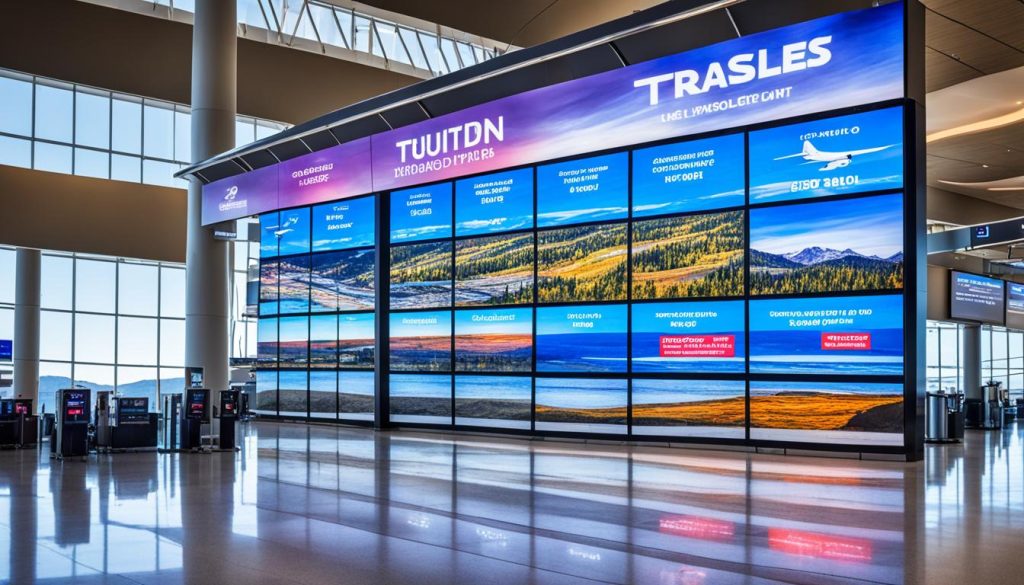
Key Features of Kinetic LED Display for High-Impact Airport Advertising
Not all kinetic LED displays are suitable for airports. The best models, designed for high-traffic, high-light environments, possess four essential characteristics that are key to advertising success.
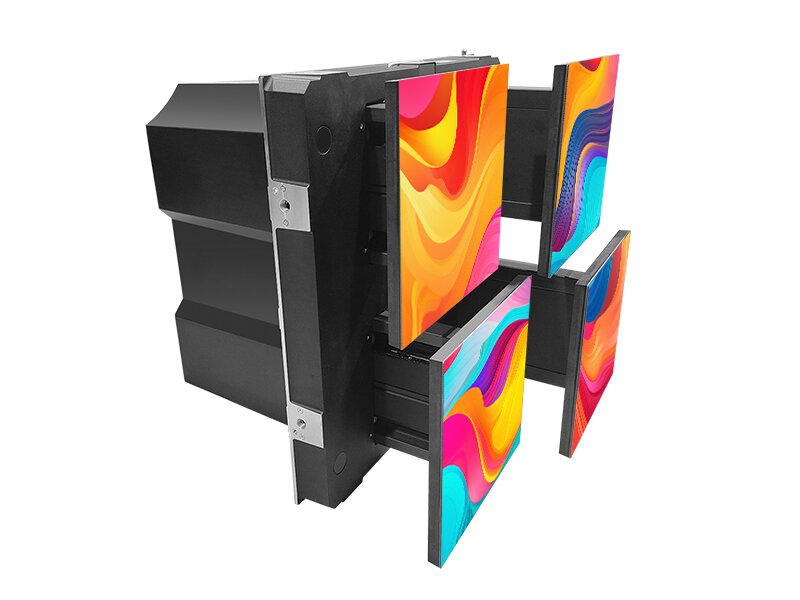
First, it delivers smooth, dynamic effects. Choose displays with modular panels that can silently glide, rotate, or oscillate at variable speeds. Sudden, noisy movements can disturb travelers—smooth, dynamic effects keep them focused and undisturbed. JRVISUAL’s kinetic LED displays, designed specifically for airports, offer over 10 preset dynamic effects, ranging from slow glides to dynamic fade-ins and fades.
They also feature high-brightness anti-glare technology, ideal for airports with intense natural light. Kinetic LED displays require 2000-3000 nits of brightness and an anti-glare coating to remain clearly visible—even in direct sunlight. This ensures that advertisements are clearly visible whether travelers are at the gate or 50 feet away in the waiting area. Most importantly, they enable seamless content integration. Dynamic displays can sync with your advertising management software to arrange content, overlay real-time data, and track performance. Look for displays that support 4K resolution, video, animation, and interactive content.
High-Impact Advertising Formats in Airport Areas
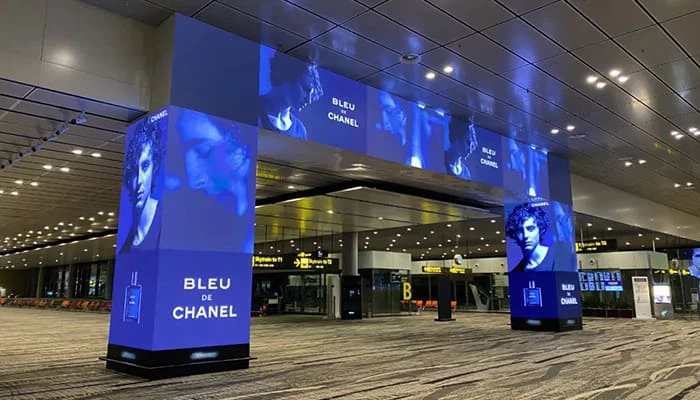
Airports have different zones with varying passenger behaviors—your kinetic LED display content and location should be tailored to each zone. If installed in the waiting area, where passengers spend more time, use longer content (15-30 seconds of animation) with dynamic effects to capture their interest. In the departure hall, where passenger flow is high, use 5-10 second, eye-catching animated shorts. At baggage claim, while passengers are focused on their luggage, they can also get bored; interactive dynamic content is a good option. When aiming for high-impact advertising, the key is to match content to user behavior. For stationary passengers, provide slow-paced, engaging content; for moving crowds, provide fast-paced, attention-grabbing content.
Airport Optimization Installation and Maintenance Tips
If you’ve already purchased kinetic LED displays for your airport, the following tips will maximize their performance, lifespan, and advertising effectiveness. To improve visibility, optimize placement. In the gate area, install displays at eye level, avoiding excessive height or obstruction. In the departure hall, displays are placed at key decision-making points for passengers. Additionally, calibrate brightness according to area, adjusting for natural light: 2500 nits in sunny departure halls, 2000 nits in gate areas, and 1500 nits in baggage claim areas. Most kinetic LED displays use automatic brightness sensors to enable this feature, save energy, and avoid glare.
Furthermore, perform regular maintenance by cleaning the panels weekly with a soft, dry cloth to remove dust and fingerprints. Check the power mechanism for wear at least monthly and lubricate moving parts every six months. Most importantly, comply with airport regulations, ensuring your displays meet FAA safety standards and the Americans with Disabilities Act (ADA) requirements. Avoid using flashing content that may distract pilots or ground staff.
High-Impact Advertising for Airports
Airports are no longer just transportation hubs; they are also prime advertising venues, and kinetic LED displays are key to unlocking their full potential. With their smooth, dynamic effects, high brightness, and flexibility, they can cut through the noise of busy terminals, attract travelers’ attention, and deliver measurable revenue for both airports and advertisers.