The main difference between kinetic LED display and 3D LED video walls lies in how they create depth, dynamism, and emotional interaction. While both rely on advanced
LED technology, their structural logic and visual presentation mechanisms are quite different. Therefore, it’s essential to understand these differences before making a purchase. In the following analysis, we will examine and compare aspects such as spatial perception, technical architecture, content workflow, installation complexity, and usage positioning to help potential buyers understand these differences.
Kinetic LED Display vs. 3D LED Video Walls: Core Visual Effect Differences
The most critical difference between
kinetic LED displays and 3D LED video walls lies in the source of visual depth. One system generates realistic three-dimensional motion, while the other creates a perceived sense of stereoscopic effect through advanced digital rendering technology. While both solutions deliver stunning visual effects, their underlying mechanisms lead to different audience reactions and environmental interactions.
Spatial Dynamics of Kinetic LED Display
Kinetic LED display integrate LED modules with programmable mechanical actuators, allowing each module or panel to move independently or synchronously. This movement can include rotation, extension, contraction, tilting, lifting, or wave-like transformations. Therefore,
kinetic LED screens can not only display animations but also physically deform in real time.
This structural change creates realistic spatial depth. Viewers perceive realistic parallax as the surface physically shifts relative to its position. Furthermore, natural shadows dynamically form and change as the structure moves under ambient light. These realistic visual cues significantly enhance spatial perception compared to simulated depth effects.
In contrast, while 3D LED video walls can simulate raised shapes or immersive tunnels, their geometry remains planar. Therefore, dynamic solutions offer a more consistent and immersive spatial experience when comparing visual realism from different perspectives.
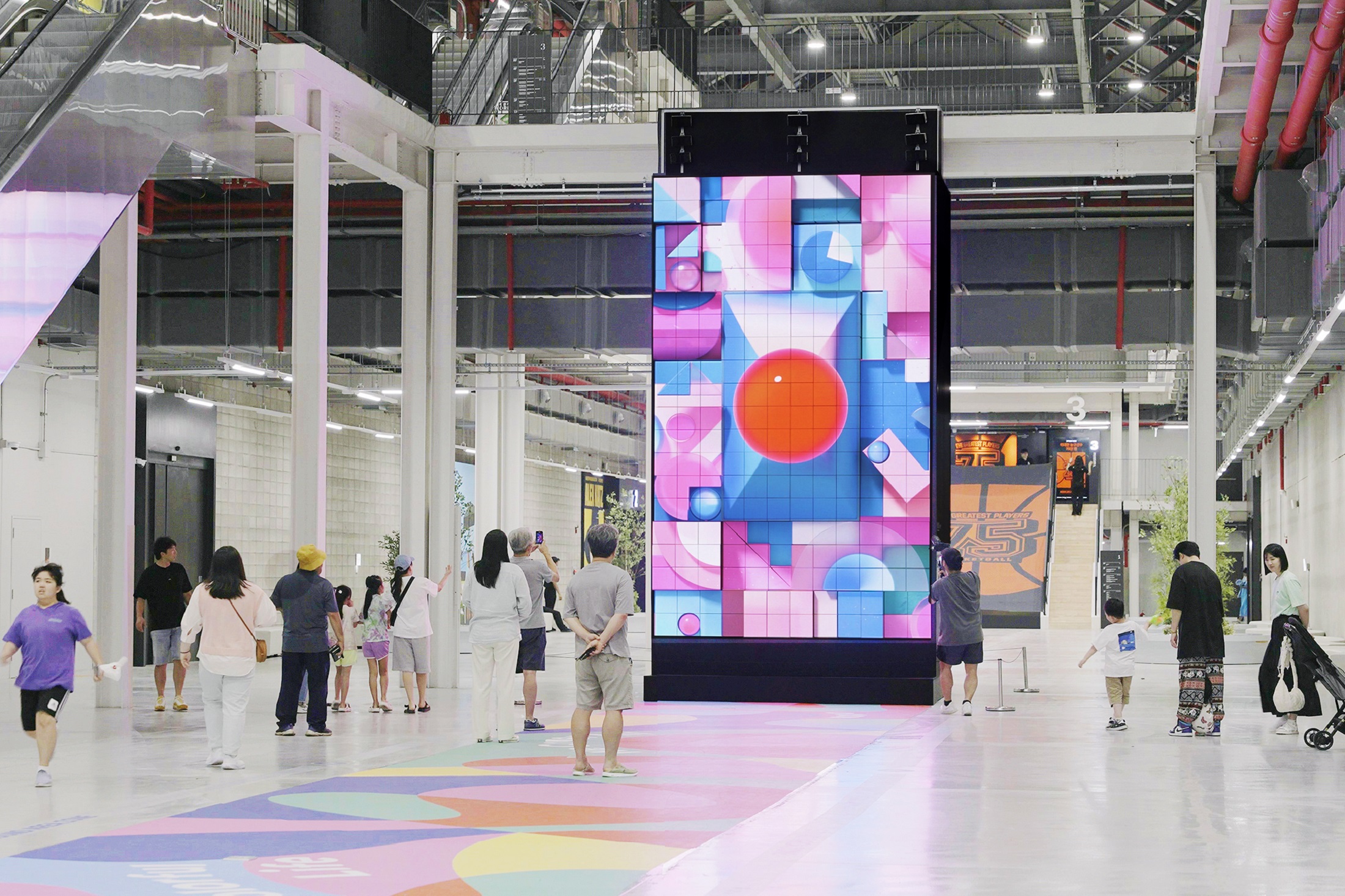
3D LED Video Wall’s Optical Illusions and Surface Fidelity.
The advantage of 3D LED video walls lies in their ability to present ultra-high-definition visual content on a stable plane. With advanced rendering engines and perspective mapping technology, designers can create realistic 3D effects. These effects typically rely on shadow gradations, motion parallax in animation, occlusion effects, and carefully controlled camera angles.
Because the display surface is fixed, pixel pitch can be minimal. This allows for exceptional clarity in product images, texture details, and fonts. In retail environments or corporate spaces where clear, close-up brand information is crucial, 3D LED video walls offer a significant advantage.
Therefore, when comparing the visual effects of dynamic LED displays and 3D LED video walls, the differences are apparent:
- Kinetic LED displays can present realistic geometric changes and a tangible sense of depth.
- 3D LED video walls offer acceptable image resolution and complex visual effects.
- Both solutions are powerful tools, but their strengths serve different experience priorities.
Kinetic LED Display Technology Architecture and Scene Selection
Beyond aesthetics, choosing between kinetic LED displays and 3D LED video walls requires technical evaluation. Performance reliability, installation complexity, content production processes, and cycle costs must all be considered to ensure compliance with project requirements.
Technical Performance Comparison
From an engineering perspective, both systems utilize the same core LED technology, but their structural designs introduce unique technical variables.
Pixel Density and Resolution
3D LED video walls typically support ultra-fine pixel pitches, sometimes even less than 1.5 mm. This makes them ideal for environments requiring close-up viewing and fine visual communication. Because the system remains stationary, achieving seamless panel alignment and consistent calibration is relatively easy.
In contrast, kinetic LED screens integrate motion mechanisms behind or inside the LED modules. These mechanical components require structural spacing and reinforcement, which affects pixel pitch configuration. While modern dynamic systems can still achieve high-resolution output, their primary visual advantage lies in stereoscopic transformations rather than microscopic image details. Therefore, if image sharpness is the primary metric, 3D LED video walls may be more advantageous. If spatial awareness and dynamic effects are the primary considerations, kinetic LED displays are a better choice.
Content Creation Workflow
Content development for kinetic LED displays requires interdisciplinary collaboration. Designers must coordinate the timeline of physical motion with digital animation sequences. This process involves mechanical safety parameters, acceleration curves, and synchronization control protocols.
While this workflow is more complex than producing standard LED video content, it offers unique storytelling capabilities. Designers can meticulously choreograph reveal sequences, interactive transformations, and multi-layered performances, seamlessly blending light, sound, and motion. In contrast, the content of 3D LED video walls is more standardized. Creative teams rely on mature 3D modeling software and media servers. Its workflow is efficient and scalable, making it suitable for large advertising networks or frequently updated promotional campaigns.
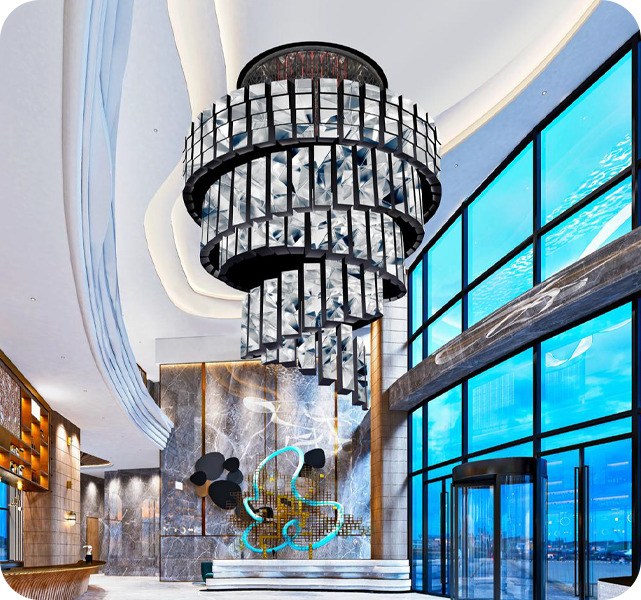
Lifecycle Management
From a user’s operational perspective, dynamic installations require more in-depth structural planning. Engineers must assess load-bearing capacity, the impact of dynamic movement, and safety compliance. Calibration during installation is also more meticulous, as mechanical movement must perfectly align with the visual content.
Maintenance of kinetic LED displays includes electronic maintenance and mechanical inspections. Actuators, bearings, and moving parts require regular evaluation. However, thanks to industrial-grade components and preventative maintenance programs, system reliability remains consistently high. Since 3D LED video walls are static, mechanical risks are lower. Maintenance primarily focuses on LED module replacement and controller upgrades. Therefore, their lifecycle management may be more straightforward and more predictable.
Ultimately, which should you choose?
The choice between kinetic LED displays and 3D LED video walls should be aligned with the intended use case and objectives. If the goal is to create a landmark installation that transforms the architectural space and engages audiences from multiple angles, then kinetic LED screens are unparalleled in their emotional impact. If the primary objective is to deliver high-resolution advertising content on a large surface area, with predictable deployment and efficient content rotation, then 3D LED video walls remain highly effective.