
LED sphere rental transport and packaging need to be agreed upon before dispatch. A case that cannot fit the goods lift, a missing component or an unclear damage record can delay installation even when the shipment arrives on time. Confirming the packing plan early gives the event team time to resolve these problems. Start with the configuration that will actually travel. Confirm its packed dimensions, case inventory and handling instructions, then check the route from the loading bay to the display position. Keep the departure record available for the return journey so the crew can reconcile the same equipment after the event.
Match LED sphere rental packing to the ordered configuration
Our LED sphere rental range supports different diameters and pixel pitches, with floor-standing and hanging options. These choices give projects flexibility, but the transport plan must match the selected configuration, not the general product family. The published indoor P2 table lists one sphere per case for the 1 m, 1.5 m and 2 m models. It lists separate packing in six cases for the 2.5 m model and eight cases for the 3 m model. Use these as reference options; obtain the approved packing list for the exact order, including separately packed accessories.
Case quantity alone does not tell the venue team how to receive the shipment. Ask for the external dimensions and gross weight of every packed unit, plus the total shipment volume. Confirm if a case contains a complete assembly, several sections, or only supporting equipment. Do not derive packed weight from a screen-only specification. A larger display can involve more packages and more reconciliation at the destination. The crew needs a way to confirm that every required item has arrived before assembly starts. Finalise that inventory together with the equipment order.

Check the venue route for your rental LED sphere
Send the venue team the packed dimensions before booking delivery. Check the loading entrance, door openings, lift dimensions, lift capacity and the final approach to the installation area. Include turns and staging space: a package may pass through a doorway but still lack room to change direction afterwards. Confirm which equipment and personnel will unload and move the cases. Have the supplier identify the approved handling points and orientation, then have the venue team confirm a suitable handling method. Keep transport restraints and lifting arrangements within the supplier and qualified site teams’ approved procedures.
The installation format also changes the inventory. A floor-standing configuration needs its specified base and associated components at the venue. A hanging configuration needs the approved suspension equipment and coordinated access to the installation area. Confirm which party supplies each item and where it appears in the packing list.
Protect the spherical LED surface during transport
The rental product includes GOB module surface treatment. This adds a protective layer over the LEDs, which matters when the display is handled repeatedly. Keep its role separate from packaging: cushioning, component restraint and approved handling still need their own checks. Ask the supplier to show how the packaging supports each component without placing unintended pressure on the display face. Confirm the position of loose accessories, how exposed edges are treated, and how parts are kept from moving inside the case. Request photographs of the approved arrangement for the crew’s reference on return.
For projects requiring formal packaging validation, the ISTA transport package test procedures distinguish screening tests from simulations of transport hazards. Ask a packaging specialist to select an appropriate procedure for the shipment. Request the relevant report if the purchase agreement includes performance testing; a flight case does not establish certification.
Use an LED sphere packing checklist before dispatch
Give the dispatch and receiving teams the same inventory, with a case reference against every equipment group. The checklist should explain what must be present, how to identify it and what record will be used if something is missing.
| Equipment group | Confirm before dispatch | Receiving record |
| Sphere components | Model, component IDs, quantities and case locations | Count and visible condition by ID |
| Base or suspension parts | Approved installation inventory and supplying party | Required components present |
| Control equipment | Controller, playback devices and approved configuration | Model IDs and included files |
| Power and signal cables | Specified cable list, lengths and connection references | Counts and visible connector condition |
| Spares and accessories | Approved types, quantities and storage locations | Match against supplied inventory |
| Cases and protective inserts | Case IDs, packing photos and return layout | Exterior condition and retained inserts |
Agree on the reporting contact and shortage process before the truck leaves. Include the latest approved inventory with the shipment records so the receiver does not compare delivery against an earlier quotation or a superseded equipment list.

Event cases show why delivery details need project review
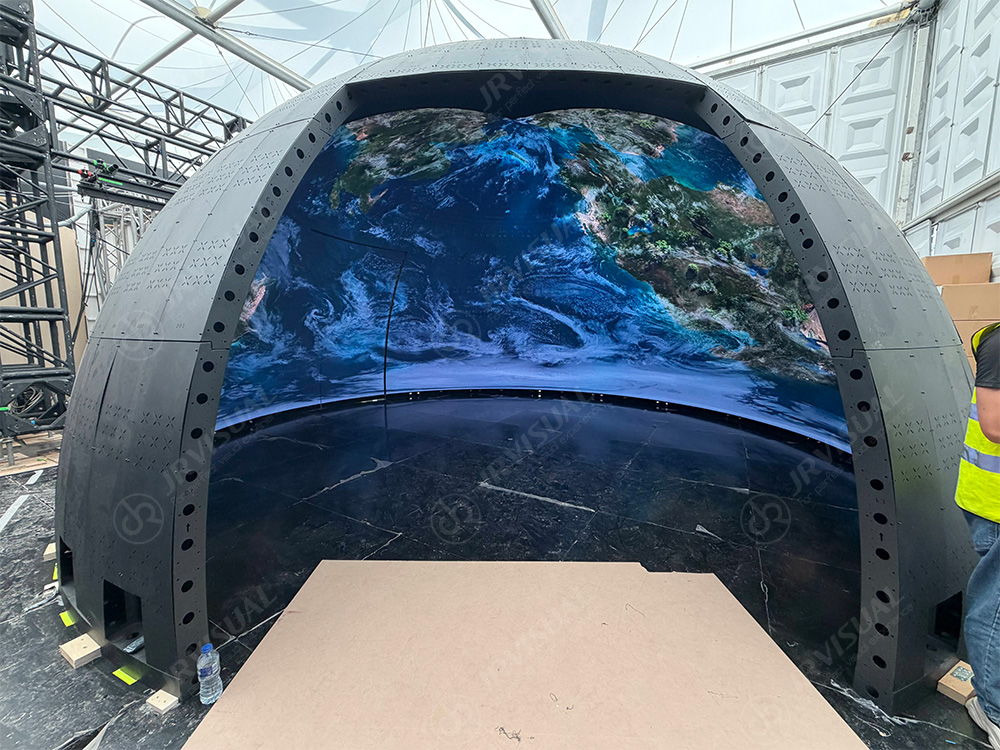
The SABIC year end meeting project used a 2.5 m diameter P2 indoor sphere in Dammam, Saudi Arabia, in December 2023. It provides a real reference for a spherical display used as a corporate-event centrepiece. For a future project of a similar scale, request a complete dispatch inventory and a venue route review early in planning. The Etisalat GITEX 2023 project in Dubai used a 1.5 m diameter P2 sphere in October 2023. It provides an exhibition-booth reference at a different diameter. A smaller display still needs a confirmed delivery slot, equipment inventory and return arrangement.
For either event format, put the screen configuration and delivery requirements in the same brief. Confirm the case count, freight arrangement and available assembly window for the new project. Use a reference installation to explain the intended application, then verify the logistics against the equipment and venue being proposed.
Inspect LED sphere delivery before approving event use
Record the exterior condition of the cases before unpacking. Compare their IDs and quantities with the dispatch list, photograph visible damage and follow the agreed reporting process. Store protective inserts and packing materials where the crew can retrieve them during dismantling. After unpacking, check the visible condition of components without improvising repairs. Have the installation team assess any damage before use. Once the system is assembled and approved for energisation, have the technician run the agreed display checks, including solid colours, gray levels and the event content.
Use the project’s acceptance criteria when assessing the image. Record missing items, visible faults and any approved corrective action. A successful power-on alone does not confirm that the delivered equipment is complete or that its display surface is acceptable for the show.
LED sphere rental transport and packaging include return planning
Reserve time after the event for the approved shutdown, dismantling and repacking sequence. Assign responsibility for counting components and checking each case against the original inventory. Separate and identify any item awaiting repair so it cannot disappear into general stock. Use the approved packing photographs to restore each component to its assigned position. Check that protective inserts are present and that cables or accessories cannot press against the display face. Record the condition and quantity of returned equipment before handing the cases to the carrier.
Before confirming the order, agree the selected sphere, packing list, venue route, receiving checks and return responsibilities. When reviewing the plan with an LED display supplier, include the event schedule so the proposed configuration and delivery scope can be assessed together. A rental booking is ready to proceed when the product and every stage of its movement have an identified owner and an approved plan.