
Static screens suffer from visibility issues. In retail aisles, exhibition halls, and event venues saturated with visual information, flat-panel screens displaying looped content no longer capture people’s attention as effectively as they once did. Kinetic LED displays offer a direct solution to this problem. These screen systems not only display content but also move physically while in operation. This shift is significant because dynamic effects capture attention in ways that simple brightness and resolution cannot. As the technology has matured, dynamic displays have evolved from novelty installations into essential commercial infrastructure.
The Technology Behind the Movement
A kinetic LED display integrates mechanical components — motors, transmission systems, or modular joinery — directly into the screen structure. The LED panels themselves function like any high-resolution indoor display, but the housing around them is engineered to rotate, reconfigure, or shift orientation in real time. The mechanical layer is what separates kinetic systems from standard video walls. Content and structure move in sync. The display changes physical shape as part of the content sequence. Folding panels or orbiting screens are real mechanical movements, not just software effects. They’re physical events happening in the room. Control is handled through a combination of standard LED signal processors and a dedicated motion control layer. The two systems operate in sync, which is what allows content timing to align precisely with mechanical movement.
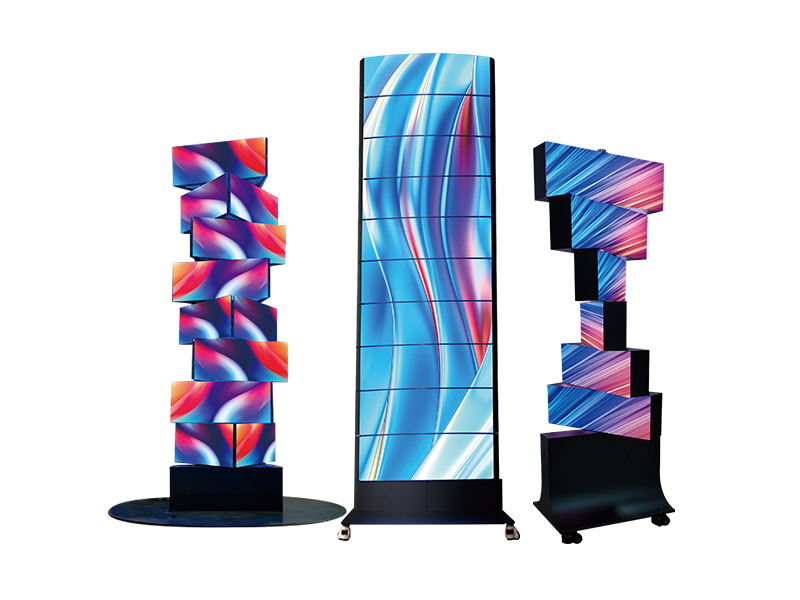
DNA Rotating LED Screen vs. 3D Kinetic LED Screen
The kinetic LED display category currently centers on two distinct system architectures. They share the same core appeal — motion plus content — but serve different spatial requirements and visual outcomes.
DNA Rotating LED Screen
The DNA rotating LED screen uses an intelligent mechanical transmission system to drive synchronous rotation across multiple panels. Screens can orbit, ripple, or spiral through space in coordinated sequences while running continuous video output.
Pixel pitch ranges from 1.2mm to 2.0mm, covering close-range boardroom environments through mid-distance retail installations. Screen types include double-sided flat panels and double-sided curved panels — the dual-sided format delivers content on both faces simultaneously, which is critical for installations where viewers approach from multiple directions.
Individual panels can be programmed to follow independent angular paths rather than rotating in unison. That independent motion control is what produces the layered visual complexity — something no static or conventional motion-graphics display can replicate.
3D Kinetic LED Screen
The 3D kinetic LED screen uses a modular splicing architecture rather than rotation. Panels are arranged into three-dimensional configurations — staggered grids, suspended geometric forms, or dynamic structures that open and close on cue.
Two standard configurations are available: 640×480mm panels at P1.98mm pitch using 160×160mm modules, and 500×500mm panels at P1.9mm or P2.6mm pitch using 250×250mm modules. The modular format scales from a compact boutique display to a multi-story atrium installation without redesigning the core system.
The standout capability is coordinated “content plus form” transformation — the physical shape of the installation changes in sync with the content playing on it. That synchronization is what creates the stopping power that retail and event clients are specifically purchasing.
Where Kinetic LED Displays Deliver the Strongest Impact
Commercial retail remains the most established use, with mall atriums providing the perfect setting: vertical space, high foot traffic, and an engaged audience. A rotating LED installation above a brand zone becomes a destination, not just a screen.
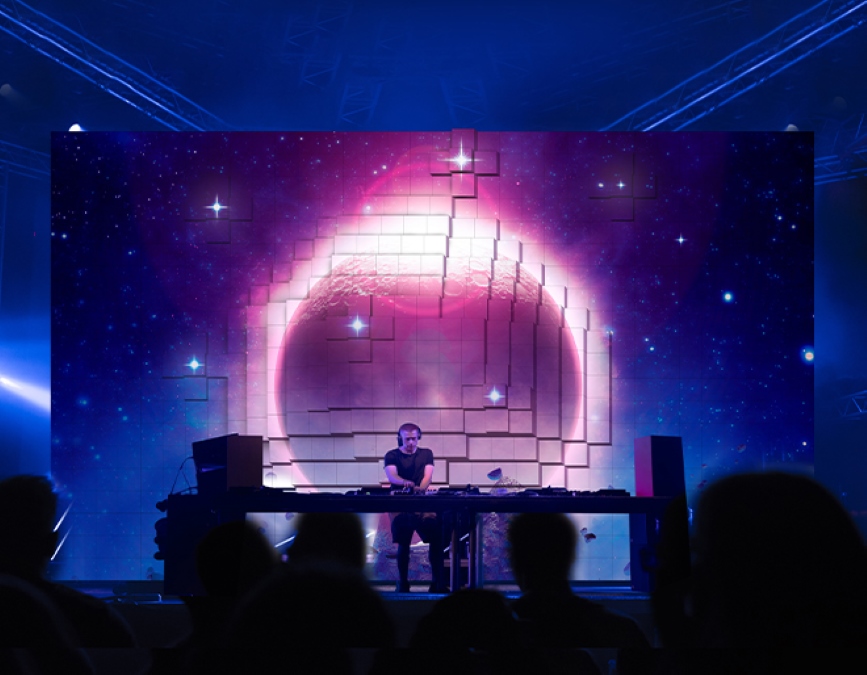
Event marketing boosts demand for 3D kinetic systems, with product launches using them as stage backdrops that change between segments, reinforcing brand identity through movement, not just content. In pop-up formats, the motion naturally generates social media content. A transforming display gets filmed; a static screen doesn’t.
Cultural tourism and exhibition design are growing fields. DNA rotating screens in heritage sites and museums bring visual storytelling to life, showing historical evolution through movement, not fixed panels. Theme parks now view 3D kinetic installations as permanent features.
Corporate showrooms and tech pavilions use kinetic LED displays to showcase innovation, making the display itself proof of engineering capability before any product or slide is shown.
Specs That Drive the Right Purchase Decision
Pixel pitch is the starting filter, and it should be selected based on the primary viewing distance:
- 1.2mm–1.5mm — Close-range environments: boardrooms, high-detail brand activations, spaces under 3 meters viewing distance
- 1.8mm–2.0mm — Standard retail and exhibition settings, 3–6 meter viewing range
- 2.6mm — Larger installations where the primary viewing distance exceeds 6 meters
What Real-World Installation Requires
Kinetic LED display imposes structural demands that standard LED wall installations don’t. The mechanical components generate dynamic loads — forces that shift and cycle during operation — which require a dedicated structural assessment of the mounting environment. Standard ceiling mounts and trusses cannot support kinetic hardware unless modified. We first calculate load distribution and vibration tolerance for each site before ordering hardware. On the positive side, the modular design supports fast assembly and disassembly, which is why kinetic displays are practical for temporary event deployments, not only permanent installations. That said, the motion control layer requires calibration and synchronization testing before any live event or public opening — budget time for that in the project schedule.
The Screen That Changes Shape Changes the Conversation
In most LED product categories, specifications—such as pixel count, brightness, and refresh rate—serve as key differentiators. Kinetic LED display, however, compete based on their dynamic performance.
The key considerations extend beyond resolution alone. We also account for the dynamic effects created after installation, how we choreograph content with physical movement, and the structural needs of specific venues. While this requires a more complex specification process, this very uniqueness gives kinetic display technology its edge in environments where visual impact directly delivers measurable results.