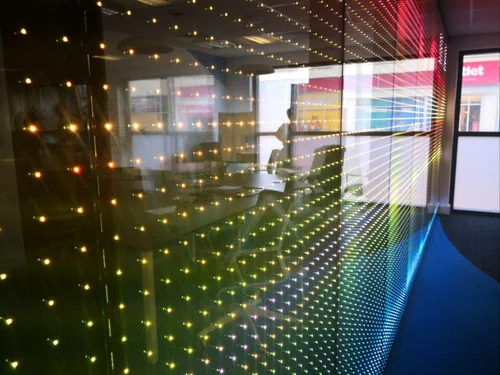
Integrating digital displays into transparent glass surfaces is undoubtedly an innovative idea. Still, technological limitations have led to either obstructed views through opaque screens or to sacrificing image quality for partial transparency. See-through LED Display offers a balance between these two approaches. By embedding precisely designed LED pixels into lightweight, open-structure panels, transparent displays can now present dynamic visual content without obstructing views or natural light.
Generally, traditional LED displays rely on dense pixel layouts and enclosed enclosures, while See-Through LED Displays prioritize optical transparency. Advances in LED miniaturization, energy efficiency, and signal processing technologies have enabled displays with up to 90% transparency. These displays are no longer just visual novelties; they are already being used in many buildings.
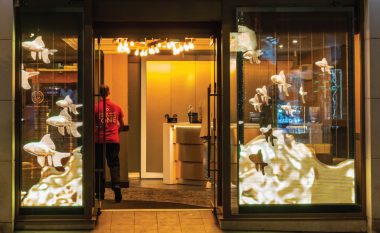
For example, when you walk past a glass shop window, vivid and realistic animated content is seamlessly displayed, offering an unobstructed view of the store’s interior. Beyond these applications, the latest See-Through LED Display integrates smart technologies, enhancing interactivity, energy efficiency, and installation flexibility. This perfect combination makes these displays both aesthetically pleasing and highly effective communicators.
Pixel and Module Development in See-Through LED Display Technology
Traditional LED displays maximize image density to eliminate gaps between pixels, but this completely blocks light. In contrast,
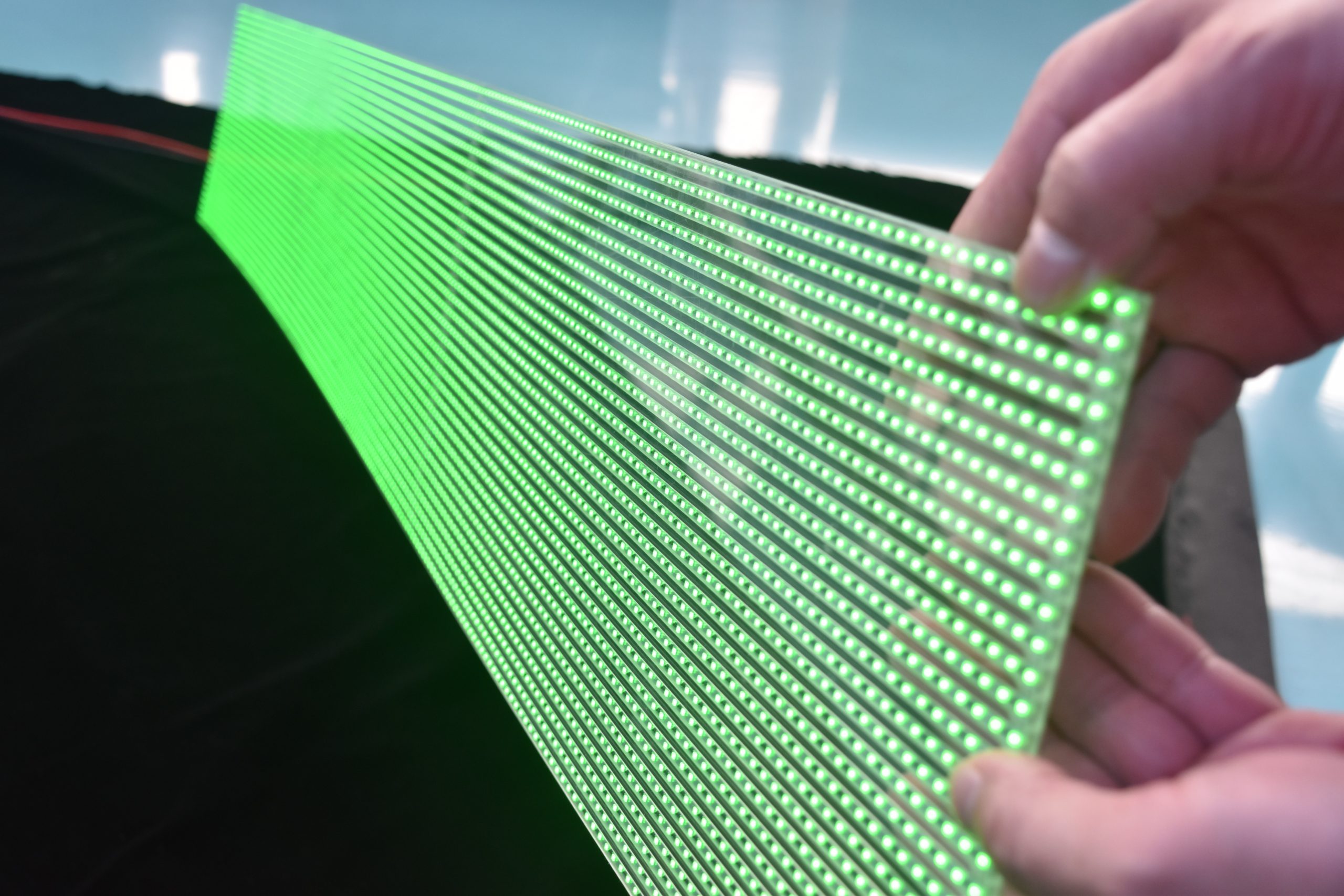
See-Through LED Displays achieve sufficient pixel density for clear readability by carefully spacing LEDs.
The layout of micro-LED packaging and precision soldering technologies allows for smaller pixel pitches without compromising transparency, resulting in clearer images at closer viewing distances. Furthermore, ultra-thin LED chips with optimized emission angles reduce light scattering, improving contrast and color accuracy from multiple viewing angles.
Meanwhile, transparent LED modules now employ high-strength, low-visibility support structures, minimizing visual interference.
Double-layer PCB structures separate power and signal transmission, improving stability and reducing electromagnetic interference. These improvements enable the See-Through LED Display to maintain stable performance in large-scale installations, something difficult to achieve with earlier transparent displays.
Intelligent Control in See-Through LED Display Solutions
Modern See-Through LED Display features high-refresh-rate controllers, distributed signal processing, and intelligent calibration systems. These ensure smooth motion and uniform brightness on the transparent surface. These characteristics are particularly important because uneven brightness is more pronounced on transparent displays compared to opaque screens.
Integrated sensors and intelligent control software adaptively adjust brightness based on ambient light conditions. During the day, the display increases brightness to maintain visibility; at night, it reduces brightness to avoid glare and light pollution. Content scheduling and remote management platforms further support centralized control across multiple locations, making the See-Through LED Display suitable for large commercial networks.
Energy Optimization and Structural Efficiency
Energy consumption has always been a focus for
large LED displays. See-through LED Display addresses this challenge by improving both electronic and structural efficiency. Because the LEDs are distributed rather than densely packed, their overall power consumption is naturally lower than that of traditional LED screens with the same surface area.
Innovative low-voltage drive circuitry and efficient power supplies further reduce energy loss. Some See-Through LED Displays employ intelligent power distribution technology that adjusts power consumption based on content brightness and the effective display area. This approach minimizes unnecessary energy consumption while maintaining consistent image quality.
Meanwhile, lightweight aluminum alloys and composite materials reduce load requirements, making transparent displays suitable for glass curtain walls and suspended installations. The reduced weight not only simplifies installation but also lowers long-term maintenance costs.
Architectural Adaptability and Design Freedom
The see-through LED Display also opens new possibilities for architectural design. Transparent panels can be seamlessly integrated into curtain walls, atriums, and glass railings without altering the original architectural intent. They also do not affect the openness of the overall layout or natural lighting.
Customizable panel sizes allow the displays to adapt to curved or irregular surfaces. Reduced reflections and glare ensure visual comfort even in bright environments. When not displaying content, the screen is almost completely invisible. This adaptability makes the See-Through LED Display an ideal solution for projects that balance aesthetics and functionality.
See-Through LED Display Expands Commercial and Retail Applications
In retail environments, transparent screens allow brands to showcase dynamic marketing campaigns while maintaining visibility of merchandise and interior spaces. This multi-layered visual experience enhances customer interaction without disrupting the store layout.
In some entertainment venues, a See-Through LED Display blends digital content with the physical environment, creating an immersive atmosphere. From interactive menus to real-time visual effects, transparent displays are the backbone of these experiences. Meanwhile, transportation hubs and exhibition centers also benefit from transparent displays, which convey information while maintaining spatial transparency.
Compared to traditional LED displays, transparent solutions have broader application potential in environments with extremely high requirements for visibility, light transmission, and aesthetics. This versatility explains their increasing popularity in high-end commercial projects worldwide.
See-Through LED Display Leads the Revolution in Visual Communication
Through advancements in pixel design, intelligent control, energy optimization, and structural engineering, See-Through LED Displays have surpassed the performance of traditional LED screens in scenarios where openness and visual integration are crucial.
Combining high transparency, reliable brightness, modular flexibility, and intelligent system compatibility, See-Through LED Display expands the application of digital media in architectural and commercial spaces. With continuous technological innovation, these displays are expected to become standard equipment in environments that balance visual impact and spatial clarity. For applications that require more than traditional LED technology, See-Through LED Display offers mature and future-oriented solutions.