
Control rooms need a display wall that helps operators read information quickly during long shifts and fast-changing situations. Maps, camera feeds, dashboards, alerts, and system status often appear on the same screen. Poor detail, visual gaps, or uneven brightness can slow daily work. A COB LED screen can support closer viewing and long operating hours. Buyers should still check monitoring needs, data visibility, installation conditions, and long-term performance before choosing one.
What are the requirements for display walls in a control room?
Operators spend full shifts checking video feeds, alerts, maps, data panels, and status signals. Visible seams, uneven brightness, or blurry details can slow them down. The screen also needs to match the actual viewing distance. If operators sit close to the wall, small labels, thin map lines, and dense dashboards must stay easy to read. A fine-pitch COB LED screen creates a smoother viewing surface, keeps key information clear from normal seating positions, and supports better brightness uniformity across the full wall.
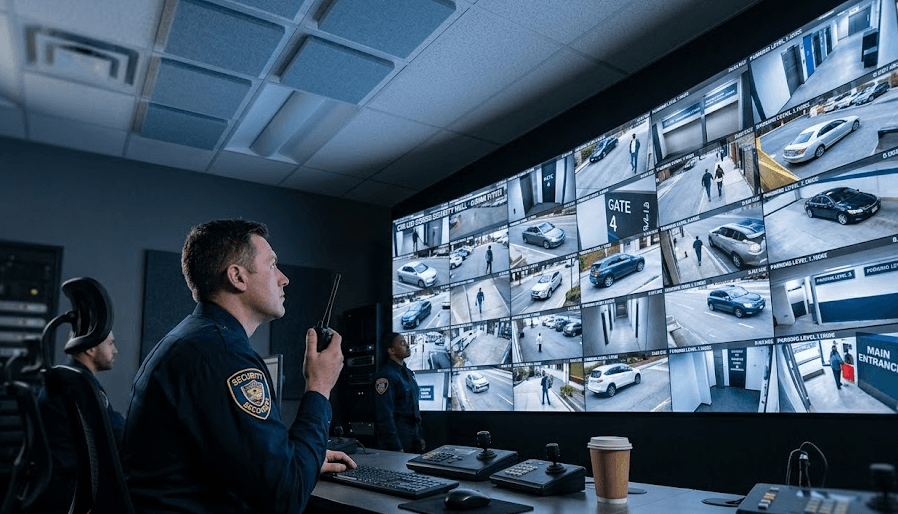
Why a COB LED Screen Performs Well in Control Rooms?
COB LED screens use chip-on-board packaging technology. This design mounts LED chips directly onto the substrate. Compared with many traditional SMD LED designs, this structure yields a flatter, more durable display surface. JR Visual describes COB displays as ultra-fine-pitch, impact-resistant, and highly color-accurate. The displays also support wall-mounted, ceiling-mounted, and recessed installations. This construction works well in control rooms because displays often run around the clock. Teams may also need to clean, maintain, or work close to the wall.
COB displays resistance to impact, scratches, vibration, and dust. They also help reduce long-term maintenance costs by over 30%. Seamless splicing also improves control room operations. Operators typically use display walls to present large maps, camera grids, flowcharts, and command interfaces. A cleaner splice effect helps this visual content appear as a single coherent surface. When teams need to quickly compare several information sources, they can scan the entire display wall more quickly.
How a COB LED Screen Improves Real-Time Data Visibility?
Real-time monitoring relies on rapid recognition. Operators need to detect color changes, read small labels, track routes, and compare several camera feeds. They should not have to guess what the screen shows. COB LED screens improve this process through fine pixel pitch, smoother detail rendering, and consistent brightness across the full screen.
JR Visual offers COB LED screens with pixel pitch options from 0.6mm to 1.8mm. This range helps project teams match resolution to viewing distance and content density. Color and grayscale performance also affect visibility. Indoor COB LED panels cover over 98% of the NTSC color gamut and support 16-bit grayscale. COB technology also helps reduce brightness inconsistency. These features help operators identify videos, alert levels, routes, zones, and status colors during long shifts. They also reduce visual confusion.
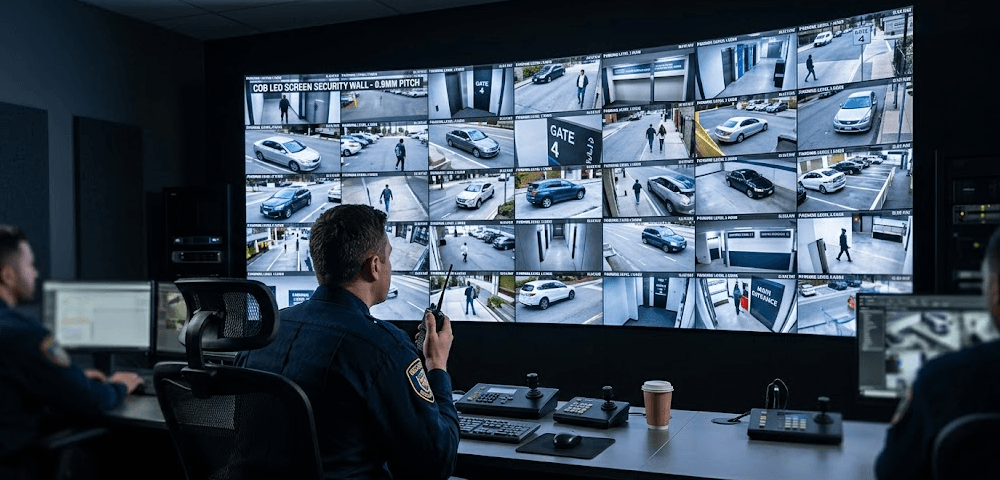
What factors should you consider before making a decision?
Start with viewing distance. Measure the distance between the operator’s seat and the display wall. Then determine the minimum size of text, lines, or data points that must remain legible. If the control room shows dispatch maps, factory process interfaces, transport routes, or dense dashboards, the project may need a finer pixel pitch. Next, confirm the screen size, cabinet dimensions, and content layout.
JR Visual’s COB LED display products use a 600 × 337.5 mm cabinet with a 16:9 aspect ratio. This specification supports standard video wall planning. Project teams should also address installation planning early. Before placing an order, check the wall structure, ventilation space, power supply, signal cabling, and maintenance access. JR Visual COB LED displays support wall-mounted, ceiling-mounted, and recessed installations.
A COB LED Screen Supports 24/7 Control Room Operation
Control room displays may run around the clock, so thermal management affects long-term performance. Prolonged operation affects brightness stability, component lifespan, and maintenance frequency. The integrated substrate design of COB LED displays improves thermal efficiency by 25% compared with SMD solutions. This helps maintain lower operating temperatures during continuous operation.
Better thermal performance gives the display system a stronger base for long running hours. It also helps reduce stress on components when the screen handles high-brightness content, real-time video, and multi-window layouts. Surface protection and cleaner splicing further support stable visual performance across different shifts. Control rooms should choose COB LED screens when projects require close-viewing clarity, reliable data visibility, a clean, large-screen display, and lower maintenance demands.