
Printed window decals have been the default for retail storefronts for decades — and it’s easy to see why—low upfront cost, quick turnaround, no technical setup. But more retail store owners are now asking whether LED transparent film is the smarter long-term choice. “Heap to start” and “cheap to run” are two very different things. The real decision isn’t which option costs less to buy — it’s which one costs less to live with.
The True Cost of Printed Window Decals Most Retail Owners Overlook
Static printed graphics feel economical until you start tracking how often they change. A spring promotion runs six weeks. Summer stock arrives next. A clearance sale follows, then the holiday window. That’s four full print-and-install cycles in under a year — each one carrying costs that most owners never add up in advance.
Why Reprinting Adds Up Faster Than You Think
Each printed decal cycle involves a design fee, print production, and professional installation. Those costs are incurred every time the window changes. For most active retail stores, that happens far more often than owners plan for. A store running six window updates per year pays those expenses six times over, not once. Rush print fees add up when a campaign launches at the last minute. Extended promotions create their own reprint delays. The bill keeps growing.
Hidden Costs Beyond the Print Shop Invoice
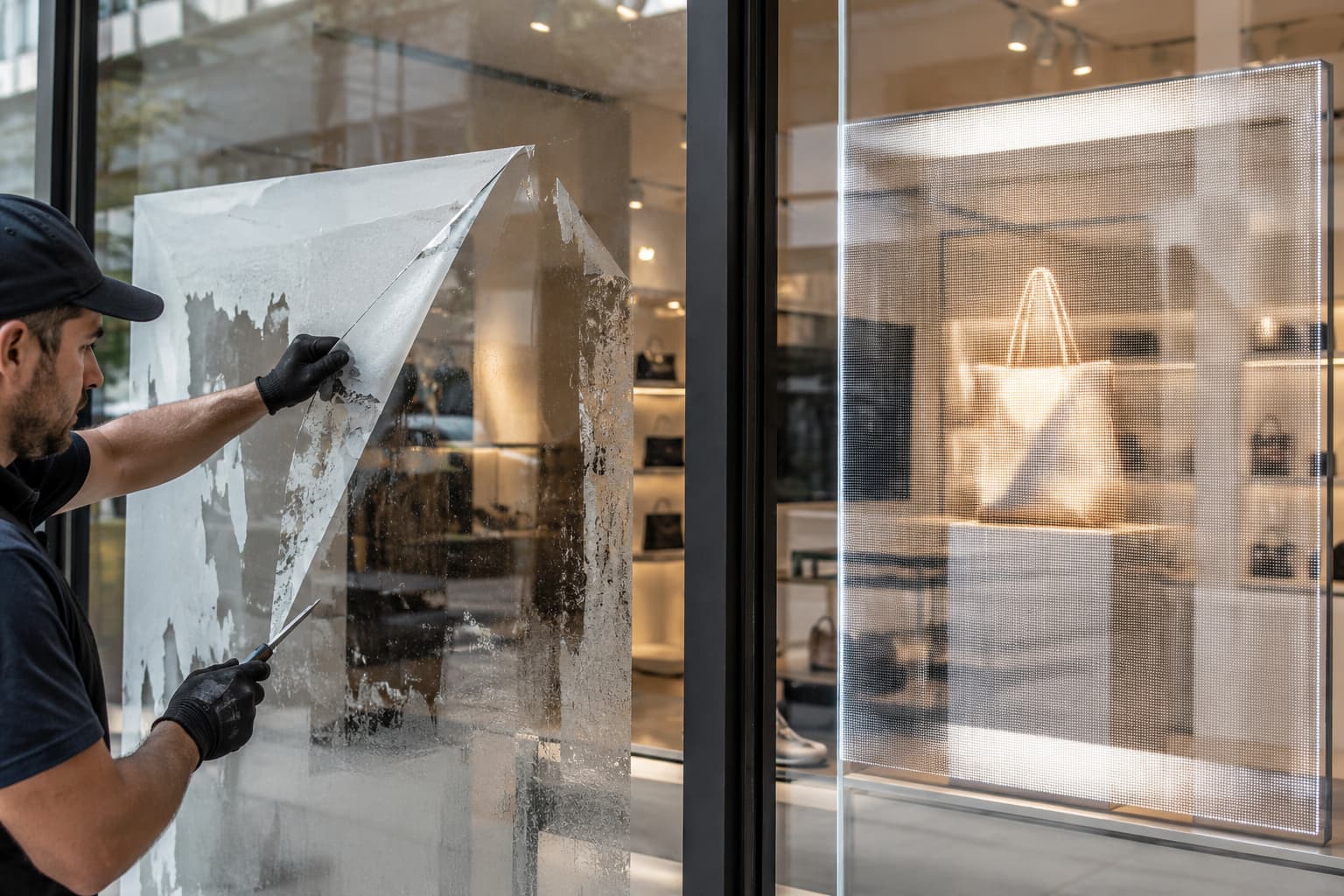
Removal causes problems most owners don’t see coming. Adhesive residue, micro-scratches from scraping tools, and coating damage all show up — especially on older glass. Each removal cycle incurs an additional service fee. On heritage retail fronts with specialist glazing, fixing adhesive damage costs significantly more. An outdated or blank window carries its own cost, too. When a promotion expires before the next one is ready, the storefront runs stale messaging or goes dark. Neither outcome helps foot traffic.
What LED Transparent Film Actually Costs Over Time
The upfront investment in LED transparent film is higher than that of a single decal print — that’s a straightforward fact. But the cost structure works differently. For retail stores that update their windows regularly, the long-term picture looks very different from the initial number.
Upfront Investment vs. Long-Term Savings
LED transparent film is a one-time installation. Hardware carries a 50,000+ hour rating. At eight hours of daily use, that’s over 17 years of operation before brightness degrades to end-of-life levels. The exact investment varies by window size, pixel pitch, and site requirements — every storefront gets a custom configuration. But that upfront cost never repeats with each campaign change. Stores running multiple promotions per year reach the break-even point faster than expected. Every skipped print cycle is a direct savings against the initial install.
How Content Updates Change the Cost Equation
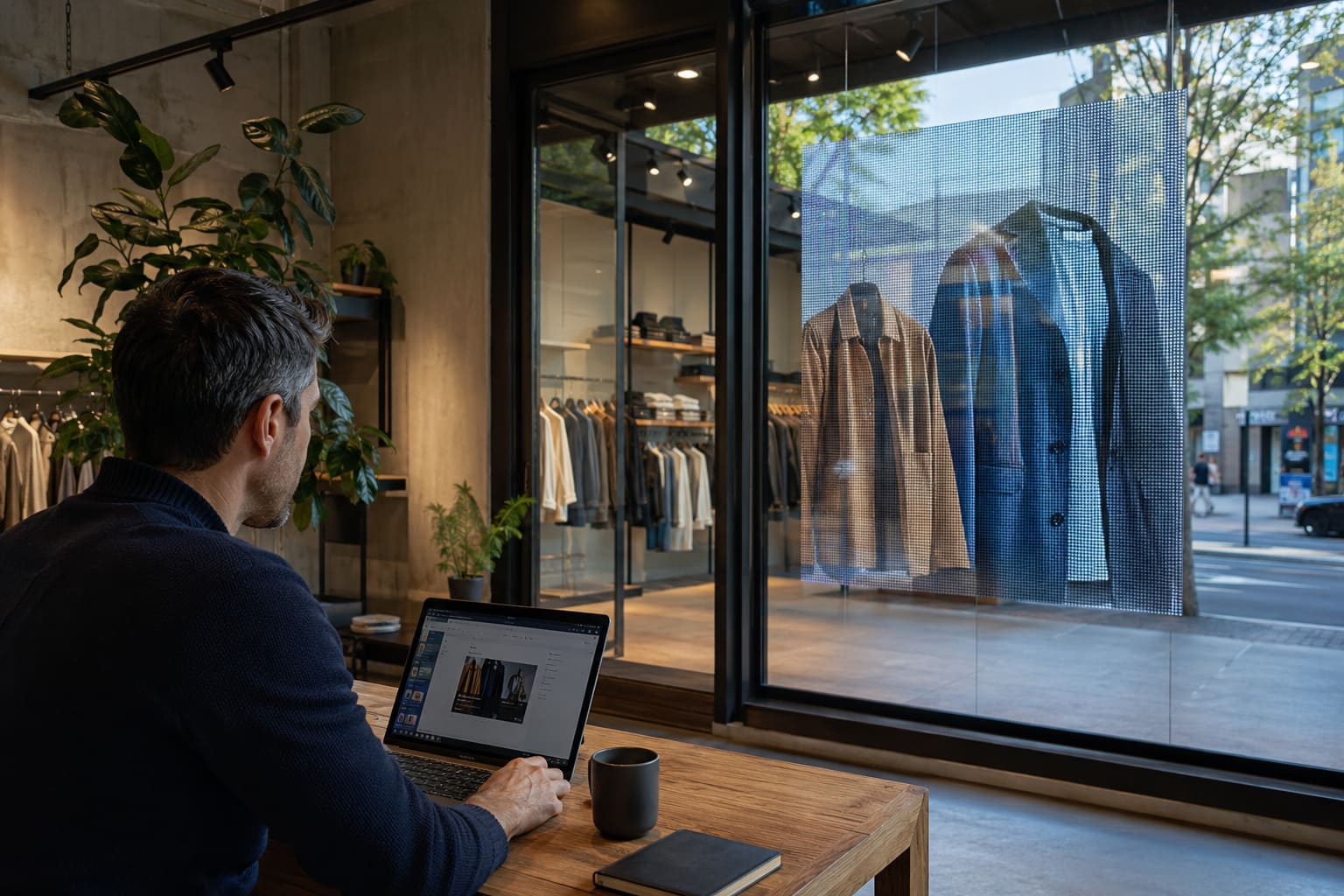
Once the LED transparent film is in place, content updates incur no material costs. Swapping a weekend promotion for a weekday offer takes minutes. Owners can respond to a competitor’s move or push a real-time message — no print shop, no production wait, no installation crew needed. Stores running a transparent LED display typically update window content several times per week. That frequency is financially impossible with printed decals. Fresh content gives passing foot traffic a reason to keep noticing a storefront they walk past regularly.
LED Transparent Film vs. Printed Window Decals: A Direct Comparison
Here’s how both options stack up across what matters most to a retail store owner:
| Printed Window Decals | LED Transparent Film | |
|---|---|---|
| Upfront Cost | Low | Higher (varies by size and spec) |
| Ongoing Cost | Repeats every update cycle | Near zero after installation |
| Content Flexibility | Static, one message at a time | Dynamic, update anytime remotely |
| Natural Light & View | Partially or fully blocked | 70–95% transparency preserved |
| Lifespan | Weeks to months per print | 50,000+ hours |
| Installation Disruption | Repeated with every change | One-time |
The ongoing cost gap is where the comparison shifts. Every content change involving printed decals incurs an additional expense. With an LED transparent film display, content changes are free — and that difference adds up fast across a full year of retail operations.
Why LED Transparent Film Wins for Most Retail Stores
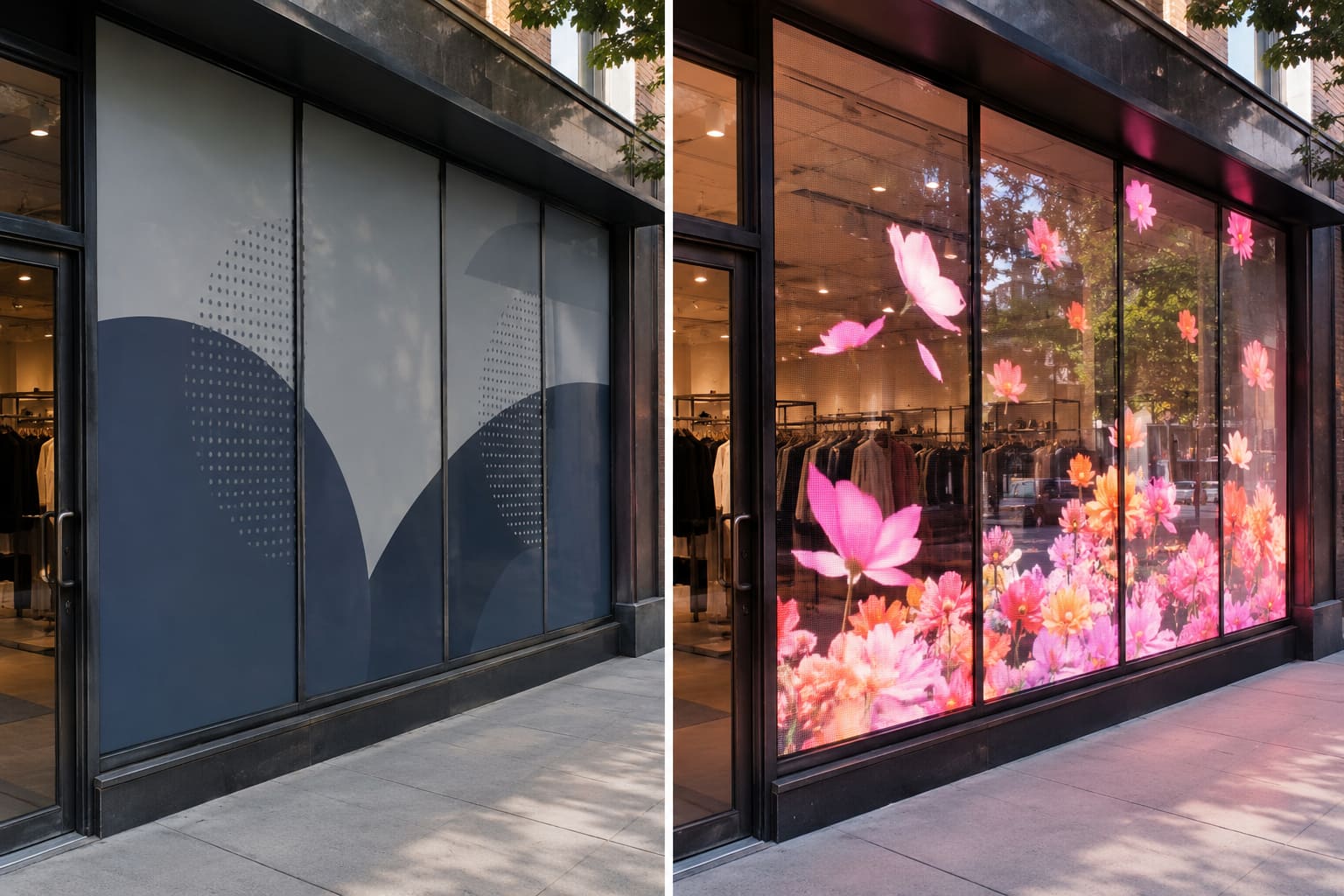
Printed decals still make sense in narrow situations — a single-location store with one annual promotion, or a pop-up running a fixed campaign. For those cases, print is a legitimate fit. For any retail store managing multiple promotions per year, seasonal stock cycles, or high-footfall locations where window impact drives walk-ins, LED transparent film delivers what printed decals cannot: the ability to stay current without paying for every change.
The visibility factor matters too. JR Visual’s transparent LED display range — including the TF Series and StarLink film — runs at 3,000 to 7,000 nits. Content stays clearly visible even in direct sunlight. Transparency rates above 85% keep the store interior open and inviting. The display becomes part of the storefront, not a barrier in front of it. For retail owners ready to stop treating window advertising as a recurring print budget, LED transparent film is a structural fix — not just an upgrade.