
Choosing pixel pitch for an outdoor advertising LED screen should start with viewing distance, not the smallest number on a spec sheet. A smaller pitch improves detail, but it also raises cost, power use, heat, and maintenance pressure. A mall entrance screen, a building facade screen, and a roadside billboard do not need the same pitch.
Start Outdoor Advertising LED Screen Planning with Viewing Distance
Pixel pitch is the distance between adjacent pixels. A P4 screen has 4mm spacing. A P10 screen has 10mm spacing. The smaller the number, the denser the pixels. For an outdoor LED advertising screen, viewing distance should guide the initial decision. If viewers stand close, they may notice pixel gaps, so a smaller pitch makes sense. If viewers stand 30 or 40 meters away, a larger pitch can still look clear.
Many buyers overspend here. A P3.91 screen may look better than a P8 screen from three meters away, but at a long distance, that difference may not justify the cost. The project still needs brightness, waterproofing, heat control, cabinet stability, and service access. For buyers comparing complete Outdoor LED Display solutions, JR Visual reviews pixel pitch alongside cabinet design, brightness, installation method, and long-term maintenance.
Match Outdoor Advertising LED Screen Pitch to Each Location
Different outdoor locations create different viewing habits. A storefront screen, a plaza screen, and a roadside screen each require a different pitch range.
Street-Level Outdoor Advertising LED Screen Needs Finer Detail
Street-level screens sit close to pedestrians. They appear on retail storefronts, mall entrances, and commercial street walls. Viewers may stand within 4 to 10 meters, so image detail matters more. For this type of outdoor advertising LED screen, P3.91 to P5 is often practical. It supports clearer product images, readable campaign text, and smoother brand visuals. If the pitch is too large, text edges may look rough.
Building Facade LED Outdoor Screen Can Use Medium Pitch
A building facade screen usually serves viewers from a longer distance. People may see it from across a street, a plaza, a parking area, or a commercial district. For shopping mall facades, office building exteriors, public square displays, and large commercial walls, P6 to P10 is usually more reasonable. It provides sufficient clarity for large-format advertising while controlling costs and power consumption. This range works well for large visuals, brand slogans, motion graphics, and video ads. For fixed-facade projects, JR Visual can match the screen structure, cabinet access, pixel pitch, and control setup across the building surface.
Roadside Outdoor Advertising LED Screen Usually Needs a Larger Pitch
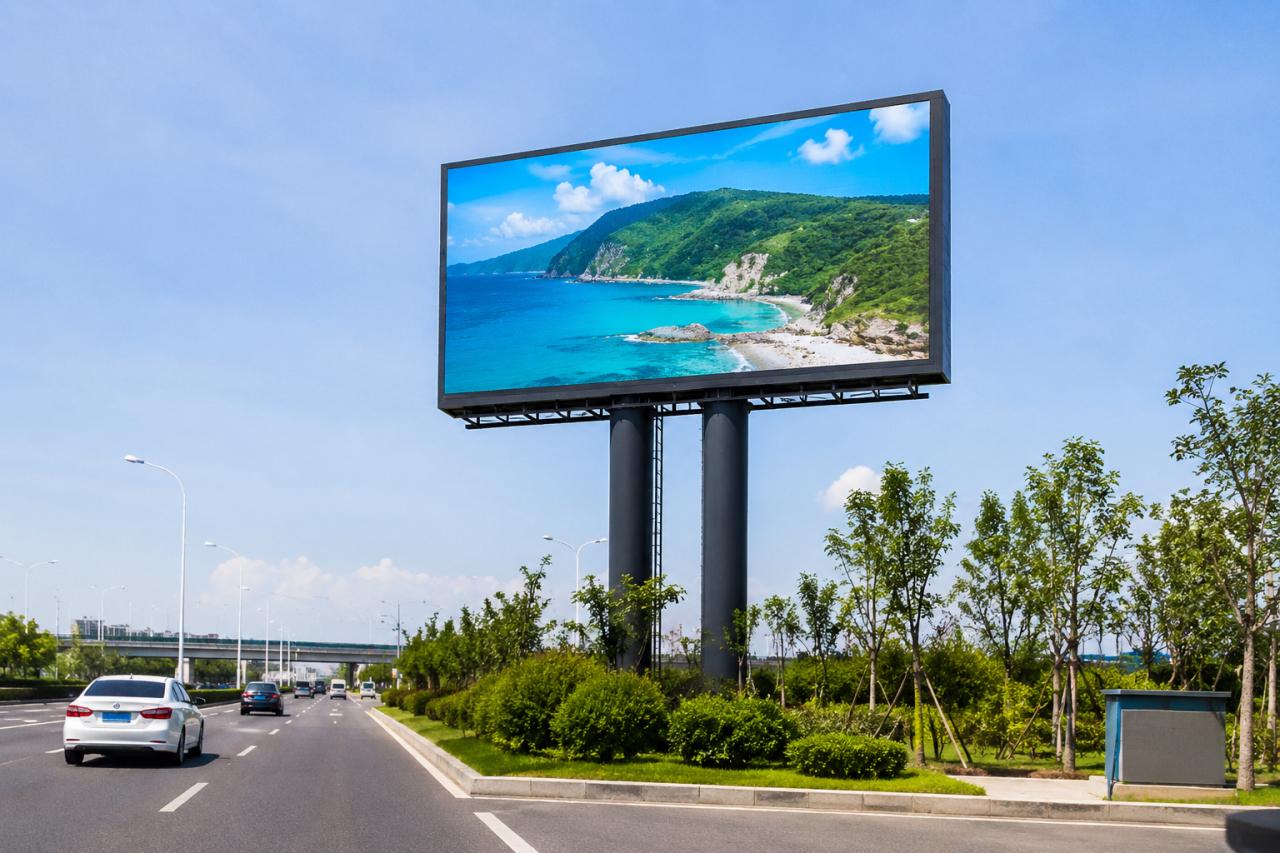
Roadside LED screens have a faster viewing pattern. Drivers and passengers pass them quickly, so the screen must communicate through bold visuals and short messages. Fine detail matters less than visibility and readability. For a large LED outdoor screen, P10 to P16 is often enough when the screen faces roads, parking areas, transport routes, or distant viewing zones. This range suits large text, simple slogans, brand logos, high-contrast video, and distance-based advertising.
Outdoor LED Display Size and Ad Content Can Change the Final Choice
Viewing distance gives the starting range, but screen size and content type can change the final decision. A small outdoor screen needs a finer pitch because the display area is limited. A large outdoor LED screen can often use a wider pitch because the screen itself carries the visual impact.
Content also matters. Product photos, brand typography, promotional details, QR codes, and short text need more pixel density. Big campaign visuals, motion graphics, brand videos, and simple slogans can often use a wider pitch. JR Visual’s outdoor LED display solutions are matched to content style, viewing angle, installation surface, and operating environment, so buyers do not pay for resolution they cannot actually see.
Check Outdoor Advertising LED Screen Conditions Before Confirming Pitch
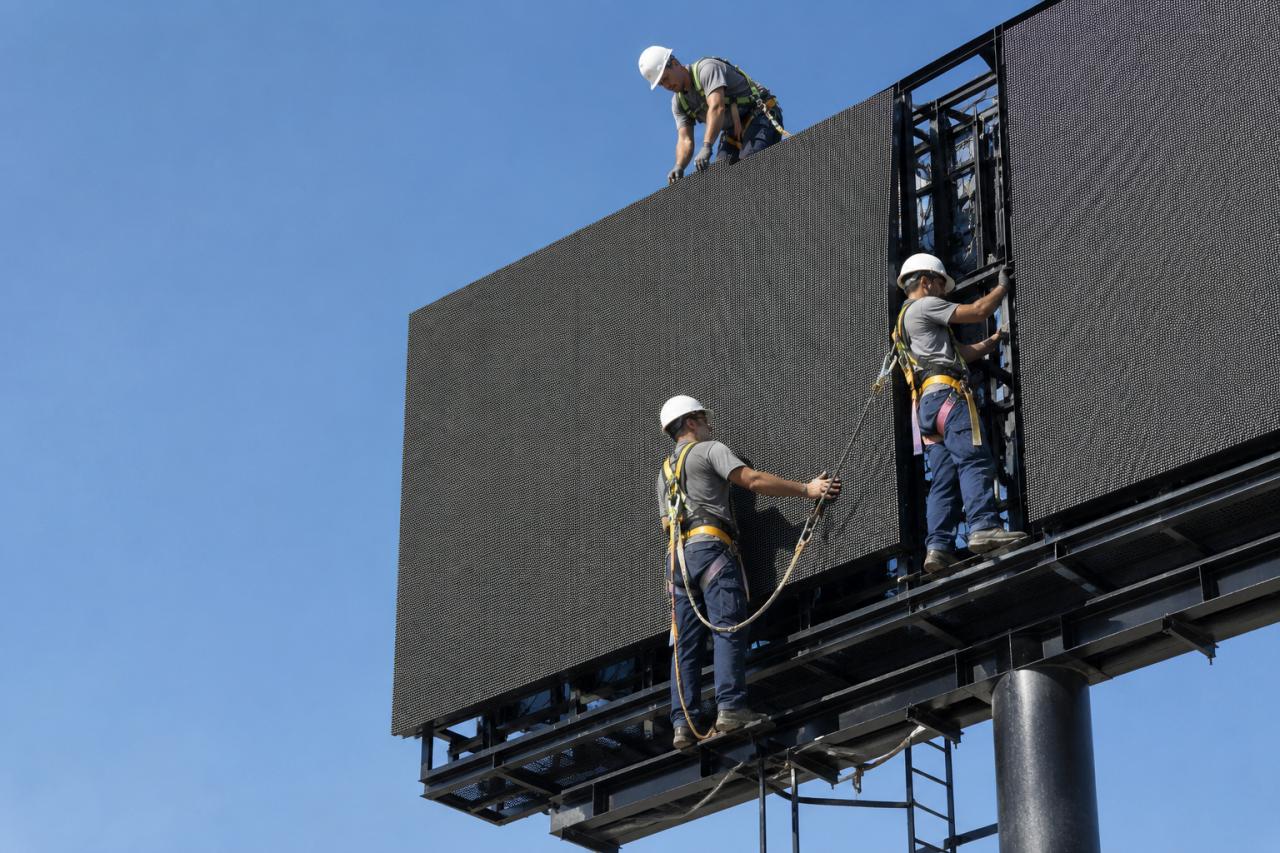
After choosing a likely pitch range, the project still needs one more check: the installation environment. Installation height matters. A high-mounted screen usually has a longer viewing distance, so it may not need a very small pitch. A screen near eye level needs more detail. Sunlight direction also matters. A south-facing or west-facing screen may receive strong direct sunlight, so brightness becomes part of visibility. The screen also needs weather protection, cabinet sealing, drainage, outdoor-rated power systems, heat control, and a suitable IP rating.
Maintenance access is another detail buyers often underestimate. For a large outdoor fixed installation project, a product such as the O-PT outdoor fixed installation LED display can be planned around wall structure, frame design, installation height, and service direction.
The Right Pixel Pitch Depends on Distance, Size, and Content
There is no single best pixel pitch for every outdoor advertising LED screen. For close-up viewing at storefronts, commercial streets, and mall entrances, P3.91 to P5 usually works better. For mall facades, building walls, plaza screens, and general commercial displays, P6 to P10 is often practical. For roadside billboards, high-mounted screens, and long-distance advertising displays, P10 to P16 can be enough. The right pixel pitch is not the smallest option. It is the pitch that makes the content clear at the real viewing distance while keeping project cost, power use, and maintenance workload under control. JR Visual can help match pixel pitch with screen size, cabinet structure, brightness, installation conditions, and future maintenance needs.