
A spherical screen can become the visual center of an event, showroom, museum or entertainment venue. The hard part is deciding how to build and use that LED sphere display. A touring production needs quick handling and repeatable setup. A permanent venue needs structural coordination, dependable access and content that remains effective after the opening week. The right decision starts before comparing quotations. Project duration, viewing distance, sphere diameter, indoor or outdoor use, mounting method and service access all affect the final configuration. Once those conditions are clear, buyers can judge an LED sphere by project fit instead of selecting it on shape alone.
Start With Project Duration and Deployment Frequency
The first question is how the display will operate during its working life. A screen used for a three-day exhibition faces different demands than one installed in a shopping mall for several years. Rental and fixed projects may use a similar spherical form, but their priorities differ. Rental projects usually involve transport, assembly, dismantling and another setup at a new site. Cabinet or module protection, packing, handling points, installation time and the consistency of repeated assembly deserve close attention. The production team also needs a clear plan for processing and testing content before each event.
A fixed installation removes repeated transport from the equation, but it adds building coordination. The project team must confirm available space, structural support, power and data routes, ventilation, maintenance access and the path for bringing components into the venue. A sphere that fits the finished room may still be too large for an elevator, doorway or installation route. Use duration alone does not settle the choice. A brand may purchase a reusable sphere for a busy exhibition calendar, while a venue may rent one for a short seasonal activation. Decide who will own, store, operate and maintain the screen. Those answers reveal which cost model makes sense.
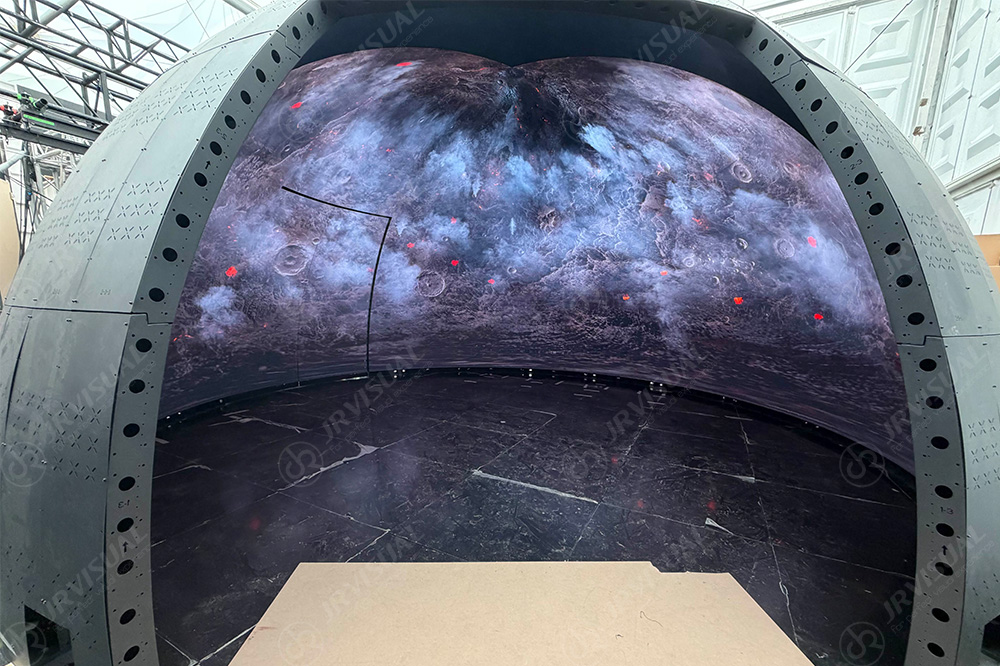
LED Sphere Rental Works Best for Repeated Event Use
An LED sphere rental configuration suits exhibitions, product launches, corporate meetings, concerts and temporary brand activations. It gives event teams a distinctive 360-degree visual form without committing the venue to a permanent structure.
Plan for Setup, Transport and Handling
Ask the supplier to explain the complete assembly sequence, crew requirements and expected setup time. Review the size and weight of transport cases, the number of components, cable labeling and the process for checking modules after delivery. A design that looks impressive in a rendering can slow down an event schedule when the loading route or rigging window is tight. JR Visual states that GOB LED module treatment can be used for rental. Buyers should ask how this treatment changes surface protection, module replacement and repair procedures. The answer matters when the screen will be packed, transported and assembled many times.
Match Ownership to the Event Calendar
Occasional users may prefer a project rental because storage, maintenance and utilization remain the provider’s responsibility. Production companies with frequent bookings can compare long-term rental costs against purchasing a reusable system. Include transport, cases, spare parts, processing equipment, labor and storage in that calculation. The screen price alone does not represent the full operating cost. Content preparation also belongs in the schedule. Spherical mapping distorts a flat image, especially near the top and bottom. Run a content test before the event and inspect the result from the audience’s main sightlines. Logos, faces and text need extra review because distortion is more obvious on familiar shapes.
A Fixed LED Sphere Installation Needs Building-Level Planning
A fixed spherical LED display fits atriums, museums, visitor centers, showrooms, entertainment venues and branded public spaces. It can work as a long-term media feature, but only when the screen, structure and building services are planned together.
Confirm the Structure Before Finalizing the Diameter
JR Visual offers floor-standing and hanging installation options. Each creates different engineering and viewing conditions. A floor-standing sphere needs a base that supports the display and controls public access. A hanging sphere keeps the floor open, yet it requires approved suspension points and a coordinated installation method. The display supplier should provide the information the project’s structural or rigging professional needs. The venue team should approve the support concept before production begins. Do not treat a ceiling attachment, secondary restraint or floor base as an item to solve after the sphere arrives.
Protect Access for Future Service
Permanent placement can make a simple repair difficult. Check how technicians reach modules, power supplies, receiving equipment and cable connections. If the sphere hangs over an escalator, water feature or occupied zone, the service plan may require access equipment and scheduled closures. Those costs should influence the mounting position. Power and data routes also need a clean path. Confirm where the controller will sit, how signals reach the display and how the installation handles shutdown and restart. For an outdoor project, ask the supplier to document the enclosure protection required for the site. The IEC 60529 enclosure protection classification defines the IP Code used to describe protection against access, solid objects and water. The project team still needs to specify the rating appropriate for its conditions.
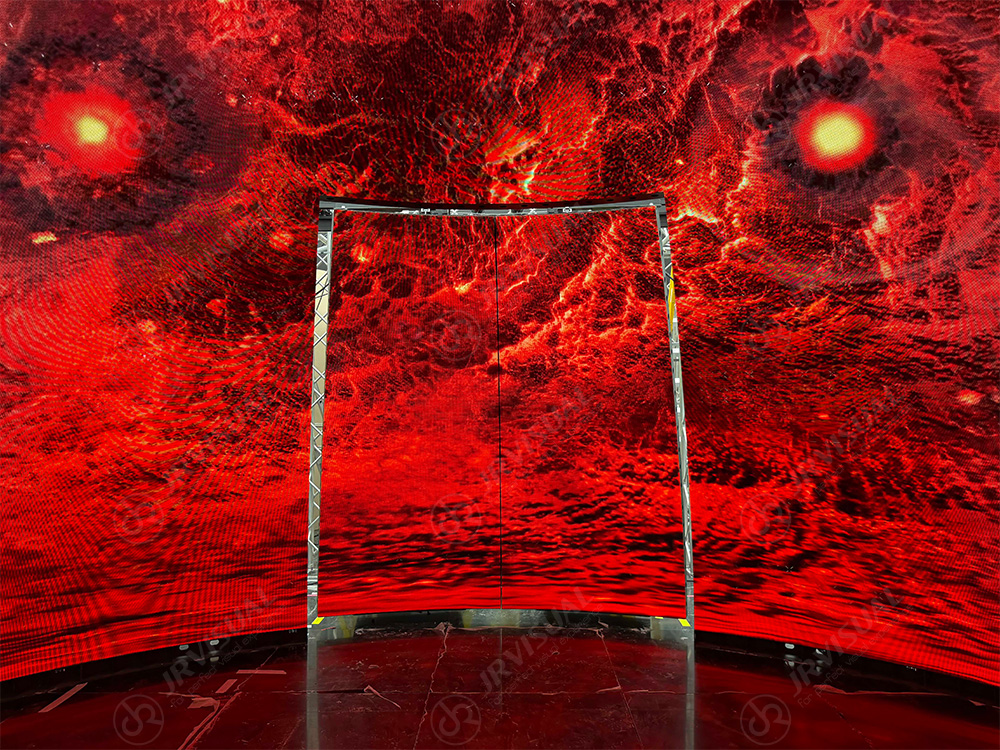
LED Sphere Specifications That Change the Viewing Result
Diameter and pixel pitch are connected decisions. Buyers sometimes request the smallest pitch available, then discover that the budget would have produced more impact through a larger sphere or better content. Start with the real viewing conditions and work back to the specification.
Diameter Sets the Visual Scale
JR Visual lists indoor diameters of 0.5 m, 1 m, 1.5 m, 2 m, 2.5 m and 3 m, with larger custom sizes available. Outdoor options include 3 m, 4 m and larger diameters. The available size is only a starting point. The chosen sphere must fit the room, installation route, structure and audience sightlines. A compact sphere can support close interaction in a showroom or booth. A larger spherical display is easier to read across an atrium or event hall. Create a scaled drawing that includes ceiling height, nearby architecture and the nearest and farthest viewers. This exposes clearance problems that a product-only drawing may hide.
Pixel Pitch Follows Viewing Distance
The listed indoor pixel pitches are 1.2 mm, 1.5 mm, 1.8 mm, 2 mm and 2.5 mm. Outdoor options are 4 mm and 5 mm. A finer pitch supports closer viewing and more image detail, but it also changes the LED quantity, processing load, and project cost. The correct choice depends on how near viewers can stand and how detailed the content must appear. Ask for a visual test using representative content at the planned viewing distance. Inspect fine lines, faces, gradients and moving graphics. A specification sheet cannot show how a curved image will feel in the actual venue.
Indoor and Outdoor Use Require Different Checks
Indoor projects focus on close viewing, controlled lighting, noise, access and integration with interior finishes. An outdoor LED display adds sunlight, rain, temperature change, wind exposure and greater viewing distances to the planning process. The product page lists separate indoor and outdoor pixel-pitch and diameter ranges, so buyers should state the environment at the start of the inquiry. Do not assume that temporary outdoor use has the same requirements as an indoor rental. Ask about weather protection, wind planning, drainage, cable connections and the conditions under which operation must stop. Site-specific engineering remains necessary for a suspended or exposed installation.
Compare LED Sphere Rental and Fixed Installation Side by Side
The comparison is easier when you judge each option against the same project questions. Use this table before requesting a final quotation.
| Decision Point | Rental or Touring Project | Fixed Installation Project |
|---|---|---|
| Typical use | Exhibitions, launches, meetings, concerts and temporary activations | Malls, museums, showrooms, visitor centers and entertainment venues |
| Main priority | Fast, repeatable setup and reliable transport | Long-term integration, access and stable operation |
| Structure | Temporary floor support or approved event rigging | Building-coordinated base or permanent suspension system |
| Handling | Cases, labeling, assembly sequence and repeated module handling | Delivery route, installation access and future service access |
| Cost review | Rental period, labor, transport, content setup and possible repeat bookings | Equipment, structure, installation, controls, maintenance and access |
| Content plan | Campaign-specific media that can change for each event | A renewable content library that remains useful over time |
| Approval focus | Venue schedule, temporary structure and production safety | Structural review, power, data, maintenance and building operation |
A standard rectangular screen may be more practical when the project needs long-distance information or advertising rather than a sculptural focal point. A kinetic LED display adds physical movement when motion is central to the concept. A rotating LED screen provides another direction for projects that need changing profiles instead of a complete sphere. Compare the communication goal first; a creative shape should serve the experience, not replace it.
Common Buying Mistakes That Increase Project Risk
Most avoidable problems begin with an incomplete brief. A buyer sends a diameter and asks for a price, but the supplier still lacks the information needed to design the right system. The first mistake is choosing pixel pitch without a viewing-distance plan. This can lead to overspending on resolution viewers cannot appreciate or producing an image that looks coarse from the nearest position. Mark audience zones on the venue drawing and identify the content with the finest detail. The second mistake is treating hanging and floor-standing layouts as interchangeable. They affect structure, clearance, audience flow, cable routing and service access. Decide the preferred mounting method early and ask the venue or engineering team to review it.
The third mistake is ignoring content geometry. A 360 LED screen needs media prepared for a curved surface. Request the exact canvas, mapping template, signal workflow and preview process. Test brand marks and typography before the installation date. The fourth mistake is comparing quotations with different scopes. One proposal may include control equipment, spares, transport cases, supervision, or structure, while another lists only the display. Ask every supplier to respond to the same scope sheet and note all exclusions. The fifth mistake is leaving maintenance until the end. Confirm spare-module quantity, access method, replacement steps, remote support, documentation and the party responsible for ongoing service. For a fixed sphere, model the cost of reaching the display as well as the cost of the component being replaced.
Choose an LED Sphere After Confirming Five Project Details
Rental is the stronger fit when the display supports a limited event period, moves between venues or needs campaign-by-campaign flexibility. Fixed installation makes more sense when the sphere will become part of a permanent space, and the project can coordinate structure, power, data and maintenance from the design stage. Before ordering, confirm five items in writing: the installation environment, diameter, closest viewing distance, mounting method and period of use. Then add the content format, delivery route, control location and service plan. These details allow a supplier to recommend a configuration that can be priced and engineered consistently. For projects that need a customizable indoor or outdoor spherical screen, review the available sizes, pixel pitches and installation choices on the LED sphere product page. A useful quotation should connect every recommended specification to the venue, audience and operating plan.