
Yes — but the answer comes with an important condition. A hanging LED sphere display can absolutely function in both environments, but the specifications required for each are fundamentally different. Using an indoor-configured sphere outdoors, or vice versa, doesn’t just reduce visual quality. It shortens the lifespan of the unit and, in some cases, renders it effectively unusable. The environment dictates the specs, not the other way around.
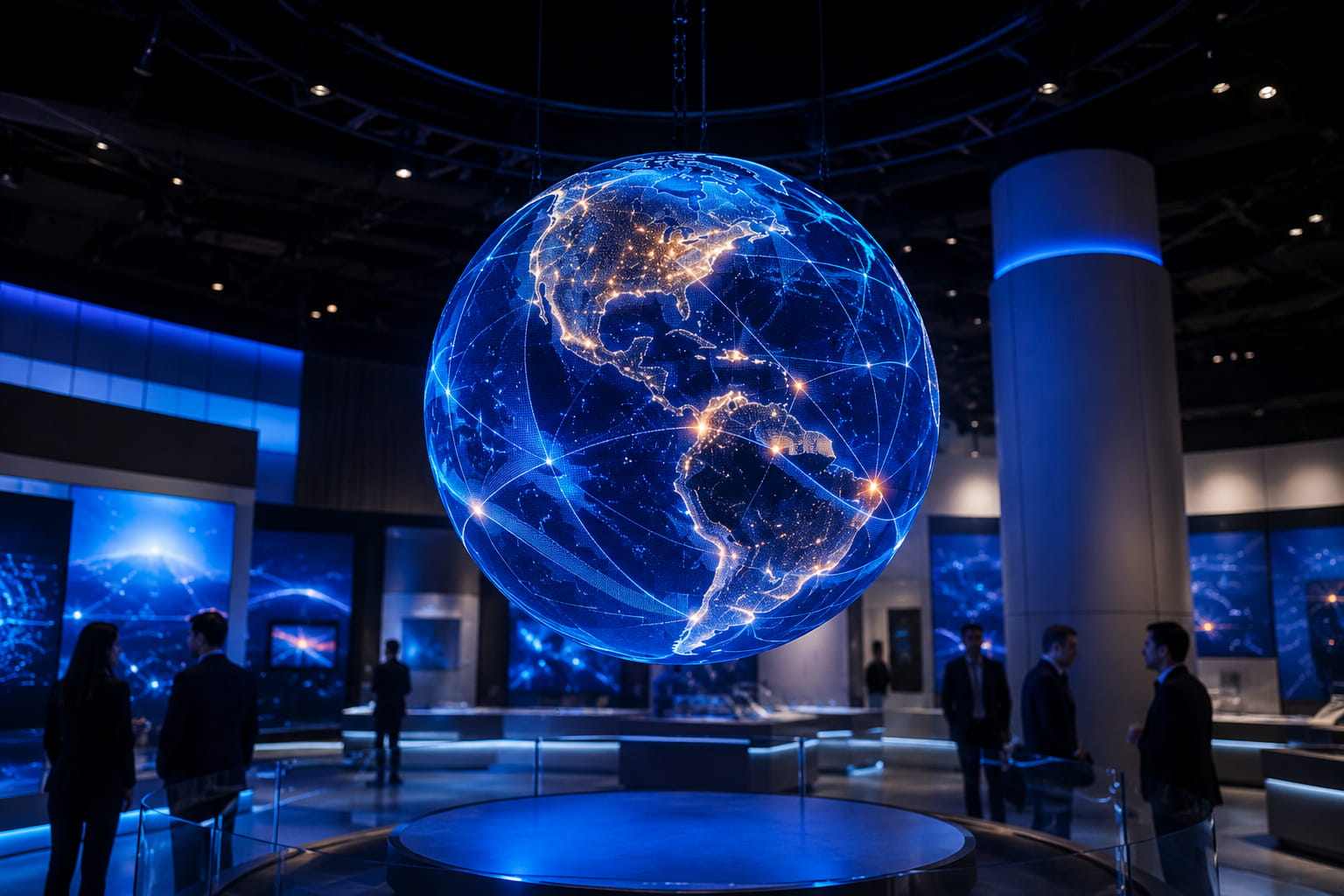
How a Hanging LED Sphere Display Performs in Indoor Settings
Indoor environments seem straightforward — controlled lighting, stable temperatures, no rain. However, they introduce their own set of demands that directly shape how a sphere-led screen needs to be built and configured.
Indoor Spaces Demand Higher Resolution for Close-Range Viewing
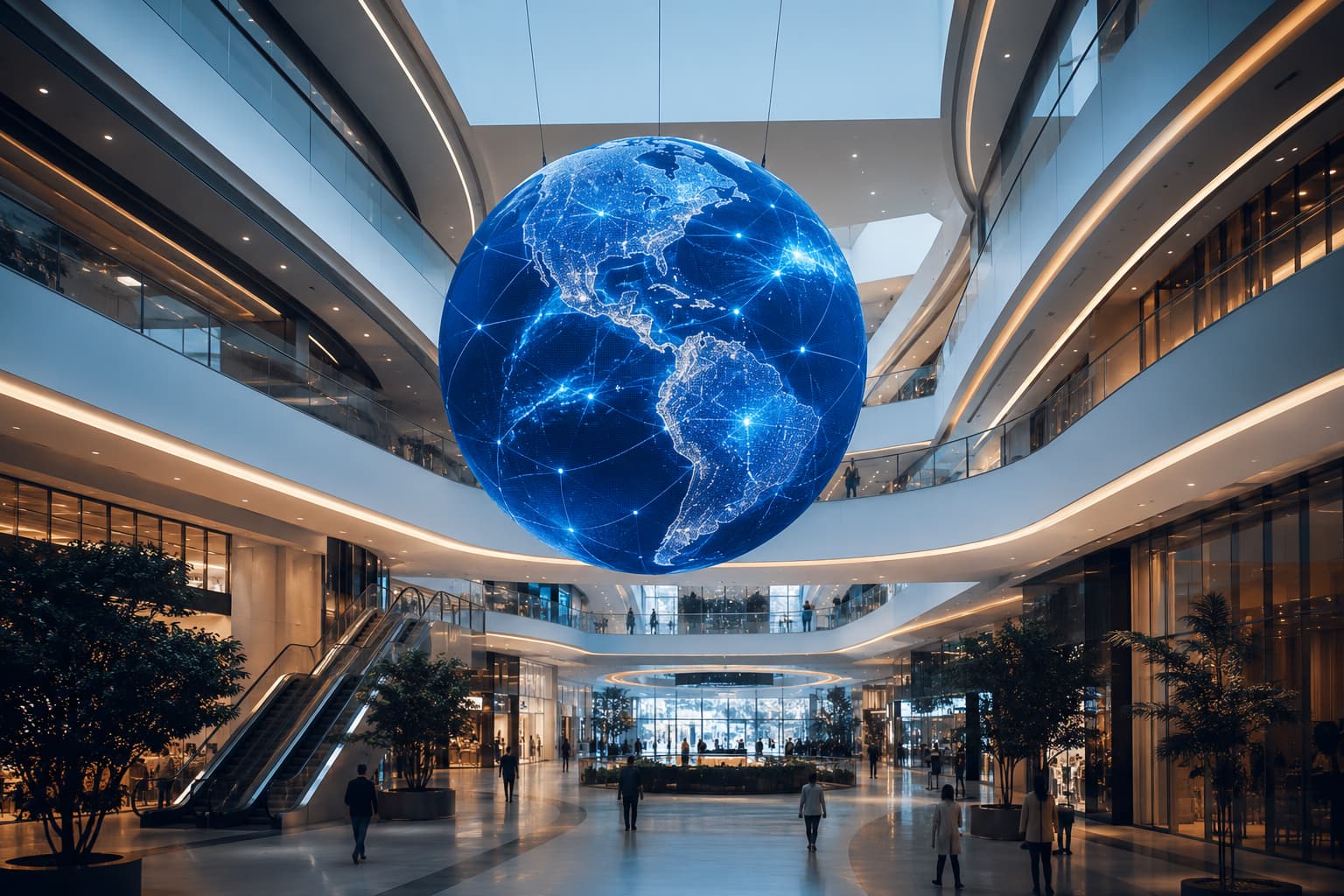
In an indoor venue, your audience is close. Whether it’s a shopping mall atrium, a product launch event, or a trade show booth, viewers are often standing within 2 to 10 meters of the display. At that distance, every pixel is visible. As a result, a low-resolution sphere looks pixelated and cheap — the opposite of the impression you’re trying to make.
This is why indoor LED spheres require tighter pixel pitches. A P2 configuration delivers approximately 20,662 dots per square meter, producing sharp, detailed imagery that holds up under scrutiny. For a 1-meter diameter indoor sphere, that translates to a resolution of 1,536 × 782 — more than enough for vivid visuals at short range. Beyond P2.5 indoors, image quality noticeably compromises the display’s impact.
GOB Protection Keeps a Hanging LED Sphere Display Running Through Rentals
Indoor LED sphere displays used for rental events face a challenge that fixed installations don’t: they get moved. Repeatedly. Teams pack them into cases, transport them to venues, assemble them on-site, disassemble them, and repack them. Standard LED modules weren’t designed for that kind of repeated physical stress.
GOB — Glue on Board — technology addresses this directly. Manufacturers apply a transparent epoxy resin over the LED surface, bonding the components and creating a protective layer that resists impact, moisture, and dust ingress. For rental operators running an LED sphere display across multiple events per month, GOB protection isn’t a premium add-on. It’s what keeps maintenance costs manageable over time. Additionally, a magnetic module fixing system makes on-site assembly significantly faster and less error-prone.
Indoor Brightness Needs to Stay Within a Controlled Range
There’s a common misconception that brighter is always better. Indoors, however, that’s not true. A sphere running at 5,000 nits inside a retail space or event hall creates visual discomfort for nearby viewers and washes out subtle color gradations in the content.
Instead, indoor LED spheres perform best at 600 nits or above — sufficient to produce vivid, punchy visuals under ambient lighting without causing glare. Combined with a 3,840Hz refresh rate and 14-bit grayscale processing, the image remains smooth and accurate across all content types. Moreover, IP43 protection handles the minor moisture exposure typical of indoor environments without over-engineering the unit for conditions it won’t face.
How a Hanging LED Sphere Display Performs in Outdoor Settings
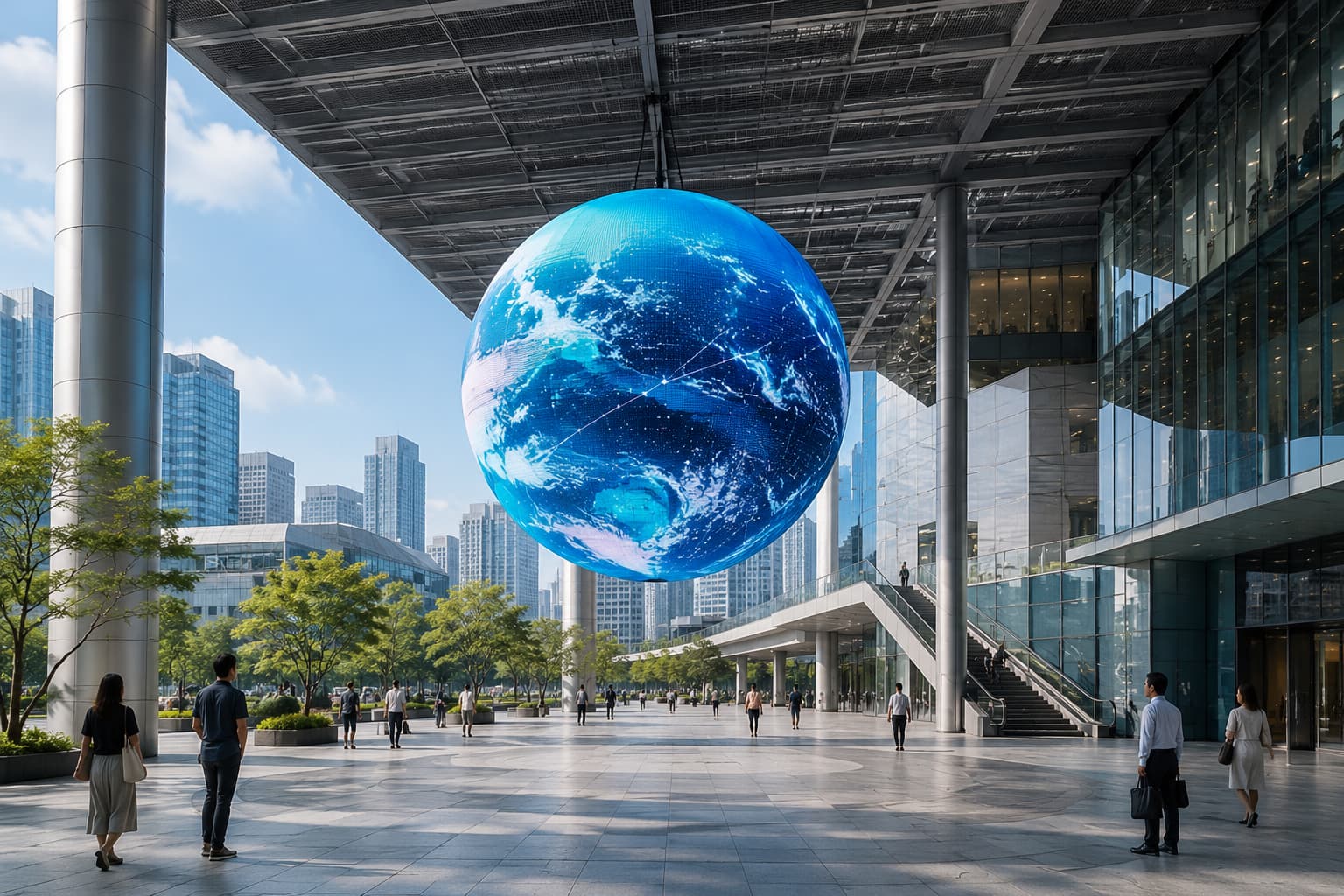
Step outside, and the operating conditions change completely. Sunlight, weather, open sightlines, and the sheer scale of outdoor venues rewrite the requirements for an asphere-led screen from the ground up.
Open-Air Venues Push Brightness Requirements Far Higher
Direct sunlight ranges from 10,000 to 100,000 lux on a clear day. Because of this, a display running at 600 nits becomes virtually invisible under those conditions. Outdoor LED spheres need to operate at a minimum of 5,000 nits to remain clearly visible in daylight — that’s more than eight times the brightness of their indoor counterparts.
This isn’t just a difference in numbers. Engineers need different LED encapsulation, different driver circuitry, and higher-power infrastructure to support sustained high-brightness output. For example, SMD2727 outdoor LED encapsulation manages the thermal load of sustained high-brightness operation in warm ambient conditions.
Larger Diameters Give a Hanging LED Sphere Display an Outdoor Impact
A 1-meter sphere hanging inside a boutique retail space creates an intimate, striking focal point. That same sphere suspended above an outdoor stage or festival ground, however, disappears. Scale matters in open-air environments, and outdoor LED spheres reflect that reality.
Outdoor configurations start at 4 meters in diameter and extend to 12 meters and beyond for large-scale permanent installations. For instance, a 12-meter outdoor sphere covers approximately 452 square meters of display surface — a structure with genuine visual presence at distances of up to 100 meters. Therefore, the pixel pitch for outdoor use shifts to P5, which remains sharp at those viewing distances while keeping the module count and overall weight manageable for structural rigging.
Weatherproofing Determines How Long an Outdoor Installation Lasts
Rain, humidity, wind-driven dust, and temperature swings between seasons aren’t edge cases outdoors — they’re the baseline operating conditions. As a result, a hanging LED sphere display built for outdoor use needs to handle all of them without interruption.
IP68 front protection and IP65 rear protection set the standard for serious outdoor deployment. The front rating means the display surface withstands continuous water immersion — well beyond what rain or pressure washing demands. Furthermore, the aluminum module structure and aluminum masking material provide structural rigidity, resist deformation under wind loads, and prevent moisture ingress at the seams. These aren’t cosmetic specifications. They directly determine whether an outdoor sphere runs reliably for years or requires frequent servicing.
Frequently Asked Questions
What pixel pitch is best for an indoor hanging LED sphere display?
P2 is the standard starting point for most indoor applications, delivering sharp imagery at viewing distances as close as 2 meters. P2.5 works well for larger venues where audiences sit further back.
How large can an outdoor hanging LED sphere display get?
Outdoor configurations range from 4 meters up to 12 meters in diameter, with custom sizes available for large-scale permanent installations.
Can a hanging LED sphere display be used for both rental and fixed installation?
Yes. Rental units use GOB-protected modules with magnetic fixing for fast assembly, while fixed installations use screw-fixed aluminum modules for long-term stability.
Choosing the Right Hanging LED Sphere Display for Your Project
Environment comes first, specs follow. Indoor use calls for high resolution, controlled brightness, and a modular build — starting with P2 and GOB protection. Outdoor use demands high brightness, weather resistance, and scale — 5,000 nits minimum, IP68 protection, and diameters of 4 meters or more. Getting the match wrong is costly. Explore JR Visual’s full range of LED spheres to find the right configuration for your project.