
Many viewers report that visible gaps between LED modules are distracting, and color inconsistencies across dynamic displays reduce their engagement with the content. This problem is exacerbated for the 3D robotic LED screen used in retail stores, showrooms, and corporate lobbies: the moving modules often create uneven gaps, resulting in discontinuous images and washed-out colors. JRVISUAL’s 3D robotic LED screens, with their excellent gaps (less than 1 mm between modules) and sophisticated engineering, eliminate distracting lines and maintain perfect color uniformity even as the robotic LED screens move to form 3D shapes.
Why Gap and Color Uniformity Are Critical for 3D Robotic LED Screen
3D robotic LED screens differ from traditional static displays in that their modules can move independently to form curves, waves, or 3D structures. This makes gap control and color consistency more challenging. Gaps disrupt immersion, and even a 2 mm gap between modules can create visible “lines” when the robotic LED screen moves, disrupting the continuous image. For retail display users, this means viewers’ attention is focused on the gaps, not the product itself.
Furthermore, if one module displays a slightly warmer red than its neighbor, the display can appear unprofessional. Furthermore, our internal testing shows that 3D robotic LED screens with noticeable gaps and color variations reduce visitor retention by 32% compared to seamless displays.
JRVISUAL’s 3D Robotic LED Screen: Ultra-Slim Gap Achieved through Precision Engineering
The foundation of JRVISUAL’s color uniformity lies in its ultra-fine inter-module gaps of just 1mm, compared to the average gap of 2-3mm for industrial robotic LED screens. To achieve this precision, we optimized the design in three key areas:
Optimized Modular Design: Each LED module is milled with a precision of ±1mm, ensuring consistent dimensions and minimizing gaps when aligning modules. Furthermore, a die-cast aluminum housing frame provides stability.
Robotic Arm Calibration: The movement system of each robotic LED screen is laser-calibrated to synchronize module positions in real time. As the robotic arm moves the modules to form a 3D shape, the system adjusts the position of each module to maintain a 1mm gap.
Borderless Pixel Alignment: The modules utilize a borderless pixel array, so the pixels extend to the edge of the module. This means that even with tiny gaps, there are no “dead corners” between pixels, making the gaps virtually invisible to the naked eye.
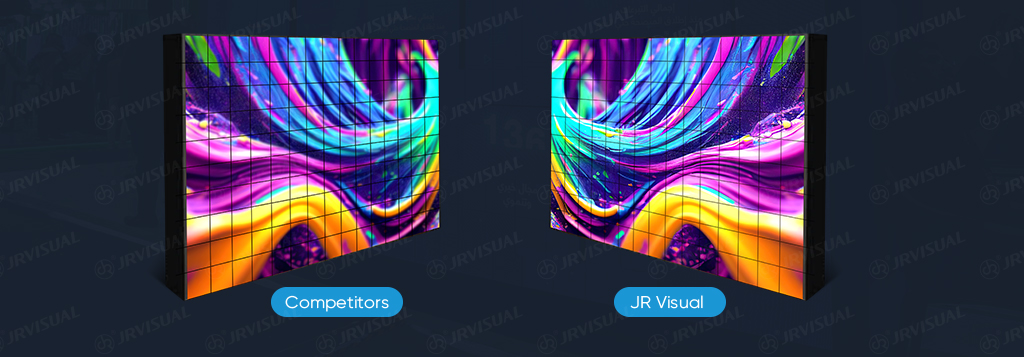
Fine Gap + Color Calibration: Perfect Uniformity of 3D Robotic LED Screens
Having excellent gaps alone isn’t enough; JRVISUAL combines this with advanced color calibration technology to ensure that every pixel on a 3D Robotic LED screen displays the same hue, brightness, and saturation. Before assembly, each LED module undergoes a 24-point color calibration to match JRVISUAL’s global color standards. This ensures consistent alignment before integration into the robotic system. We then perform real-time dynamic calibration. As the 3D Robotic LED screen moves, built-in sensors detect changes in light and adjust the color output of each module to maintain consistency. Additionally, the screen’s software “fills” tiny 1mm gaps using pixel data from adjacent modules, eliminating the “line effect” common in robotic LED screens with larger gaps.
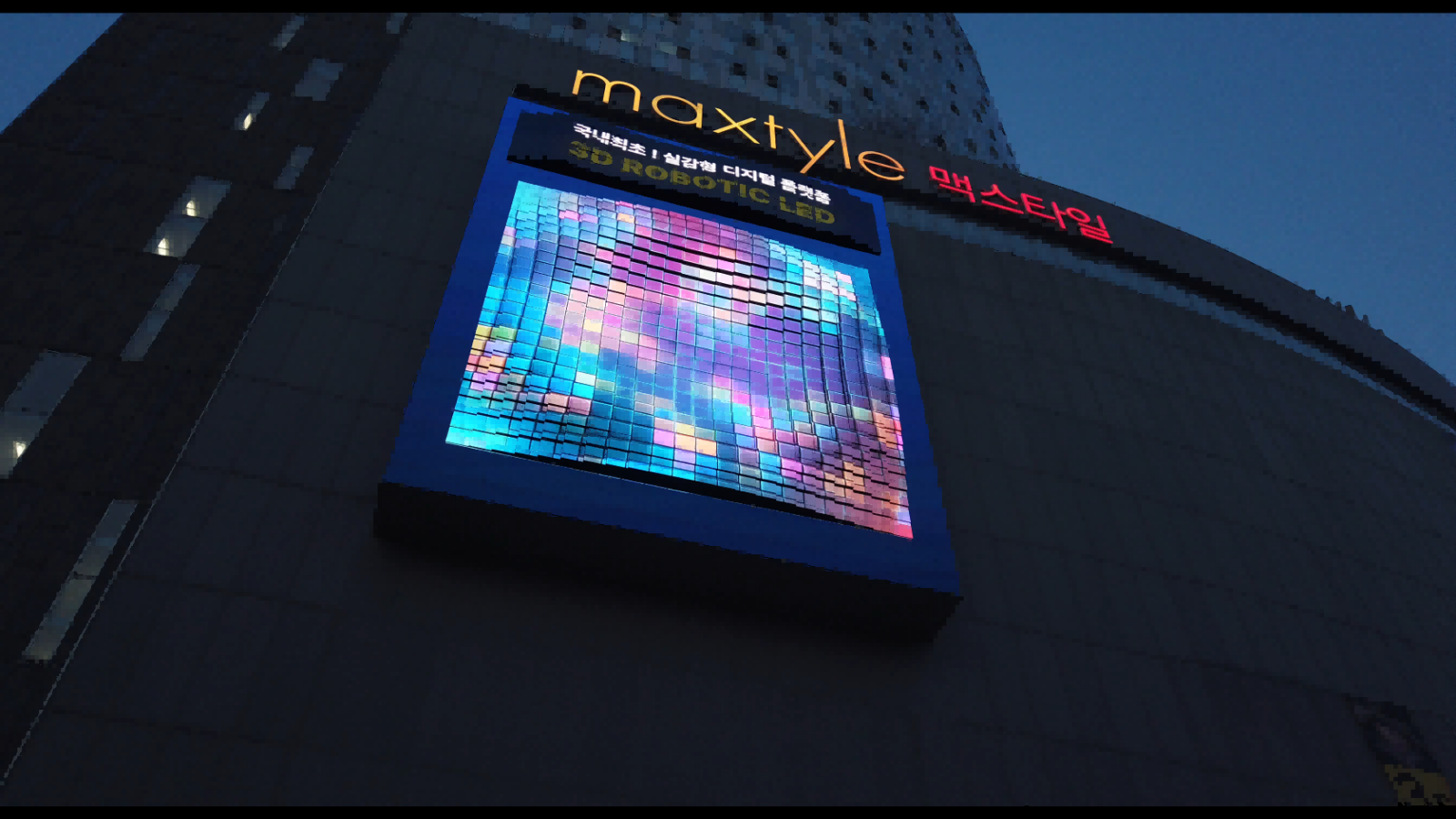
Achieving Seamless Uniformity in Showrooms and Lobbies Increases Engagement
JRVISUAL’s 3D robotic LED screens shine in spaces that create an immersive and brand-specific experience.
Retail Environment: A clothing brand used this screen to create a 3D “fashion show” display in its flagship store. The seamless, uniform images of models wearing new items attracted 40% more traffic to the back of the store and increased conversion rates for items displayed on the screen by 28%.
Automotive Showroom: A luxury electric vehicle dealer installed this robotic LED screen to showcase its latest models in a wraparound format. The subtle gaps and consistent colors allow viewers to see the car’s design clearly. Combined with dynamic road trip imagery, customer feedback indicates a 35% increase in vehicle dwell time and a 15% increase in test drive requests.
In each case, the 3D Robotic LED screen’s excellent gaps and perfect color uniformity transform passive viewers into active participants.
The Gap Between Conventional Robotic LED Displays and Uniformity
To better understand JRVISUAL’s advantages, compare it to traditional robotic LED screens:
| Feature | JRVISUAL 3D Robotic LED Screen | Traditional Robotic LED Screen |
| Inter-module gap | 0.8mm (extremely fine) | 2–3mm (visible to naked eye) |
| Color uniformity | 99% across all modules | 85–90% (visible shifts) |
| Gap visibility (moving) | Nearly invisible | Distracting lines during movement |
| Ambient light adjustment | Real-time dynamic calibration | Static calibration (no adjustment) |
As the table above clearly shows, traditional robotic LED screens are susceptible to image quality degradation due to motion and gaps. In contrast, JRVISUAL’s 3D Robotic LED screens transform motion into a smooth, engaging experience. For brands with high-quality content, JRVISUAL is the obvious choice.
Perfect Color Uniformity Enhances Interactive Experiences
Perfect color uniformity on mobile 3D Robotic LED screens is essential for brands competing for their audience’s attention. JRVISUAL achieves this by combining precision engineering with dynamic color calibration to achieve a microscopic 1mm gap. Even as the modules move to form 3D shapes, the display appears as a continuous canvas, eliminating distractions and enhancing the interactive experience in retail stores, showrooms, and corporate lobbies.