
Most buyers check the LED spec sheet, see “100,000 hours,” and stop there. That figure only tells half the story — and for a rotating LED display, the other half is what actually determines how long the system stays in service.
How Long Does a Rotating LED Display Actually Last?
The LED panels in a quality indoor rotating LED display are rated for 50,000 to 100,000 hours. At 12 to 16 hours of daily use, that translates to 8 to 10 years before brightness noticeably degrades. But a rotating LED display is two systems in one: the LED panels and the motion mechanism. The motion system — stepper motors, guide rails, drive belts — runs on a separate wear curve. A well-engineered kinetic LED screen with industrial-grade components and regular maintenance can match the LED panel’s operational lifespan. A poorly maintained one may not reach half of that.
What Shortens the Lifespan of a Rotating LED Display?
Several factors determine how long a rotating LED screen actually performs in real-world conditions. Most are controllable.
LED Panel Degradation
LED diodes dim gradually over time. The 50,000-hour benchmark marks the point at which brightness drops to roughly 50% of the original output — not outright failure. High-brightness static content accelerates this process. Running the display at lower brightness levels under typical ambient conditions significantly slows diode degradation.
Motion Mechanism Wear
Every forward-back cycle puts load on the guide rails, drive belt, and stepper motor. A system rated for a minimum forward-back cycle time of 0.7 seconds is built for high-frequency operation. However, cumulative cycle count matters over the years of use. Tracking motion hours alongside LED hours is sound maintenance practice.
Operating Environment
Indoor rotating displays are rated for 0°C to 40°C. Exposure to humidity, oil mist, corrosive gases, or excessive dust degrades both electronic and mechanical components prematurely. The environment is one of the fastest ways to shorten a display’s lifespan — and one of the easiest to control.
Usage Pattern and Content Type
Varied, dynamic content distributes wear evenly across LED diodes. Static frames held at maximum brightness concentrate stress on specific diodes, accelerating uneven degradation. Content strategy directly affects hardware longevity.
Maintenance Quality
This is the variable with the most leverage. A rotating LED display that receives regular inspection of its circuitry, power supply, and motion unit will consistently outlast one that runs unattended. Scheduled maintenance is not optional — it’s what converts rated lifespan into actual lifespan.
The Components That Define Rotating LED Display Durability
The long-term performance of a 3D kinetic LED display comes down to three engineering systems.
The LED panel sets the image quality lifespan. Indoor panels using P1.98mm or P1.9mm pitch modules with die-cast aluminum cabinets maintain structural flatness and thermal stability across years of operation. A brightness rating of 700 nits or above for indoor use means the display can run at reduced brightness in normal ambient light — less stress on diodes, longer service life.
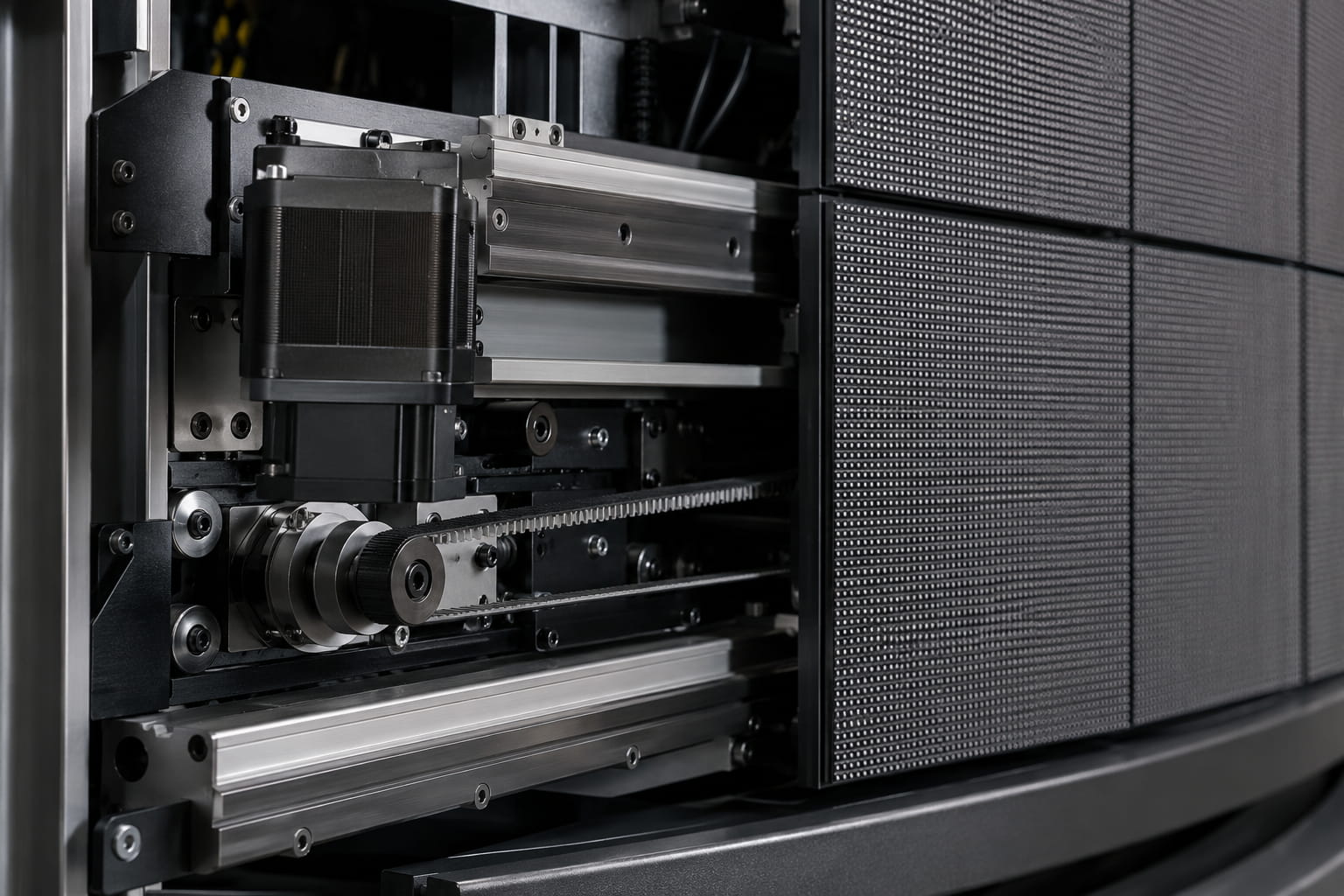
The motion drive system is where kinetic displays differ from every other screen type. Industrial-grade linear guide rails hold module gaps under 1mm, preventing the uneven load distribution that accelerates mechanical wear. A closed-loop stepper drive system continuously monitors position, self-corrects in real time, and reduces operating noise by up to 70% compared to open-loop alternatives. Less vibration means less fatigue on every moving part over time.
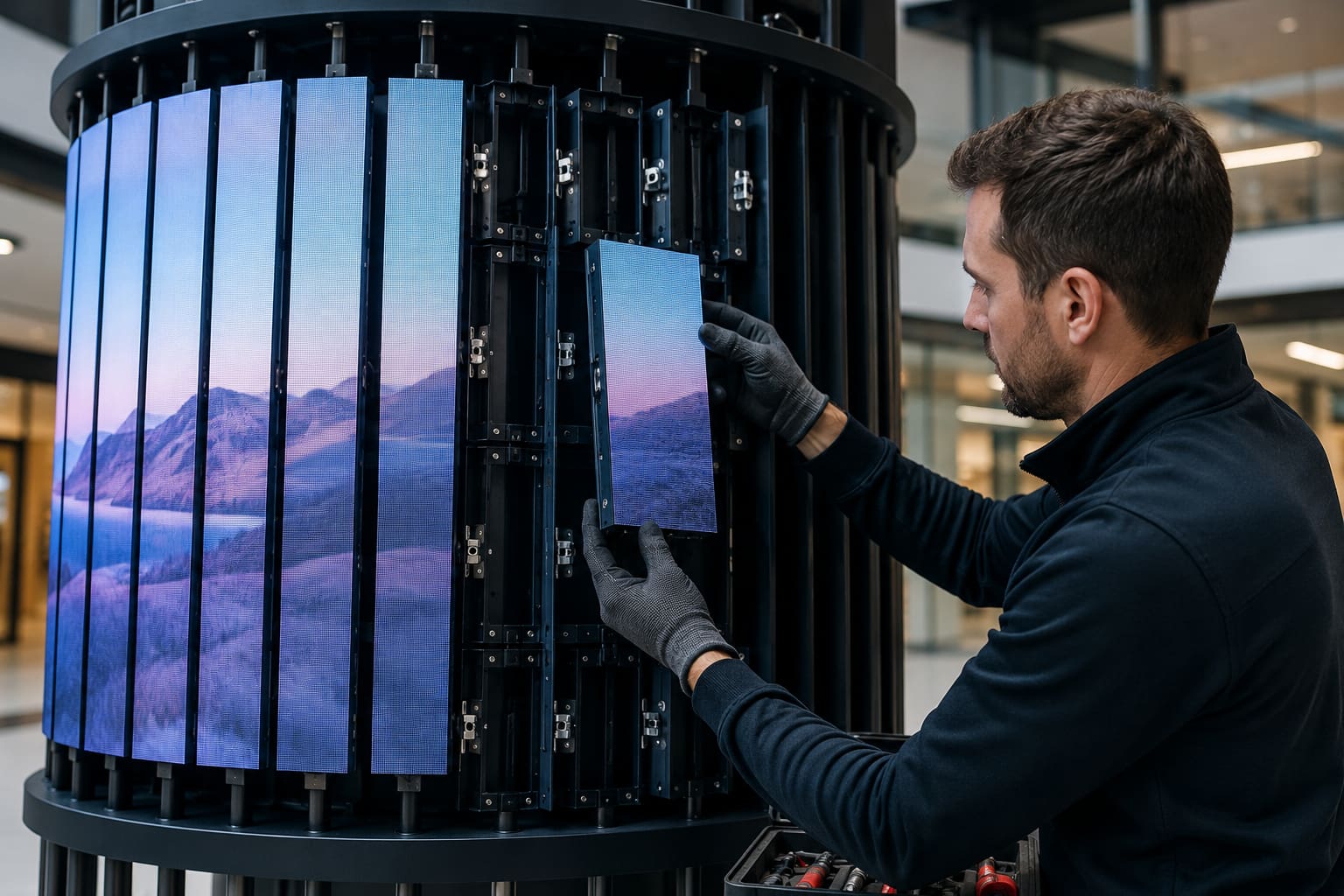
The cabinet and frame hold the entire system in alignment. Precision-machined die-cast aluminum maintains screen flatness across thousands of motion cycles. Front-accessible maintenance design lets technicians inspect and replace components without full disassembly — reducing downtime and eliminating the risk of damage caused by unnecessary teardown.
Together, these three systems determine whether a kinetic LED screen runs strong for 5 years or well past a decade.
How to Extend Your Rotating LED Display Lifespan
Regular maintenance is the highest-return action an operator can take. Here’s what a practical maintenance routine looks like:
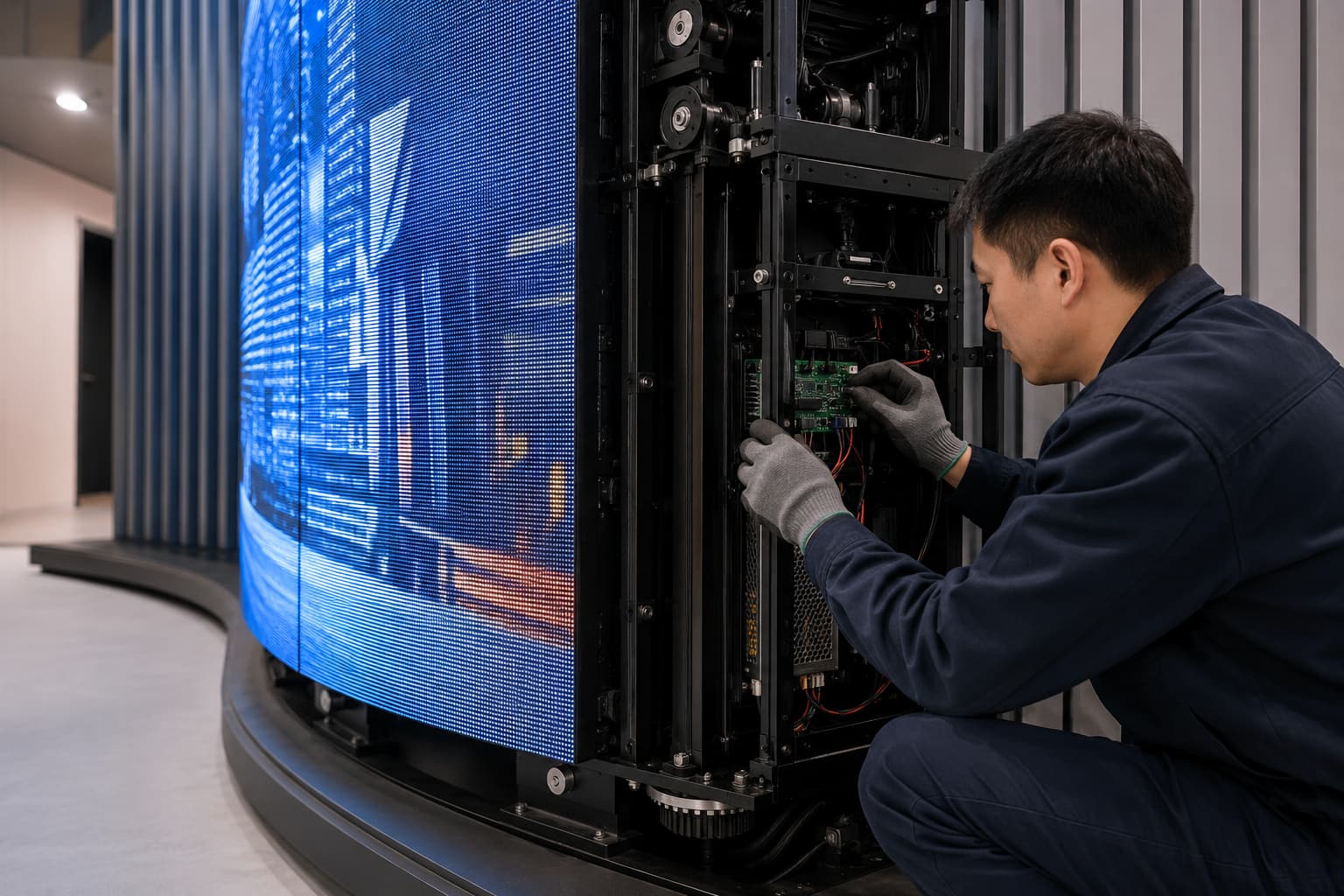
- Inspect the circuitry and power supply on a set schedule. Open the rear cover to check the receiving card, wiring, and power supply for heat damage, loose connections, or early signs of component wear. A failing power supply caught early rarely causes collateral damage.
- Examine the motion unit mechanically. Check the guide rails, drive belt, and stepper motor for debris accumulation, alignment drift, or abnormal wear patterns. Even minor rail misalignment accelerates wear across the entire mechanism.
- Cap daily operating hours where possible. Continuous 24-hour operation builds heat in both the LED modules and the drive system. Limiting use to 16 hours per day noticeably extends the life of both.
- Maintain ambient temperature within the rated range. Poor ventilation shortens lifespan faster than heavy usage alone.
- Rotate content actively. Avoid prolonged static frames at high brightness. Dynamic content distributes diode stress evenly and maintains consistent motion wear patterns.
Rotating LED Display Repairs: Replace a Part or the Whole System?
One of the core advantages of a modular rotating LED display is that components can fail and be replaced without touching the rest of the system. Replace individual parts — LED modules, power supplies, motion drivers — when a fault is clearly isolated. A single malfunctioning module swaps out without disrupting adjacent sections. This keeps repair costs proportionate to the actual problem.
A full system evaluation makes sense when multiple motion units exhibit simultaneous alignment drift, when LED brightness degrades unevenly across cabinets, or when the drive system requires repeated repairs within a short period. At that point, cumulative repair costs may justify replacement, and a new system brings updated engineering. For larger installations, build a component replacement schedule before the display goes live. Reactive maintenance is always more expensive than planned maintenance.
Rotating LED Display FAQ
How many hours does a rotating LED display last?
Quality indoor LED panels are rated for 50,000 to 100,000 hours — roughly 8 to 10 years at 12 to 16 hours of daily use. The motion mechanism’s lifespan depends on cycle frequency and maintenance quality. With regular inspection, a well-engineered system can match or exceed the LED panel’s service life.
Does noise level signal mechanical wear in a rotating LED display?
Yes. A rise in operating noise — particularly irregular sounds above the normal baseline — is an early indicator of guide rail misalignment or stepper drive irregularity. A correctly functioning closed-loop system runs quietly. Any change in noise pattern is worth investigating before it becomes a visible performance issue.
Is a rotating LED display harder to maintain than a standard LED screen?
It involves more components, so there are more inspection points. However, displays with front-accessible maintenance design and modular construction are straightforward to service. The motion system adds one mechanical check to the routine — typically a visual inspection rather than a complex procedure.
Get More Years From Your Rotating LED Display
Engineering quality sets the ceiling. Maintenance determines how close the system actually performs to that ceiling over its lifetime. A rotating LED display built with precision components and a modular architecture gives operators every advantage — but only consistent maintenance can convert that potential into reliable, long-term performance. Before choosing a kinetic LED display, make sure the specs align with your venue’s environment, usage hours, and maintenance capacity. Contact the JR Visual team directly for a consultation on your specific project.