
Choosing the right LED sphere starts with one question: where is it going? An LED sphere that works perfectly in a trade show booth will underperform in a shopping mall atrium. A globe LED display sized for a museum may be overkill for a corporate event stage. Before you look at a single spec, you need to know your scenario. That’s where every good indoor LED sphere decision begins.
LED Sphere Selection Starts With the Scenario, Not the Spec Sheet
Most buyers approach this backwards. They start with a diameter or a price point, then try to make the specs fit. The problem is that pixel pitch, brightness, installation method, and module type all respond differently depending on the environment — and getting one wrong affects everything else. Indoor environments vary more than people expect. Viewing distances in a retail space can range from 5–15 meters, whereas in an exhibition booth, they drop to under 2 meters. A spherical LED display that looks stunning from a distance can show visible pixel gaps up close — and that’s not a minor aesthetic issue; it’s a failed deployment. The four variables that drive every good decision are viewing distance, venue size, installation method, and usage frequency.
Choosing an LED Sphere for Trade Shows and Exhibitions
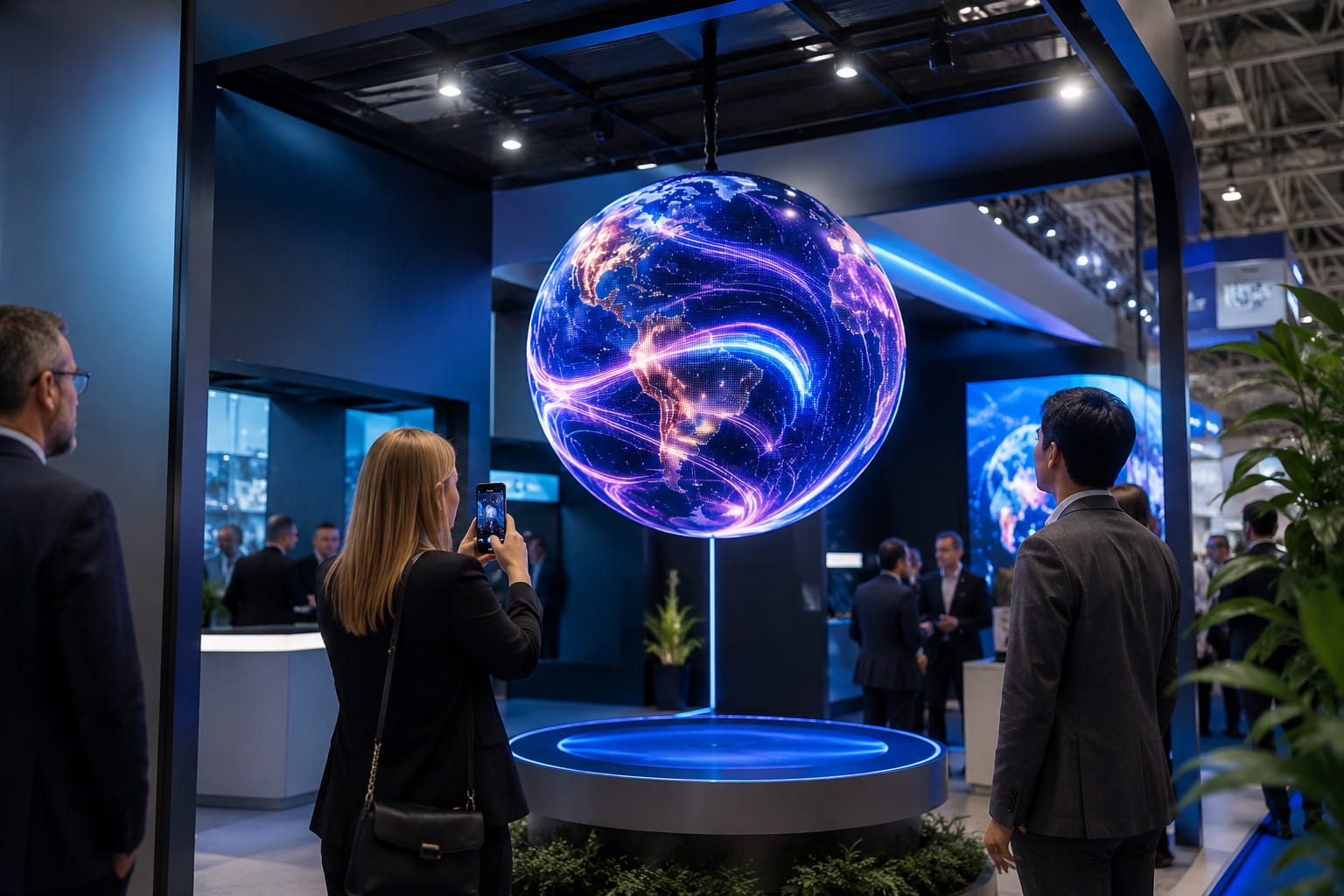
Exhibition environments are unforgiving. Visitors walk up close, take photos, and expect sharp visuals from under 2 meters away. Getting the spec wrong here is immediately visible — before the client even sees the footage. Fine pixel pitch and durable module construction aren’t optional at this scale; they’re the baseline.
Pixel Pitch for Close-Range Viewing
For trade show use, P1.5 to P1.8 is the standard working range. It delivers sharp, detailed visuals at arm’s length without the resolution loss that becomes obvious in tight booth spaces. A P2.5 unit shows visible pixelation at under 1.5 meters, which immediately undermines the premium impression most brands work hard to create. Fine pitch costs more upfront, but it’s the only spec that holds up under exhibition scrutiny.
Module Durability for Repeated Transport
Frequent assembly and disassembly put real stress on modules, which is why GOB (GGlue-on-Board treatment matters here. It seals the LED surface against knocks, humidity, and the handling involved in repeatedly moving a display in and out of flight cases. Magnetic module fixing is also preferable to screw mounting for trade show use — it makes field maintenance significantly faster when you’re working against a setup deadline.
Recommended Size for Exhibition Booth Footprints
For most exhibition setups, a 1m- to 1.5m-diameter LED sphere hits the practical sweet spot. It’s visually impactful without dominating the booth space, proportionate, with a footprint under 20 sqm, and manageable for a two-person installation team without specialist rigging equipment.
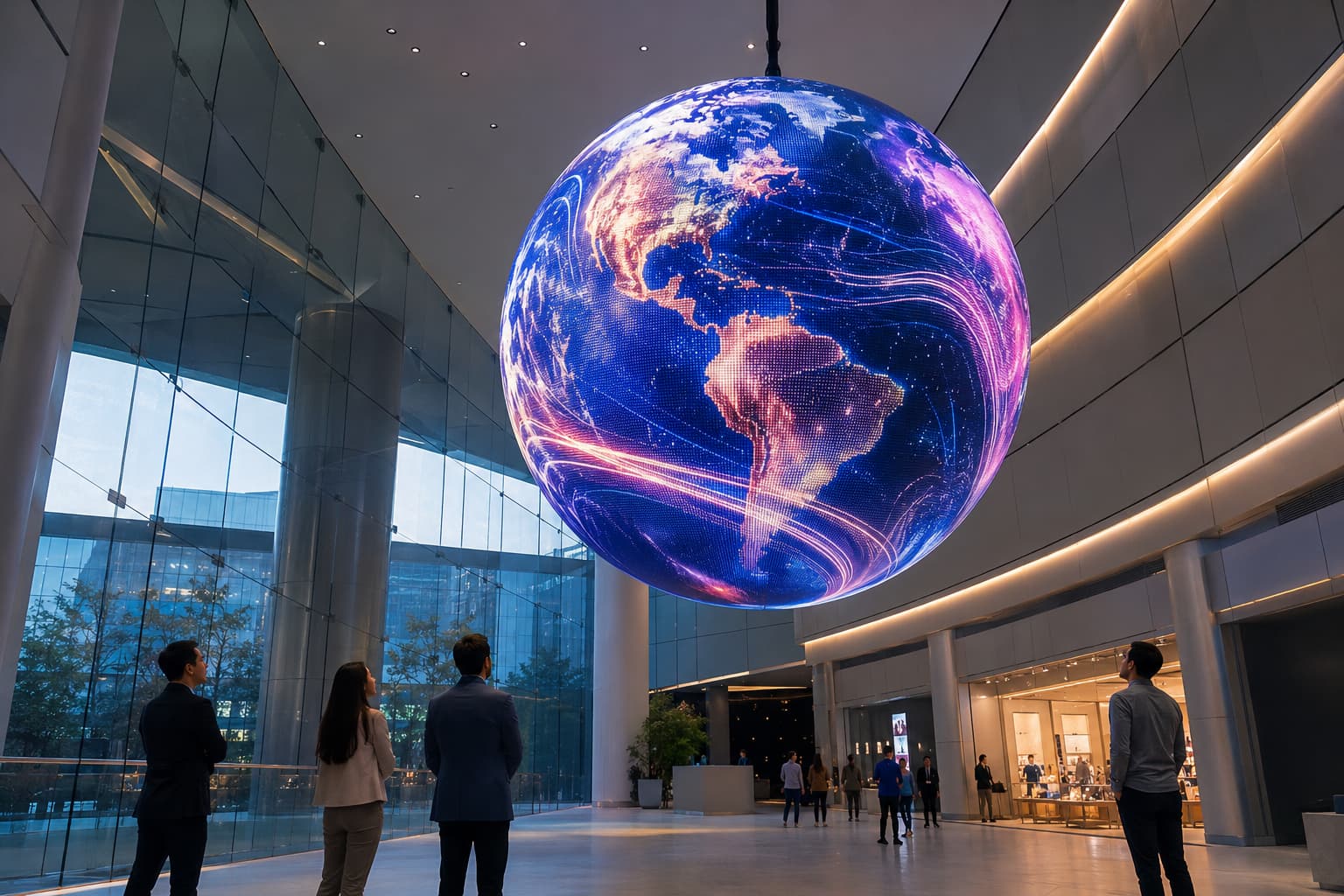
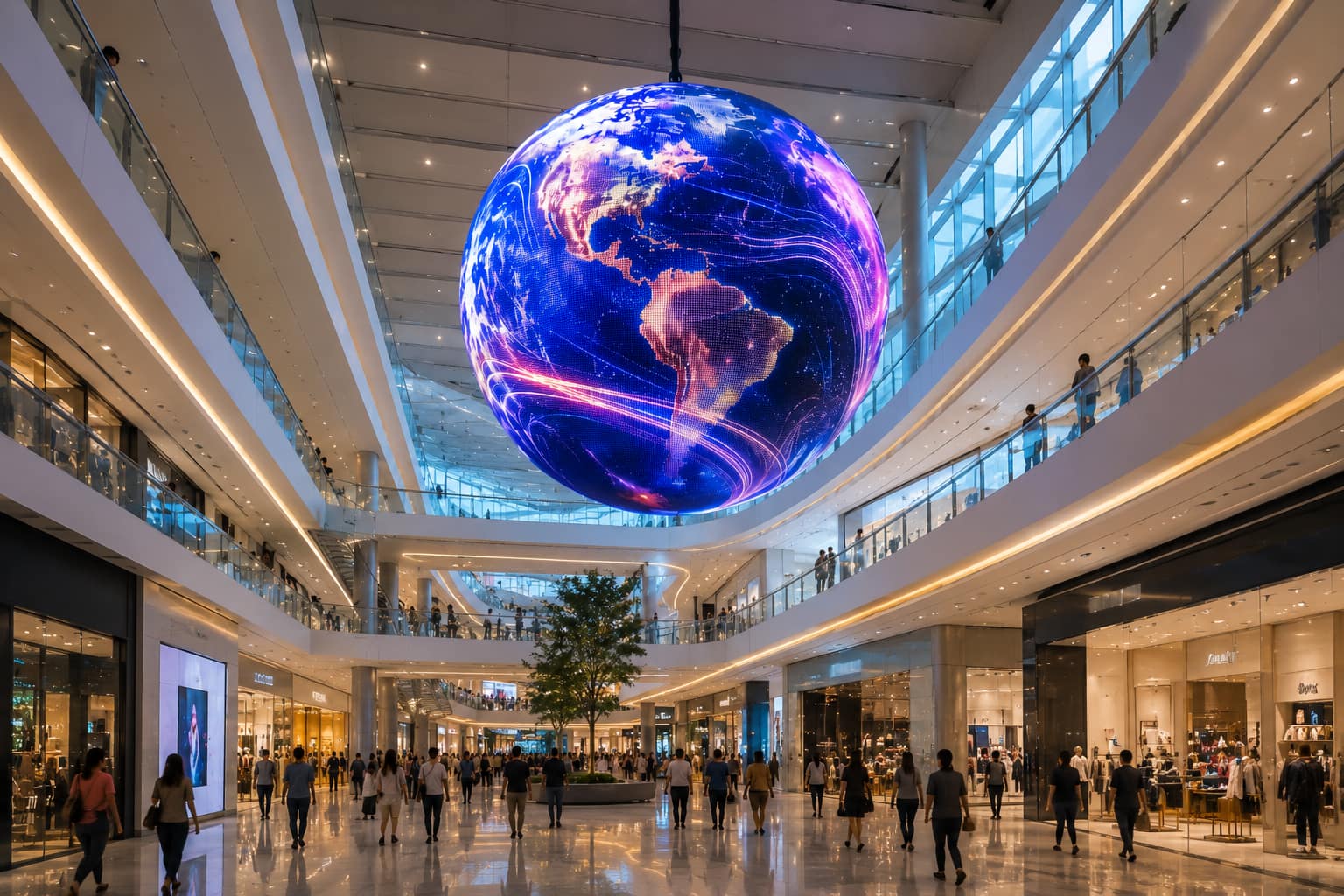
Selecting the Right LED Sphere for Retail Spaces and Shopping Malls
Retail and mall installations operate on a completely different logic. Here, the LED sphere functions as a permanent architectural feature — it needs to perform consistently for the ears, look proportionate within the space, and require minimal maintenance. The spec decisions that matter most shift accordingly.
Pixel Pitch at Longer Viewing Distances
Viewing distances in a shopping mall atrium typically range from 5 to 15 meters. At that distance, P2 to P2.5 delivers clean, vivid imagery without the premium cost of finer-pitch options. Pushing to P1.5 in a large atrium doesn’t improve perceived quality for a shopper standing 10 meters away — it simply increases unit cost without a visible return on that investment.
Matching Sphere Diameter to Ceiling Height
Diameter selection in retail is based on ceiling height. For atriums with 8–12 meter ceilings, a 2m to 3m sphere maintains visual proportion without overwhelming the space. Going too small in a high-ceilinged environment produces a floating-dot effect — the display is present, but it never commands the attention a well-sized spherical LED display should.
Structural and Maintenance Planning for Fixed Installs
Hanging installation is standard for mall deployments, but it requires structural planning well before procurement. The ceiling mount must support the full suspended weight — a 3m indoor LED sphere weighs approximately 1,000 kg — which is a structural engineering requirement, not a site-visit detail. Front-access maintenance design is equally essential, since rear access is rarely possible once a unit sits surrounded by permanent finishes.
LED Sphere Options for Corporate Events and Product Launch Venues
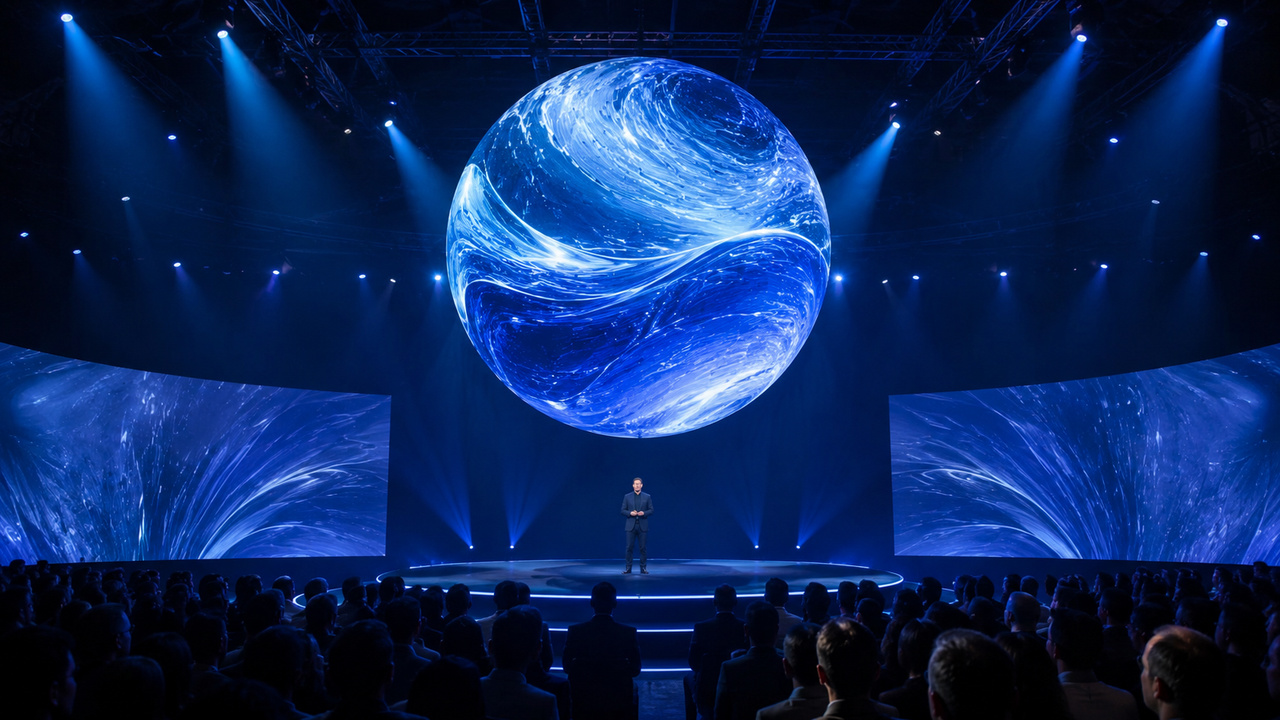
Corporate events carry the highest stakes in this list — and the tightest timelines. The LED sphere typically serves as the visual centrepiece of a stage setup, which means every spec decision is visible to a room full of people and a broadcast camera. Getting it right requires thinking through signal flow, rigging logistics, and refresh rate before the production schedule locks.
Diameter and Pixel Pitch for Auditorium-Scale Venues
For a 500-seat auditorium with a 10–15 meter viewing distance, a 1.5m to 2.5m sphere at P2 delivers the optimal balance of resolution and visual scale. P2 pixel pitch supports clean playback of broadcast-quality content within that range, including real-time video feeds standard for product-reveal moments. Going finer than P2 in this context adds cost without a perceptible quality gain from the audience’s perspective.
Signal Compatibility and Refresh Rate for Live Events
The sphere must support HDMI, DVI, and HD-SDI inputs to connect cleanly with the AV control systems most event production companies already run. Confirm control system compatibility — Novastar or Mooncell — before procurement, not during load-in. A refresh rate of 3,840Hz or higher is non-negotiable for live-event use, as it eliminates moiré patterns and flicker when broadcast cameras or smartphones capture the display, which happens at every event now.
Rigging Weight and Setup Time
Weight directly affects production scheduling, so factor it in early. A 1.5m sphere at approximately 270 kg fits a two-person crew in under four hours. A 2.5m unit at 700 kg needs additional rigging equipment and crew time — build that into the production schedule from the start, not on load-in day.
Picking an LED Sphere for Museums and Immersive Experience Spaces
MMuseums and immersive installations demand a fundamentally different approach. The audience is stationary, often at close range, and the content is art-led or interactive, which means image quality is the primary criterion, not portability or logistics. Every spec decision here should prioritize the viewing experience.
Fine Pixel Pitch for Detail-Rich Content
Pixel pitch for this application should be P1.2 to P1.5. At these fine pitches, the spherical LED display produces visuals with sufficient resolution to support detailed content — architectural renderings, scientific visualisations, interactive artwork — without pixelation breaking the immersive effect at 1–3-meter viewing distances. This is the one indoor scenario where investing in the finest available pitch consistently pays off in audience experience.
Refresh Rate and Colour Accuracy
A minimum refresh rate of 3,840Hz prevents flicker under the mixed lighting conditions common in museum environments. Colour temperature range — 5,500K to 9,300K, adjustable — is important for art applications, where content creators need precise colour matching across different display environments and changing exhibition lighting setups.
Longevity and Custom Sizing
An LED lifespan of over 100,000 hours — roughly 11 years of continuous operation — is the baseline for museum-grade fixed deployments. Custom diameter options are worth discussing with the manufacturer up front, since immersive spaces frequently have non-standard ceiling configurations where off-the-shelf sizing simply won’t meet the architectural intent.
How to Finalize Your Indoor LED Sphere Spec Across Any Scenario
Every scenario above points to the same four-step framework. First, confirm the minimum viewing distance and divide it by 1,000 to get your maximum workable pixel pitch. Second, confirm the installation method before specifying the diameter, since hanging and floor-standing installations have different structural requirements that affect which sizes are viable. Third, determine usage frequency: rental-pattern use favours GOB protection and magnetic fixing, while fixed installation prioritises front-access maintenance. Fourth, verify control system compatibility before purchase, because a sphere that won’t integrate with the existing AV setup creates problems that no visual quality can compensate for. Lock these four points down before any conversation about price. The right indoor LED sphere for your scenario is always the better value, regardless of the cost compared to the wrong one.