Glass cleaning remains straightforward
The gap allows safe access to both surfaces of the glass without dismantling the display.

The Challenge
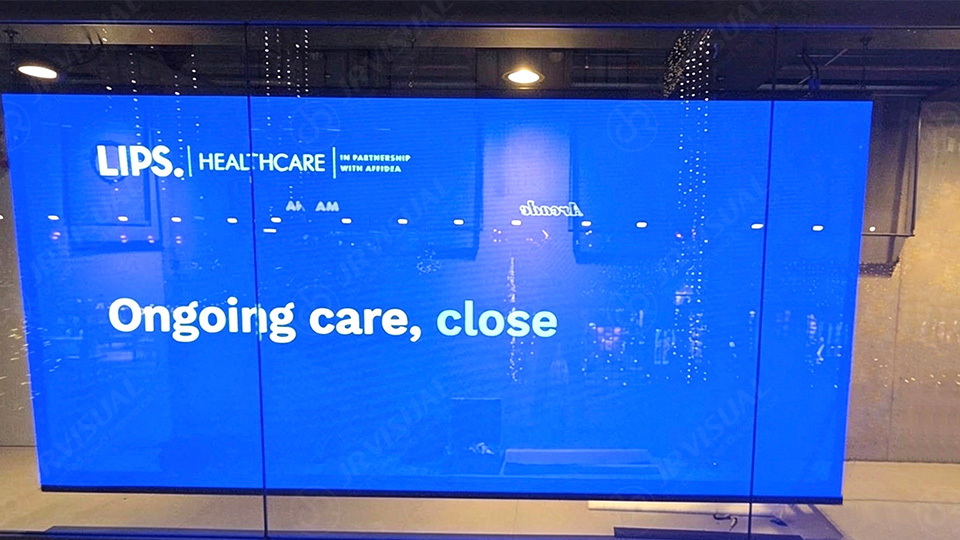
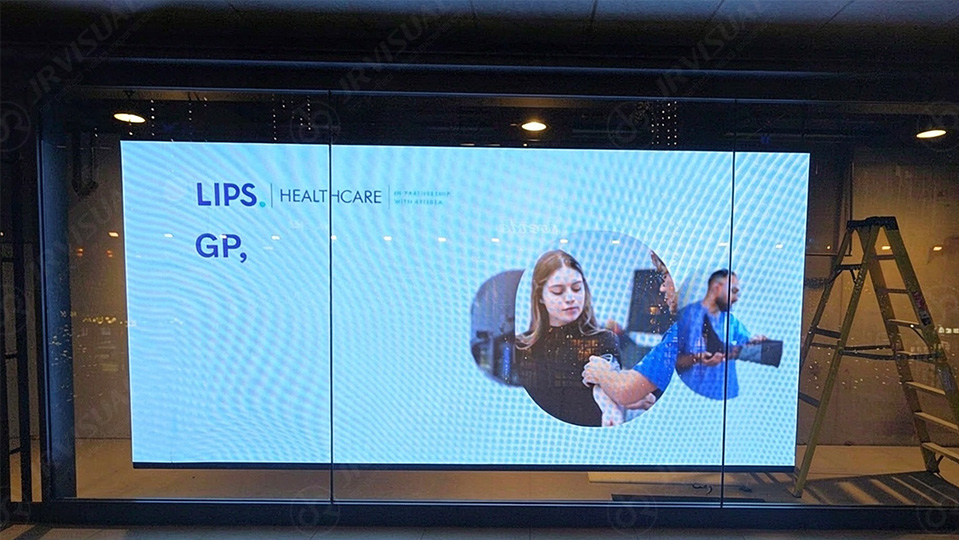
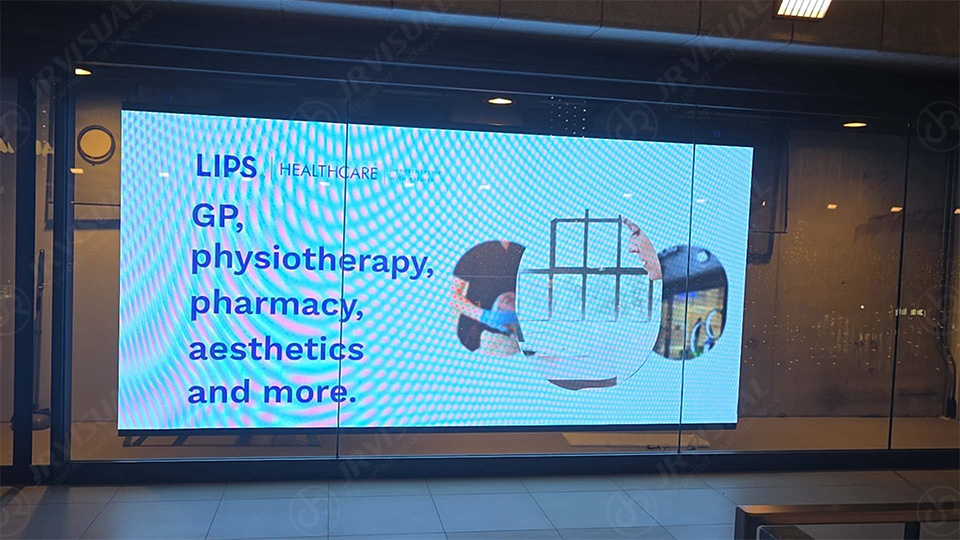
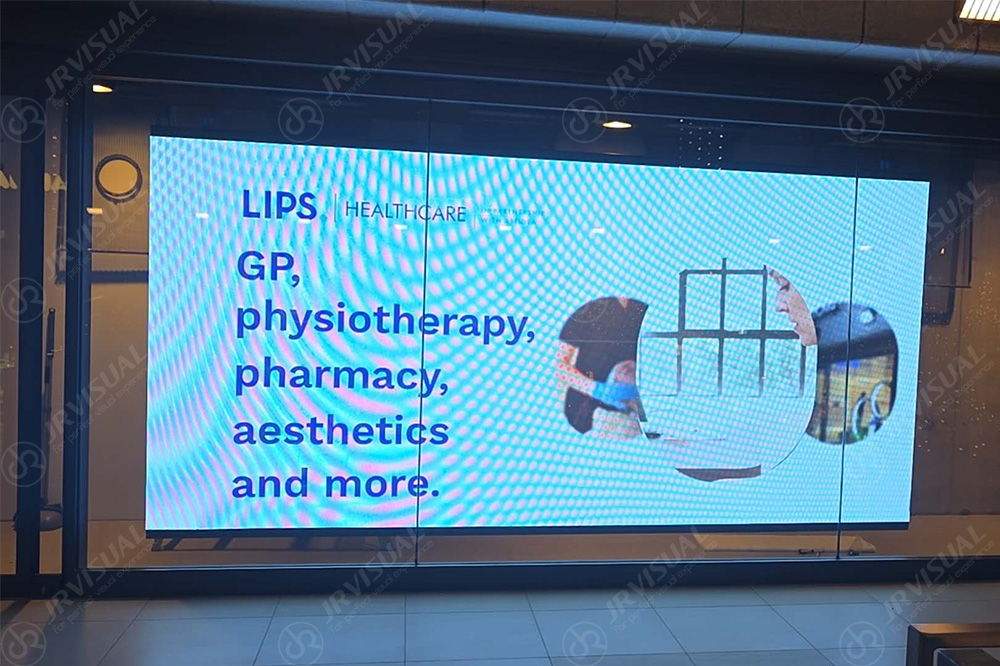
The health care centre had a street-level glass frontage. Behind the glazing was a closed demonstration space, not an occupied reception or treatment area. The clinic wanted to use the window to show dynamic content — service messaging, health reminders, promotional information — while keeping the demonstration space behind the glass visible.
The installation brief had two practical constraints that ruled out a conventional approach:
Direct glass mounting complicates cleaning, puts load and vibration onto the glazing, and makes screen service awkward.
An opaque LCD or solid LED wall would have blocked the view into that space and turned the window into a black panel.
The requirement was therefore: a bright, transparent LED display, suspended independently behind the glass, with enough clearance to clean the glass and service both the screen and the glazing.
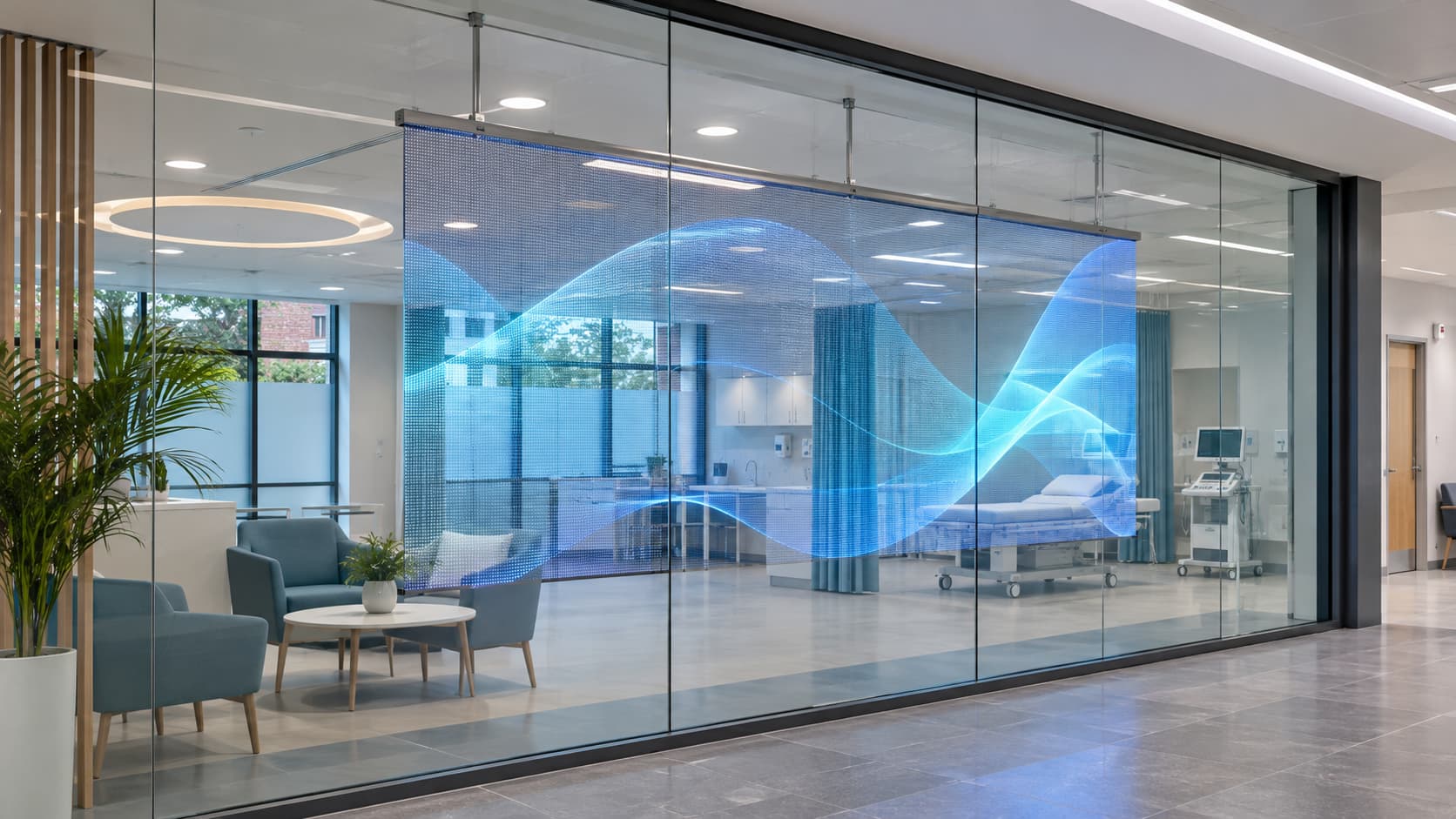
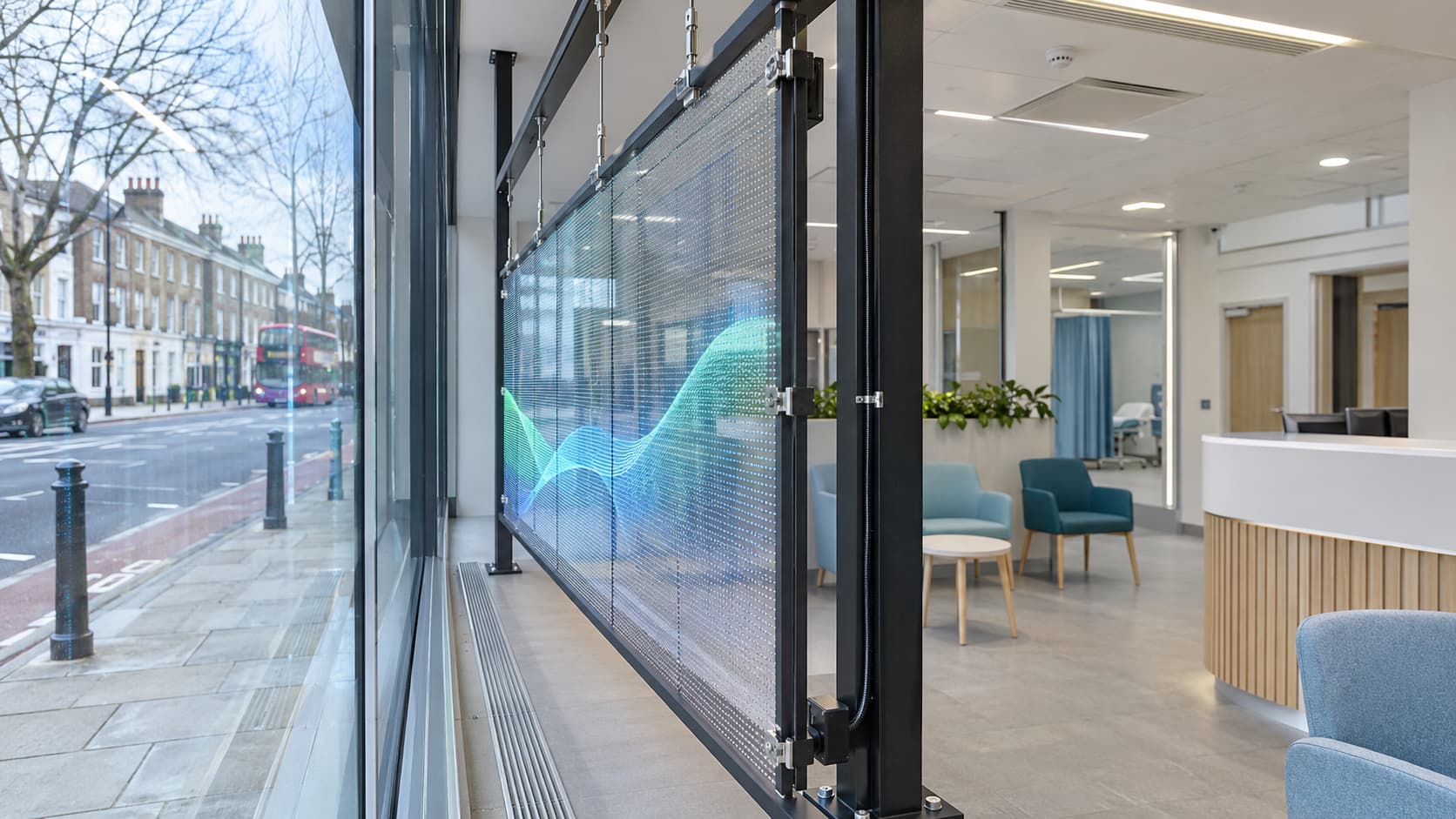
Street-facing window display · London, UK
The Solution
A transparent display and independent support frame keep the window usable for communication, cleaning and maintenance.
We specified the AirMesh P3.9mm transparent LED display at 4.25 m × 2 m, suspended behind the existing window glass on an independent mounting frame. The display is not attached to the glass. It hangs in the enclosed demonstration zone with a deliberate service gap between the panel and the glazing.
This configuration delivers three things at once:
The gap allows safe access to both surfaces of the glass without dismantling the display.
The independent frame allows module-level access from behind or above, depending on the final rigging detail, without putting pressure on the glazing.
The P3.9mm transparent panel retains approximately 74% visual transparency, so the closed demonstration zone behind the glass remains legible rather than being hidden behind a solid screen.
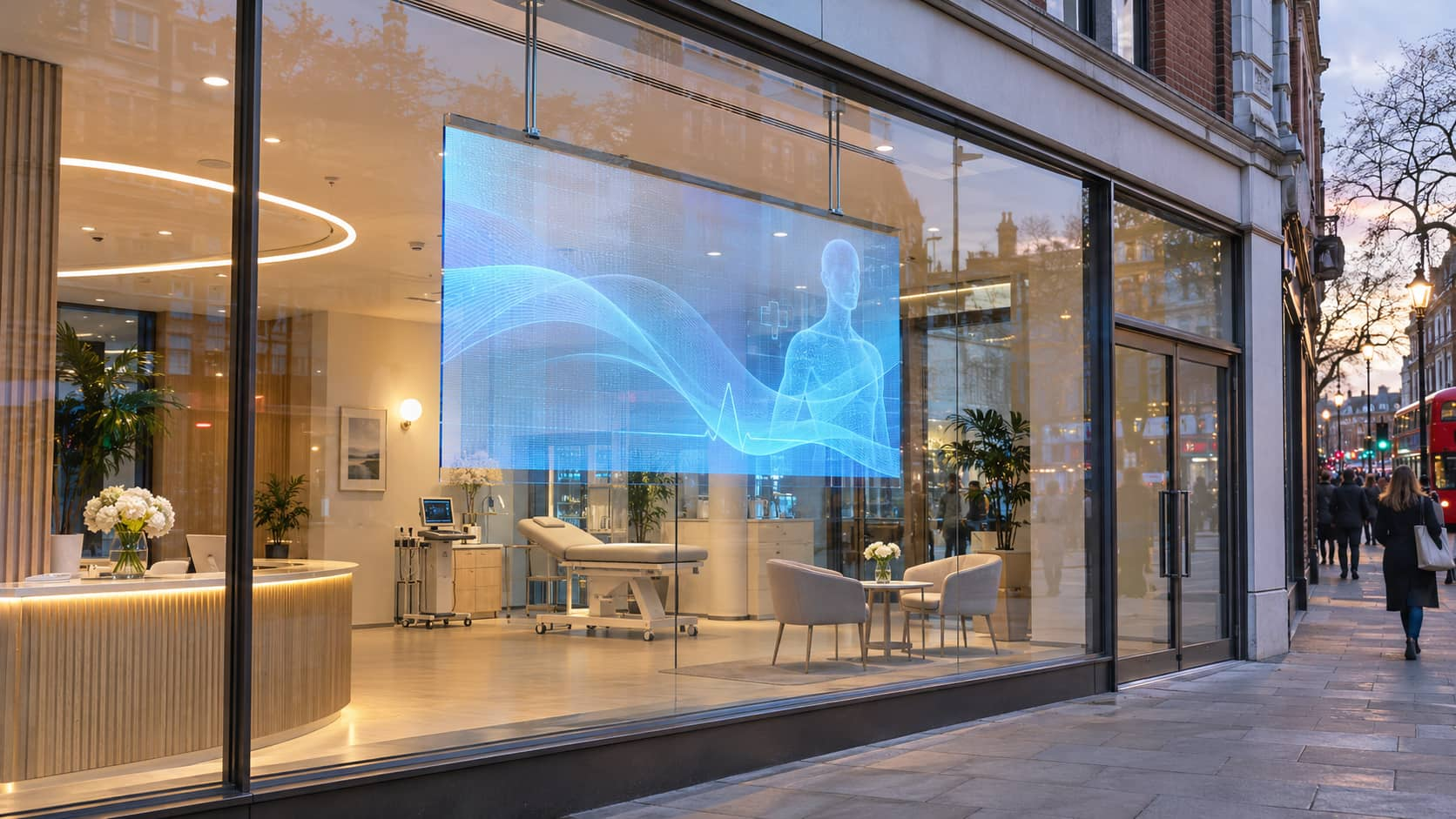
The display is interior-mounted behind glass, which in England normally benefits from deemed advertisement consent under Class 12 of the 2007 Advertisement Regulations. That usually means no separate planning application is required for the screen itself, although external fascia signs, listed buildings, and conservation areas should always be checked with the local authority.
Technical Specification
A transparent LED display configured for the glazing, ambient light and service requirements of this healthcare window.
4.25 × 2 m
Display dimensions · 8.5 m² total area
P3.9mm
Indoor transparent LED pixel pitch
≈74%
Typical visual transparency
| Pixel pitch | 3.9 mm indoor transparent |
|---|---|
| Transparency | Approximately 74% visual transparency |
| Brightness | 4,000 nits class, dimmable |
| Refresh rate | 3,840–7,680 Hz |
| Average power | Approximately 200–270 W/m² |
| Mounting | Suspended on an independent frame behind the glass; not glass-mounted |
| Service access | Clearance maintained between display and glazing for glass cleaning and screen maintenance |
Figures reflect the general performance envelope of P3.9mm-class transparent LED products; project settings were tuned to the glazing and ambient light conditions.
At 4.25 m × 2 m (8.5 m²), the display draws in the low-kilowatt range under normal content. Brightness is adjustable for daylight, evening, and overcast conditions.
Because the panel is suspended rather than bonded to the glass, the glazing is not carrying the display load — an important consideration for leased or period commercial properties in London.
Project Considerations
The display adds a communication layer without turning the window into an opaque wall. The closed demonstration zone behind the glass remains visible, and the frontage keeps an open, modern appearance.
A suspended installation with a service gap avoids the common problem of a screen fixed so close to the glass that neither surface can be cleaned properly. This matters for a street-facing healthcare window where appearance and hygiene are both visible to the public.
The screen is used for service-level and promotional content in a closed demonstration space. It is not connected to patient records, appointment lists, or any identifiable data source. UK healthcare screens visible to the public should not display patient names, appointment details, or other personal information; keeping the window display on a separate content system is the straightforward way to meet that expectation.
Outcomes
The suspended configuration maintains access to the glazing without removing the display.
The independent frame allows maintenance without loading or disturbing the glass.
The high-transparency P3.9mm panel lets the closed demonstration zone read through the screen rather than being blocked by an opaque display.
The clinic moved from static window graphics to scheduled, remotely updatable content for services, health reminders, and opening-hours messaging.
Frequently Asked Questions
No. The AirMesh P3.9mm display is suspended behind the glass on an independent frame. It is not bonded or mounted to the glazing. This protects the glass from display load and vibration, and it preserves a gap for cleaning both the glass and the screen.
The installation keeps a service clearance between the display and the glazing. That allows safe cleaning of the glass surfaces and routine screen maintenance without dismantling the display. The exact clearance and access route should be confirmed at design stage against the window frame and rigging details.
A P3.9mm transparent panel typically retains around 70% visual transparency. It reduces but does not eliminate visibility into the enclosed demonstration zone. The effect should be assessed on-site, but for most street-facing healthcare windows it is materially more open than an opaque LCD or solid LED wall.
In England, a digital screen installed inside a building behind the glass normally benefits from deemed advertisement consent under Class 12 of the 2007 Advertisement Regulations, so a separate planning application is usually not required. Externally fixed screens, fascia signs, listed buildings, and conservation areas fall under different rules and should be checked with the local authority.
The display is used for service-level and promotional content in a closed demonstration space. As long as it is not fed from appointment systems, patient records, or any identifiable data source, it sits outside the GDPR obligations that apply to clinical patient-information screens. Content scheduling and access controls should still be documented as part of the centre’s information governance.
The interior position protects the panel from weather and direct contact. Routine maintenance is mainly content and brightness monitoring, occasional cleaning of the glass and panel surface, and module-level service access via the independent frame. The service gap should be planned at installation so the glass can be cleaned without removing the screen.