
More transparency doesn’t mean a fainter picture. That’s the first assumption worth dropping, and it’s just one of six myths floating around the see-through LED screen category. Each one costs people the wrong product decision before they’ve even seen a sample panel.
Myth 1: A Transparent LED Display Always Looks Dim
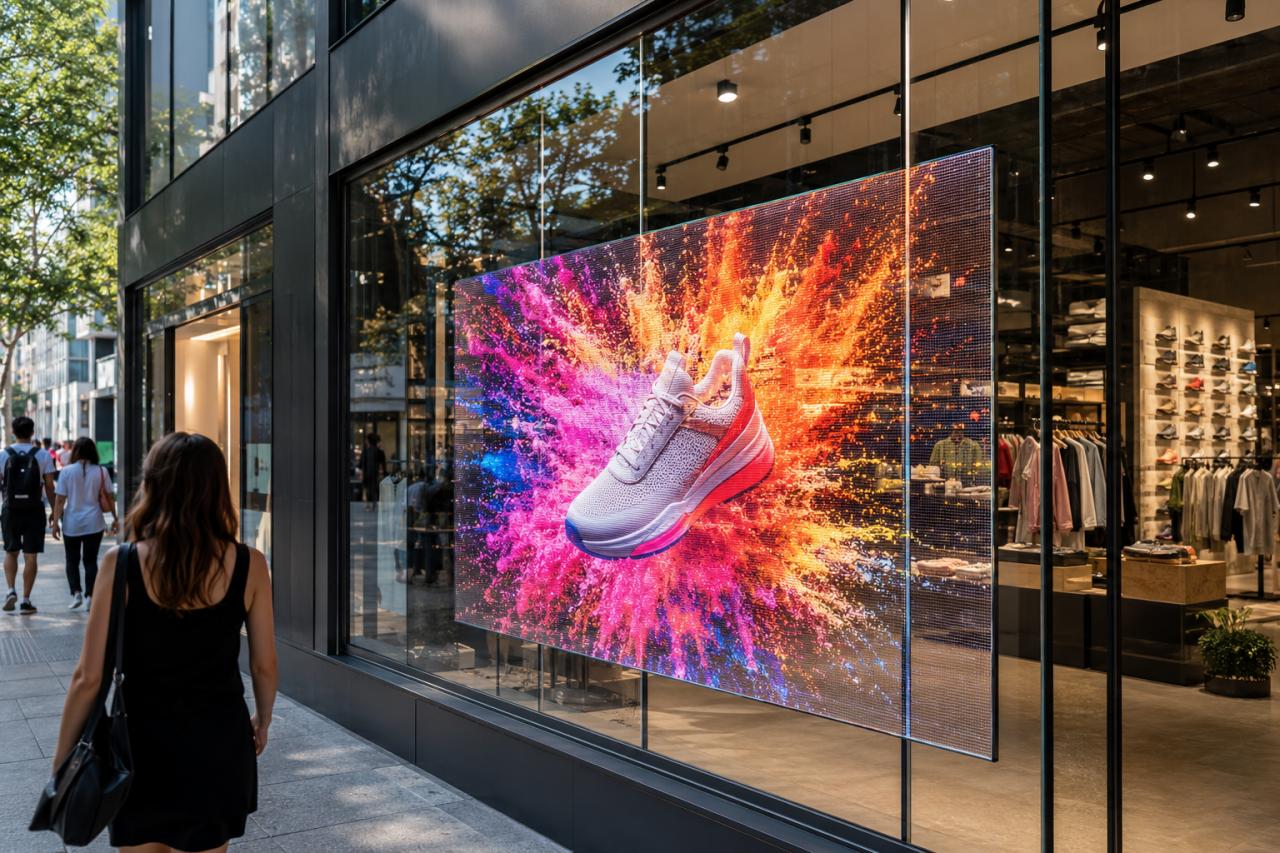
High transparency and low brightness aren’t the same trade-off. That pairing depends on pixel pitch and LED density, not on transparency alone. A 2.5mm pitch transparent LED display can hit roughly 160,000 pixels per square meter. It still holds a 70% transparency rate while doing it — sharp imagery and a clear view through the glass, together. Outdoor-rated units push brightness even further. Some configurations reach 6,000 nits, which holds up fine against direct sun. So the “transparent means faint” idea doesn’t hold up under scrutiny in current LED technology. Chip quality sets the real limit, along with how a manufacturer balances pixel spacing against output. The transparent format itself isn’t the bottleneck.
There’s a real engineering trade-off underneath, though. Packing more LEDs into a given area boosts brightness but reduces the open space between diodes. That reduction lowers transparency. Smaller, denser chips solve the conflict without forcing a choice between the two specs.
Myth 2: Every Transparent LED Display Needs a Structural Frame
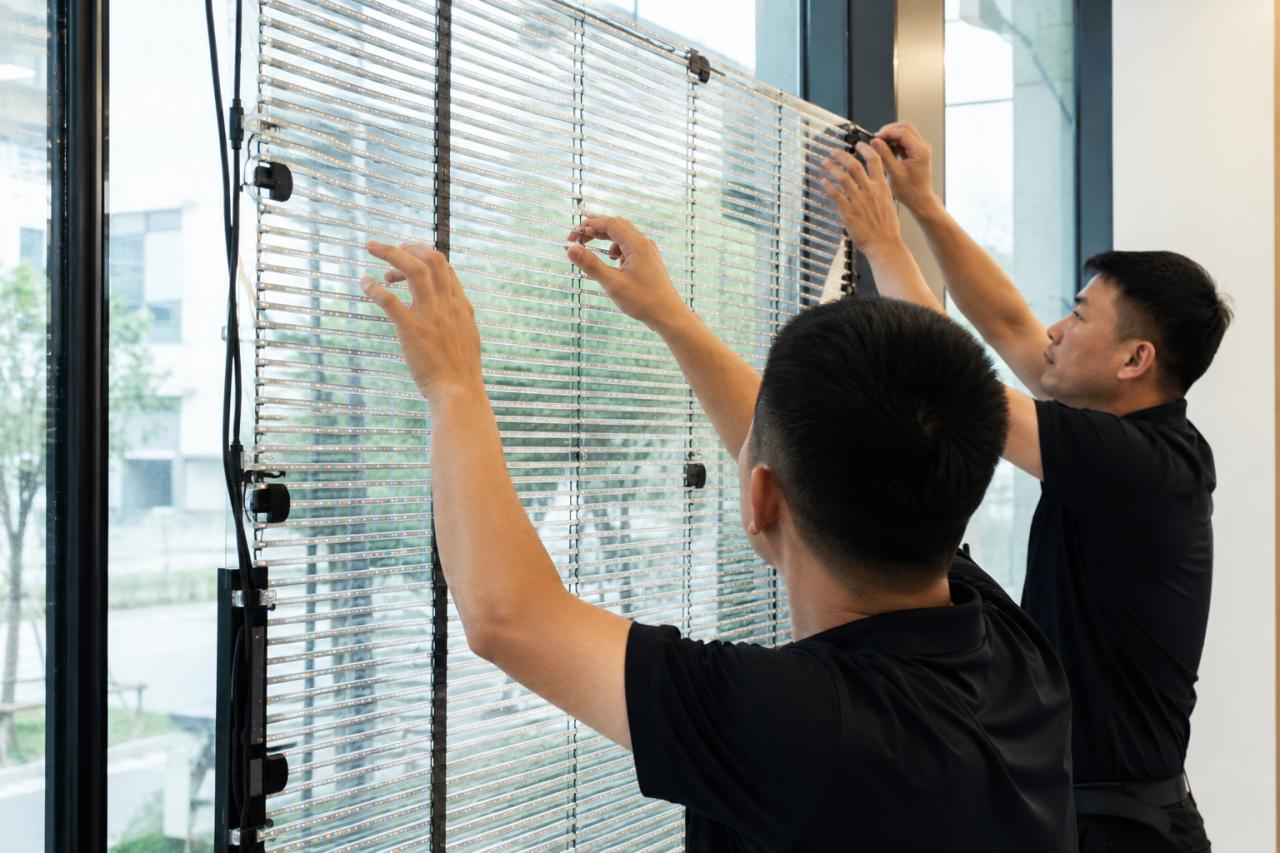
Bolted frame, wall penetration, the works — that’s the mental image a lot of quotes start from by default. The assumption usually traces back to traditional LED video walls, where a steel frame and a rigging system are standard parts of the build. Carrying that same expectation into a transparent LED display quote is what inflates the number for no reason.
The two product categories solve completely different problems. A standard LED wall builds its own structure from scratch — frame, cabinet, mounting hardware, all of it. A transparent LED display, by contrast, often works with an existing surface: a storefront window, a glass facade, an atrium wall. Treating both projects as if they need the same hardware misses that distinction entirely, and it’s usually where the inflated quote comes from.
Glass-Mounted Adhesive Systems vs Structural Frames
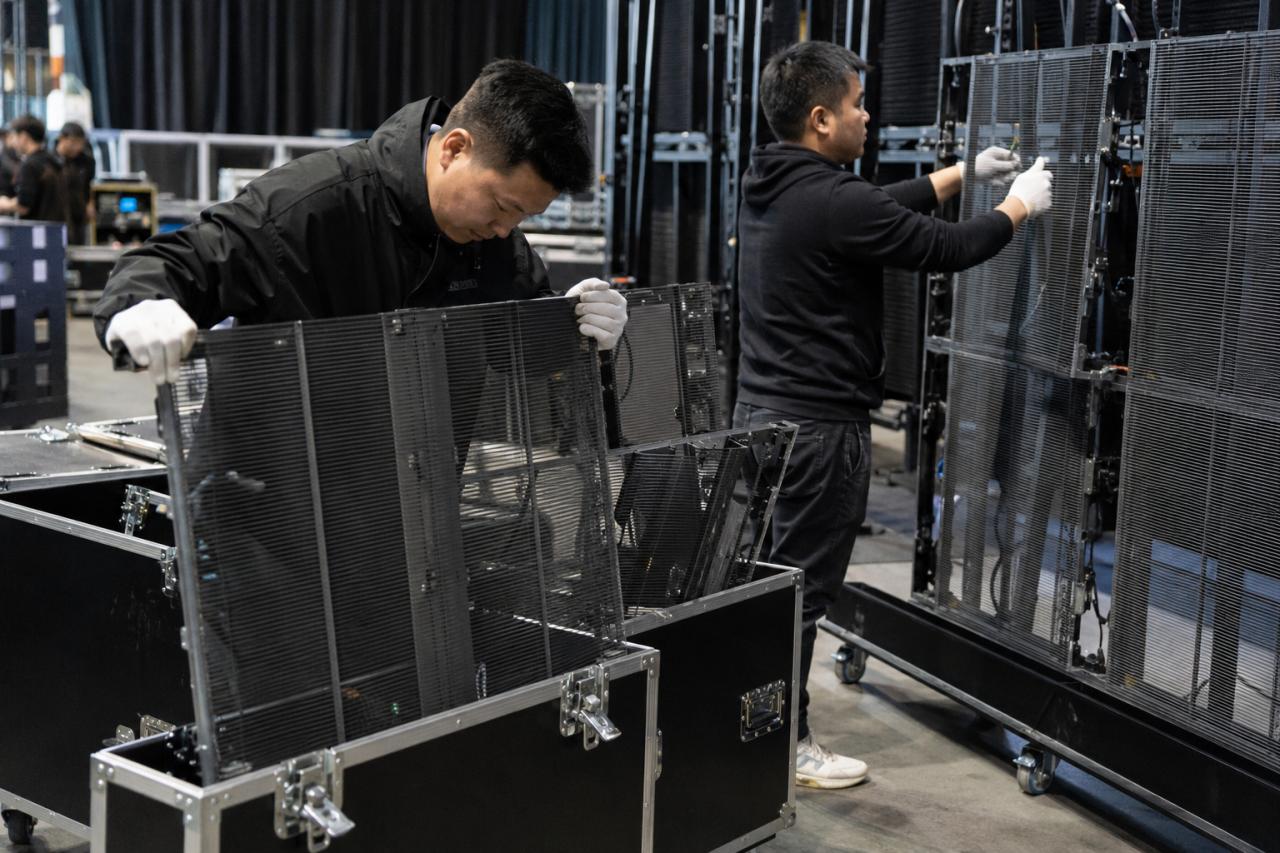
Glass-mounted LED film sticks directly onto existing glass. Precision grid connectors align the modules, and metal locking clips hold them in place. No structural frame, no wall penetration, no sign-off for load-bearing brackets. A touring-frame transparent screen built for stage backgrounds sits in a completely different category.
The install method should be the first question in any quote conversation, not the pixel pitch. A glass facade project and a stage backdrop project carry entirely different labor costs. Conflating the two is where budgets get blown. A storefront window installation might take a two-person crew half a day. A touring stage backdrop runs longer — rigging, load calculations, and usually a structural engineer’s sign-off come first. And the timelines split just as sharply. Adhesive film systems can go from delivery to operational in days. Framed systems can take several weeks once permitting and structural review are involved, especially for custom architectural installations.
Myth 3: A Transparent LED Display Is Maintenance-Free
“Set it and forget it” doesn’t survive long in this category. A transparent LED display built on adhesive-film technology integrates the LEDs and IC drivers into a single streamlined module. Fewer separate components means fewer failure points over a multi-year install. Pixel pitch options on film-style transparent LED displays typically range from P2.5 up to P10. Smaller pitches like P2.5 deliver close-up viewing clarity but require more frequent calibration checks, since LED density is higher. Larger pitches, such as P10, cost less to maintain. They suit big architectural facades where viewers stand much farther back.
Carbon fiber transparent LED display variants take maintenance in an entirely different direction. The cabinet weighs roughly 7 kg per square meter indoors. That’s light enough for touring crews to pack 4 to 6 square meters per case, which sharply reduces transport damage compared to heavier steel-frame alternatives. Here’s the honest trade-off. Lighter, film-based systems save on installation labor but need slightly more attention to driver calibration. Heavier-framed systems cost more to move but require less ongoing fuss once mounted. Neither wins the “low maintenance” label outright — that depends entirely on which failure mode matters more to avoid.
Myth 4: A Transparent LED Display Can’t Survive Outdoor Weather
Plenty of units handle outdoor weather just fine. Not every unit on the market does, though, and that gap is where projects get burned. Indoor-rated transparent panels skip the sealing that blocks moisture and temperature swings, full stop. An outdoor transparent LED display carries IP65 or IP67 ratings front and rear, plus UV-resistant coatings. Some models keep running reliably from -30°C through extreme heat. Their cabinet design handles storm-force wind loads by design, not by accident. The IEC sets the IP rating standards that these numbers reference, so a vendor citing IP65 or IP67 should point back to that exact framework.
Ask for the written IP rating outright. A vendor who can’t produce one probably isn’t selling an outdoor-rated product, no matter what the marketing copy implies. Check whether that rating covers both sides of the cabinet, too — a panel sealed only on the front still takes on water from behind during a storm.
Myth 5: A Transparent LED Display Is Truly Invisible
No transparent LED display is actually invisible. That’s the myth behind most of the buyer’s remorse in this category. Even at 80% to 95% transparency, the structure stays faintly visible up close. Most manufacturers note the screen becomes essentially unnoticeable from around 5 meters away — a meaningfully different claim than “invisible.” That distinction shapes where a unit belongs. A storefront window viewed from a sidewalk works fine at that distance. A small showroom changes the math: customers stand within arm’s reach of the glass, so pixel pitch and viewing distance need a different conversation before installation, not after.
Myth 6: Pixel Pitch Only Affects Clarity, Not Transparency
Pixel pitch usually lands under “resolution” and stops there. In reality, it also sets how much open space sits between each LED. That open space creates a sense of transparency. A finer pixel pitch packs more LEDs into the same area. That sharpens close-range detail but narrows the gaps between diodes. A wider pitch leaves more open space, which boosts transparency but increases the minimum viewing distance at which the image looks clean. Treating pixel pitch as a pure clarity spec misses half of what it actually controls on a transparent screen.
Knowing all six of these going into a vendor conversation changes the questions that get asked. Install method, IP rating, realistic viewing distance, pixel pitch versus transparency — that short list, covered before signing a quote, prevents most of the regret stories that surface in this industry after the fact.