
Museums, theaters, and experience centers need more than a large display when they want visitors to feel surrounded by a story. The screen must cover a wide field of view, audio must come from the correct direction, and the content must suit the room. An Acoustic LED Dome combines a curved LED surface, perforated display modules, rear-mounted speakers, and synchronized media control. It can support educational presentations, immersive films, live performances, digital art, brand experiences, and themed attractions within the same venue.
How Does an Acoustic LED Dome Create an Immersive Experience?
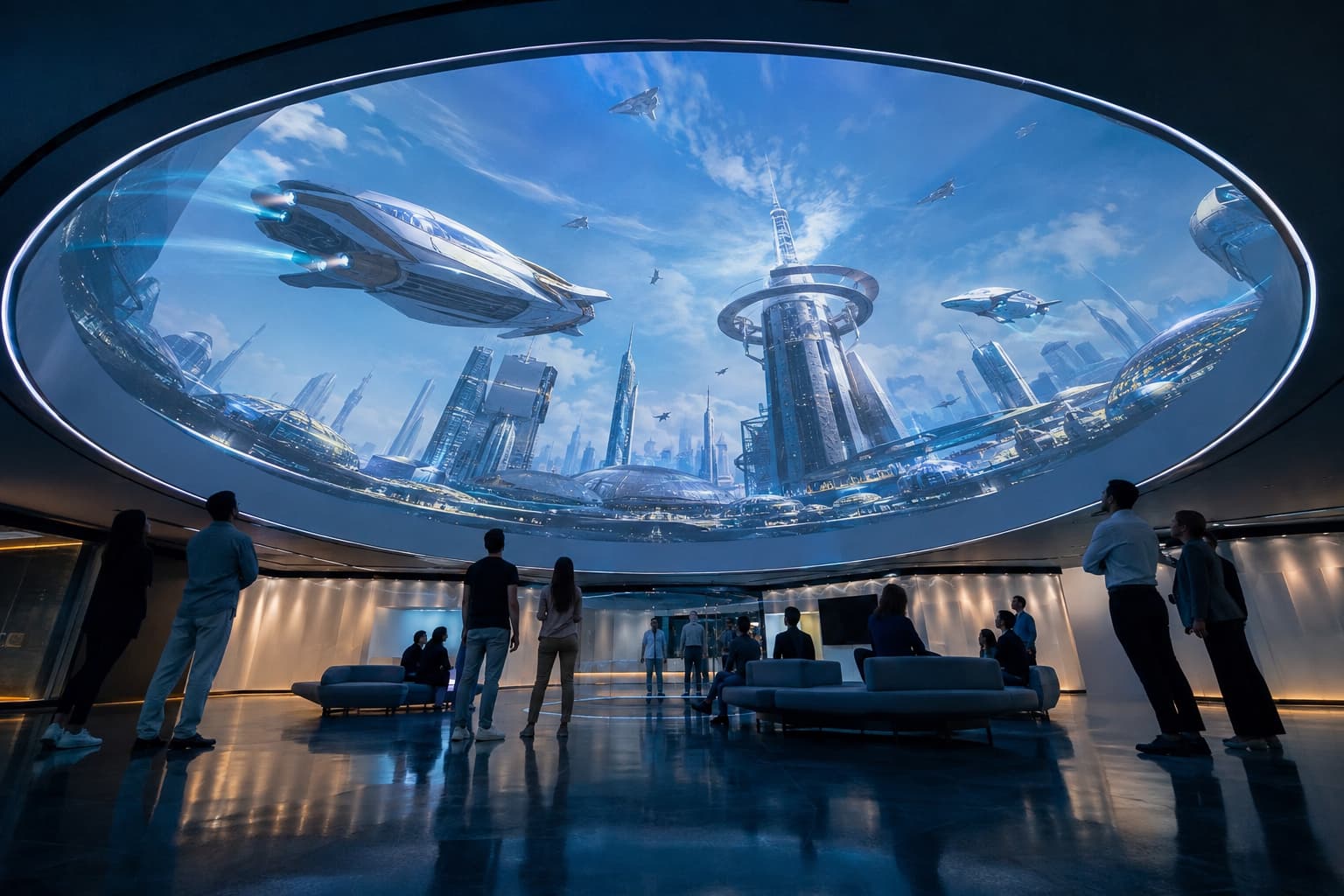
A flat LED wall keeps the audience looking in one direction. An Acoustic LED Dome places imagery above and around the viewing area, allowing aircraft, planets, natural environments, and digital artwork to move across a continuous curved surface. Perforations in the LED modules allow sound to pass through the display. Speakers can sit behind different areas of the dome, helping the sound location match the related image. For venues planning object-based playback, spatial audio can place and move individual sounds within a three-dimensional listening space, depending on the selected platform and speaker layout. Display control, audio playback, lighting, and interactive devices should therefore be planned as one connected system.
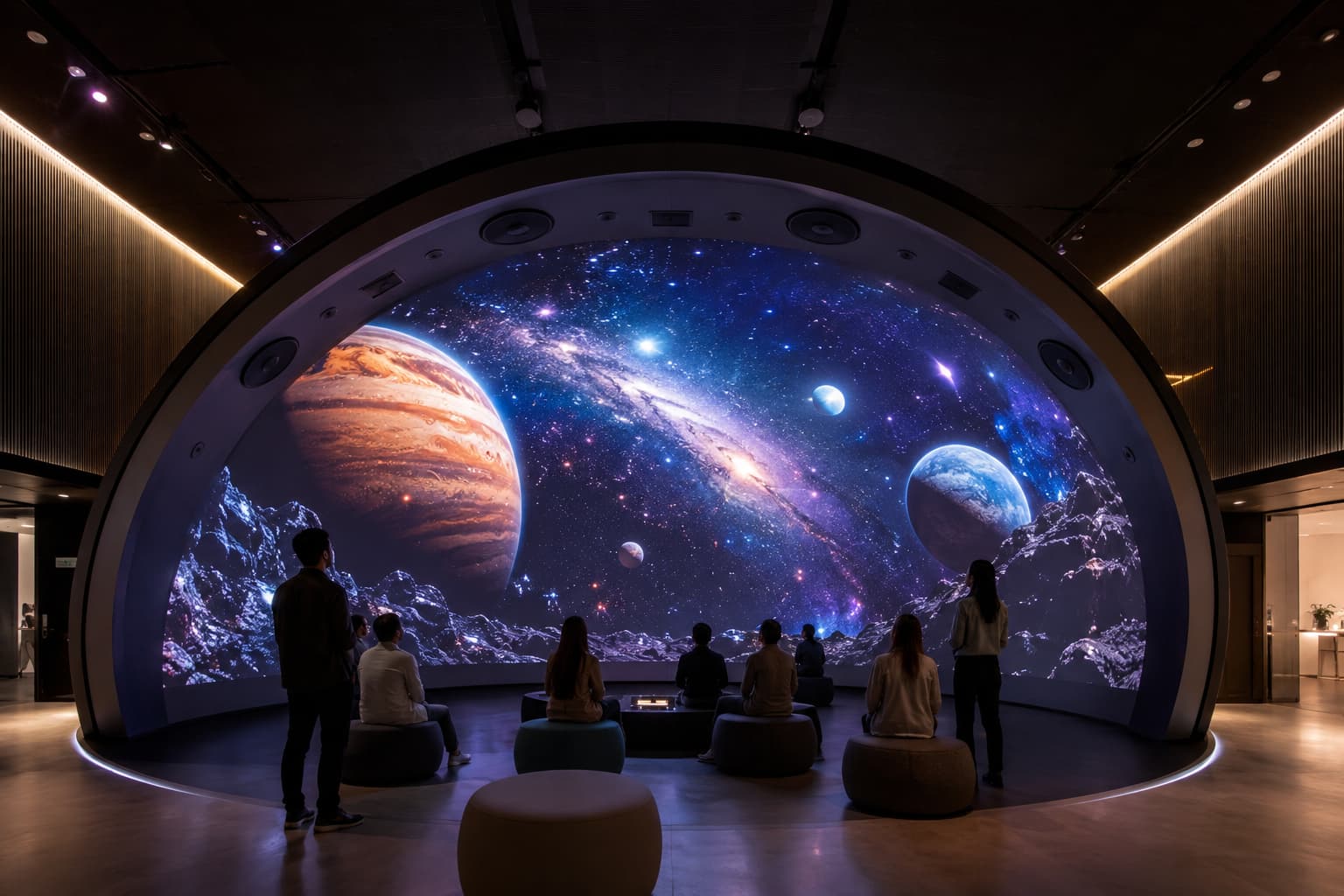
Acoustic LED Dome for Museums and Educational Exhibitions
Museums can use an Acoustic LED Dome to turn scientific, historical, and cultural information into spatial presentations. Astronomy programs can show planets, galaxies, and spacecraft above the audience. Natural history exhibitions can recreate oceans, forests, weather systems, or geological events. Cultural institutions can reconstruct historical architecture or place visitors inside a past environment. The curved format helps explain scale and movement that wall graphics or standard video may not communicate clearly. A science center can show how a storm develops across a region, while an aviation museum can demonstrate aircraft movement under different flight conditions. Motion sensors, touch controls, or tracking systems can also let visitors select scenes or affect visual and audio elements. The interaction should support the educational message instead of distracting visitors from the exhibition.
Acoustic LED Dome for Theaters and Live Performances
Theaters can use an Acoustic LED Dome for dome films, documentaries, art programs, music events, dance, and multimedia performances. LED image generation avoids projector shadows and overlapping projection zones while supporting moving imagery across the dome. For live productions, the dome can become a responsive stage environment. Visual content may follow music, performer movement, lighting cues, or real-time data. Audio can place voices, instruments, and effects around the audience instead of directing every sound from the front. A theater should decide whether the system will support prerecorded films, live events, or both. Live programs may require camera feeds, low-latency processing, media servers, timecode, and connections to lighting and audio consoles.
Acoustic LED Dome for Experience Centers and Attractions
Experience centers often need to update their stories without rebuilding the physical space. An Acoustic LED Dome allows operators to replace digital content while retaining the main display structure. Automotive companies can present vehicle technology, aerospace brands can simulate flight, and energy companies can visualize infrastructure or future systems. The same venue can also host digital art, virtual travel, themed entertainment, and temporary campaigns. A morning session may introduce a company’s technology, while an evening event uses the dome for an immersive performance. A customized cosm led dome can be planned around the available diameter, audience position, viewing distance, content type, and acoustic layout. This allows the project team to match the display to the venue instead of forcing the room to accept a standard screen size.
What Should Buyers Check Before Ordering an Acoustic LED Dome?
Dome Size and Audience Layout
Confirm the room dimensions, ceiling height, dome diameter, entrance position, seating arrangement, and closest viewing distance. The design should leave enough space for structural support, speakers, ventilation, cables, emergency access, and maintenance. Audience flow must also be reviewed before production, especially in museums and experience centers with continuous visitor traffic.
Pixel Pitch and Image Resolution
Pixel pitch should match the viewing distance, dome diameter, and content detail. A finer pitch can support closer viewing, but it may also increase module density, processing requirements, power demand, and project cost. The total resolution should support videos, interactive graphics, live feeds, and educational material. Buyers should compare the actual audience position and content plan instead of selecting the smallest pixel pitch available.
Audio Position and Acoustic Transparency
Confirm where speakers, subwoofers, and acoustic treatment will be installed. The project team should test how the perforated LED surface affects sound level and frequency response, then calibrate the completed system across the entire audience area. Museums may prioritize clear narration, while theaters may require a wider dynamic range for films and live performances.
Structure and Maintenance Access
The project requires structural calculations, installation planning, power distribution, heat management, fire-safety review, and safe technician access. Front-service modules can simplify maintenance, but the venue still needs a practical route for replacing LED modules, power supplies, receiving cards, speakers, and cables. Buyers should also confirm how technicians will reach the upper sections of the dome after installation.
How Should Content Be Designed for an Acoustic LED Dome?
Standard 16:9 video should not simply be stretched across a dome. Curved displays require content mapping, geometric correction, and careful placement of important subjects. Faces, text, logos, and product details should stay away from areas where the curve may cause noticeable distortion. Content creators also need to consider where the audience will look and how quickly visual elements move across the dome. Sound direction should match visual movement. When an aircraft travels toward the upper-left area, the audio should follow the same route. A mismatch between image and sound can weaken the immersive effect. Operators should prepare a content library instead of relying on one permanent film. It may include a main attraction, educational sequences, seasonal programs, event visuals, live-performance assets, and presentations for private bookings. This approach allows the venue to update its program and serve different audiences without replacing the display system.
A Real LED Dome Project Shows the Need for Custom Planning
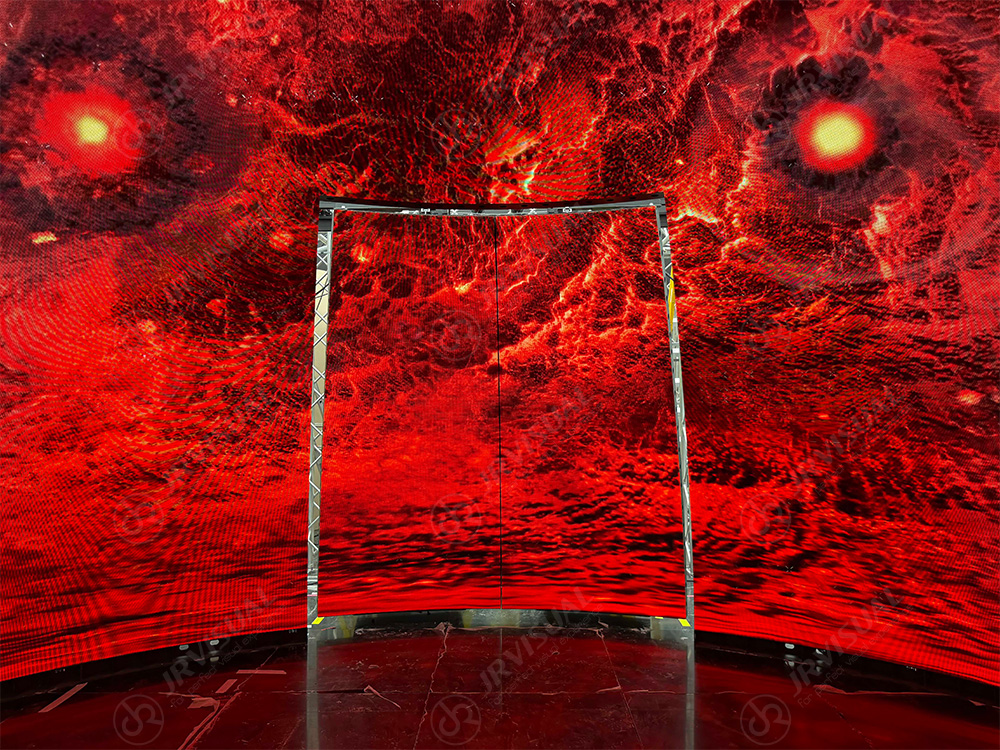
JR Visual’s 7m-diameter LED dome project at Farnborough International Airshow 2026 used a P2.5 Acoustic LED Dome and included customized curved automatic doors. The project shows how the display structure, entrance design, installation schedule, delivery period, and creative concept must be coordinated together. Museums, theaters, and experience centers may not need the same door system, but every venue has its own architecture, audience flow, acoustic conditions, content goals, and maintenance limits. A supplier should review these conditions before confirming the screen structure, pixel pitch, audio arrangement, and production plan.
Acoustic LED Dome Supports Different Venue Programs
Museums can use an Acoustic LED Dome for science, culture, history, and interactive education. Theaters can use it for immersive cinema, music, dance, and multimedia productions. Experience centers can build brand stories, simulations, digital art, and themed attractions that change over time. A successful project begins with the venue and its program. Buyers should define the audience layout, content plan, acoustic target, structural conditions, control requirements, and maintenance process before confirming the dome diameter and pixel pitch.
FAQ
What Is an Acoustic LED Dome?
An Acoustic LED Dome is a curved LED display that uses perforated modules to transmit sound and support speakers behind the screen.
Can Speakers Be Installed Behind the LED Dome?
Yes. Speakers can be installed behind the perforated display surface, but the completed venue still requires acoustic testing and calibration.
What Pixel Pitch Is Suitable for an Acoustic LED Dome?
The suitable pixel pitch depends on the viewing distance, dome diameter, content detail, total resolution, and project budget.
Can Existing Videos Be Played on a Dome Display?
Existing videos may be reused, but they usually require dome mapping, reframing, geometric correction, or additional content production.
Can an Acoustic LED Dome Support Live Performances?
Yes. It can connect with media servers, live video inputs, lighting systems, audio consoles, sensors, tracking equipment, and timecode.