
Global demand for indoor LED displays continues to grow as businesses increasingly embrace immersive digital communication systems. Today, indoor LED displays are impacting how brands communicate, how employees collaborate, and the physical space experience for visitors. Market data shows that fine-pitch indoor LED displays are increasingly used in commercial real estate, retail chains, corporate headquarters, and exhibitions due to improved cost-effectiveness and reliability. A successful indoor LED display deployment depends on understanding how different market segments use this technology.
Indoor LED Display Market Segmentation: Retail, Enterprise, Exhibition, and Office Public Spaces
Market segmentation is crucial because performance metrics that measure success in one environment may be completely inapplicable in another. For example, an indoor LED video wall designed for exhibition halls may be too bright for meeting rooms. At the same time, enterprise-grade fine-pitch displays may lack the modular flexibility required for rental applications. Therefore, understanding the specific needs of different market segments is essential to ensure efficient investment allocation and measurable returns.
Indoor LED Display for Retail Environments
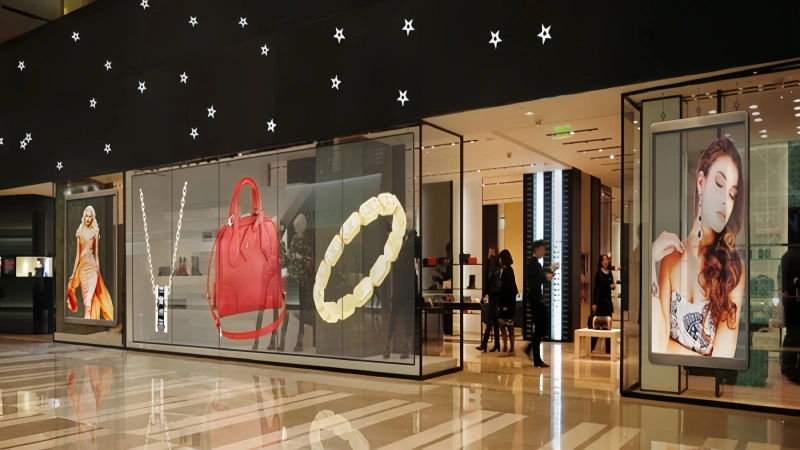
The retail industry is one of the most competitive and visually impactful markets for indoor LED displays. In this sector, indoor LED displays serve as dynamic sales tools that can influence consumer behavior in real time. Modern retail strategies rely on immersive brand storytelling, digital marketing, and omnichannel integration, and high-quality indoor LED video walls can effectively enhance their effectiveness.
From a technical perspective, the choice of pixel pitch is crucial for retail locations viewed up close, such as luxury goods display cases, cosmetics counters, or jewelry display cases. Small-pitch indoor LED displays (P0.9–P2.5) offer superior image clarity and accurate color reproduction. For large promotional walls located further from customers, pixel pitches of P3.9–P6.25 can be used to balance cost and performance. Brightness and contrast must also be carefully calibrated. Retail stores typically employ a mix of lighting, including spotlights and natural light. Indoor LED displays with brightness between 800 and 2500 nits ensure clear visibility without glare.
Indoor LED Display for Enterprise Applications
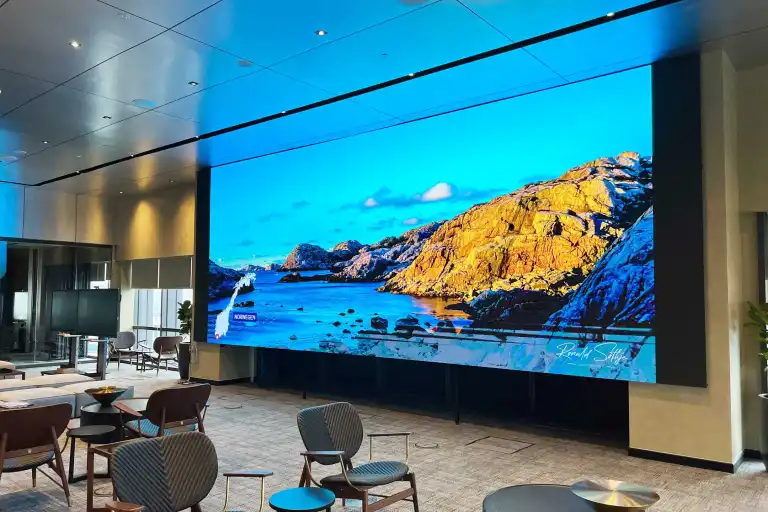
In enterprise environments, indoor LED displays serve as a strategic communication platform to strengthen brand image and improve operational efficiency. Unlike retail environments, enterprise installations place greater emphasis on clarity, professionalism, and seamless integration with enterprise systems.
Common applications include lobby branding walls, executive briefing centers, conference rooms, and auditoriums. In these venues, where audiences can view displays at close range, small-pitch indoor LED displays (P0.9–P1.9) are typically preferred. High pixel density ensures clear text, detailed charts, and professional video conferencing visuals. Color calibration and uniformity are equally important. Corporate branding requires consistent color reproduction across all modules. Therefore, factory calibration and on-site adjustments are crucial for maintaining long-term color temperature accuracy.
Furthermore, seamless panel alignment enhances visual coherence and creates a high-end architectural look. Additionally, corporate indoor LED displays must integrate with audio-visual control systems, conferencing platforms, and enterprise content management software. Compatibility with HDMI, SDI, and network protocols ensures seamless integration.
For Exhibitions and Trade Shows
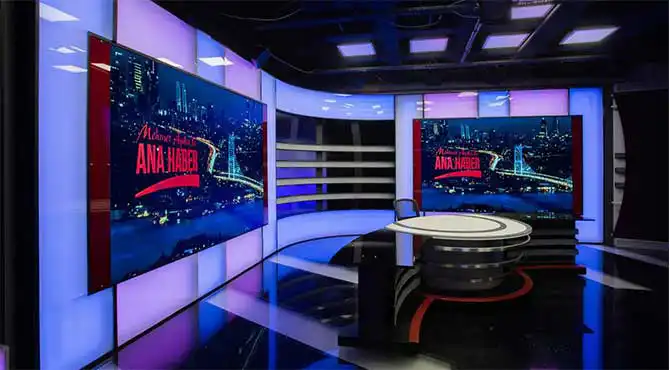
Exhibition environments present unique challenges, requiring flexibility, high brightness, and modular design. Indoor LED displays for trade shows must attract attention in visually rich environments while supporting rapid installation and dismantling.
Rental-grade indoor LED displays typically feature lightweight aluminum alloy frames, quick-locking devices, and front and rear maintenance designs. These characteristics reduce labor time and transportation costs. Since exhibition halls normally have strong overhead lighting, brightness requirements may range from 1500 to 5000 nits to maintain good visibility. The choice of pixel pitch depends on the booth size and viewing distance. For large backdrops visible from aisles, a pixel pitch of 2.5–4.8 pixels provides a strong visual impact while controlling costs. In private demonstration areas where viewers view the screen at close range, a smaller pixel pitch better showcases product details.
For Office Public Spaces
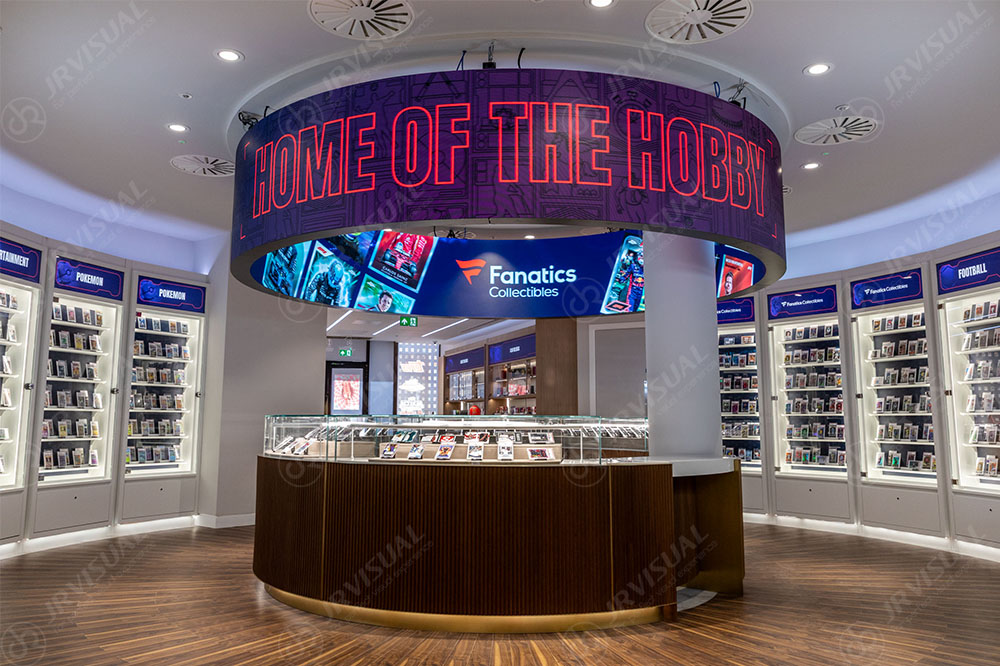
Office public spaces require more functional indoor LED display solutions. These spaces include lobbies, corridors, collaboration areas, and cafeterias. The primary goal is to deliver information while efficiently integrating brand elements.
Indoor LED displays in office spaces are typically used to display meeting schedules, company dashboards, security notices, and internal announcements. Pixel pitch must be matched to typical viewing distances; pixel pitches of 1.9 to 3.9 are generally used in lobbies, while closer signage may require higher resolutions. Energy efficiency and long-term durability are crucial. Unlike temporary exhibition installations, office LED displays operate continuously. Timing software and brightness adjustment functions help reduce energy consumption and extend LED lifespan.
Indoor LED Display Technology Framework
Choosing the right indoor LED display requires careful evaluation of technical parameters across all application areas. While application segmentation guides application strategies, core engineering principles ensure reliable performance and cost optimization.
Pixel Pitch and Viewing Distance
Pixel pitch remains the most important factor affecting image sharpness and cost control. Smaller-pitch indoor LED displays offer superior detail but require a higher investment. Decision-makers should choose an appropriate pixel pitch based on the actual viewing distance, rather than simply selecting the smallest available option. Overly pursuing high specifications increases costs without corresponding benefits.
Brightness, Contrast Ratio, and Refresh Rate
Brightness must be matched to ambient lighting conditions. Typical indoor environments require 800 to 2500 nits of brightness, while exhibition spaces with strong ambient light may require higher brightness. High refresh rates reduce flicker and enhance camera compatibility, both of which are increasingly important in mixed-event environments. Contrast ratio and grayscale processing determine visual depth and gradient smoothness. Choosing indoor LED displays equipped with advanced driver chips and color calibration systems ensures consistently superior image quality over the long term.
Control Systems and Content Management
Efficient indoor LED video walls rely on a stable control ecosystem. Enterprise-grade content management systems support remote updates, scheduling, and multi-location synchronization. Through API integration, indoor LED displays can connect to POS systems, enterprise dashboards, and data analytics platforms. Content strategy should be developed early in the project lifecycle. Without structured planning, even technologically advanced indoor LED displays may fail to achieve the desired user interaction.
Future Markets
The future development of indoor LED displays depends on innovation in micro-LED technology, improved energy efficiency, and smarter control platforms. As manufacturing precision increases, the cost of small-pitch indoor LED displays continues to decline, driving their application in more market sectors. From a product management perspective, the segmentation of indoor LED displays depends not only on technological differences but, more importantly, on the suitability for their application scenarios. Retail requires conversion-oriented visuals; enterprise customers prioritize clarity and professionalism; exhibitions require eye-catching flexibility; and office and public spaces focus on information delivery and operational stability.