
Flexible LED displays are used in a variety of creative and dynamic installations, from curved retail walls to immersive entertainment venues. When choosing a flexible LED display for irregular shapes, numerous technical, operational, and design factors need careful consideration. Choosing the wrong display can lead to poor visual effects, installation difficulties, and long-term maintenance problems. Therefore, you need a comprehensive understanding of all key elements to maximize the aesthetics and functional reliability of your installation, ensuring a smooth visual experience.
Technical Specifications of Flexible LED Displays
When selecting a flexible LED display, its optical performance is one of the most important considerations. Pixel pitch directly affects viewing distance and the display’s overall sharpness. For indoor installations, ultra-fine pixel pitches of 0.9 mm to 2 mm are ideal for close-up viewing. In contrast, larger pixel pitches are suitable for viewing at greater distances. Brightness is another key factor; flexible LED displays should provide sufficient brightness to maintain vibrant colors under various ambient lighting conditions, such as in retail spaces, exhibitions, and stage backdrops.
Color accuracy, contrast, and grayscale depth also play a crucial role in creating lifelike images. Advanced technologies like HDR10 enhance the visual depth of displays, ensuring brighter highlights and deeper blacks. Maintaining consistent brightness and color across the entire display surface is particularly challenging for irregularly shaped displays. Still, flexible LED modules address this challenge with uniform pixel density and high-quality RGB LEDs. Furthermore, viewing angles must be considered: wider angles ensure color consistency even when the viewer is off-center, which is crucial for curved or 3D displays.
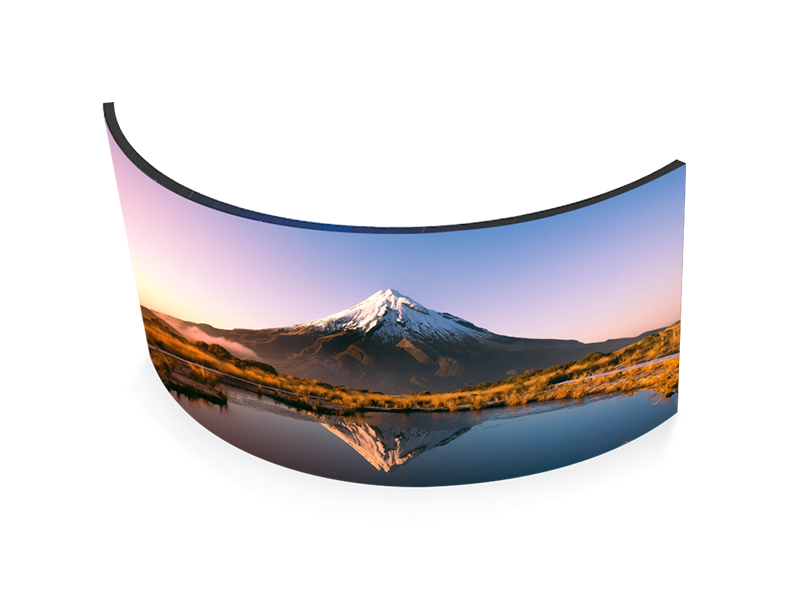
Flexible LED Displays: Bending Radius, Module Thickness, and Weight
Mechanical design determines how flexible LED displays are installed and integrated into irregular shapes. A key metric is the minimum bending radius, which determines the maximum angle the module can bend without damaging the LEDs or circuitry. Flexible LED screens must strike a balance between a thin, lightweight module structure and structural integrity to achieve smooth bending while maintaining performance.
Thinner, lighter components reduce stress on the support structure and simplify installation, making them especially suitable for suspended or complex curved-surface installations. Lightweight materials such as steel or carbon fiber are often used to ensure durability without increasing volume. Furthermore, proper edge and seam treatment ensures seamless panel splicing, creating a visually continuous image even on curved or angular surfaces. Robust installation schemes and structural reinforcement prevent components from sagging or deforming over time, ensuring safety and lifespan.
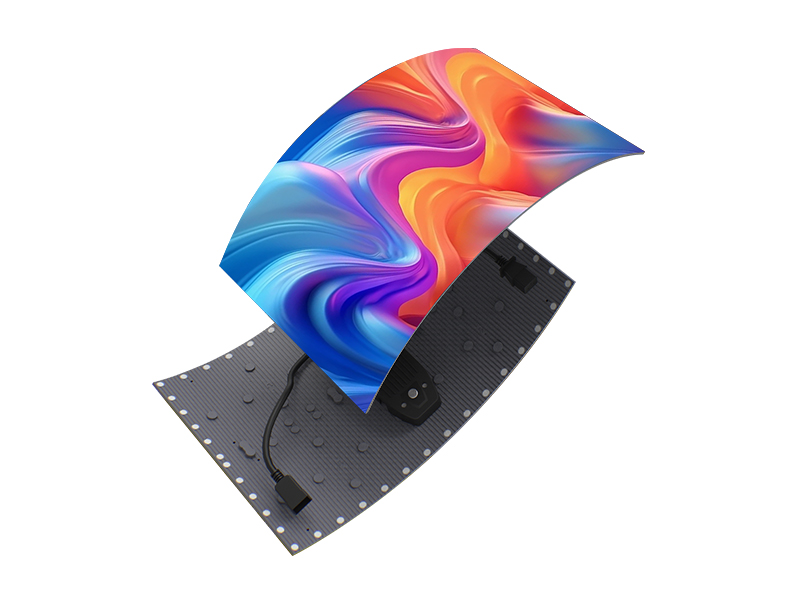
Customization and Manufacturing Capabilities
Customizable manufacturing processes enable flexible LED displays to fit irregular or custom shapes precisely. This includes cutting modules to precise dimensions, accurately mapping pixels, and ensuring seamless alignment between multiple panels. JRVISUAL’s flexible LED screens support curved, tilted, or 3D configurations, making them suitable for architectural installations, exhibition booths, and immersive environments.
Additionally, software must correctly render images on non-standard display shapes for content adaptation. This involves pixel mapping, geometric correction, and synchronization with the control system. Suppliers typically offer prototyping services, allowing customers to test partial installations before full deployment. Customizing each panel reduces installation errors, ensures a perfect fit, saves time, and avoids costly adjustments.
Operational Considerations for Flexible LED Displays
The operational performance of flexible LED displays is highly dependent on the control system and synchronization technology. High-end LED controllers support multiple inputs, refresh rates up to 3840Hz, and seamless signal processing. For curved or irregularly shaped screens, accurate pixel mapping is crucial to align each visual element and prevent distortion properly.
Furthermore, in large-scale installations, flexible LED screens may require networked content management solutions. Wireless connectivity, remote monitoring, and centralized control enable operators to manage multiple panels efficiently. Interactive features such as touch or sensor integration can further enhance user engagement. A smooth content workflow, including real-time updates and automated testing, ensures the display functions perfectly in demanding environments such as events and exhibitions.
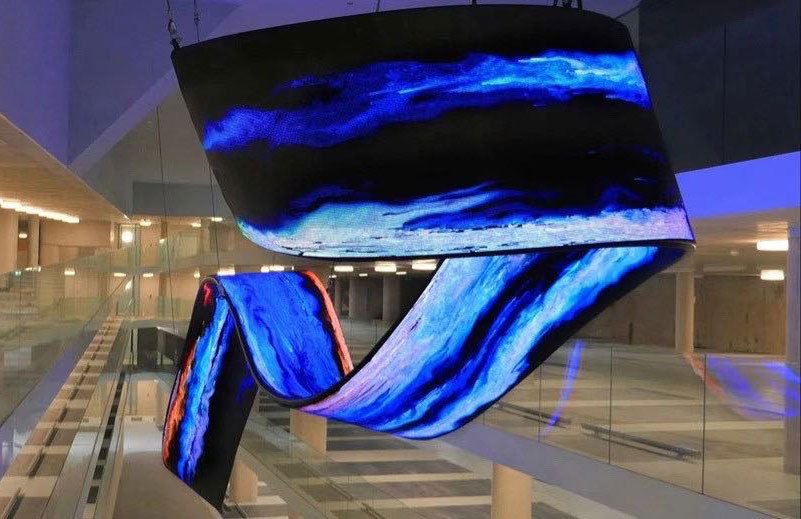
Power, Thermal Management, and Electrical Safety
Power and heat dissipation considerations are critical for maintaining performance and extending lifespan. Flexible LED displays require efficient power zoning, and independent circuitry reduces the risk of overload. Thermal management systems, such as heat sinks or airflow channels, prevent overheating during prolonged use. Additionally, proper grounding, surge protection, and compliance with local safety standards reduce risks during installation and operation. For irregular shapes or multi-layered structures, careful wiring is essential to avoid visual interference while ensuring reliability. By balancing electrical efficiency, thermal management, and safety, operators can ensure uninterrupted, high-quality visual output.
Ensuring the Successful Operation of Customizable Flexible LED Displays
Selecting the right customizable flexible LED display for irregular shapes requires careful consideration of technical specifications, mechanical design, operational performance, and long-term durability. From pixel pitch and brightness to bending radius and module weight, every factor affects the visual appeal and functional reliability of the installation. Control systems, thermal management, and maintainable design further ensure smooth operation, while careful supplier selection reduces installation risks.