
You spotted a rotating LED screen at a trade show. It stopped you cold. That reaction is exactly what it’s built for. But being impressed by one and knowing whether it fits your business — those are two very different things. Before you commit the budget, here are seven things every buyer needs to understand. Not about the technology. About what it means for you.
Thing 1 — A Rotating LED Screen Works Hardest When Your Space Has a Crowd
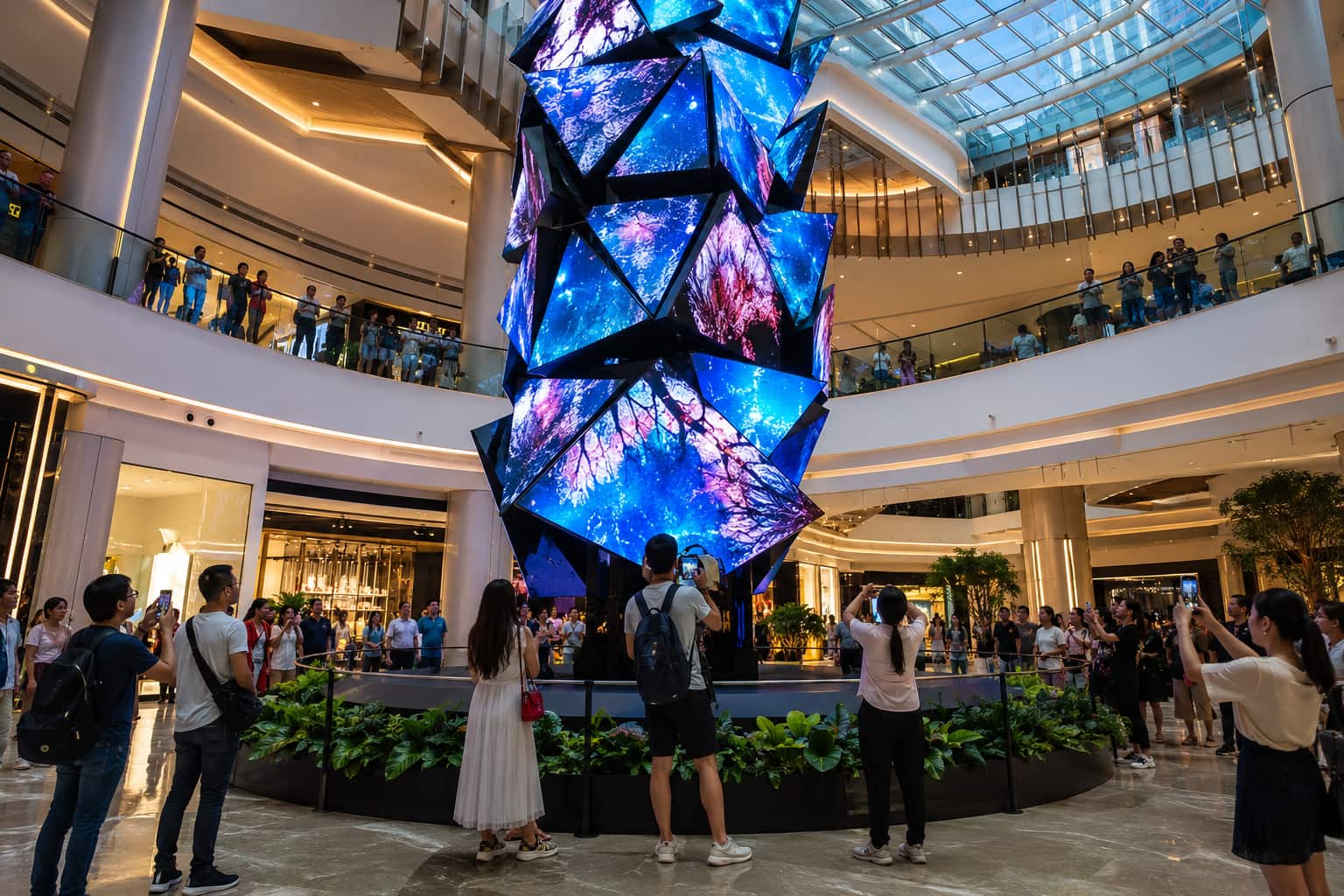
A kinetic LED display captures involuntary attention. The physical motion — panels rotating, shifting, reconfiguring in real time — triggers a visual response that static content can’t replicate. But that power only delivers business value when people are there to see it. High-traffic locations are where a rotating LED screen pays for itself the fastest. Mall atriums, event venues, retail flagships, brand showrooms, and cultural attractions all fit the profile. Brands in those environments report higher dwell times and stronger engagement than traditional digital signage produces. If your space sees steady foot traffic, this is one of the highest-ROI display formats available. Low-traffic spaces tell a different story. When the same audience sees the screen every day, the motion no longer seems surprising. That’s not a product flaw — it’s a use-case mismatch you need to settle before buying.
Thing 2 — It Replaces Three Things You’re Already Paying For
The upfront cost of a rotating LED screen looks high — until you compare it correctly. Most buyers stack it against a single display. That’s the wrong benchmark. A well-placed kinetic display replaces three separate investments at once. First, it’s your visual display — delivering sharp, high-definition content at pixel pitches as fine as 1.2mm. Second, it works as a spatial design element. The screen’s physical form becomes part of your interior, cutting the need for separate branded fixtures or decorative installations. Third, it pulls crowds. It does the job of in-store activations, window displays, and event props — all in one unit. Add up what you’d normally spend on those three items. The dynamic LED screen starts to look less like a premium purchase and more like a smart consolidation.
Thing 3 — The Motion Is the Message — Content Strategy Changes Too
Most buyers only discover this after installation: a rotating LED screen changes how content needs to work. Static screens reward detailed messaging and high-resolution imagery. A dynamic LED screen rewards something different — movement-aware content. Bold graphics, clean color contrasts, sequences timed to the panel’s motion cycle. Brands that run standard static content on a kinetic display often feel underwhelmed. The screen performs fine. The content just wasn’t built for it. The fix isn’t complicated. Most brands sort it out within the first revision cycle. But knowing upfront means you can brief your creative team correctly from day one — and skip the frustration of a great screen running the wrong content.
Thing 4 — Not Every Rotating LED Screen Fits Every Space
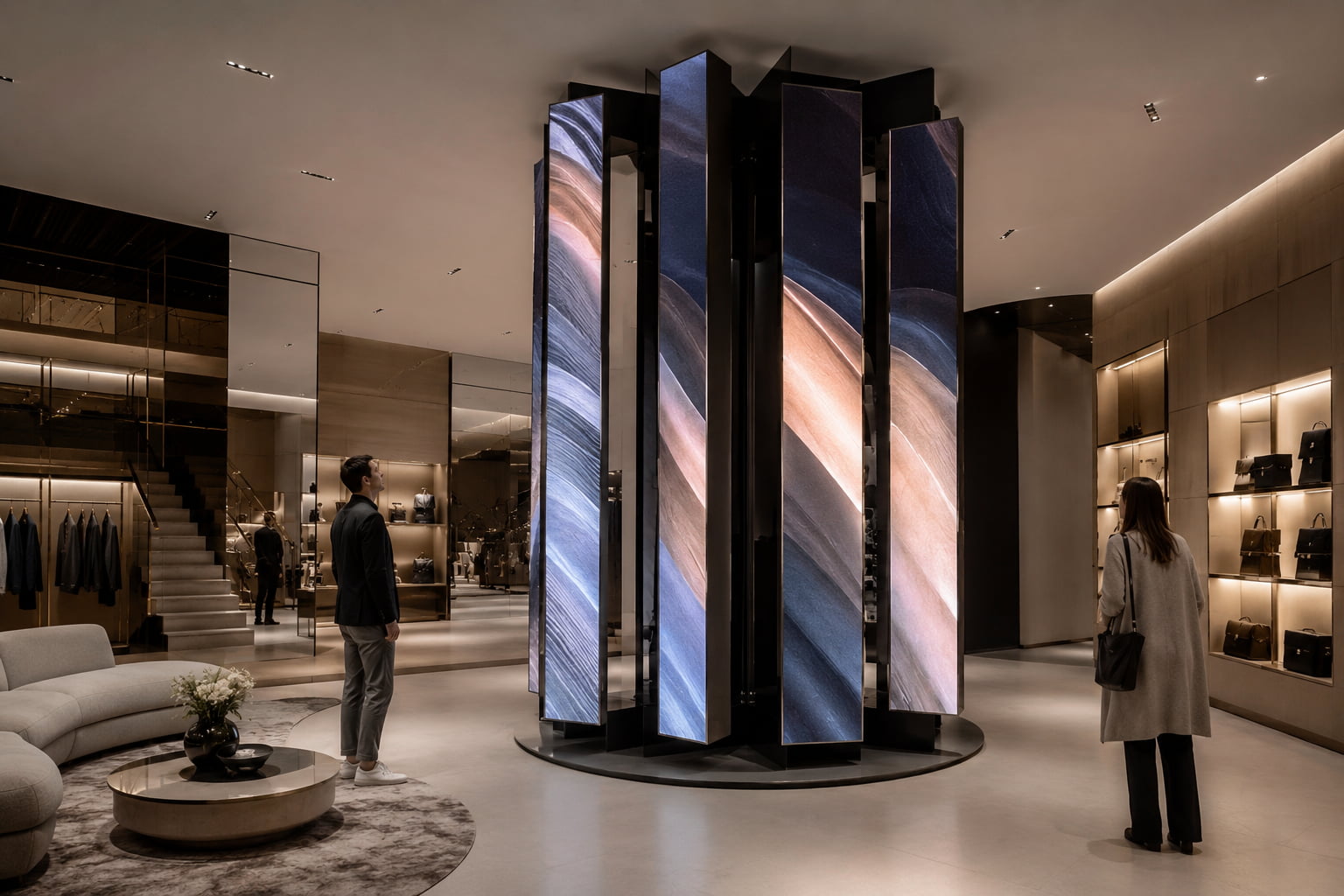
Physical fit matters more than most buyers expect. A rotating LED screen isn’t a flat panel you mount to a wall. It’s a mechanical display system with real spatial requirements. Getting this wrong costs money. The DNA Rotating LED Screen uses synchronized multi-panel rotation. That means it needs clearance for the motion arc in both the horizontal and vertical directions. Ceiling height is a hard constraint. The 3D Kinetic LED Display works differently. It uses modular splicing to build staggered 3D configurations and open/close effects. It adapts to tighter footprints without needing overhead clearance.
Module sizes come in 160×160mm and 250×250mm. Pixel pitches run from P1.2mm to P2.6mm. Viewing distance drives that choice — spaces under 3 meters need P1.2mm to P1.9mm for sharp results. Larger open spaces handle P2mm or P2.6mm without any visible drop in quality. Both screen types support dual-sided configurations, flat or curved. Share your floor plan, ceiling height, and viewing distance with your supplier before ordering. A reliable supplier flags fit issues before shipping — not after delivery.
Thing 5 — Maintenance Is Real but Manageable
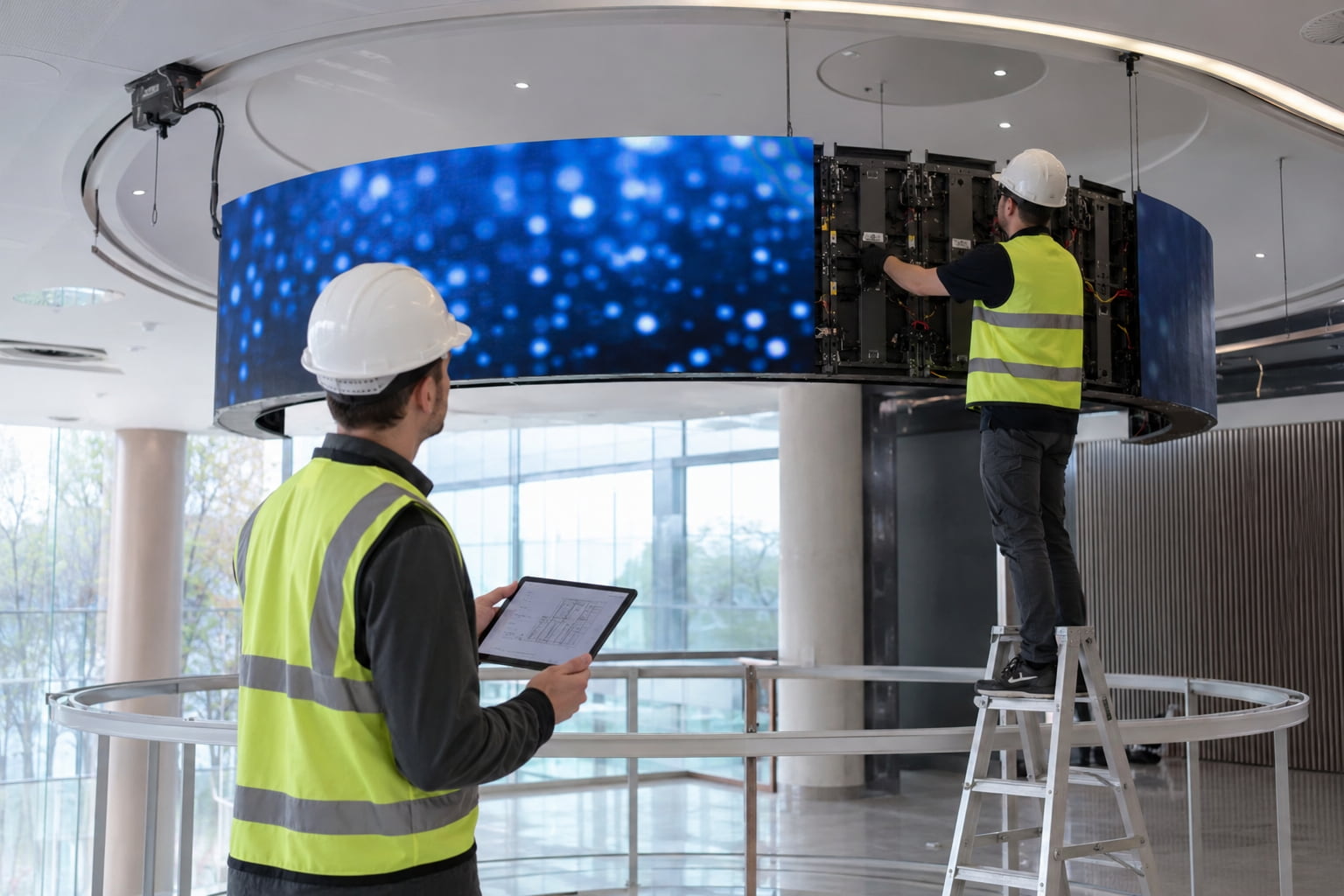
Moving parts need more attention than a fixed flat panel. Accept that before you buy. The good news is that a well-built motorized LED panel requires far less upkeep than most buyers assume. The LED components in high-quality dynamic display units have a service life exceeding 100,000 hours. The motors and transmission components all meet industrial-grade standards—engineers have accounted for the demands of continuous commercial use during the design phase. In practical installations, routine maintenance primarily consists of visual inspections of mechanical joints and occasional module checks. Frequent component replacement is not the norm. Precision drive components in industrial environments are designed to minimise wear under continuous load, and these dynamic display units meet this standard. The modular design makes repairs straightforward. Technicians remove and replace individual modules without taking the whole system offline. Factor in a periodic maintenance visit for permanent installs. But don’t let maintenance concerns kill the decision. It’s manageable.
Thing 6 — Your Competitors Are Already Using This
Rotating LED screens aren’t a novelty. They’ve moved from luxury flagships into mainstream use — across retail, hospitality, brand showrooms, and live events. The shift happened faster than most buyers tracked. Mall developers now write dynamic LED screens into standard specs for anchor spaces. Event producers rely on rotating LED screen setups for product launches and brand activations — crowds photograph and share them without any prompt. Cultural venues and theme parks treat kinetic displays as permanent fixtures rather than temporary installations. If your competitors have already upgraded and you’re still running static displays, visitors notice the gap. Early movers built recognition around the format. Brands entering now are catching up. The longer you wait, the harder that catch-up gets.
Thing 7 — The Right Supplier Makes or Breaks the Whole Investment
A rotating LED screen is not a commodity purchase. The hardware is only part of what you’re buying. Supplier capability — configuration advice, customization, logistics, installation support, post-sale responsiveness — determines whether the system performs well over the long term or becomes a headache. Ask these questions before you commit: Can they tailor pixel pitch, module size, and motion sequences to your space? Do they showcase studies from your industry? How fast do they respond after installation when something needs attention? JR Visual serves clients across retail, corporate, events, and cultural sectors. They offer fully configurable rotating LED screen solutions with built-in direct technical support. A supplier who ships a product and a supplier who supports a system — you feel the difference immediately after installation.
A Rotating LED Screen Is an Investment — Make It the Right One
These seven points aren’t meant to slow you down. They’re meant to make sure the screen you choose actually fits — the right space, the right content approach, the right supplier. Buyers who go in clear on these get better results, faster.