
Both are kinetic LED screen—both move. But the moment you see them side by side, it’s obvious — they speak completely different visual languages. Choosing the wrong one for your space doesn’t just underperform; it works against you. Here’s how to tell them apart and pick the right one.
Different Motion Principles — How Each Kinetic LED Screen Actually Moves
The DNA Rotating LED Screen uses an intelligent mechanical transmission system to drive synchronized rotation across multiple panels. Every module moves in coordinated unison — rotating continuously or in programmed sequences — producing a fluid, flowing effect. The motion is rhythmic, almost cinematic. It’s the kind of movement that pulls attention from across a room without any content playing at all.
The 3D Kinetic LED Screen works differently. Its motion arises from modular spatial displacement: individual panels shift positions, opening, closing, or staggering in three-dimensional configurations. There’s no continuous rotation. Instead, the screen changes shape — reconfiguring itself between states to create depth, layering, and architectural form-change.
One rotates as a unified system. The other transforms into a reconfigurable structure.
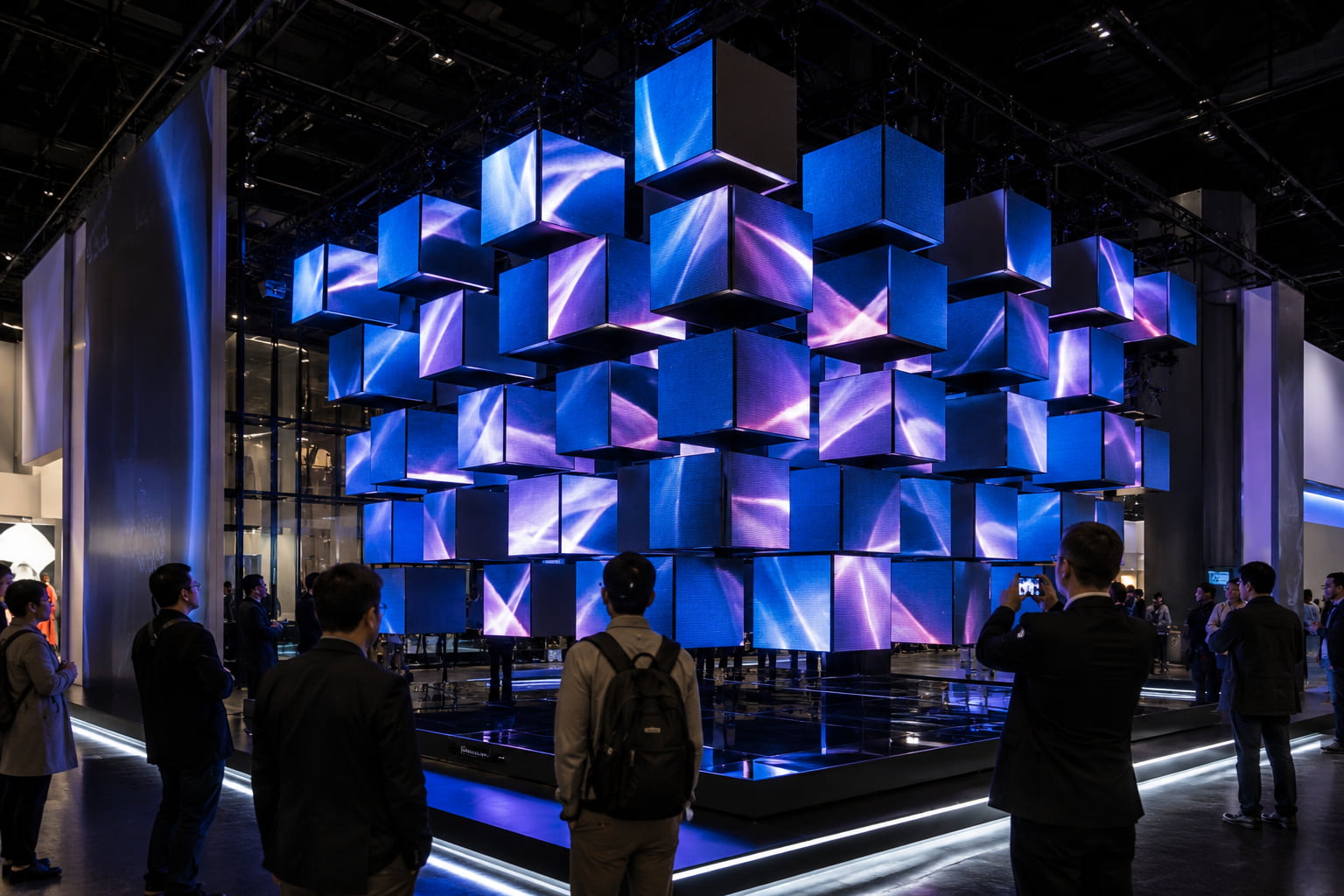
Visual Output — What Each Kinetic LED Screen Looks Like in Action
The DNA Rotating kinetic LED screen creates a sense of perpetual motion. Content wraps around rotating surfaces, producing a “flowing stream” visual language that works especially well with brand loops, product reveals, and any content designed to be watched over time. The double-sided format — available in both flat and curved configurations — means visibility from multiple angles, making it a natural fit for freestanding installations.
The 3D Kinetic LED screen produces a more architectural effect. When panels open and close or shift into staggered arrangements, the screen itself becomes the spectacle — independent of what’s playing on it. The visual impact is front-loaded: the form change is the moment. This makes it highly effective for event openers, exhibition reveals, and any situation where you want a physical “wow” that content alone can’t deliver.
Both deliver strong visual impact. But the DNA Rotating kinetic LED display holds sustained attention, while the 3D Kinetic LED screen creates discrete peak moments.
Specs Breakdown — Pixel Pitch, Module Size, and Screen Format
| DNA Rotating LED Screen | 3D Kinetic LED Screen | |
|---|---|---|
| Pixel Pitch | P1.2 / P1.5 / P1.8 / P1.9 / P2mm | P1.9 / P2.6mm |
| Module Size | 160×160mm | 250×250mm |
| Screen Format | Double-sided flat/double-sided curved | Modular staggered / open-close configurations |
| Motion Type | Synchronized multi-panel rotation | Spatial displacement and shape transformation |
| Viewing Angle | Multi-directional (double-sided) | Front-facing primary, depth from side angles |
The DNA Rotating kinetic LED screen offers finer pixel pitch options starting at 1.2 mm — a meaningful advantage for close-up viewing environments like retail showrooms or corporate lobbies where image quality under scrutiny matters. The 3D Kinetic LED screen starts at P1.9mm, which remains excellent for most event and exhibition distances where viewers are typically 2 meters or more away.
Module size also has practical implications. The 160×160mm modules on the DNA Rotating screen allow for more precise panel sizing and tighter curvature control. The 250×250mm modules on the 3D Kinetic screen support faster assembly across larger surface areas — a real advantage when installation time is tight.
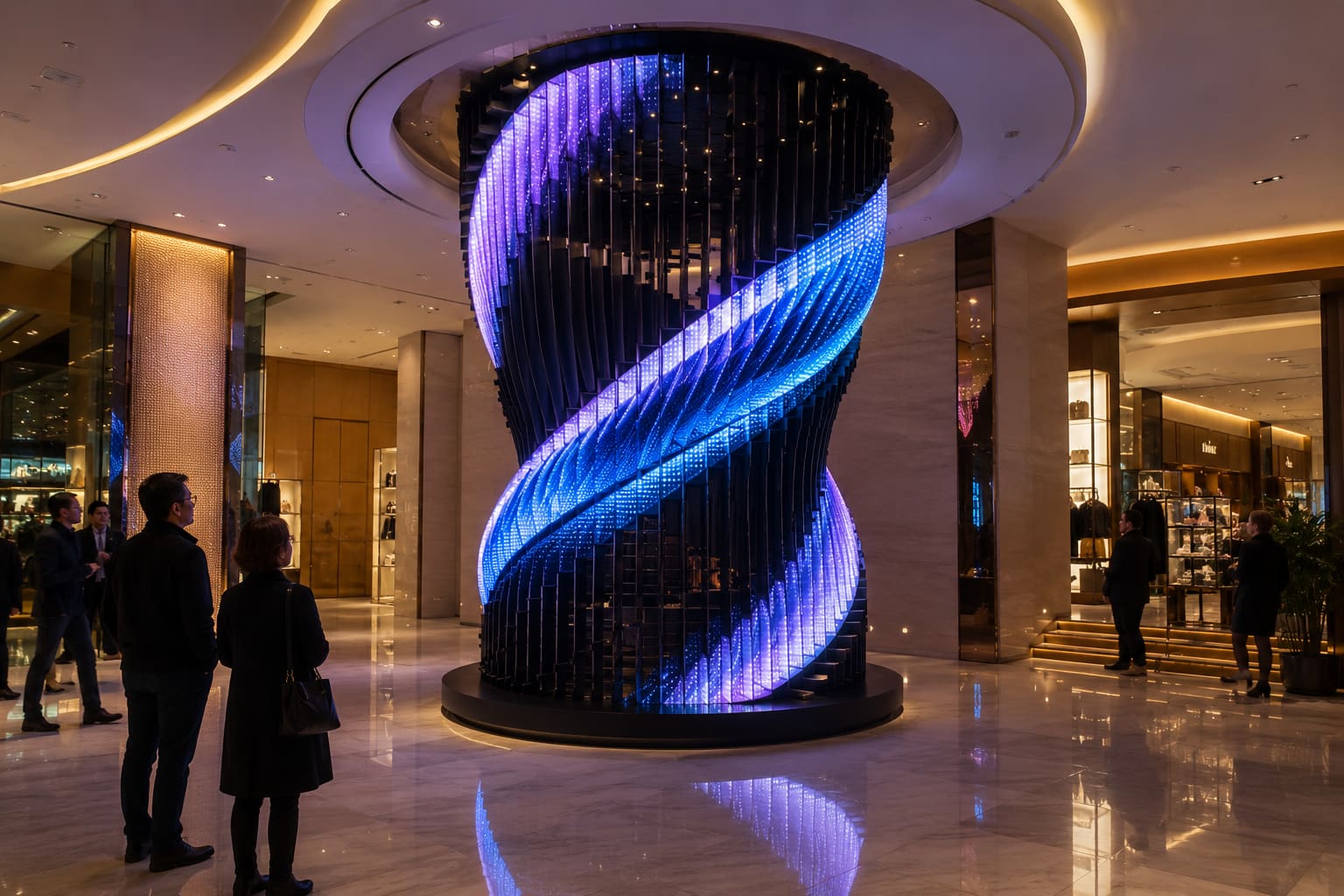
Installation and Reconfiguration — Which Kinetic LED Screen Is Easier to Deploy
The DNA Rotating kinetic LED screen requires accurate spatial planning upfront. The mechanical transmission system needs clearance for the rotation radius, proper structural support, and precise alignment during setup. Once installed correctly, it runs reliably — industrial-grade motors are rated for continuous commercial operation. But relocating or reconfiguring the installation takes meaningful effort. This is a display built to stay where it’s put.
The 3D Kinetic LED screen’s modular splicing design tells a different story. Panels connect and disconnect independently, allowing the same hardware to be reconfigured into different layouts between deployments. For teams running multi-city events or rotating exhibition setups, this flexibility is a genuine operational advantage. Fast installation and easy disassembly aren’t marketing language here — they’re structural features of the product’s design.
If your project involves a single permanent location: DNA Rotating. If it moves between venues: 3D Kinetic.
Application Scenarios — Matching Each Kinetic LED Screen to the Right Space
DNA Rotating LED Screen works best for:
- Retail flagship stores and brand boutiques — rotating product displays and seasonal campaigns
- Corporate showrooms and technology exhibition halls — dynamic brand storytelling with high image fidelity
- Hotel lobbies and upscale commercial interiors — ambient visual presence that runs continuously
- Product launch events with a fixed stage setup — rotating reveals with cinematic content wrapping
3D Kinetic LED Screen works best for:
- Trade show booths and B2B exhibitions — shape transformations that stop floor traffic
- Theme parks and cultural tourism installations — immersive, interactive visual environments
- Concert and live event stage backgrounds — dramatic form changes timed to performance moments
- Pop-up brand activations and roadshows — high-impact installations that pack and move efficiently
There’s overlap at the edges. Large mall atriums and brand roadshows can work with either, depending on whether the goal is sustained ambient presence (DNA Rotating) or event-style peak impact (3D Kinetic).
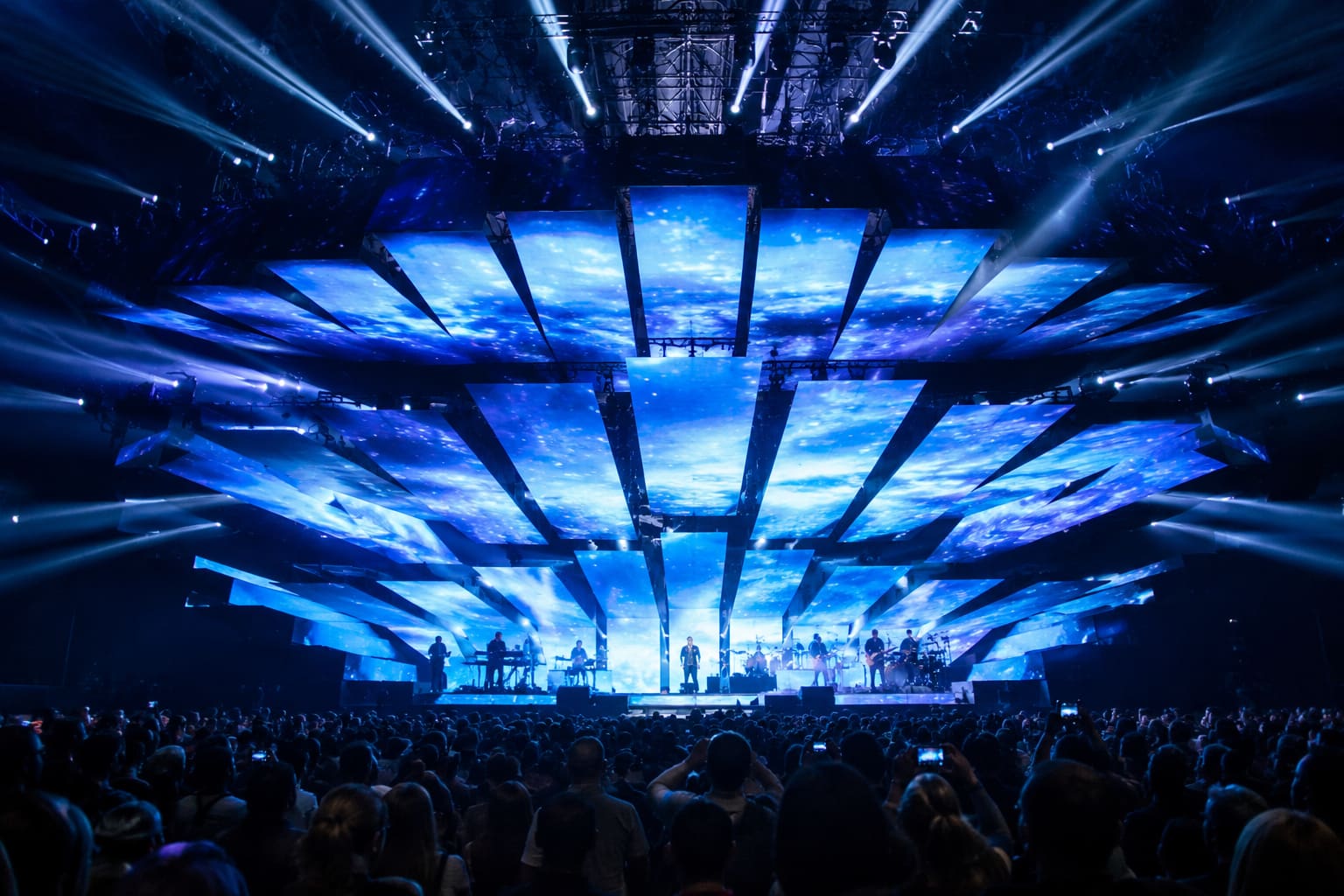
Choosing the Right Kinetic LED Screen
Three questions cut through most of the uncertainty:
1. Does your space need sustained motion or peak-moment impact? Continuous, ambient visual energy points to the DNA Rotating LED screen. A signature reveal or form-change moment points to the 3D Kinetic LED screen.
2. Is this a permanent installation or a mobile deployment? Permanent favors the DNA Rotating screen’s precision and finish quality. Multi-venue deployments favor the 3D Kinetic screen’s modular flexibility.
3. How close will viewers be? P1.2mm pixel pitch on the DNA Rotating screen handles scrutiny at under 1.5 meters. For event distances of 2 meters and beyond, P1.9mm on the 3D Kinetic screen is more than sufficient — and lowers unit cost.
Get these three answers right, and the decision usually makes itself. If your project sits at the intersection — a flagship retail space that also hosts launch events, for example — the 3D Kinetic screen’s reconfigurability gives you more long-term options.