
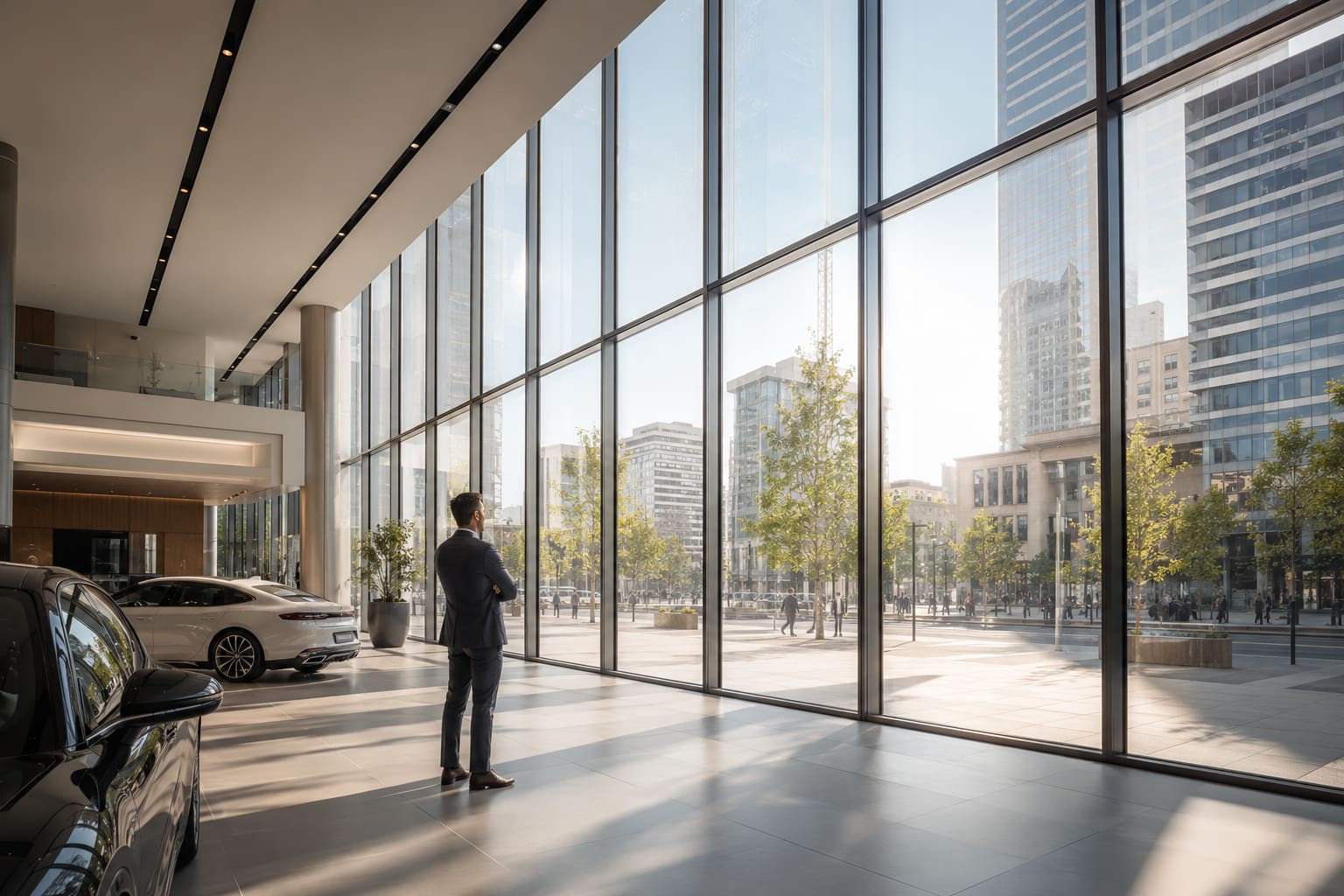
Marcus walked past it every morning. Two floors of glass, south-facing, catching the light in a way that made the whole lobby glow. It was the first thing visitors saw when they stepped off the elevator. It was the last thing they looked at when they left. And for three years, it did absolutely nothing. No one stopped. No one looked twice. The wall just stood there — clean, quiet, and completely invisible in every way that mattered.
The Wall That Should Have Worked
The building was a flagship showroom for a mid-size automotive brand in the city center. Floor traffic was steady. The location was good. The glass wall faced a pedestrian street where several hundred people passed every hour during peak time. On paper, it was prime real estate. In practice, it was dead space. Marcus was the display and retail experience manager. His job was to make spaces work — to turn square footage into attention, attention into engagement, engagement into something that moved people. He was good at his job. But that wall defeated him every single time. It wasn’t that he hadn’t tried. He had.
Everything Marcus Tried Before the Transparent LED Panel
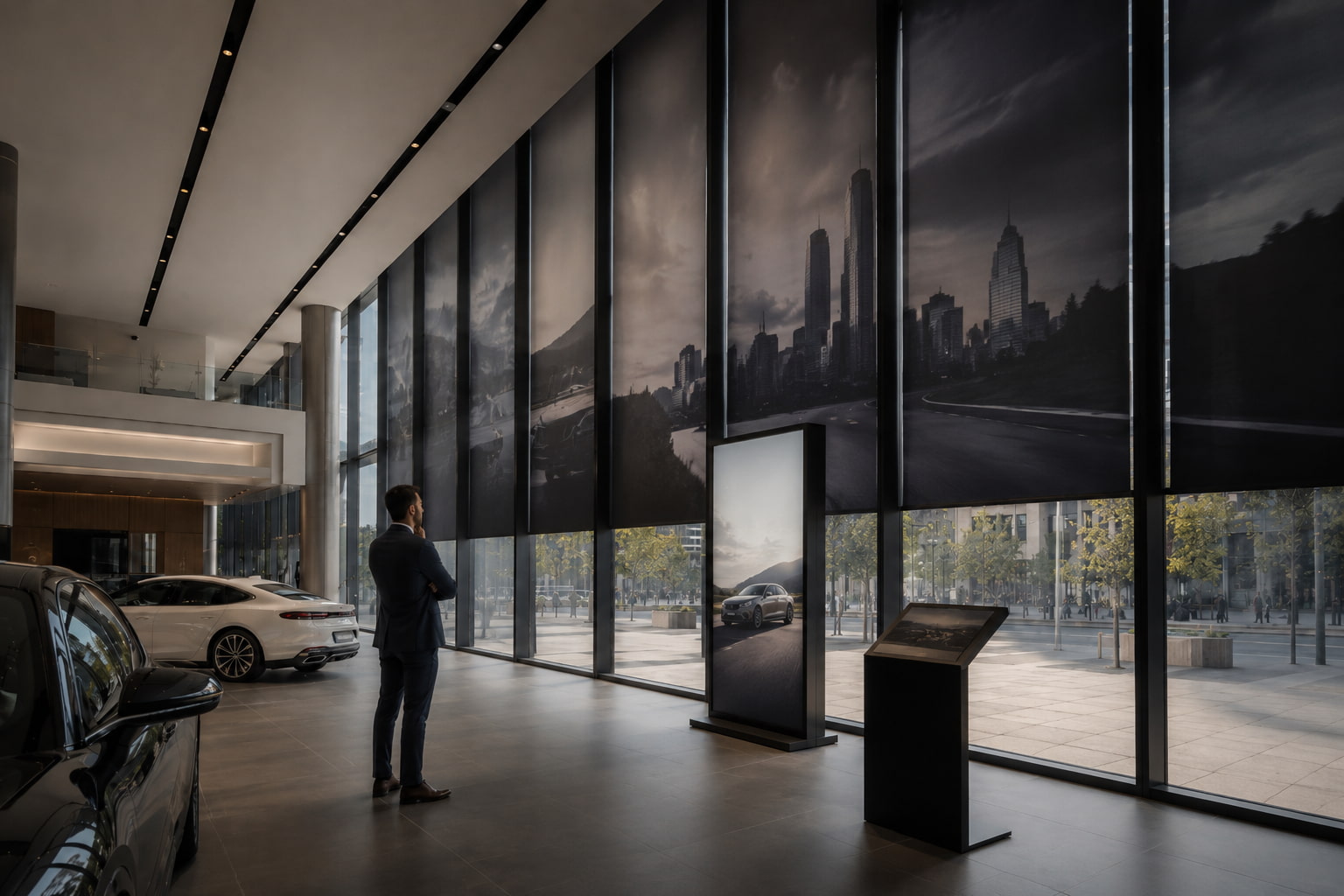
The first attempt was window film. Printed graphics, high resolution, backlit. It looked fine in the mock-up. On the wall, however, it killed the natural light. The showroom felt darker. Customers mentioned it. Staff mentioned it more. The film came down after six weeks. Then came the lightbox — a slim aluminum frame mounted against the glass, housing a static illuminated print. It looked sharp on day one. By day four, no one was looking at it anymore. Static content has a shelf life, and in a high-traffic space, that life is measured in days, not months.
He tried leaving the wall empty and rotating floor displays in front of it instead. That worked better than the film but worse than nothing — the displays blocked the natural light coming through and made the space feel cluttered. The problem wasn’t the budget. It wasn’t an effort. What he couldn’t solve was simpler than either: nothing he tried understood what the glass wall actually was — a see-through surface that needed to stay that way.
The Day Marcus First Saw a Transparent LED Panel
Not at a trade show. Not in a brochure. A colleague sent a photo on a Thursday afternoon — a retail space in another city, glass frontage alive with moving content, the street visible behind it, the display and the real world existing in the same frame at the same time. Marcus stared at it for a long time before he typed back: Is that real?
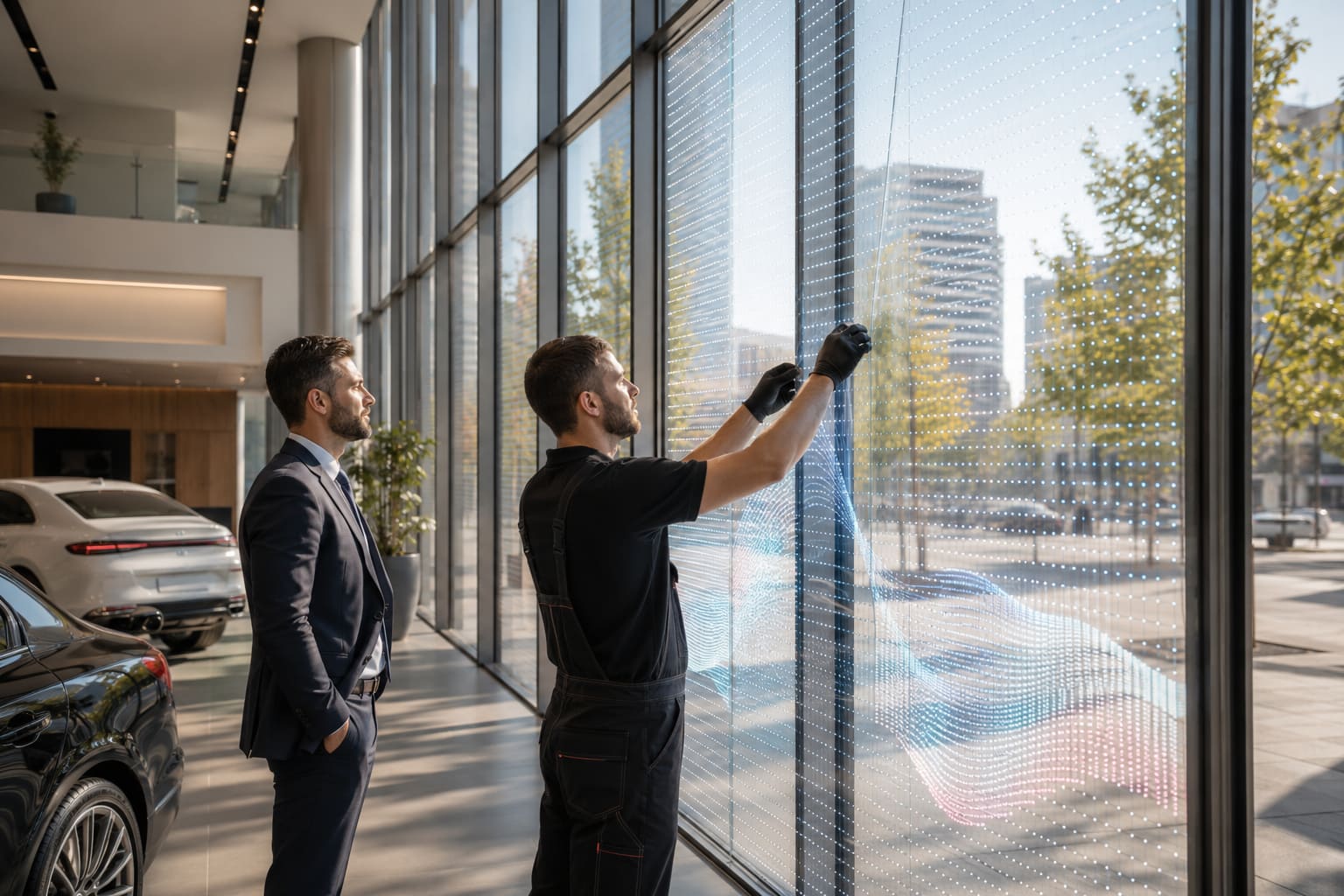
It was. A transparent LED film display adhered directly to the glass surface — with a transparency rate above 70% and a thickness of just 3mm. The display ran dynamic content without blocking the view behind it. Natural light still came through, and the glass still looked like glass.
He felt something he hadn’t felt about that wall in three years: possibility. But the feeling lasted about thirty seconds before the questions started. Would it work on his specific glass? What pixel pitch did he need at that viewing distance? Could the content be updated in real time? What happened when the sun hit it directly? He spent the next two weeks finding out.
The Moment the Transparent LED Film Display Came On for the First Time
The install happened on a Tuesday. Marcus had cleared his schedule for the day, which his assistant thought was unusual. He told her he just wanted to be on-site.
The truth was, he didn’t want to miss it. At 4:47 PM, the see-through LED film for glass powered on for the first time. The content was simple — a slow-moving visual the creative team had prepared, nothing elaborate. Even so, the effect was immediate. Marcus was standing on the pedestrian street outside when it happened. He watched three people stop within the first ninety seconds. Don’t slow down. Stop. One of them took out their phone.
The glass wall was still glass. Behind it, you could still see the showroom, the cars, the light coming through. But now it was also saying something — moving, breathing, alive in a way it had never been in three years. He didn’t go back inside for a while. Instead, he just stood there on the street and watched people look at a wall that had been invisible. Within the first week, showroom inquiries increased by 34%. The wall that had cost nothing to ignore was now the single most-noticed element of the entire frontage.
What That Glass Wall Tells Us About Transparent LED Panel Today
That wall didn’t change because someone found a better marketing strategy. It changed because the right surface technology finally matched the space’s requirements. As a result, LED display technology has reached a point where transparency and brightness can coexist on the same glass surface — something that was not commercially viable a decade ago. Transparent LED displays work precisely because they don’t ask the glass to become something else. The view stays intact. The light comes through. The glass remains glass. What changes is that the surface finally gains a voice — one that can speak differently every hour, every day, every season.
Marcus’s wall was not a special case. Retail windows, hotel lobbies, automotive showrooms, airport terminals, exhibition halls — there are glass surfaces in all of them doing exactly what his wall used to do: standing there, quietly, waiting for the right answer. The answer already exists. It’s thinner than you’d expect, more transparent than you’d believe, and once it comes on for the first time, you’ll probably want to stand outside for a while too.