
A World Cup ceremony combines live performance, music, lighting, broadcast production, athlete appearances, and large-scale visual storytelling. A fixed LED wall can display videos clearly, but it cannot physically reshape the stage. A kinetic LED screen adds controlled mechanical movement to the display system, allowing LED modules to rise, lower, rotate, or form layered structures during a performance. These movements can follow the rhythm of music, reveal performers, frame important ceremony moments, and create visual depth for both stadium audiences and broadcast viewers. Event organizers must coordinate the screen with stage design, content production, structural engineering, and safety systems to achieve a smooth result.
Why Does a World Cup Ceremony Need Moving Stage Visuals?
A World Cup ceremony must communicate across a large stadium. Audiences may watch from different seating levels and viewing angles, while television cameras capture close-ups, wide shots, and overhead views. The stage, therefore, needs visual elements that remain recognizable from multiple positions. Moving-stage visuals help separate the different parts of the ceremony. A screen can begin as a flat background, be divided into several layers, and then open to reveal performers or a central stage element. This physical transformation supports the performance without requiring a complete stage change between segments.
Movement can also guide attention. When selected LED modules rise or rotate, the audience naturally follows the changing structure. Organizers can use this effect during countdowns, cultural performances, team presentations, trophy appearances, or closing sequences. The production team must also coordinate these movements with the official match-day program, broadcast windows, performer entrances, and scheduled ceremony cues. This ensures that each screen transformation supports the event timeline.
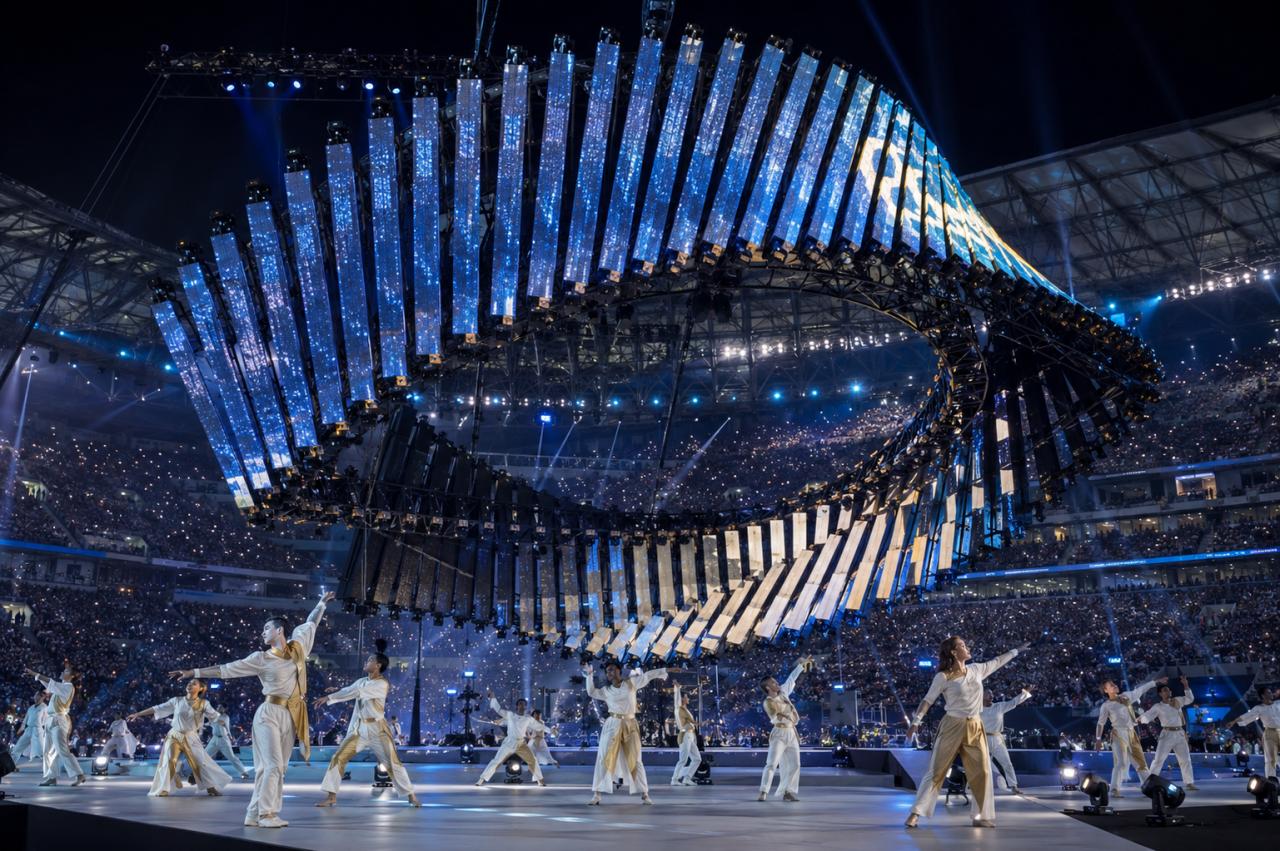
How Does a Kinetic LED Screen Turn Video into Physical Movement?
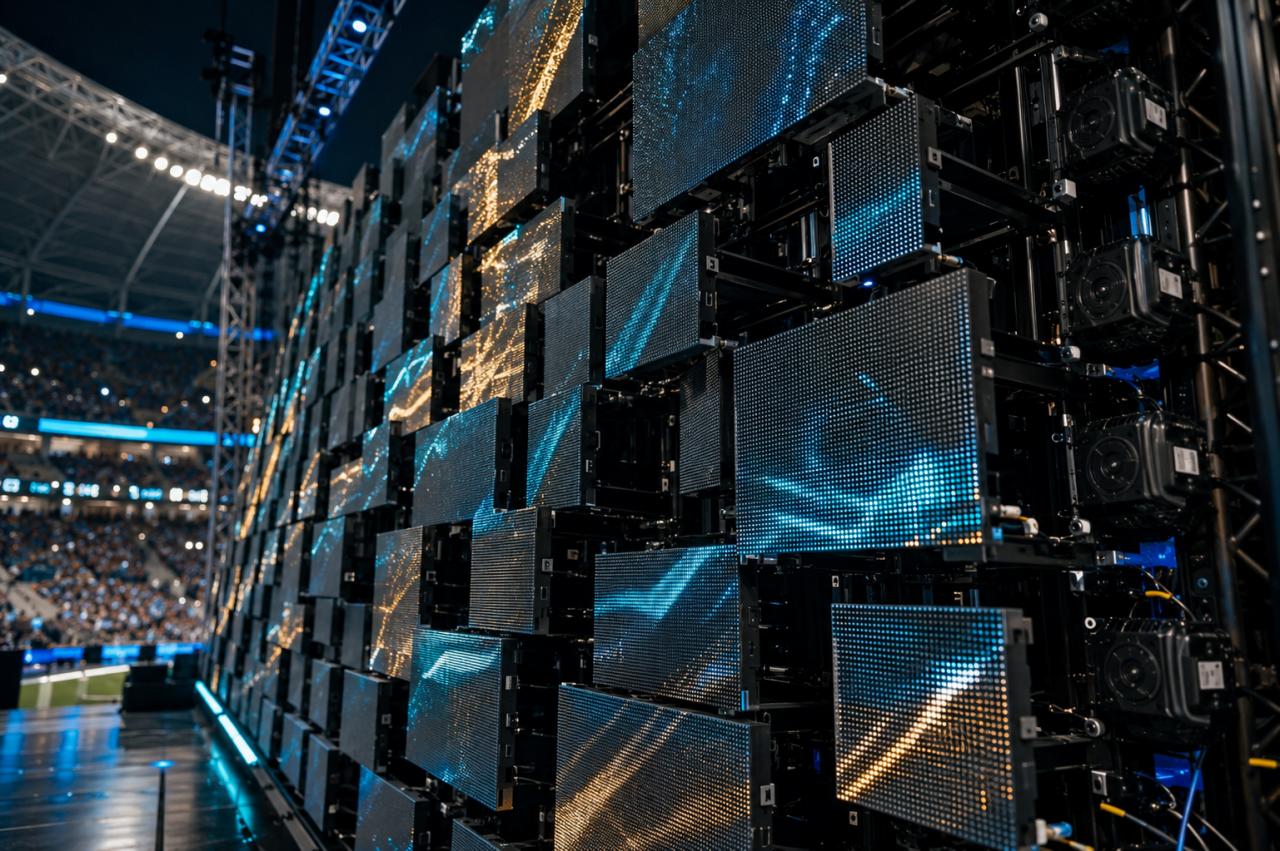
A Kinetic LED Display combines LED display modules with motorized mechanical units. The control system manages both the video content and the movement sequence. Each display section follows a programmed path based on the stage layout and performance timeline. The content team must consider the changing screen shape when producing videos. Graphics designed for a flat canvas may appear fragmented when individual modules move apart. Designers can address this by planning content around each movement phase and testing how images change as the screen transitions.
Motorized LED Modules Create Depth and Movement
Motorized units allow LED modules or larger sections to move along controlled paths. Depending on the system design, modules may move forward, backward, upward, downward, or through a rotating sequence. These physical movements create real depth on the stage. Layered modules can form waves, steps, tunnels, opening structures, or abstract patterns. Lighting designers can use shadows and highlights to strengthen the three-dimensional effect.
A rotating LED screen can add another form of movement by changing the display’s angle or visible face. This configuration may suit moments that require a reveal, a change of visual direction, or a transition between two performance sections. The mechanical system must maintain accurate spacing throughout the sequence. Uneven movement can create visible gaps, disrupt the displayed image, or interfere with nearby stage equipment.
Motion Control Synchronizes the Screen with Video Content
The motion-control timeline should match video playback, music cues, lighting changes, and performer positions. When all systems follow a coordinated sequence, the screen can change shape at the exact moment the content changes. Technical teams should rehearse each transition before the live ceremony. They need to confirm movement speed, stopping position, content timing, and emergency procedures. Rehearsals also help camera operators identify suitable angles for each screen formation. A rotating LED display requires additional content planning because images must remain readable as the display rotates. Designers should check how the visual appears before, during, and after each movement.
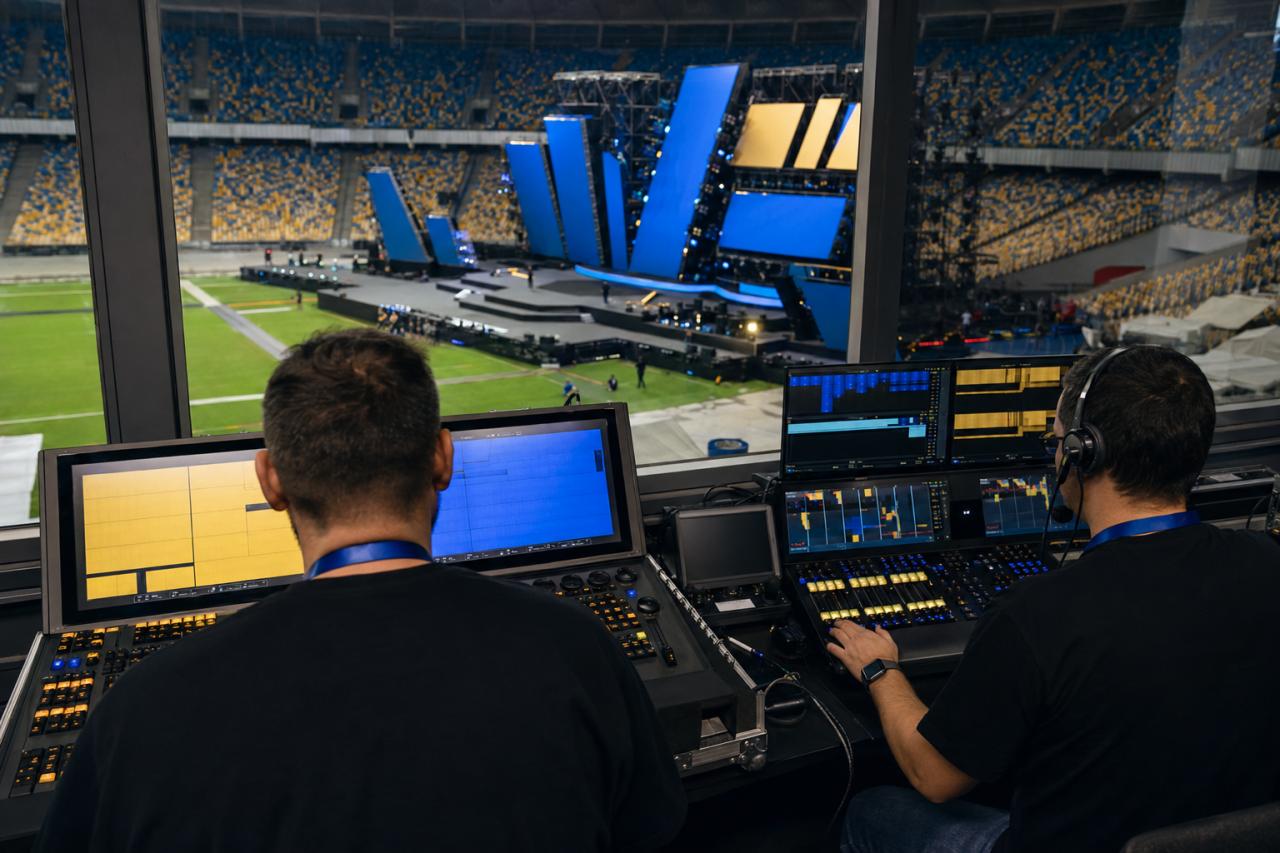
Which World Cup Ceremony Moments Can Use a Kinetic LED Screen?
A kinetic display can support several moments without dominating the entire ceremony. The creative team should introduce movement when it strengthens the story or marks a clear transition.
Opening Sequences and Performer Entrances
During an opening sequence, the display may start in a compact formation before expanding with the music. This creates a visual reveal and introduces the scale of the stage. For performer entrances, moving LED sections can open a central passage or create layered frames around the entrance route. The screens may display national colors, tournament graphics, cultural imagery, or animated patterns while performers move through the structure.
A similar approach can support an athlete’s introduction or trophy presentation. Slower, controlled movement can focus attention on the central subject, while faster sequences may suit dance performances and musical sections. A DNA LED screen can create continuous rotational movement around a central performance area. Its structure may work for entrance sequences, sponsor presentations, or transitions that require repeated movement rather than a single large reveal.
What Moving Visuals Can a Kinetic LED Screen Create?
The display can form different visual structures depending on the module design and the mechanical system. A vertical movement sequence can produce waves, stepped surfaces, or rising columns. Rotating sections can reveal another display face or change the direction of the visual surface. Designers can also program modules to form symmetrical patterns that work well in wide stadium shots. Circular, diamond, or layered formations can frame a central performer or tournament symbol. Sequential movement across the display can make graphics appear to physically travel across the stage.
A rotating display can introduce changing surfaces during a performance. One side may show tournament graphics before the structure turns to reveal live video, performer imagery, or another color composition. Every formation should remain readable from the intended viewing distance. Complicated movement may look impressive in a close-up but become difficult to understand from the upper stadium seats. The production team should test each formation from audience positions and broadcast camera locations.
How Should Stage Systems Work Together?
The moving display must operate as part of the complete ceremony system. Stage designers should confirm the location, dimensions, movement range, supporting structure, power distribution, signal routing, and maintenance access during planning. Lighting fixtures must remain outside the screen’s movement path. Performers, props, cables, and temporary structures also require clearly defined safety distances. The engineering team should calculate loads for the selected screen configuration and venue conditions.
Music and lighting cues should follow the same approved show timeline as the display movement. Operators also need a clear method to stop the mechanical system if a module moves outside its programmed position or if another stage element enters the operating area. Content tests, mechanical rehearsals, and full-stage rehearsals allow the production team to identify conflicts before the live event. These checks help each visual transition appear intentional while protecting performers, technicians, and nearby stage equipment.
A Kinetic LED Screen Can Create a More Dynamic World Cup Ceremony
A kinetic LED screen can turn a conventional video background into an active part of the ceremony. Physical screen movement can reveal performers, create stage transitions, add depth to tournament graphics, and direct attention during major presentation moments. The strongest results come from coordinated planning. The screen structure, movement sequence, video content, music, lighting, cameras, and performers must follow the same creative plan. With precise motion control and appropriate safety measures, the display can create moving visuals that engage spectators inside the stadium and viewers watching the broadcast.
Frequently Asked Questions
How does a kinetic LED screen move during a ceremony?
Motorized mechanical units move individual LED modules or larger display sections according to a programmed sequence.
Can a kinetic LED screen synchronize with music and stage lighting?
Yes. The production team can coordinate movement, video playback, music, and lighting through a shared show timeline and rehearsed cues.
Is a kinetic LED screen suitable for a large football stadium?
It can suit a stadium ceremony when the dimensions, viewing distance, structural support, movement range, weather conditions, and broadcast requirements match the venue.
What moving shapes can a kinetic LED screen create?
Depending on its mechanical design, it can create waves, layered surfaces, opening structures, rotating sections, stepped formations, and symmetrical patterns.
What safety checks are required before the screen starts moving?
The technical team should inspect the supporting structure, motors, modules, cables, movement paths, stopping positions, safety distances, and emergency-stop system before operation.