
A 3D Kinetic LED Display for Nightclubs can turn a wall, ceiling, or stage area into a moving visual element rather than a static backdrop. The combination of LED imaging and controlled movement allows visual content to change in both appearance and physical position. For nightclub projects, the design must account for viewing angles, available space, movement patterns, content, structural support, and maintenance from the start.
Design a 3D Kinetic LED Display Around the Nightclub Space.
The physical layout should come before the visual effects. A nightclub may have a main stage, DJ booth, dance floor, columns, balconies, or low ceilings, and each condition affects how you can position a moving LED installation.
Consider Ceiling Height and Available Space
A 3D Kinetic LED Display needs sufficient clearance for its full movement range. The installation should account for the highest and lowest positions of the moving components, not just the static installation height. Viewing distance also affects the configuration. A display positioned close to the dance floor needs different specifications from one installed high above the stage. Therefore, consider pixel pitch, module size, and display dimensions alongside the audience’s typical viewing distance. The movement envelope should also remain clear of lighting equipment, speakers, trusses, signage, and other stage components.
Match the Display Shape to the Interior
A 3d led wall can be arranged as a large visual surface, while smaller moving elements can create depth across the stage or ceiling. A rotating LED display can introduce changing orientations during a performance. Multiple units can operate independently or move in synchronization, depending on the intended visual effect. The physical arrangement should complement the architecture instead of simply filling an available wall. Curved sections, suspended rows, layered structures, and separated display units can create different spatial effects while maintaining a coordinated visual system.
Plan Content Around Physical Movement
Content design needs to follow the movement system. A graphic that looks effective on a stationary 3d led screen may become difficult to read once the display changes position or orientation. Animations should account for movement speed, rotation angles, synchronization, and viewing direction. Large shapes, strong contrast, geometric patterns, and appropriately scaled graphics can stay visually recognizable while the display moves. This is particularly useful when the LED installation forms part of a live performance. The content can change together with music, lighting cues, and programmed motion.
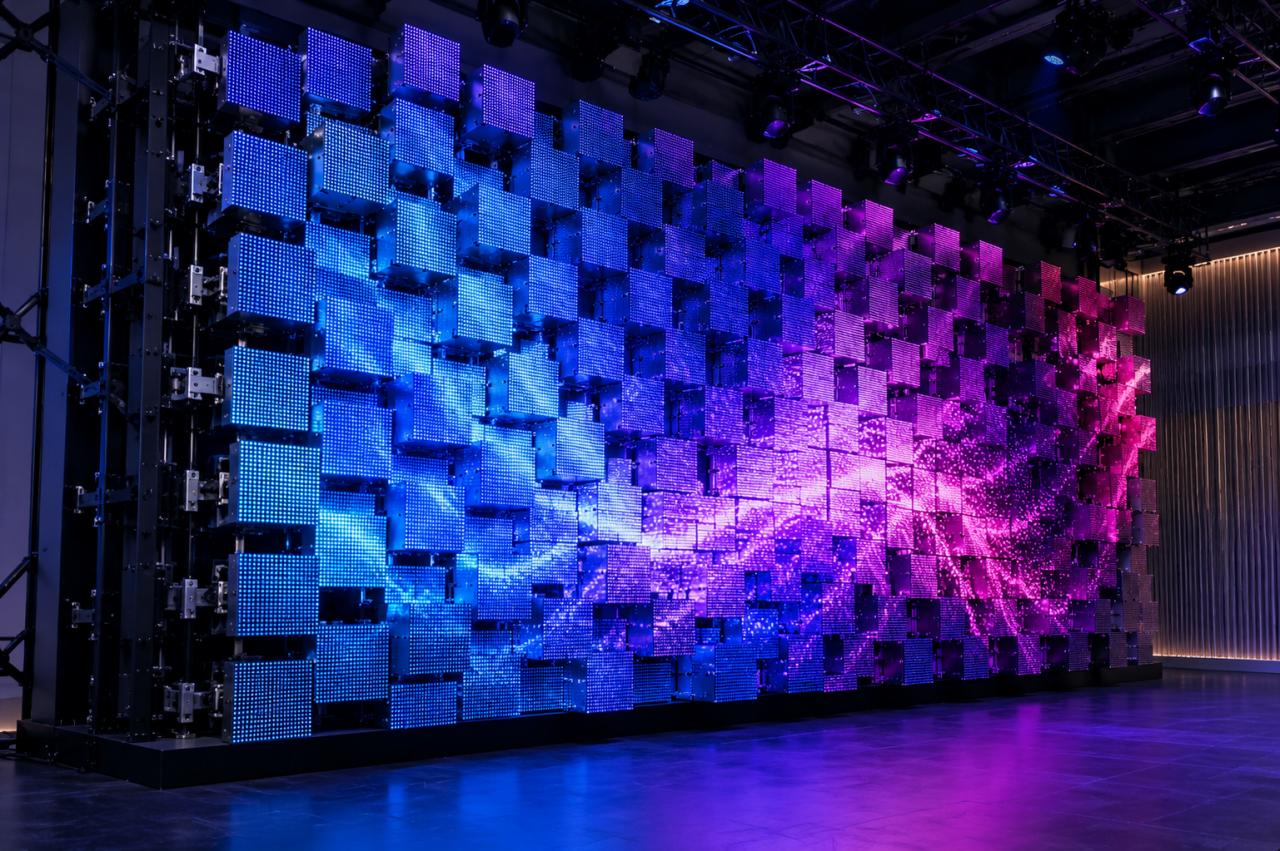
Create Dynamic Effects With a 3D Kinetic LED Display.
The strongest results usually come from coordinating several visual systems, not relying on screen movement alone.
Combine Motion With Lighting and Music
Nightclub environments already use lighting, sound, video, and stage effects. A kinetic installation can become another programmable element within this environment. Movement can follow musical sections, lighting transitions, or programmed show cues. For example, several display elements can rotate together during one sequence and then move independently during another. Plan the control architecture early, so the LED content and mechanical movement follow the same show timeline.
Use Different Movement Patterns
Different movement patterns produce different visual impressions. A rotating LED screen can continuously change its orientation and create shifting perspectives. Vertical movement can produce a rising or falling effect, while sequential movement can make individual display elements appear to travel through the space. Synchronized movement creates a unified visual structure. Independent movement can produce a more complex appearance. The selected movement pattern should match the available physical space and the type of content being displayed. Excessive movement is not automatically more impressive; controlled timing can create a stronger effect.
Build Layered Visual Effects
Layering can make a 3d led display appear deeper than a conventional flat screen. Position different rows or groups at different depths and program them to move at different times. Geometric animations work particularly well with repeated kinetic elements because the physical arrangement can reinforce the visual pattern. You can then adapt brand graphics, abstract animations, and atmospheric content to the same structure. A Kinetic LED Display can also combine fixed and moving sections. This allows the installation to maintain a stable visual area while selected elements provide physical movement.
Installation Requirements for Nightclub Kinetic LED Displays
Installation planning is more complicated than mounting a conventional LED screen because the display includes moving components. Verify structural support before fabrication. The mounting structure must accommodate the total installed load and the forces created by movement. Consider the available attachment points, ceiling structure, truss system, and service access. Power and signal distribution should also be planned around the movement path. Cables must have enough flexibility for the required movement without creating excessive tension or interfering with mechanical components.
Coordinate motion-control equipment with the LED control system. The final configuration needs to define how movement commands, video playback, lighting cues, and emergency stops interact. Where applicable, project teams should also review IEC 62368-1 safety requirements alongside applicable local installation requirements. Maintenance access is another practical consideration. Modules, power components, controllers, motors, and connectors may require inspection or replacement after installation. A visually compact design can still be difficult to service if the original layout doesn’t include access routes.
How to Choose a 3D Kinetic LED Display for a Nightclub
Choosing a 3D Kinetic LED Display for Nightclubs should start with the actual installation conditions rather than a single display specification.
Pixel pitch and viewing distance: Smaller pixel pitches can be appropriate for close viewing, while larger installations viewed from farther away may require a different configuration.
Display size: The overall size should fit the stage, wall, ceiling, or architectural feature without restricting other equipment.
Movement range: Define the required rotation, vertical travel, or other movement before selecting the mechanical system.
Brightness and contrast: The display needs to remain visible within the nightclub’s lighting environment without overwhelming surrounding visual effects.
Control compatibility: The LED system and kinetic mechanism should support the required content and show-control workflow.
Maintenance: Before finalizing the structure, consider access to LED modules, power supplies, controllers, motors, and connection points.
For projects that require a dedicated kinetic configuration, evaluate the 3D Kinetic LED Display based on the required display configuration, movement characteristics, and installation conditions.
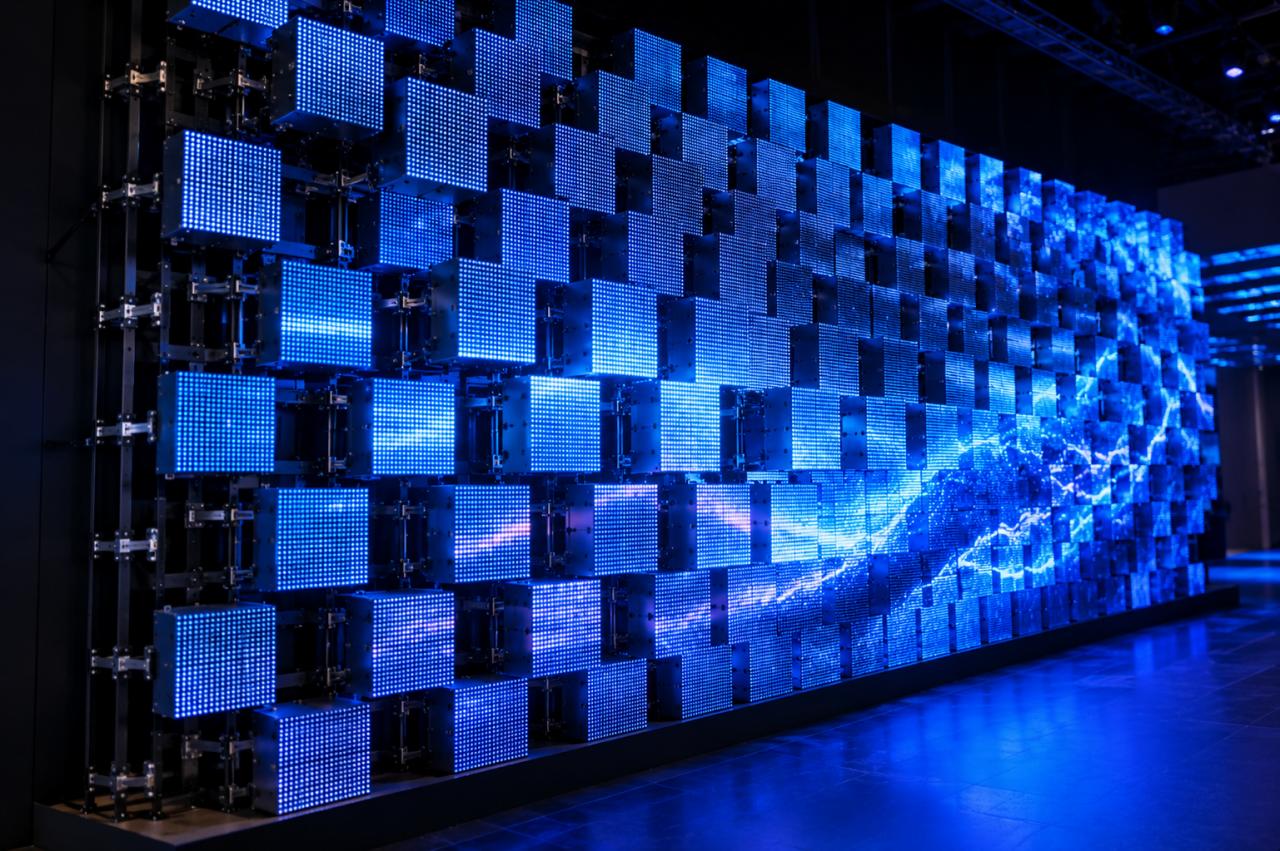
Avoid Common Problems During a 3D Kinetic LED Display Project.
You can avoid several problems by resolving installation details before production.
The first is designing the visual effect without checking the structural conditions. A concept may look excellent in a rendering but require a mounting structure that the venue cannot accommodate. Another issue is ignoring the complete movement envelope. Measuring only the screen’s static position can leave insufficient clearance once the system starts rotating or moving. Cable management is equally important. Moving components require carefully planned cable routes, connectors, and strain relief. Poor routing can affect both reliability and movement.
Content can also become a problem when it is created independently from the mechanical design. The animation should reflect the actual movement pattern, display geometry, and viewing conditions. Finally, don’t leave maintenance until installation is complete. Incorporate service access, replaceable components, and inspection points from the start.
Build the Display Around the Complete Nightclub Experience
A kinetic installation works best when the LED content, physical movement, lighting, sound, and architecture are planned as one system. For a nightclub, the goal isn’t simply to install a moving screen. A 3D Kinetic LED Display for Nightclubs should contribute to the atmosphere and create visual changes that support the venue’s programming. When its mechanical and digital systems are designed together, it can serve as a stage feature, architectural installation, or immersive visual element.
The final configuration should therefore be based on the venue’s structure, viewing distance, movement requirements, content strategy, control system, and maintenance conditions. This approach makes it easier to create a kinetic installation that is visually dynamic while remaining practical to operate and maintain.