
A DNA rotating LED screen can turn an event entrance into a changing visual feature. Instead of presenting one fixed composition, rotating display surfaces give designers another way to introduce a theme, reveal a brand or draw attention to a particular moment. A reported installation at the APEC 2026 media centre offers a timely design reference. Its combination of digital flipping screens and a sailboat-shaped structure shows how display surfaces can contribute to a recognisable physical story. For event producers, the useful idea is the connection between movement, form and meaning. That connection can guide a new project without copying the original installation.
What the APEC Installation Suggests About Event Design
A published report on the APEC media centre describes “Asia-Pacific Sails,” an installation at the meeting week’s media centre in Shenzhen. It combines nine digital flipping screens with a boat-shaped base, using the appearance of raised sails to express a theme of cooperation. The screens contribute to the installation’s overall form. Visitors encounter a themed object as well as digital imagery.
This is a design reference rather than a JR Visual project case study. The report does not establish that the installation uses the same display technology, mechanism or construction as a DNA system. The transferable principle is straightforward: give the physical display a role in the story. A screen arrangement can express a theme before visitors read a detailed explanation. For an overseas conference, exhibition or brand event, start by identifying that theme. Then decide whether changing orientation would help communicate it.
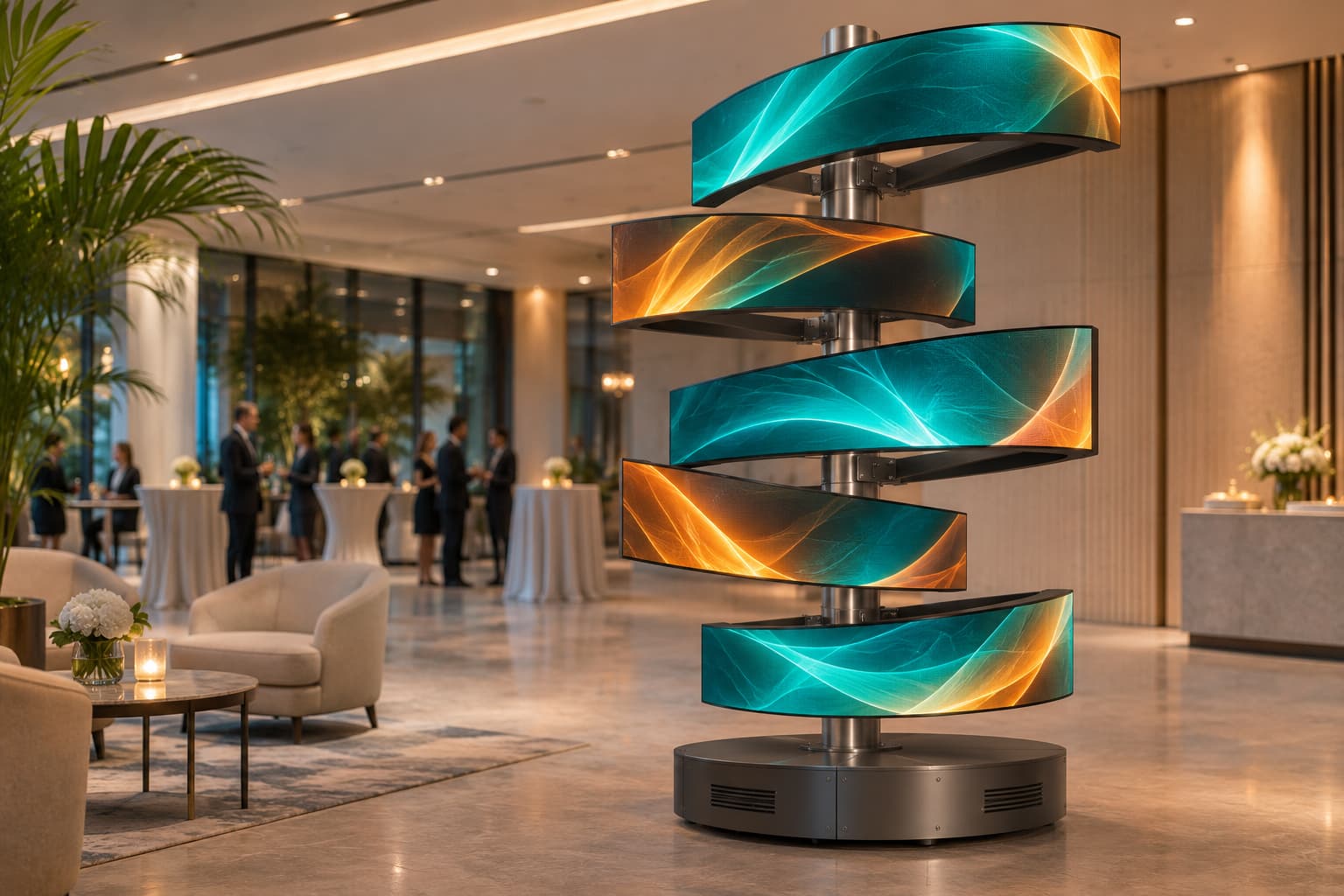
Plan a DNA Rotating LED Screen Around the Entrance Experience
An entrance installation needs to work for people arriving at different times. Some visitors may stop to watch a complete sequence, while others see only a brief transition. Build the concept around a recognisable state that returns regularly. This might be an event identity, a product image or a simple visual composition connected to the programme. Use movement to lead into that state. Once the main message appears, allow the audience an agreed opportunity to understand it.
For a rotating LED screen, ask the supplier to review the intended sequence against the proposed configuration. The design should account for which surfaces remain visible as the arrangement changes. Avoid making the main message depend on visitors arriving at one precise second. An entrance loop needs to accommodate people who join the experience halfway through it. The result should also sit comfortably within the wider arrival plan. Registration, queues and directional information still need clear space and attention.
Match the Screen Form to the Audience’s Approach
A DNA rotating LED screen proposal should explain how the selected form serves the audience’s approach. JR Visual’s product page lists double-sided flat, double-sided curved and triangular rotating screen forms, each requiring its own layout and content review. Begin with the main approach directions. Identify where visitors first see the installation, where they can stop and which views matter for photography. Then ask the supplier to illustrate the proposed display from those positions. A front-facing rendering cannot answer every question about side views or changing orientation.
Use the comparison below to structure the discussion.
| Proposed form | Design question to explore | What to review |
|---|---|---|
| Double-sided flat | How will the installation address opposing visitor routes? | Message visibility from both approach directions |
| Double-sided curved | How does the curved form relate to the surrounding space? | Content placement and the appearance of the changing silhouette |
| Triangular rotating | Which faces should communicate at each point in the sequence? | Face orientation, transitions and the main audience view |
These are planning questions, not guarantees that a particular form suits every venue. Confirm the available dimensions, movement capabilities and installation requirements with the supplier. For broader context, the kinetic LED screen range helps distinguish rotation from other kinds of physical screen movement. Keep the final brief focused on the motion the project actually needs.
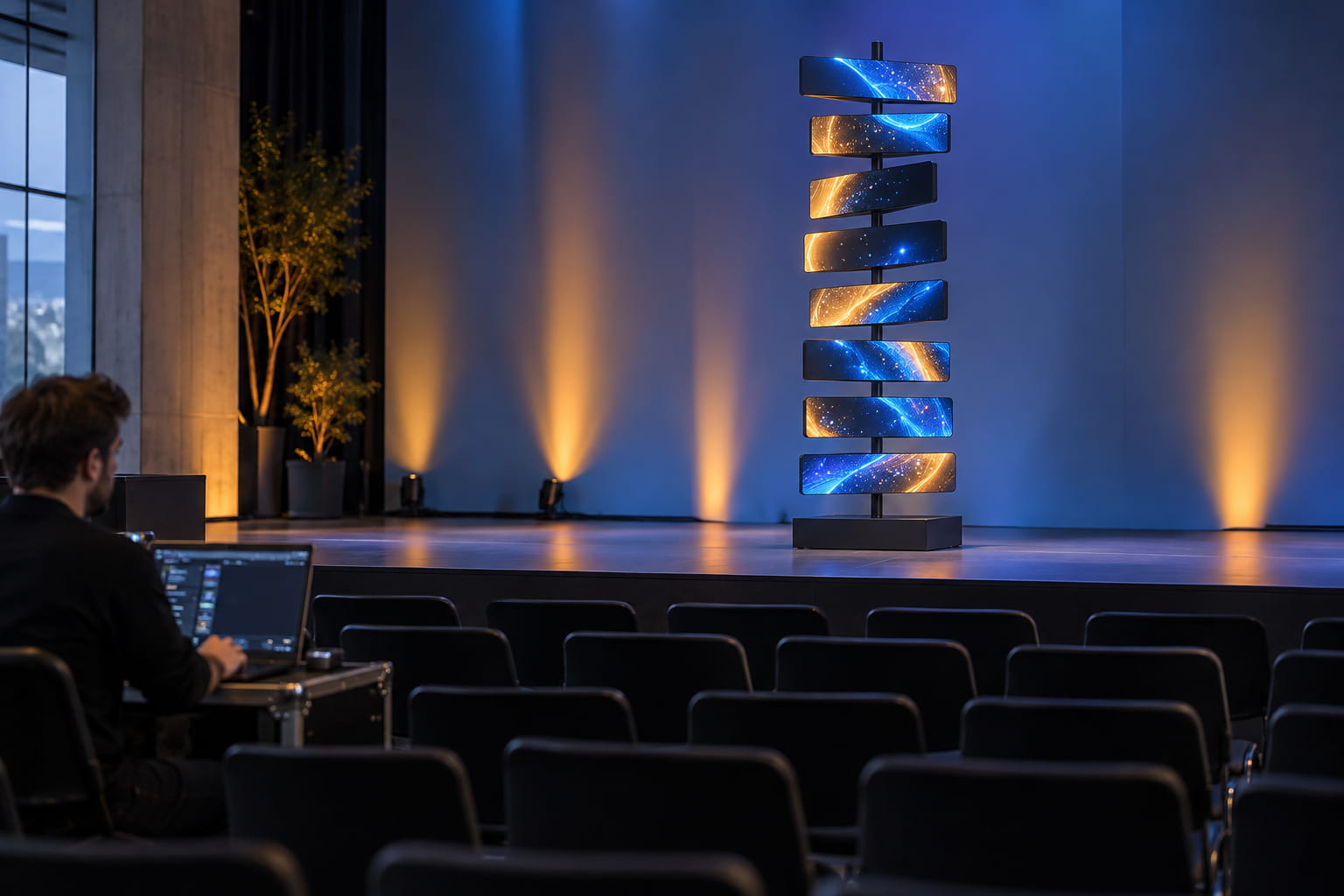
Design the Reveal Before Producing the Video
A rotating installation needs content that accounts for the changing display arrangement. A video designed for a fixed rectangular screen may require a different composition for the proposed system. Start with a storyboard. Show the opening state, the transition, the main message and the return to the beginning. At each stage, describe what the audience should notice. This gives the media team and supplier a shared objective before detailed production begins.
Establish the Main Message
Choose the image or phrase that visitors must recognise. Keep it visually distinct from decorative material so the movement does not obscure its purpose. Ask when the proposed arrangement presents that message most clearly. Use that state as a reference for developing the surrounding sequence.
Coordinate the Rotating Display and Video
Explain how the movement supports the reveal. It might introduce parts of an image, change the visible composition or create a transition between messages, subject to the supplied system’s capabilities. Review the motion and media together. Approve a representative sequence before producing an entire campaign around an unverified concept.
Make the Loop Understandable
An entrance display usually needs a repeatable programme. Check how the ending connects to the start and what a visitor sees when arriving during that transition. Keep matching motion and media files under a shared version reference. Operators should be able to identify the accepted combination.
Choose a Setting Where Movement Has a Purpose
A rotating display can play different roles within an international event. The strongest brief gives it one primary task. At a conference entrance, it could introduce the event identity. In a networking area, it could act as a visual landmark that helps define the space. For a product launch, the installation could support a timed brand reveal. That requires coordination with the wider programme, including the presenter, lighting and playback cues.
An exhibition feature needs a different rhythm. Visitors approach independently, so the content should make sense without a scheduled introduction. When considering creative LED solutions, explain the intended setting and audience behaviour. A supplier can assess the concept more usefully when it knows what the installation must accomplish. Reserve detailed schedules, instructions and presentation material for displays suited to those reading tasks. A moving centrepiece can then concentrate on its visual role.
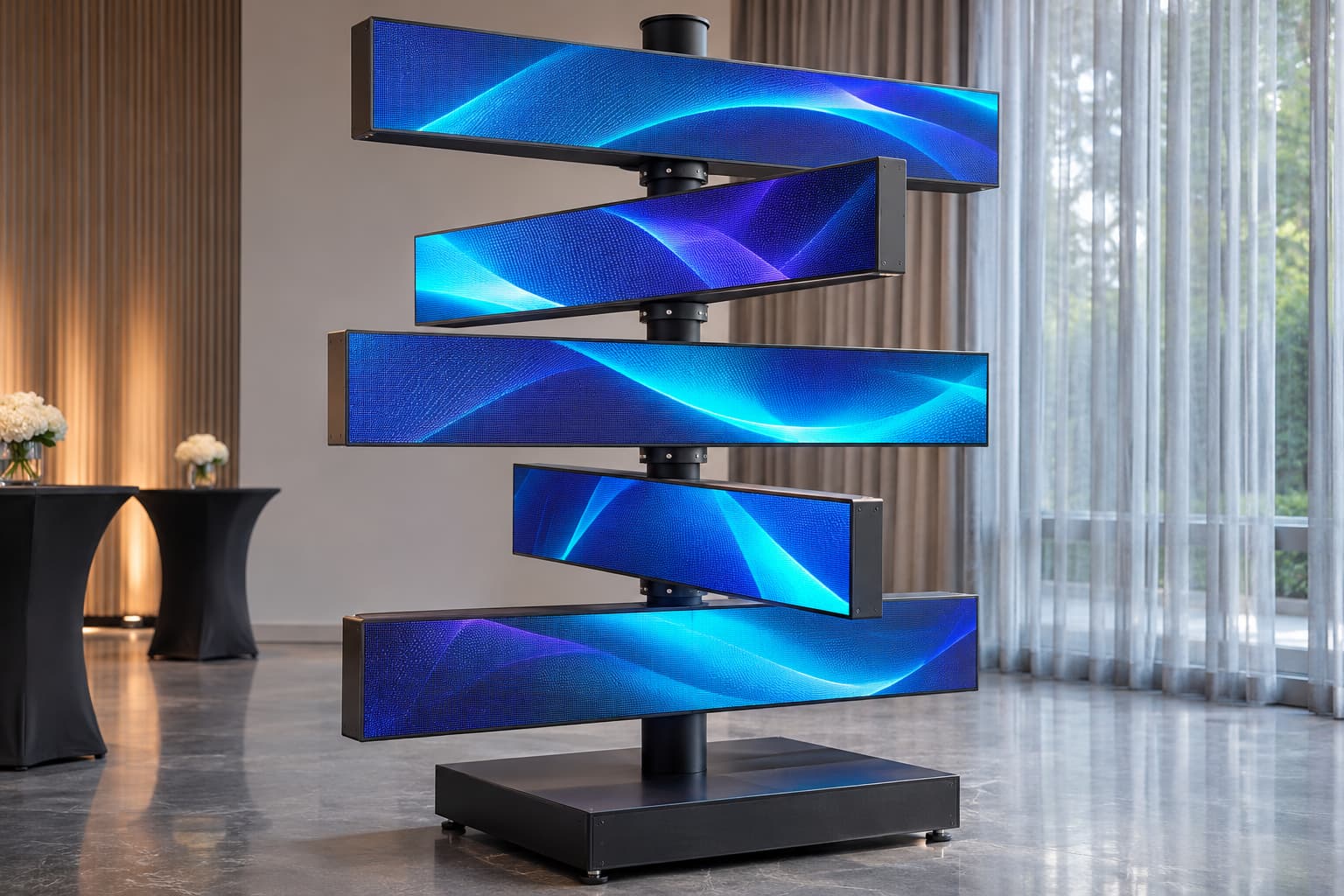
Review the Whole Installation Before Ordering
The rotating screen is one part of the project. The venue and installation teams also need to understand the support arrangement, operating space, cable routes and maintenance access. Ask the supplier to provide the information required for the relevant project professionals to assess the proposed installation. Confirm the responsibilities for design review, local work and commissioning. Discuss the full movement envelope, not just the screen’s stationary outline. The plan should also address visitor routes and the agreed separation around the equipment. Check the delivery route and available installation period. Include time for configuration, content testing and rehearsal before the installation enters use.
Support arrangements deserve attention at the quotation stage. Clarify who responds to an operating issue, what information the team should retain and how an authorised service intervention would proceed. A complete proposal should distinguish the equipment package from surrounding construction, content production and on-site services.
Test the Experience from the Visitor’s Position
Before approval, rehearse the accepted sequence with the intended playback arrangement. Invite the creative team and relevant operators to assess it together. Walk the main approach routes. Check when the event identity becomes visible and whether the sequence remains understandable from the agreed positions. Review planned camera views separately. The best position for a photograph may differ from the main visitor route. Repeat the sequence from the agreed starting state. Record any inconsistent behaviour and assign the next action before accepting the programme. Ask the supplier to explain the supported stop, recovery and return-to-operation procedures. Keep those instructions with the accepted configuration and media files.
A DNA Rotating LED Screen Should Make the Theme Visible
The APEC screen installation offers inspiration through the relationship between physical form and a shared theme. A new project can apply that principle through its own story, venue and audience. Choose a rotating format when changing orientation contributes to the intended experience. Give the audience a clear message, develop the media around the proposed motion and verify the result in the actual setting. Before selecting a DNA rotating LED screen, prepare a venue plan, approach views, a simple storyboard and the intended operating schedule. These materials give the supplier a practical basis for evaluating the design.
For a project-specific proposal, ask the supplier to connect its recommended configuration to those materials. Confirm which effects the system supports and what the project team must provide. The aim is an installation whose movement has a clear purpose: introducing the event, expressing its theme or making a reveal worth watching.