
A 3D kinetic LED screen creates depth through real physical movement, not only through video effects. LED modules can move forward, pull back, open, close, or form staggered layers while the content continues to play. From the audience side, the screen looks like a moving digital surface. Behind that effect, the system must simultaneously control image clarity, module position, motion timing, and content synchronization. This is why a kinetic system is more complex than a fixed LED wall. A traditional LED display mainly depends on cabinet alignment, pixel pitch, and video quality. A kinetic LED system adds mechanical movement, so the display must remain visually stable even as its surface changes shape.
JRVISUAL’s kinetic LED display series includes 3D kinetic structures and rotating display formats, with modular sizes such as 160×160mm and 250×250mm, and pixel pitch options from 1.2mm to 2.6mm. The 3D kinetic model uses modular splicing to create staggered arrangements and dynamic opening or closing effects.
How does a 3D Kinetic LED Screen Move?
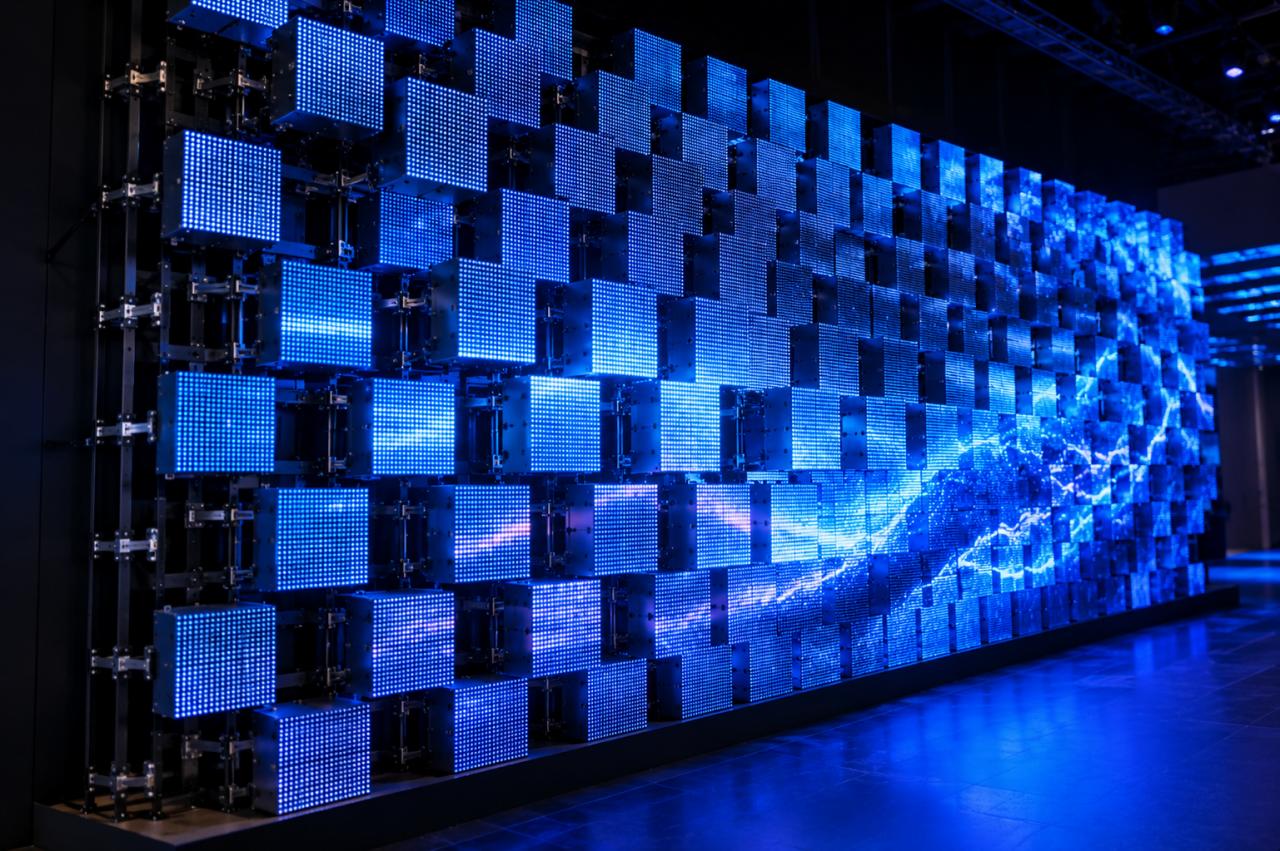
A 3D kinetic LED screen does not move as one large flat panel. It uses multiple independent LED motion units across the display surface. Each unit can move along a programmed path, usually forward and backward, to form physical depth. When different modules move at different distances, the screen creates a layered 3D structure. This movement gives the display more spatial impact than a flat video animation. The screen is not just showing depth. It is physically building depth. The modular structure also gives designers more control over the final visual effect. The screen can create wave motion, opening effects, surface changes, and staggered depth patterns. Movement becomes part of the display design instead of a decorative trick added after the hardware is installed, because apparently even screens now need choreography.
160×160mm and 250×250mm Units Shape Motion Density
Module size affects how detailed the motion can be. JRVISUAL’s 3D Kinetic LED Display includes a 640×480mm cabinet with P1.98mm and 160×160mm units, as well as a 500×500mm cabinet with P1.9mm or P2.6mm and 250×250mm units. Smaller 160×160mm units create finer motion density because more units can move within the same screen area. They work well for detailed waves, layered patterns, and precise surface changes. Larger 250×250mm units create stronger visual movement with a more direct structure. They can suit larger commercial spaces, exhibition areas, brand showrooms, and stage backgrounds where the audience views the screen from a greater distance.
A Stable Mechanical Structure Keeps the Screen Moving Smoothly
A moving display must move accurately. If each LED module travels slightly differently, the image can quickly lose alignment. The viewer may see uneven gaps, broken image edges, or unstable depth. At that point, the screen stops looking advanced and starts looking like a very expensive maintenance request. A stable 3D kinetic LED screen requires a rigid cabinet structure, precise motion control, controlled driving units, and consistent module spacing. These parts keep every LED unit moving along the correct path. The goal is not movement alone. The goal is repeatable movement. Each module should move to the planned position, stop cleanly, and return to its starting point without visible drift.
Repeatable Travel Helps Maintain Image Stability
Repeatable travel keeps the display reliable during repeated motion cycles. Many kinetic LED installations run the same motion sequence throughout an event, exhibition, or daily commercial operation. If the travel distance changes over time, the visual structure becomes less stable. Accurate travel helps the image stay connected across moving modules. It also helps the content team design motion effects with confidence. When the hardware moves predictably, the video timeline can follow the motion path more precisely.
Pixel Pitch Keeps Moving Images Clear
Pixel pitch still matters on a 3D kinetic LED screen. Motion can create physical depth, but it cannot fix poor image detail. If the pixel pitch is too large for the viewing distance, the audience may see rough edges, visible pixels, or unclear content during movement. JRVISUAL offers P1.98, P1.9, and P2.6 options for the 3D kinetic model. These fine-pitch options are well-suited to indoor projects where viewers may stand relatively close to the display, such as showrooms, museums, retail spaces, exhibition booths, and corporate halls. Fine pixel pitch helps graphics, product visuals, and brand content remain clean while the modules shift forward or backward. This is especially important because motion changes the viewing angle, making image flaws easier to notice.
Module Alignment Prevents Visual Breaks
Module alignment decides whether the screen looks like one coordinated display or a group of separate LED blocks trying their best under questionable management. On a fixed LED wall, alignment mainly affects flatness and seam visibility. On a 3D kinetic LED screen, alignment becomes more demanding because the modules are moving while still forming one visual surface. Each module edge must remain controlled during movement. If spacing becomes uneven, the viewer may see obvious visual breaks. If a module tilts or shifts, the image can look unstable even when the video signal is normal. Good alignment supports cleaner image continuity, smoother motion effects, and stronger depth perception.
The Control System Coordinates Motion Timing
The control system manages how each module moves over time. It controls motion speed, travel distance, start timing, stop timing, and movement order. This timing must match the content sequence. If one module moves too early or too late, the image loses rhythm. A wave effect may look broken. A product reveal may feel delayed. A layered motion sequence may lose its intended depth. Stable control not only moves the screen. It makes the screen move predictably.
Motion Timing Reduces Shaking and Delay
Smooth timing reduces shaking and delay. When modules start and stop in a controlled way, the movement feels intentional. When timing is uneven, the screen may appear to tremble or lag behind the video content. Predictable timing gives content designers a stable base. They can match motion effects with light trails, product reveals, opening structures, or layered video transitions.
Video Content Must Match the Kinetic LED Display Movement
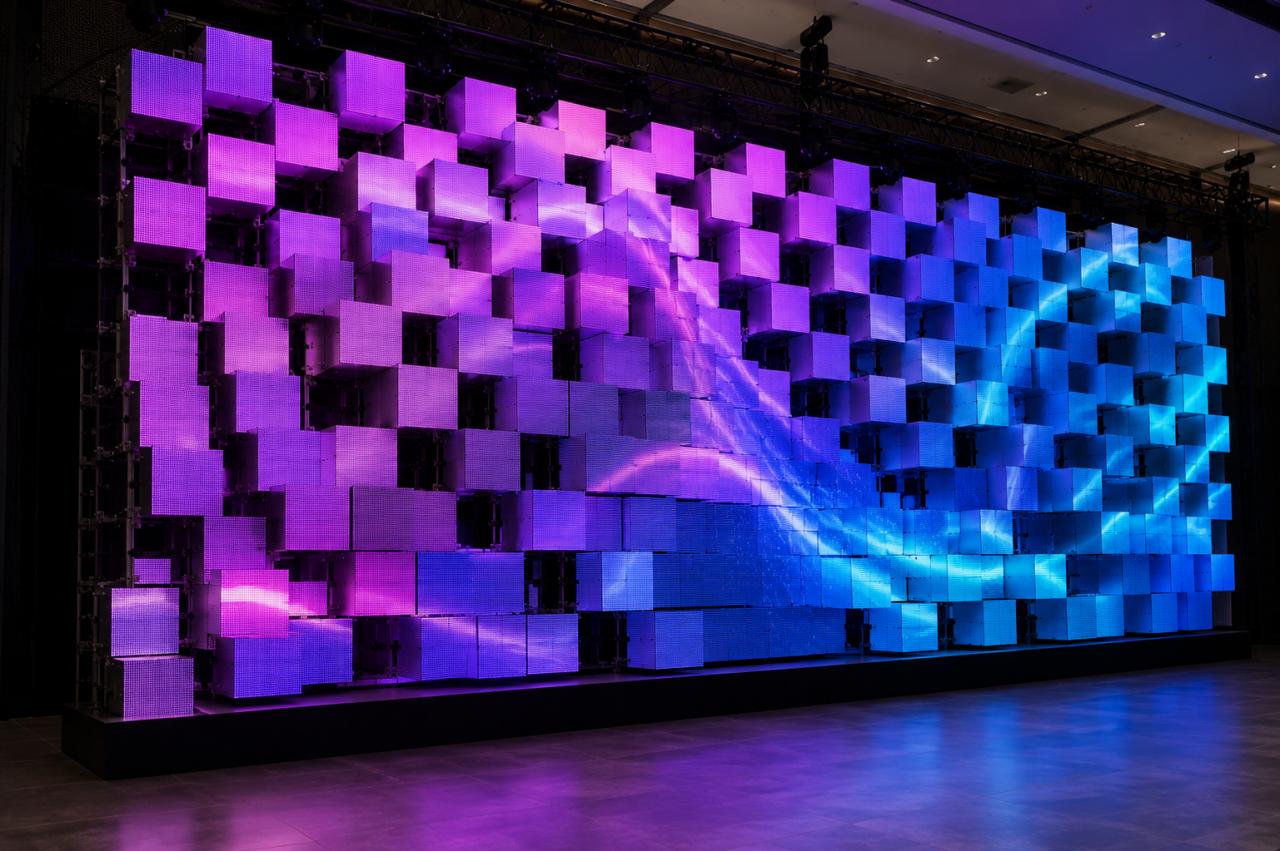
Video content for a kinetic LED system cannot be treated like normal LED wall content. A fixed LED wall only needs to be video-mapped to a flat surface. A 3D kinetic display needs content that follows the motion path. For example, a wave animation can match forward and backward module travel. A product launch video can use forward motion to emphasize a reveal. A brand animation can appear during an opening sequence. This is also where different kinetic formats create different effects. A 3D kinetic LED screen builds physical depth through module movement, while a DNA Rotating LED Screen uses rotation and changing display angles to create another type of kinetic display effect.
Stable 3D Kinetic LED Screen Images Need Structure, Control, and Synchronization
A 3D kinetic LED screen keeps images stable even as it moves because several systems work together. Modular motion units create physical depth. The mechanical structure maintains accurate movement. Pixel pitch keeps the image clear. Module alignment prevents visual breaks. The control system coordinates timing. Video content follows the motion path. The final effect does not come from one impressive parameter. It comes from coordination. When every LED unit moves predictably, and every image sequence matches that movement, the screen can create depth, waves, opening effects, and layered motion without losing visual stability. A stable 3D kinetic LED screen is not just a moving LED wall. It is a synchronized display system where structure, motion, image alignment, and content timing follow the same technical logic.