
People often choose transparent screens because the glass, merchandise, architecture, or view must remain visible. That goal can conflict with image brightness, pixel density, viewing distance, and the amount of dark space in the content. The best specification is not the highest brightness or the highest transparency in isolation. It is the combination that keeps the intended view open while making the message readable in the real lighting conditions. Buyers should treat the required brightness output as a site-dependent value. Window direction, daylight, interior lighting, background color, viewing angle, content style, and operating schedule can change the result more than a showroom demonstration suggests.
Measure Transparent LED Display Brightness Before Selecting Hardware
Measure or document the brightest and darkest expected conditions. Record window orientation, direct sun periods, reflected sky, exterior background, interior lighting, nighttime reflections, nearby signs, and whether viewers stand inside or outside. Take photographs from the intended audience positions at several times of day. Review the main Transparent LED Display selection against this site record. A display that appears vivid in a dark booth may lose contrast against a bright street, while excessive output at night can create glare and waste power.
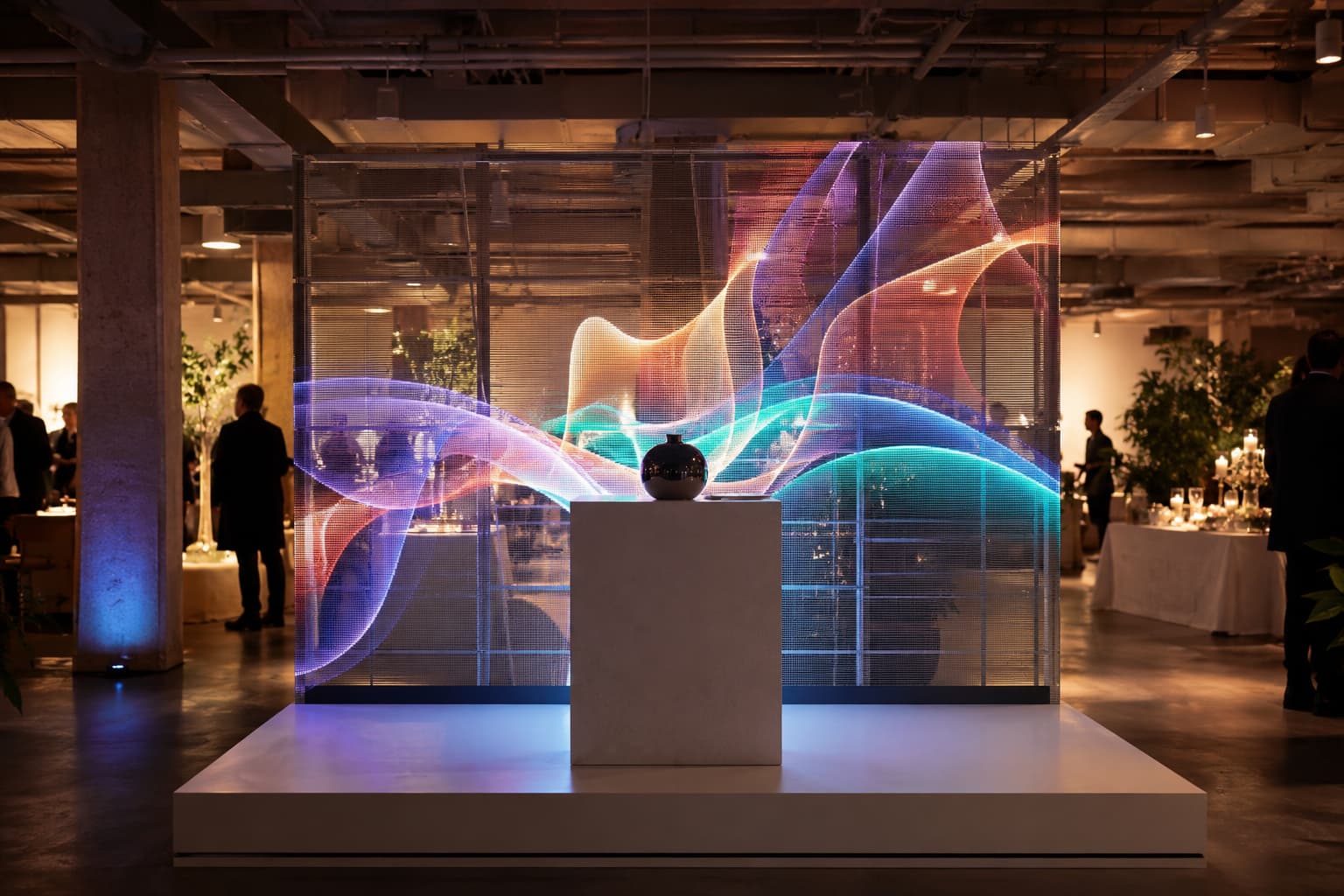
Turn Transparent LED Display Transparency into a Project Target
Define what must remain visible through the screen. A retail window may need merchandise and staff to remain clear. A lobby facade may prioritize daylight and architectural openness. A stage installation may accept lower transparency in exchange for stronger video. Transparent LED display transparency depends on strip width, pixel arrangement, supporting structure, wiring, viewing angle, and background. Ask for both the claimed optical value and photographs or samples viewed from the actual distance. Structural frames and cable routes can reduce practical transparency even when the LED material itself is open.
Test the Sample by Day and Night
Daylight creates a bright background that reduces perceived image contrast. At night, the glass can behave like a mirror and show interior reflections. Review brightness presets, automatic dimming, content colors, black levels, and operating schedules for both conditions. The WBDG daylighting guidance provides useful context for documenting daylight, glazing, glare, and interior conditions.
Choose Pixel Pitch from the Viewing Distance
Record the closest and farthest viewers, their direction of travel, typical dwell time, and the smallest content element they need to understand. A finer pitch can improve close viewing but may reduce openness, increase power density, and add visible structure. A coarser pitch may improve transparency but requires larger graphics and a longer viewing distance. For adhesive or film-based formats, a transparent LED film screen may suit glass surfaces where low weight and minimal framing matter. Confirm the real active area, edge connections, bend limits, service method, and substrate requirements rather than assuming every film product installs the same way.
Design Content for Transparent LED Display Brightness
Transparent content works differently from content on an opaque black screen. Bright, high-contrast objects usually read better than large dark scenes. Fine text, thin lines, low-contrast gradients, and content that relies on black backgrounds can disappear into the real environment behind the glass. Create a site-specific content test using representative logos, product images, text sizes, motion speeds, and color combinations. Evaluate transparent LED display brightness with the final background visible. Do not approve content only from a black studio preview.
Map Safe Areas Around Glass and Mullions
Request the final active canvas, strip or module layout, controller map, seam locations, borders, and any non-display zones. Keep critical content away from cable exits, mullions, structural interruptions, and cropped edges.
Plan the Transparent LED Display Installation
Document the glass type, dimensions, mullions, allowable attachment points, access side, cleaning method, ventilation, cable path, power locations, and local rules. Confirm whether the product is adhesive film, rigid panel, mesh, or a framed transparent cabinet. Each format creates different loads and service needs. A flexible transparent LED display can follow some curved or irregular glass surfaces, but the allowable radius, joint layout, surface preparation, temperature range, and replacement process still need project approval.
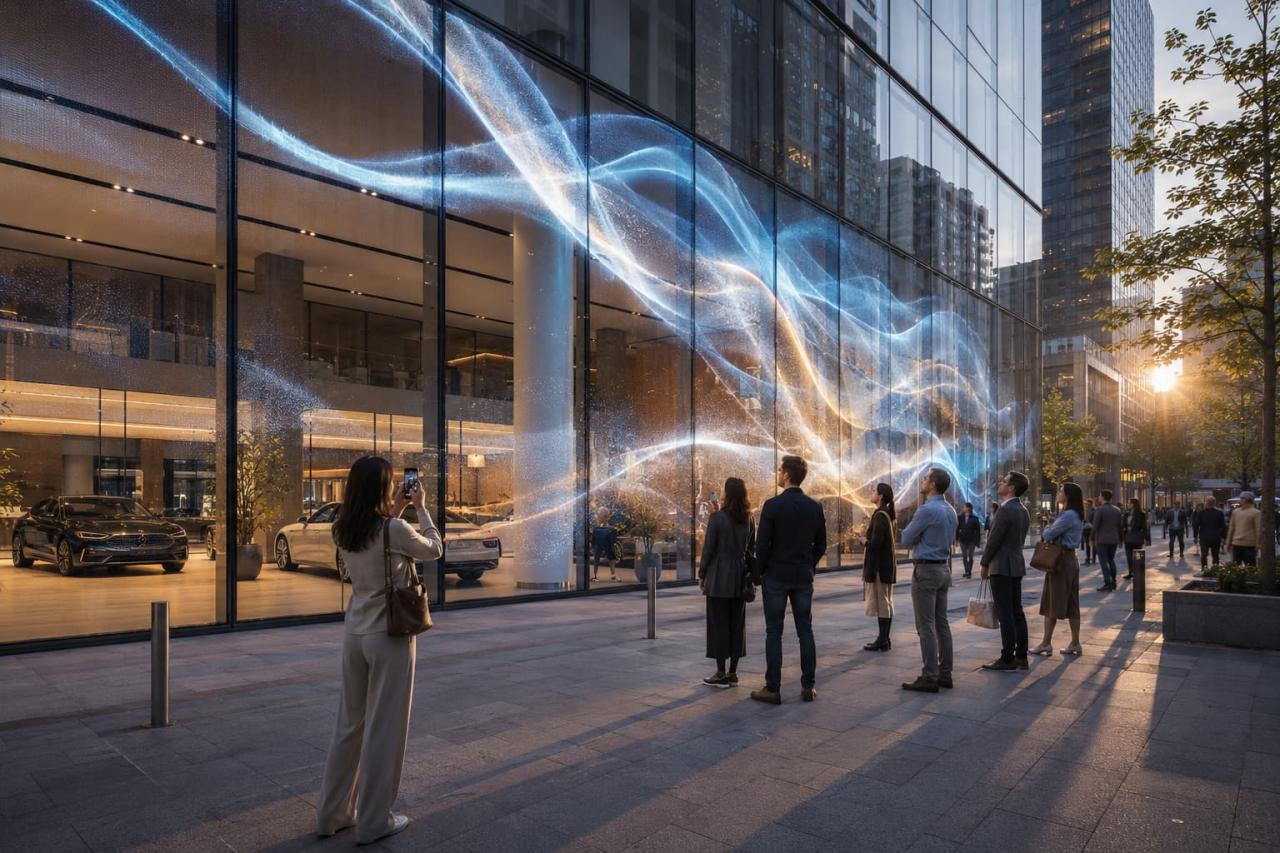
Choose Environmental Protection from Site Exposure
An indoor shop window, semi-outdoor facade, and exposed exterior screen face different water, dust, wind, ultraviolet, temperature, and corrosion conditions. Do not treat brightness as proof of outdoor suitability. Ask for the complete enclosure rating, mounting design, drainage, connectors, power equipment, and test basis. For weather-exposed projects, compare the intended system with an outdoor transparent LED display designed for exterior conditions. The supporting structure and authority requirements remain project-specific.
Define Transparent LED Display Maintenance
Confirm how technicians reach modules, power supplies, receiving components, connectors, edge drivers, control boxes, and attachment points. Record whether a damaged section can be replaced from inside, whether the window must be closed, and how the area is protected during service. Transparent LED display maintenance should include safe glass cleaning products, inspection of adhesive or fasteners, connector checks, brightness calibration, spare sections, and a method for matching replacement modules. Plan cable and controller access so maintenance doesn’t block the storefront longer than necessary.
Run a Transparent LED Display Brightness Field Trial
| Test window | Decision to record |
| Bright daytime | Minimum output that keeps content readable |
| Cloudy daytime | Usable mid-range preset without excessive glare |
| Night operation | Maximum comfortable output and reflection control |
| Side viewing | Acceptable image loss and visible structure |
| Content trial | Minimum text size, contrast and motion speed |
| Service trial | Removal path and replacement time |
Use a full-size sample when possible. Place it on representative glass and run the planned content from the real audience side. Do not simply write “passed.” Record the brightness setting, time, weather, background, viewing distance, photographs, and the reason the team accepted the result.
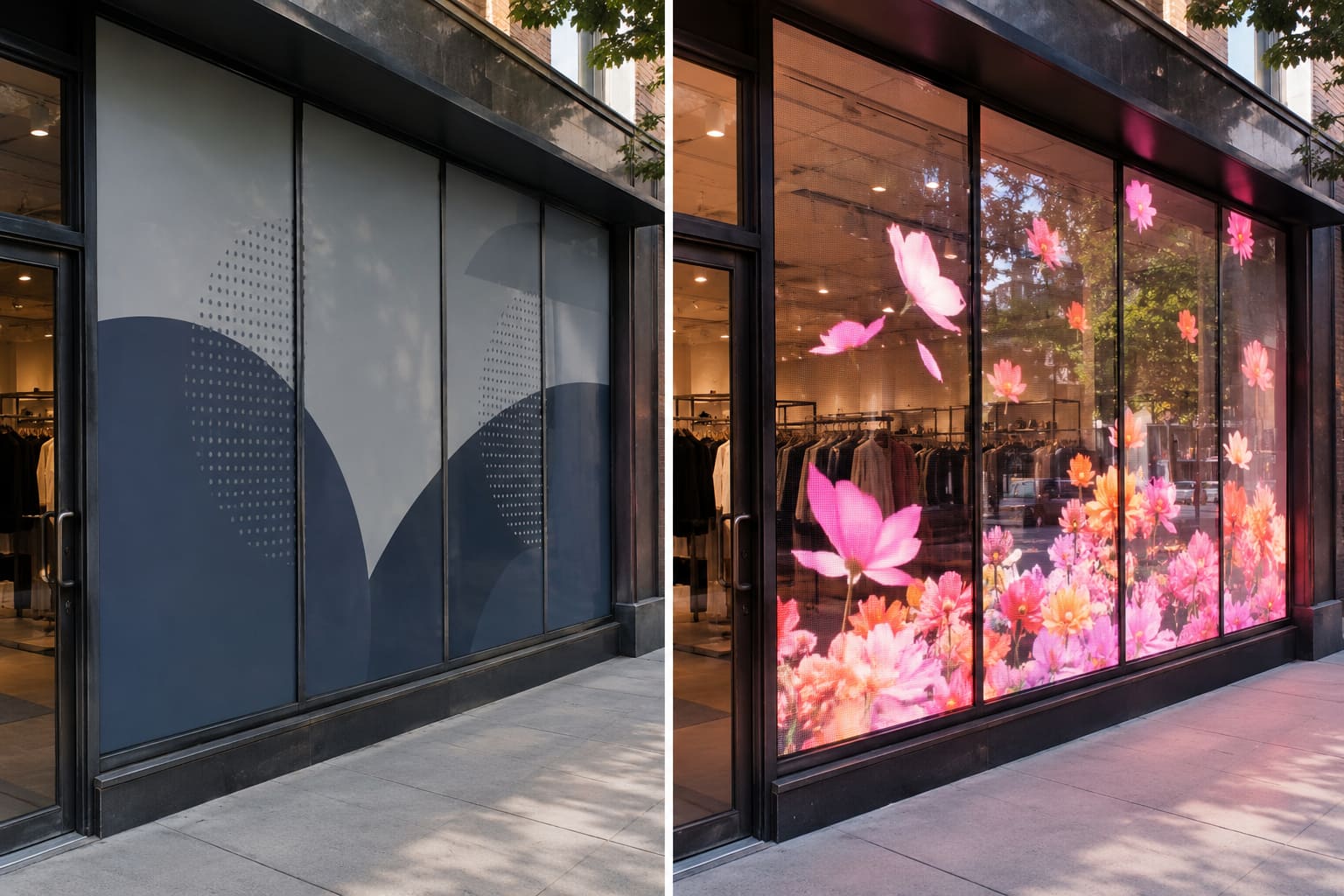
Convert the Transparent LED Display Installation Test into an RFQ
The RFQ should carry forward the measured conditions rather than restart with generic product specifications. Include glass drawings, site photographs, orientation, viewing zones, the approved transparency range, day- and night-brightness presets, minimum text size, operating hours, mounting restrictions, environmental exposure, and maintenance access.
The Transparent LED Display Transparency Tradeoff to Sign Off
The buyer should sign off on one explicit tradeoff: how much of the view must remain open versus how much image density and contrast the message needs. More openness isn’t automatically better, and one brightness setting rarely works throughout the day. The final order should state the accepted balance and the field-test conditions used to approve it.