
You’ve locked the venue. That’s the hard part done — or so it feels. But the next decision trips up more event organizers than any other: picking an LED screen that actually holds up in that specific space, under those specific conditions, with a crew that has maybe four hours to get it standing. Get the spec wrong, and you’re not just dealing with a dim image. You’re dealing with a rigging crew that can’t anchor to the ceiling, a power draw that trips the venue’s breakers, and a front row that spends the evening squinting. The venue is set. Now let the environment tell you what the screen needs to be.
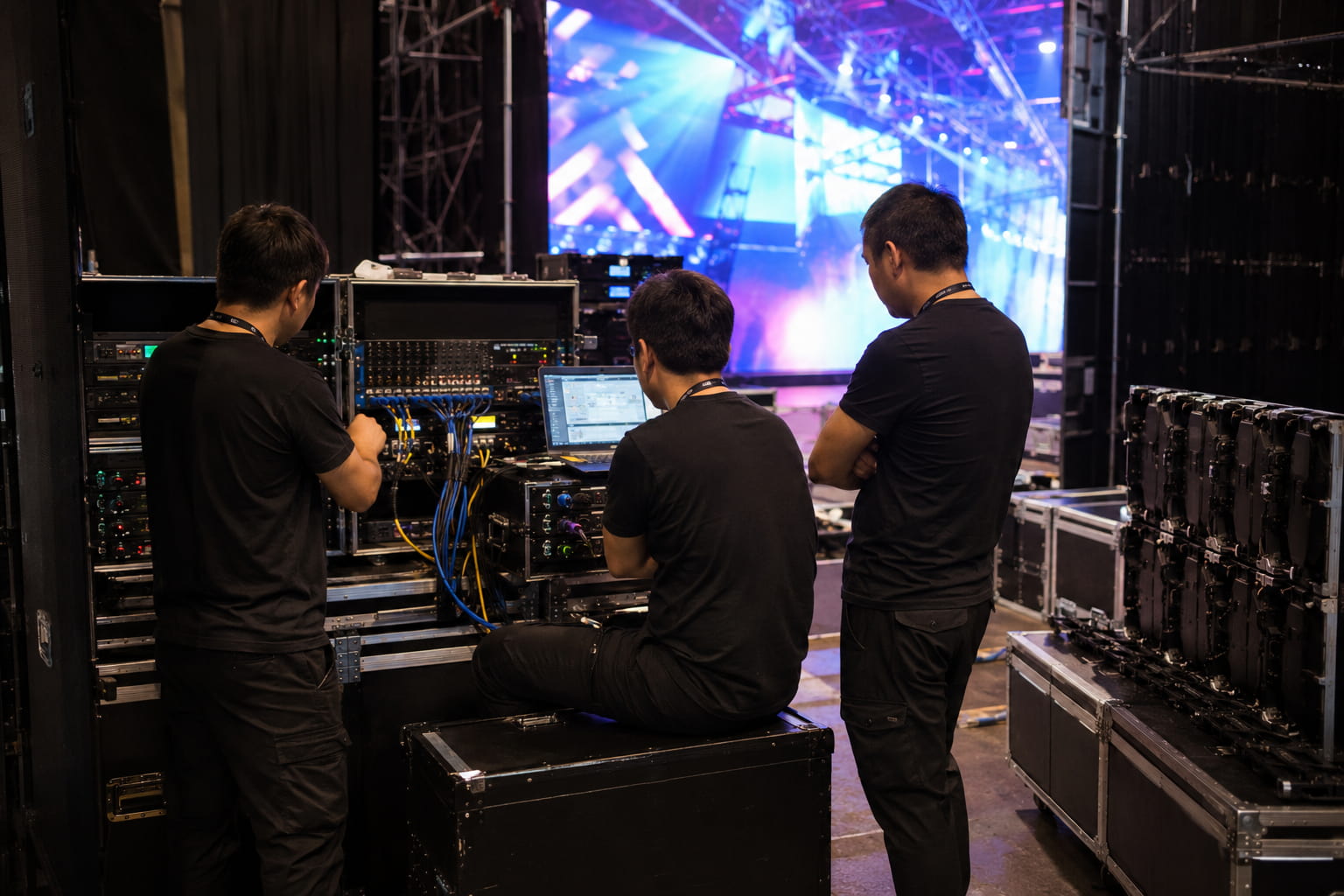
Already Have an Indoor Venue? Here’s How to Choose Your LED Screen
Indoor events hand you something outdoor setups never do: control. You control the lighting, the ambient temperature, and the ceiling height. But that control cuts both ways — the constraints are tighter too, and the spec decisions carry less margin for error.
Brightness Range for Indoor Environments
Run an indoor LED screen too dim, and the image washes out the moment someone opens a side door. Run it too bright,t and the front row develops a headache before the second speaker finishes. The practical range for most indoor temporary events sits between 800 and 1,500 nits. A standard corporate conference in a lit hall runs well at 1,000 nits. Bump that to 1,500 nits for a concert stage where theatrical lighting competes directly with the display. Anything beyond 1,500 nits indoors is overkill — and it pushes up power draw for no visible gain. Match the brightness to throom’s’s actual lighting level, not the ceiling of what the rental catalog offers.
Pixel Pitch Recommendations for Close-Range Viewing
Pixel pitch is the millimeter spacing between LED clusters on the panel. Sit too close to a high-pitch screen, and the image breaks apart into a visible dot grid — fine for a billboard on a highway, unusable for a boardroom presentation. For indoor events where your nearest seats are between 3 and 6 meters from the display, specify P2.5 to P3. That range keeps text sharp, color accurate, and video smooth at close range. Push the viewing distance out to 8 to 10 meters, and P3.9 to P4.8 becomes the smarter call — lighter panels, faster assembly, lower rental cost, and no visible quality drop from where the audience actually sits.
Weight and Installation Constraints in Indoor Venues
Here’s the detail that catches people off guard: indoor venues have structural limits that never appear on the floor plan. Suspended ceilings with load-rated rigging points, polished floors that can’t take ground anchors, heritage buildings where you can’t drill — all of it shapes what the LED video wall installation can physically do. A rental LED display panel typically weighs 8 to 12 kg per square meter. Scale that up to a 20-square-meter screen, and you’re hanging 160 to 240 kg before trussing, with motors factored in. Get the venue’s rated rigging capacity before you finalize screen size — not after. A trustworthy LED display solutions provider asks for that number before providing a quote. If they don’t ask, they’re not thinking about your event.
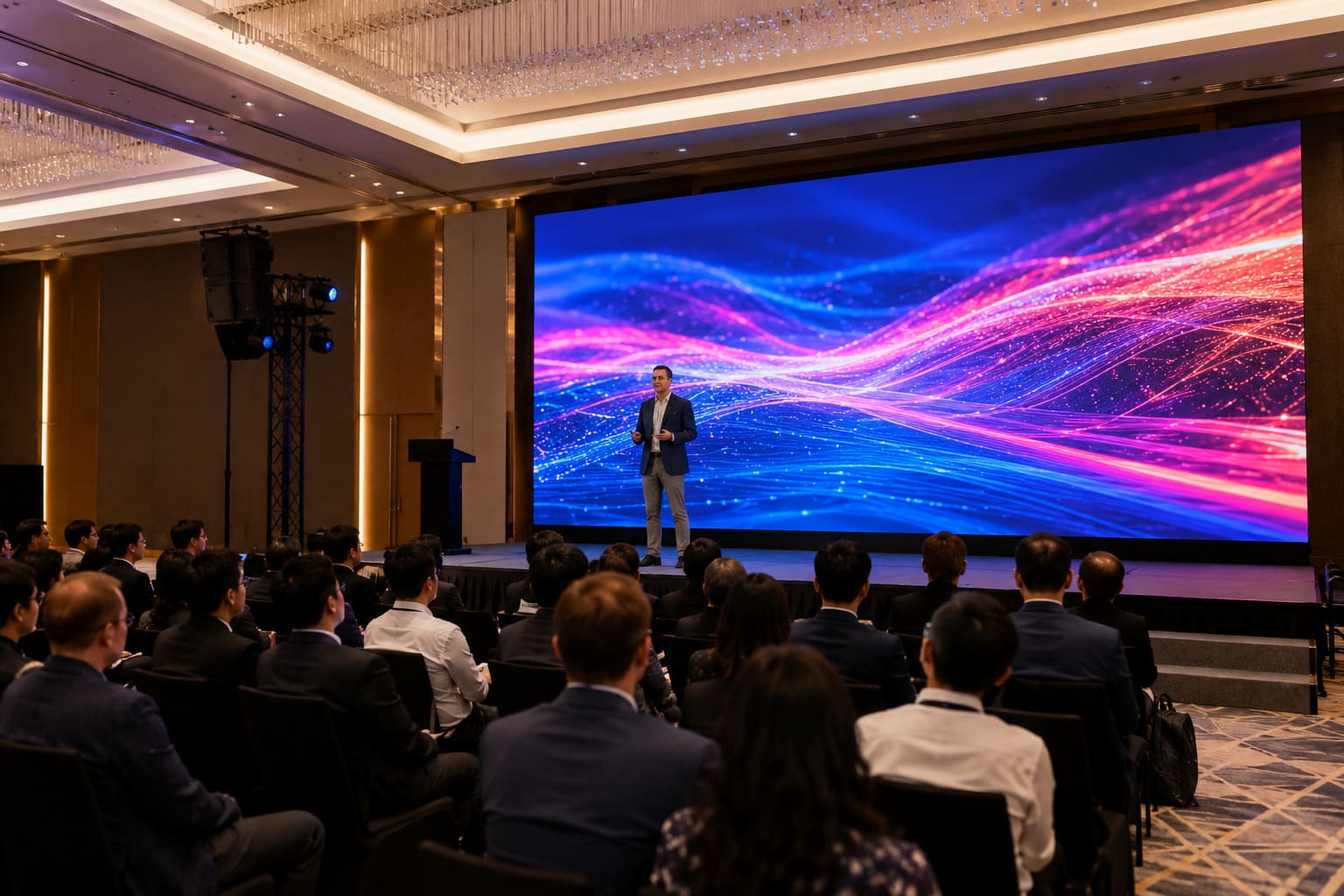
Running an Outdoor Event? Here’s What Your LED Screen Needs
Step outside, and every variable you controlled indoors disappears. The sundoesn’t negotiate. Wind doesn’t care about your event schedule. An LED screen spec built for a ballroom fails fast in an open field, and the failure modes tend to be spectacular.
Brightness Requirements Under Direct Sunlight
Daylight peaks at around 100,000 lux on a clear afternoon. An indoor-spec LED display running at 1,500 nits vanishes against that. Outdoor LED screens need a minimum of 5,000 nits to stay readable in direct sunlight — and in high-solar-exposure regions or peak summer conditions, push that target to 6,000 or 7,000 nits to maintain real contrast against the sky. Evening events flip the problem. Once ambient light drops, a 5,000-nit display at full power becomes actively uncomfortable for anyone sitting close. Make sure the rental LED screen you spec includes proper dimming controls with fine adjustment — not a two-position toggle — so the operator can dial brightness down as the sky darkens.
IP Rating and Weather Resistance for Outdoor Use
IP65 is the floor rating, not the ceiling rating, for any outdoor temporary event screen. That rating means the cabinet seals out dust entirely and handles water jets from any direction — sudden rain, a cleaning crew, a sprinkler that activates at the wrong moment. Drop below IP65, and moisture ingress becomes an electrical risk mid-event. Coastal locations, high-humidity climates, and sites with heavy seasonal rainfall warrant IP66. The practical difference: IP66 withstands higher water pressure than IP6e. If there’s any real chance of heavy rain during the event window, IP66 is the safer spec to carry.
Wind Load and Structural Safety for Outdoor Rigs
A freestanding outdoor LED screen acts like a large vertical sail. At 4 meters wide and 3 meters tall, even a 40 km/h wind puts serious lateral force on the ground support system — and that force scales up fast as the screen grows. Structures that look stable in still air behave very differently once wind picks up. Any outdoor rigging system requires a structural load certification that matches the event site’s wind exposure. This isn’t a preference — it’s a liability question. An experienced LED display manufacturer with a real events track record provides that certification upfront, without you having to chase it. Hesitation on that document is a reason to walk away.
What to Confirm with Your LED Screen Supplier Before the Event
Before you sign anything, confirm that a technician will be physically on-site during the event — not on-call or remote. A mid-show display fault needs someone next to the controller immediately. Also, ask about backup panels; a professional LED screen supplier brings spares at roughly 5% of the total display area. No spares on the truck is a red flag. On power, a 20-square-meter outdoor display at 6,000 nits pulls 6 to 8 kilowatts at peak load. Confirm that the figure matches the venue’s available supply before setup day. And ask how the supplier routes and secures power and signal cables across the footprint — that answer alone tells you whether they’ve actually run events before.
Frequently Asked Questions
What pixel pitch should I use for an indoor temporary event?
P2.5 to P3 for viewing distances of 3 to 6 meters. P3.9 to P4.8 for anything beyond 8 meters.
How bright does an outdoor LED screen need to be for a daytime event?
Minimum 5,000 nits for direct sunlight. Push to 6,000 to 7,000 nits in peak summer or high-altitude conditions.
What IP rating do I need for an outdoor event screen?
IP65 as a baseline. IP66 for coastal, high-humidity, or heavy-rain locations.
Does screen size affect indoor rigging requirements?
Yes. Every square meter adds 8-12 kg of suspended load. Always verify the venue’s rated rigging capacity before finalizing dimensions.
Match the LED Screen to the Environment — Everything Else Follows
Indoor events demand brightness control, close-range pixel precision, and a clear understanding of what the ceiling can actually hold. Outdoor events demand high-nit, proper IP protection, and a certified rigging system — not just assembled and hoped for. And regardless of venue type, the supplier conversation before the event matters as much as the spec sheet itself: on-site technicians, backup panels, power capacity, cable management — these are the variables that determine whether the display performs or fails when it counts.