
A conventional LED wall presents Content from one main direction. An LED sphere display creates a visual surface audiences can see as they move around an installation. This format suits event halls, exhibitions, museums, shopping malls and entertainment venues that need a central visual feature. Diameter alone does not determine the result. Pixel pitch, viewing distance, installation method, content mapping and maintenance access all affect image quality and daily operation. Buyers can review the available LED Sphere | Rental and Fixed Installation options while defining these project conditions.
Why an LED Sphere Display Changes Content Presentation
A spherical screen has no single front-facing side. Visitors can approach it from several directions, keeping the display visible across a wider part of the venue. A suspended installation can also use open ceiling space without occupying a large floor area. The curved surface changes how viewers read images. Flat artwork may stretch near the top and bottom when mapped onto a sphere. Long text can become difficult to follow as it wraps around the structure. Content creators should design for the shape from the start.
Short animations, rotating objects, planetary visuals, branded patterns and abstract motion usually adapt well to this format. Place important logos and messages in several viewing zones so visitors can understand the Content from different positions.
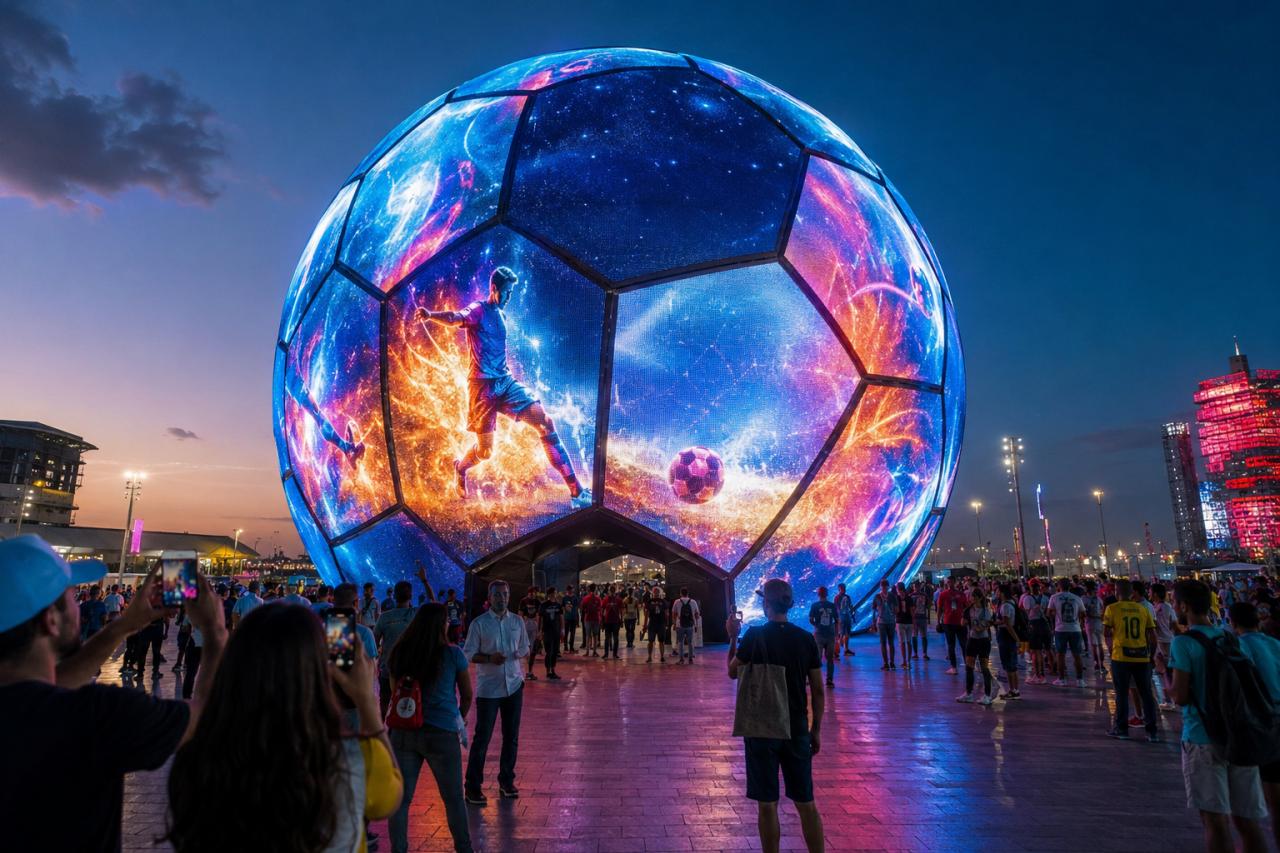
Start With Venue Size and Audience Position
Begin with the available space, ceiling height, and main audience locations. A small screen may disappear inside a high atrium. An oversized structure can obstruct sightlines, conflict with lighting equipment or leave insufficient clearance around nearby architecture. JR Visual provides indoor diameters from 0.5 m to 3 m, with larger customized sizes available. Outdoor options include 3 m and 4 m diameters, along with larger project-specific structures. Select the diameter based on the venue’s visual scale and the practical limits of transportation and installation.
For a floor-standing screen, check its footprint, base stability and surrounding visitor route. For a suspended model, confirm the hanging height, load capacity, rigging points and service access. The installation team also needs a clear route for moving each component into position.
Match LED Sphere Display Pixel Pitch to Viewing Distance
Pixel pitch affects image detail, viewing comfort and project cost. A smaller pitch helps images look smoother when visitors stand near the screen. A larger pitch may suit installations viewed from farther away. JR Visual indoor options include 1.2 mm, 1.5 mm, 1.8 mm, 2 mm and 2.5 mm. Outdoor configurations include 4 mm and 5 mm. Buyers should select from these options based on the actual viewing range, rather than automatically choosing the smallest pitch.
Provide the supplier with the closest and farthest audience positions. Detailed product graphics and small visual elements require a different resolution from large patterns or atmospheric animations.
AVIXA’s calculations for display image size and viewing position can help project teams define realistic viewing conditions before confirming screen resolution.
Rental and Fixed LED Sphere Display Projects
Rental projects require a structure that can handle repeated assembly, transport, and demanding event schedules. The crew needs a clear setup sequence, labeled connections, protective packaging and access to replacement components. JR Visual applies GOB treatment to LED modules intended for rental sphere projects to protect the module surface during frequent handling. A fixed installation has different priorities. The project team must plan long-term power and data routing, ventilation, control equipment placement, and maintenance access. A ceiling-mounted sphere also needs a practical way to reach the display after installation.
Tell the supplier how often the structure will move. A screen used for one corporate event should follow a different configuration from one operating every day inside a shopping center.
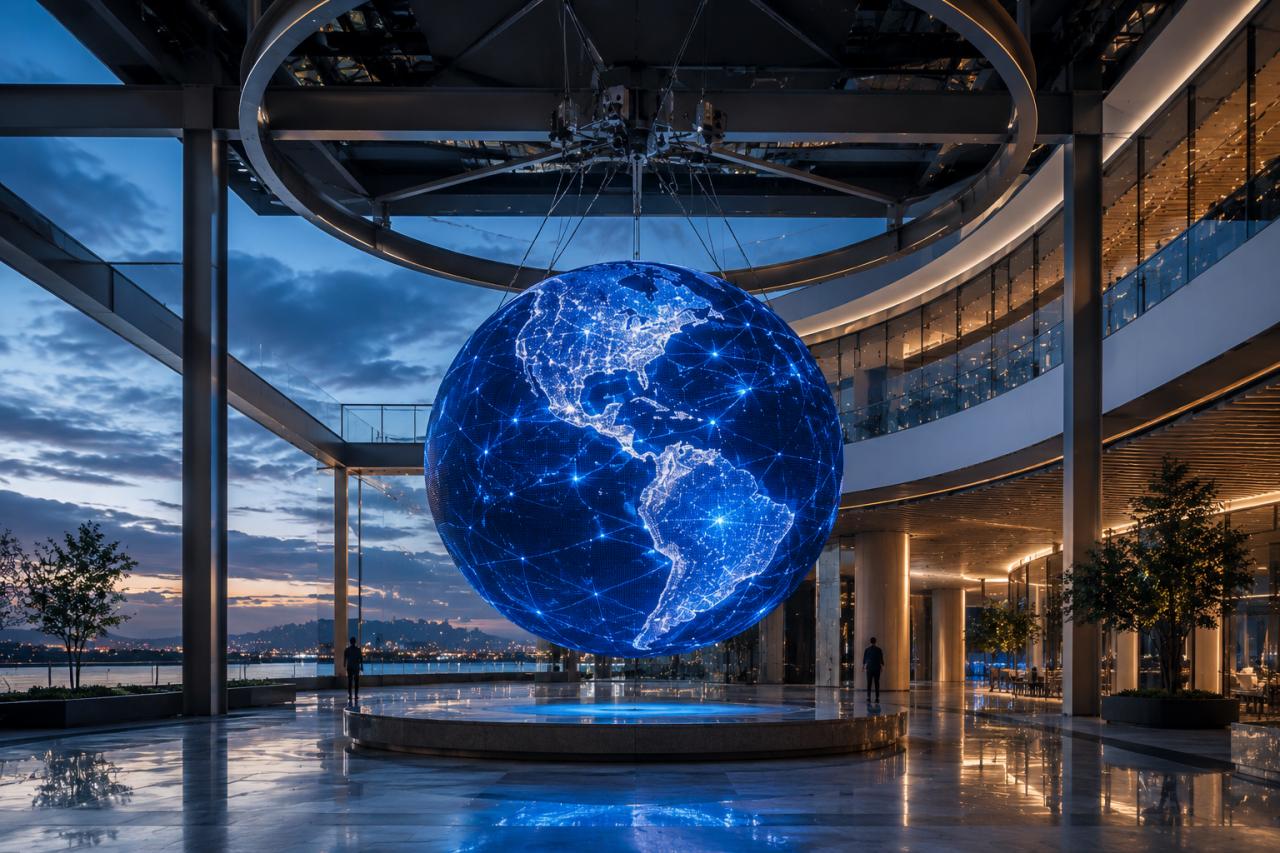
Prepare Content for a 360-Degree Surface.
Start content preparation before production finishes. Ask for the final screen resolution, playback format, and content template. The media team can then test artwork against the actual pixel layout. Keep important text away from areas where images narrow or wrap sharply. Place key information in more than one horizontal zone and preview each animation from several directions. Slow rotational movement often gives viewers enough time to understand the image as they walk around the screen. Avoid stretching one rectangular video across the entire surface without testing it first. Faces, logos,s and geometric objects can appear distorted. A short content test can reveal these problems before the event or venue opening.
Confirm how staff will upload new media and how the system will respond if the video signal stops. The playback equipment must support the required resolution, frame rate and update process.
Check Structure, Access and Operating Conditions
A technical proposal should state the total display weight, support method, power requirements and control-system arrangement. For hanging installations, the venue’s structural or rigging team should review the load and attachment plan. Ask how technicians will reach the LED modules, power supplies and data connections. Determine how much clearance the structure needs and how to remove a faulty section after installation. Outdoor projects need additional checks. Confirm the required weather protection, brightness, operating temperature, drainage arrangement and wind-load assessment. Local structural and electrical requirements may also affect the final design. Power and signal cables should follow planned routes rather than remain visible around the sphere. Cable placement directly affects the finished appearance of a suspended display.
Where Spherical Screens Work Well
Corporate events can use a sphere as a stage centerpiece for logos, countdowns, and animated brand content. Exhibition booths can suspend one above the stand to improve visibility across a busy hall. Museums and science centers can present planets, geographic data and other naturally spherical subjects. Shopping malls and showrooms can place the display in an atrium or open area to create a recognizable visual landmark. Entertainment venues can synchronize their content with lighting, sound, and surrounding screens. JR Visual supplied a P2 mm indoor sphere with a 2.5 m diameter for a SABIC year-end meeting installation in Dammam, Saudi Arabia. The project used the structure as a large event centerpiece visible from different parts of the room.
Each application still needs its own specification. A museum exhibit may prioritize close viewing and daily operation. A touring event may place more emphasis on repeated handling and fast installation.
What to Include in an LED Sphere Display Quote Request
Clear project information helps the supplier recommend a suitable configuration and prepare a more accurate quotation. Send these details:
- Indoor or outdoor operating environment
- Preferred diameter or available installation space
- Closest and farthest viewing distances
- Floor-standing or hanging installation
- Fixed-installation or rental use
- Expected daily operating time
- Content type and playback requirements
- Installation address and project schedule
- Ceiling height, rigging information or floor restrictions
- Delivery access and transportation limits
- Local structural and electrical requirements
Photos, drawings and venue dimensions can reveal installation conflicts early. Ask what the quotation includes, such as the screen structure, controller, spare parts, packing, installation guidance and content template. It may also help to compare other LED display products when the project includes surrounding video walls, floor screens or additional creative display structures.
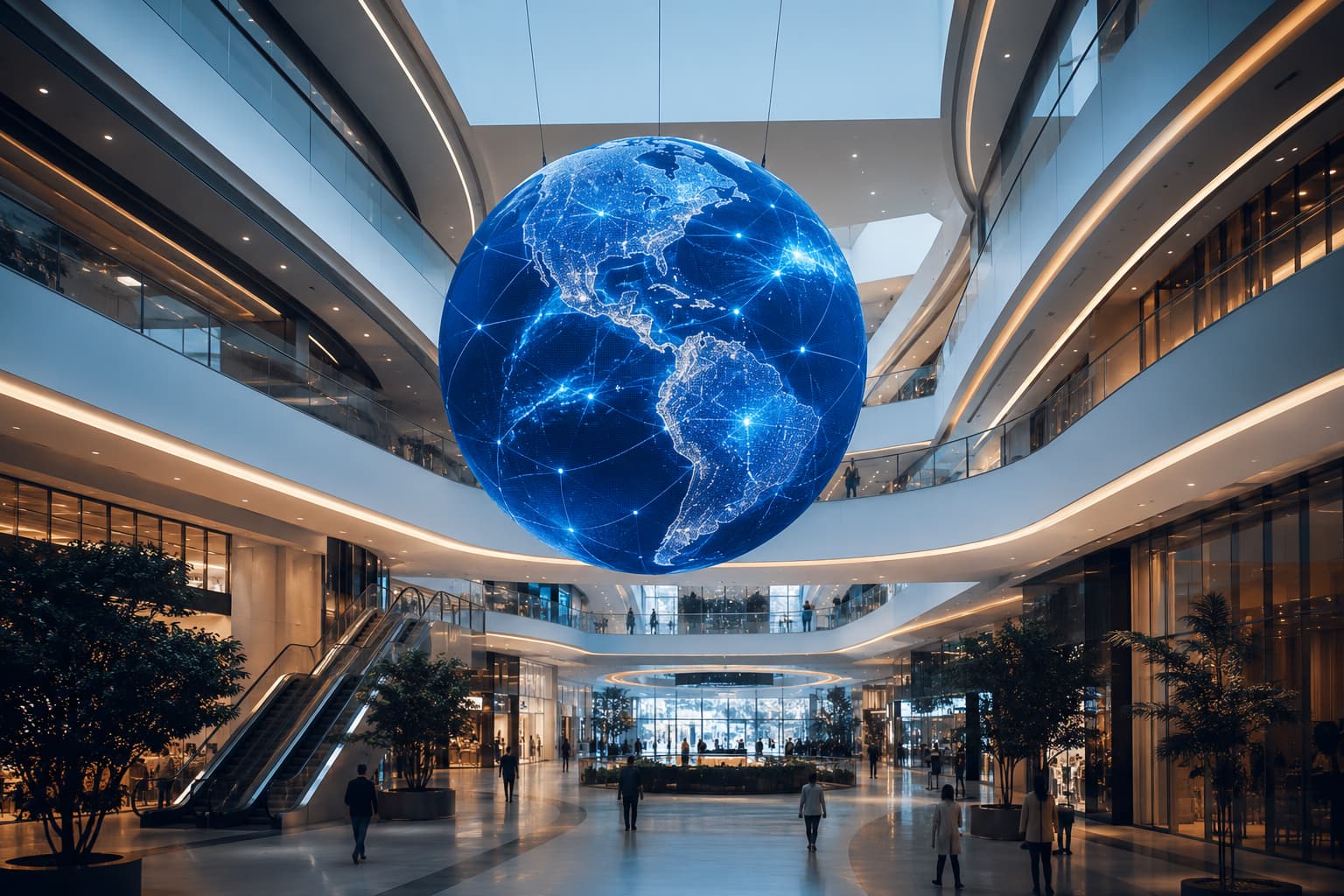
The Right Specification Starts With Site Data
Choose an LED sphere display after defining the venue, viewing distance, Content, installation method, and operating environment. These conditions determine the suitable diameter, pixel pitch and structural configuration. A smaller fine-pitch model can support close viewing in a showroom or museum. A larger suspended screen may suit an event hall or atrium where visitors see it from farther away. Rental projects need surface protection and efficient assembly, while permanent installations need dependable service access. Send the venue dimensions, audience positions, and installation plan to the JR Visual project team before confirming the order. A project-specific specification helps the screen fit the space, present content clearly,y and remain practical to operate.