
Outdoor conditions destroy displays that aren’t built for them. Before you spec any outdoor flexible LED display, check these features — missing even one of them can lead to a costly replacement job down the line.
Outdoor Flexible LED Display Weather Protection: Start with IP Rating
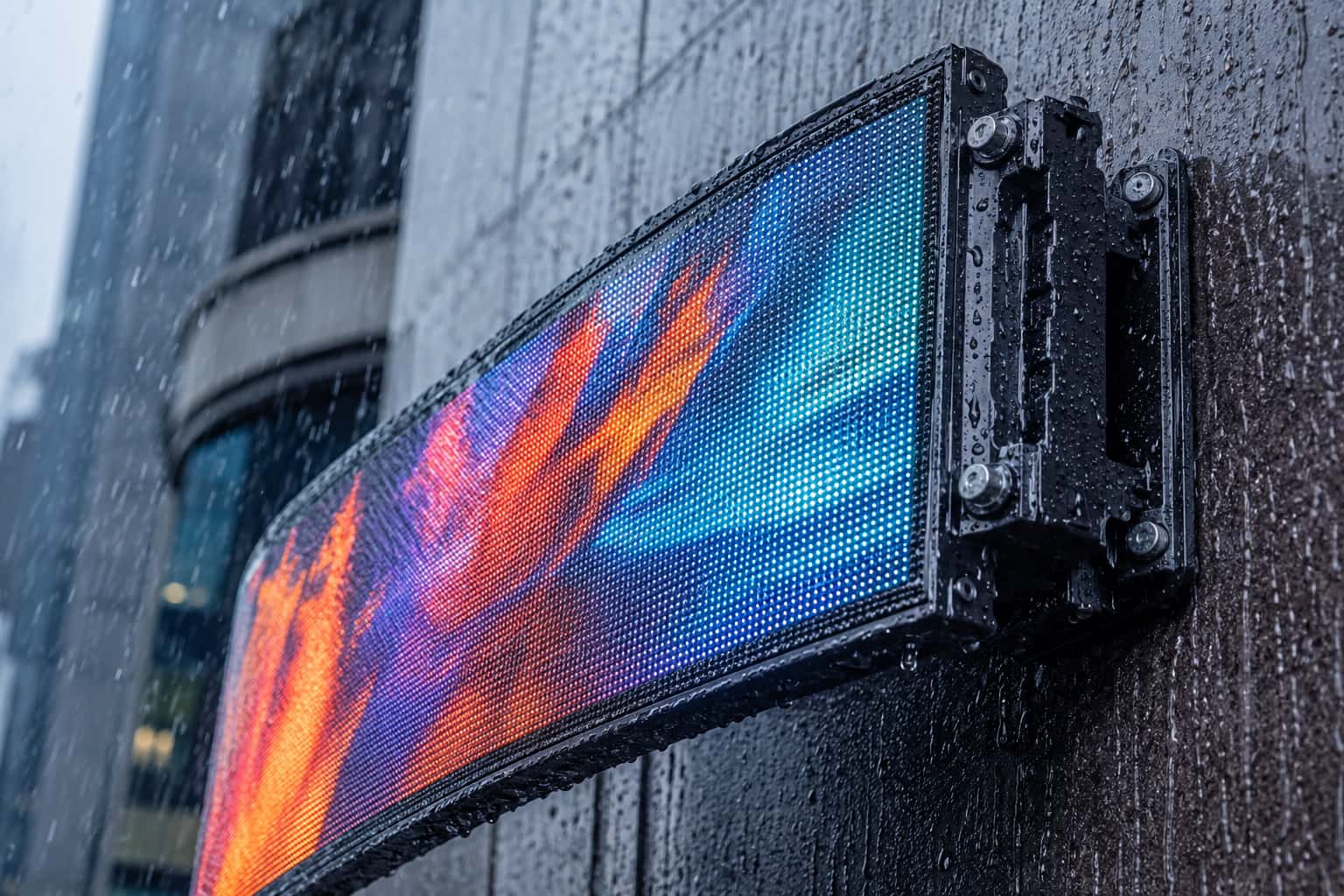
IP65 is the floor, not the ideal. It completely blocks dust and withstands water jets from any direction. For installations near coastlines, in high-rainfall regions, or on surfaces that maintenance crews pressure-wash, IP67 adds protection against short-term submersion. “Weather-resistant” printed on a spec sheet means nothing without the IP number behind it. Ask for it. If a supplier can’t provide it, move on.
Brightness Makes or Breaks Your Outdoor Flexible LED Display in Sunlight
5,500 nits is the minimum for a south-facing outdoor installation. Premium modules reach 8,000–10,000 nits for locations with intense direct sunlight — Middle Eastern and Southeast Asian markets regularly require this range. A flexible LED display built for indoor use runs at 800–2,000 nits. Push one outdoors and it either auto-dims or triggers a thermal shutdown on a bright afternoon. Neither outcome is acceptable on a live installation.
Curved Surfaces Demand a Specific Bendable LED Screen Build
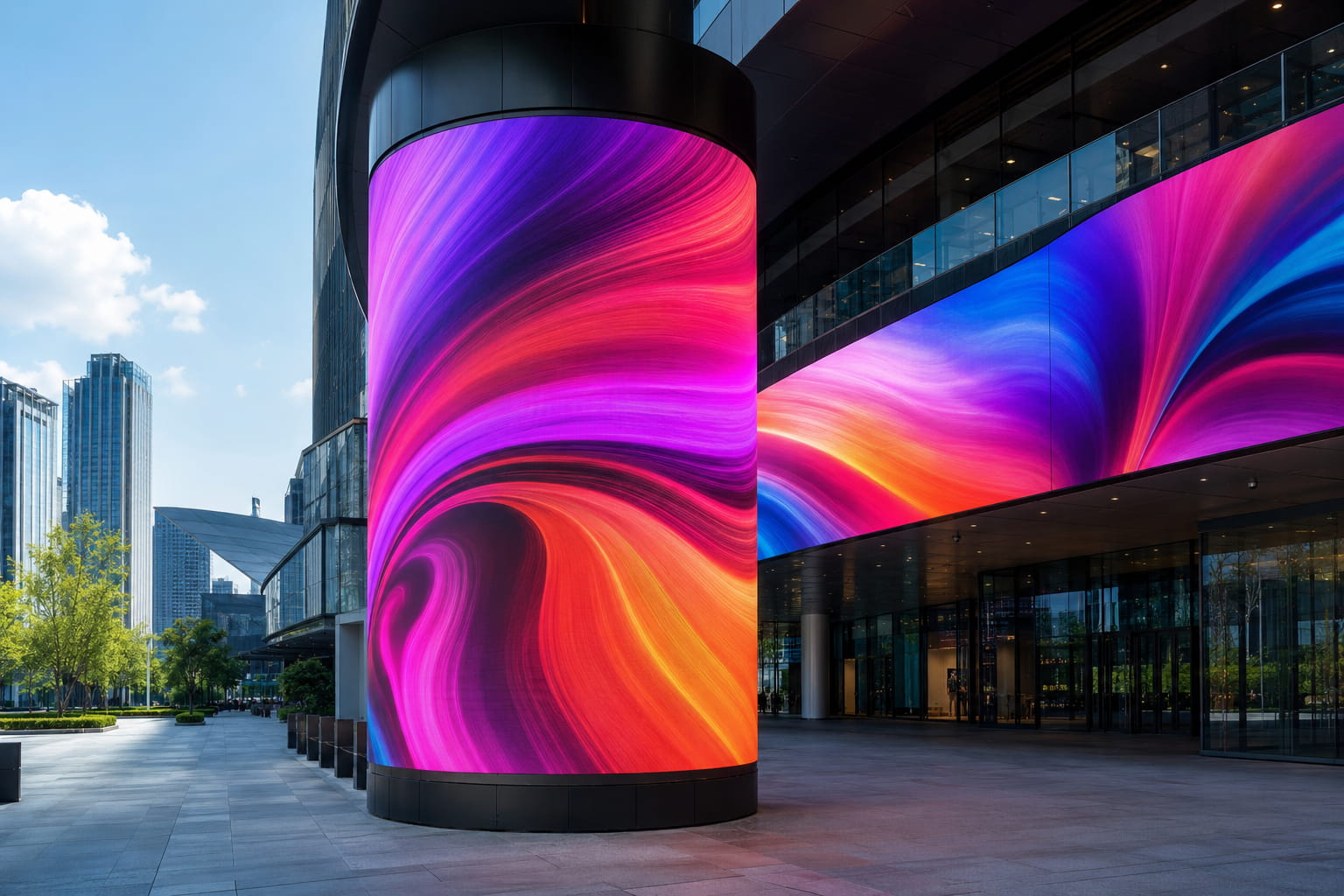
500mm is the bend radius that separates a genuinely flexible display from one that just bends slightly. Column wraps, cylindrical facades, and arched architectural surfaces all require a module that hits this threshold — tighter in some cases.
Substrate material determines how long that flexibility lasts. Silicone-based backing handles UV exposure and repeated thermal cycling far better than standard PCB soft boards. After two years outdoors, silicone-backed modules show measurably less cracking and delamination. The O-Soft outdoor flexible LED display uses a silicone substrate with a minimum bend radius of 500mm — built specifically for column wraps, curved facades, and architectural installations that standard rigid screens can’t handle. Confirm the substrate before you sign off on the spec.
How a Flexible Display Module Manages Heat Determines Longevity
Fanless passive heat dissipation outperforms active cooling in outdoor environments — no moving parts means no fan failure, no dust accumulation in vents, and no maintenance call at 2am. Quality outdoor flexible LED display modules operate from -20°C to +60°C without performance throttling. LED chip quality drives lifespan more than almost any other single variable. Modules built with Grade A chips consistently hit the 100,000-hour rated lifespan under continuous outdoor operation. Lower-grade chip sources rarely do.
For certifications: CE and RoHS for Europe, FCC for North America, and UL for projects with government or institutional requirements. Get the documentation before the order ships.
Pixel Pitch Depends on Viewing Distance
P8 to P10 covers building facades and architectural installations where audiences stand 10 meters or more away. P4 to P5 suits stage rental and event applications where viewers sit 4–6 meters from the screen. Over-specifying pitch on a large outdoor install wastes budget with no visible payoff. A P4 panel across a 200-square-meter facade costs significantly more than P8 — and an audience at 30 meters can’t tell the difference.
The installation method determines its performance
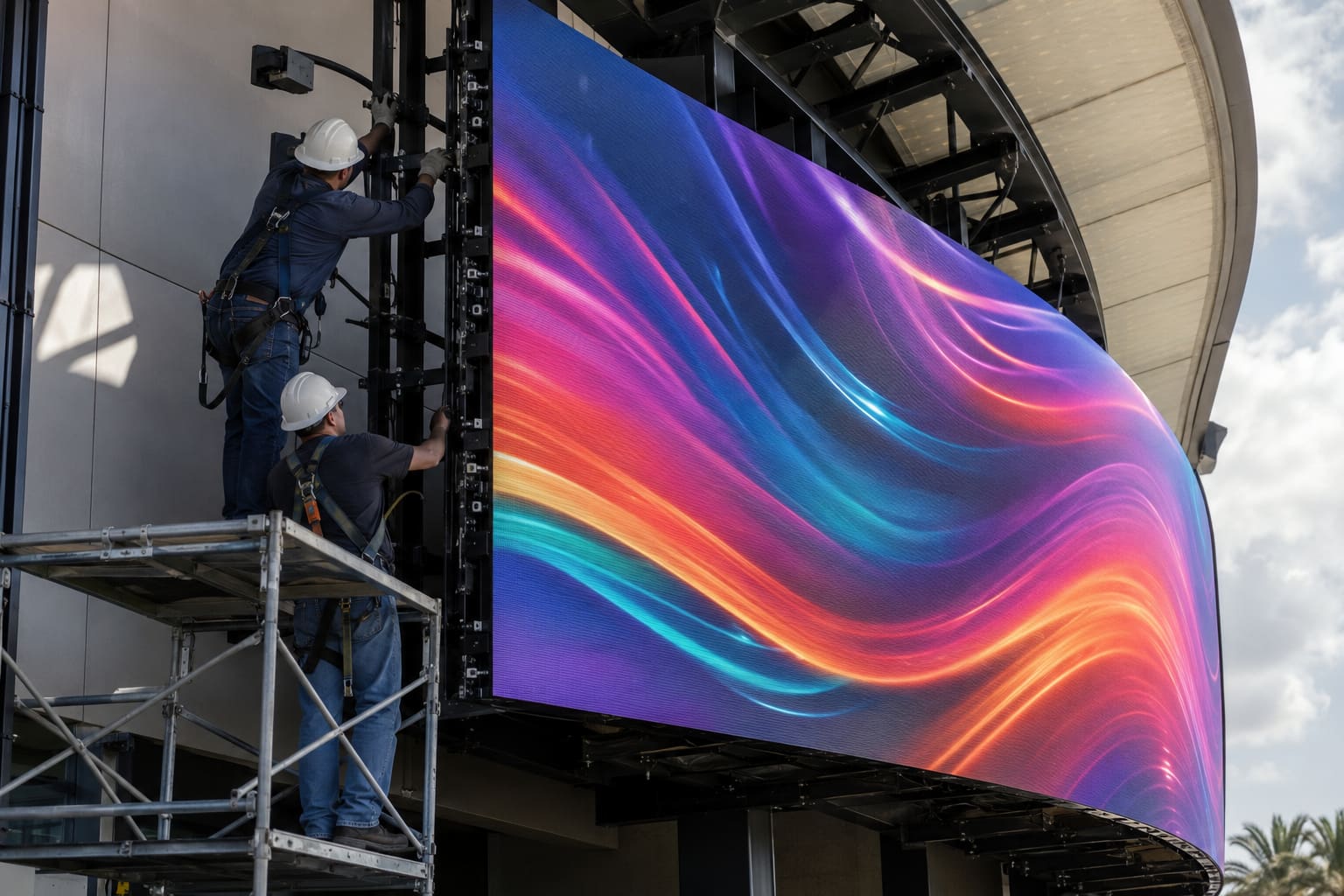
Adhesive-backed modules bond to glass curtain walls and smooth facades. Magnetic systems speed up rental setups and pack down faster between events. Steel frame systems carry the load for large permanent installations and distribute wind stress across the structure rather than the display material. Wind load is a structural requirement for outdoor installs. A properly mounted LED screen withstands sustained winds of 150 km/h. Confirm that the mounting system — not just the display — meets that threshold and complies with local building codes.
What to Lock Down Before You Buy a Flexible LED Display
Five checkpoints before any inquiry:
- IP rating: IP65 minimum; IP67 for water-exposed locations
- Brightness: 5,500 nits or higher for direct sunlight
- Bend radius: 500mm or tighter; confirm silicone substrate
- Certifications: CE, RoHS, FCC — UL if required
- Warranty: 3-year on-site minimum from any manufacturer worth working with
Get these answered in writing before the project moves forward.
Frequently Asked Questions
Can an outdoor flexible LED display handle direct rain?
Yes — IP65 confirms full protection against water jets from any direction. In regions with heavy rainfall, IP67 adds protection against short-term submersion. Always request the certification document, not just the label.
What is the minimum brightness for an outdoor flexible LED display?
5,500 nits for direct sunlight locations. Shaded installs can work with 4,000–5,000 nits. Anything below that is an indoor spec being sold as an outdoor spec.
How long does an outdoor flexible LED display last?
100,000 hours under continuous operation with quality LED chips — roughly 11 years running 24/7. Lifespan drops significantly when IP rating or thermal management falls short.
What pixel pitch should I choose for a building facade?
P8 to P10 for viewing distances of 10 meters or more. P4 to P6 for closer applications, such as stage backdrops or retail exteriors.
Is an outdoor flexible LED display more expensive than a rigid one?
Yes, typically 20–40% higher per square meter. However, installation savings on curved surfaces often offset the gap — flexible modules eliminate the custom metalwork that rigid screens require on columns or irregular facades.