
Glass surfaces create valuable opportunities for digital advertising and brand communication, but turning them into display areas requires careful planning. Buyers need a screen that delivers clear visuals while preserving the glass’s original openness, natural light, and architectural design. A Transparent LED Display can achieve this balance when the project team evaluates the installation environment, viewing distance, brightness requirements, pixel pitch, and maintenance conditions before purchase. Without proper planning, the display may appear unclear in daylight, reduce visibility through the glass, or create difficulties during future maintenance. This guide explains the main factors buyers should consider when selecting transparent LED solutions for retail windows, exhibition spaces, glass facades, showrooms, and commercial buildings.
Why a Transparent LED Display Is Chosen for Glass Spaces
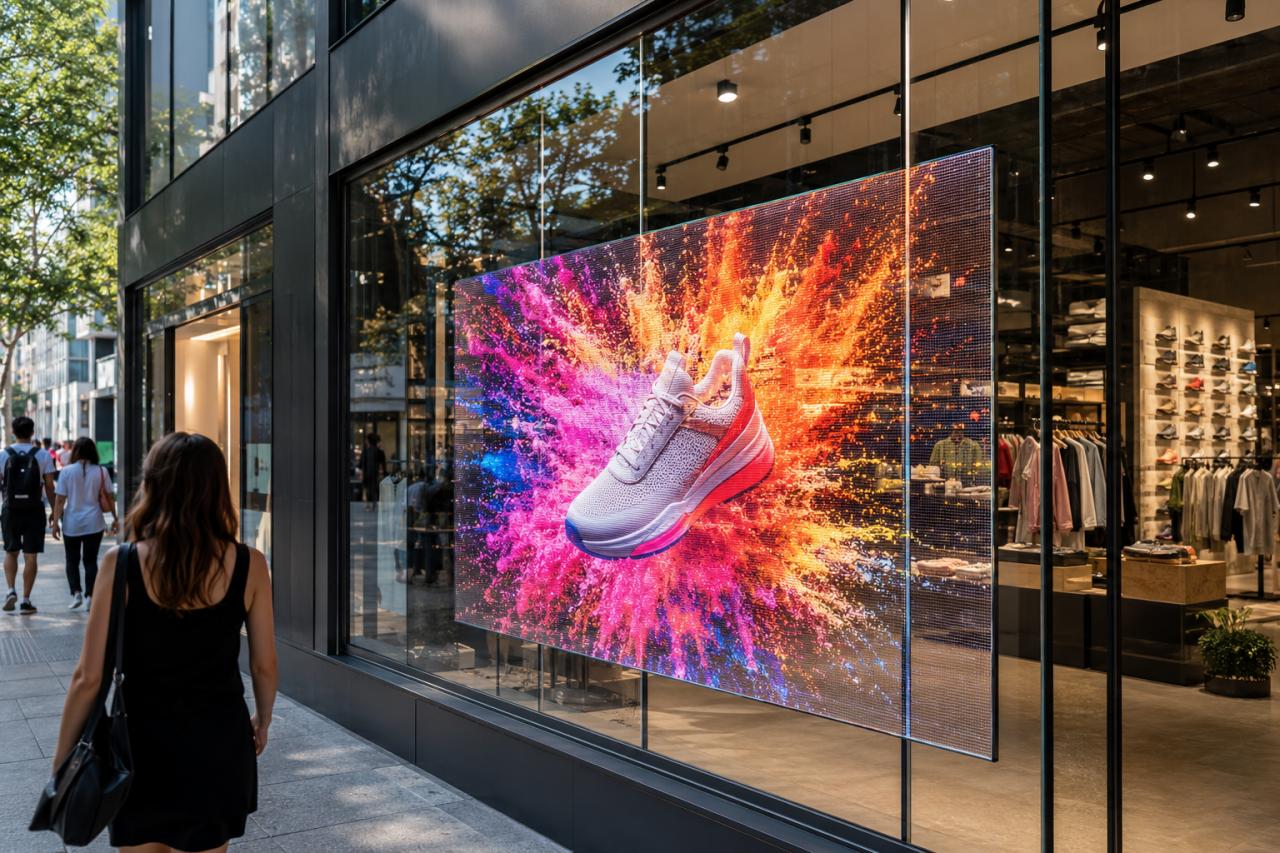
Glass areas allow businesses to communicate with customers without creating physical barriers. Traditional LED walls can create a trong visual impact, but they often obstruct the view and alter the building’s appearance. A Transparent LED Display allows digital content to appear on glass while keeping the surrounding environment visible. Retail stores often install transparent screens on storefront windows to attract pedestrians while allowing customers to see products inside. Exhibition booths use them to create layered visual experiences without building a closed display structure. Commercial buildings can also install transparent screens on facades and in atriums for branding, event information, and digital artwork.
However, transparent displays work differently from standard LED screens. The background, lighting conditions, viewing angle, and installation structure all influence the final result. A display that performs well in an indoor showroom may need different specifications when installed on a street-facing glass wall. Before selecting a solution, buyers can compare different LED display solutions based on application requirements, installation methods, and display structures.
Check the Glass Site Before Selecting the Screen Type
Before choosing a Transparent LED Display, buyers should evaluate the actual installation environment. Glass size, frame structure, support points, installation depth, and maintenance access directly affect the final design. A small retail window may use lightweight transparent modules or film-based solutions. A large atrium or building facade may require stronger support structures, planned cable routes, and safer maintenance access. Projects with curved glass or unusual architectural designs may also need customized layouts.
The installation position changes the technical requirements. A display installed behind glass can receive additional protection from weather, but reflections and heat buildup may affect performance. Outdoor facade installations require stronger environmental protection and a more detailed structural plan. Temporary exhibition projects also have different requirements. Fast installation, transportation, and repeated assembly may influence the choice of display structure.
Compare Transparency, Pixel Pitch, and Viewing Distance Together
Transparency is often the first specification buyers check, but it does not determine the complete viewing experience. A screen with higher transparency may reduce image details when viewers stand close to the display. Pixel pitch should match the expected viewing distance and content requirements. Retail windows usually need clearer images because pedestrians view the screen from nearby distances. Large building facades often have longer viewing distances, allowing larger pixel pitches while maintaining visual impact.
Content type also affects the required specification. Product advertisements, brand videos, and detailed graphics require higher image resolution than simple background animations. Before confirming an order, buyers should test sample content at the actual viewing distance. Real viewing conditions provide a more accurate evaluation than comparing specifications alone.
Brightness and Reflection Decide Daytime Performance
A Transparent LED Display installed near glass must compete with sunlight, indoor lighting, reflections, and surrounding visual elements. Brightness settings directly affect whether content remains visible throughout the day. A display with insufficient brightness may be hard to see in strong sunlight. However, excessive brightness can increase power consumption and create uncomfortable viewing conditions at night.
The project team should evaluate the direction of sunlight, nearby light sources, and viewing angles before selecting brightness levels. Content design also affects readability. Large visuals, strong contrast, and limited small text usually create better results on transparent screens. Energy consumption should also be considered during planning. 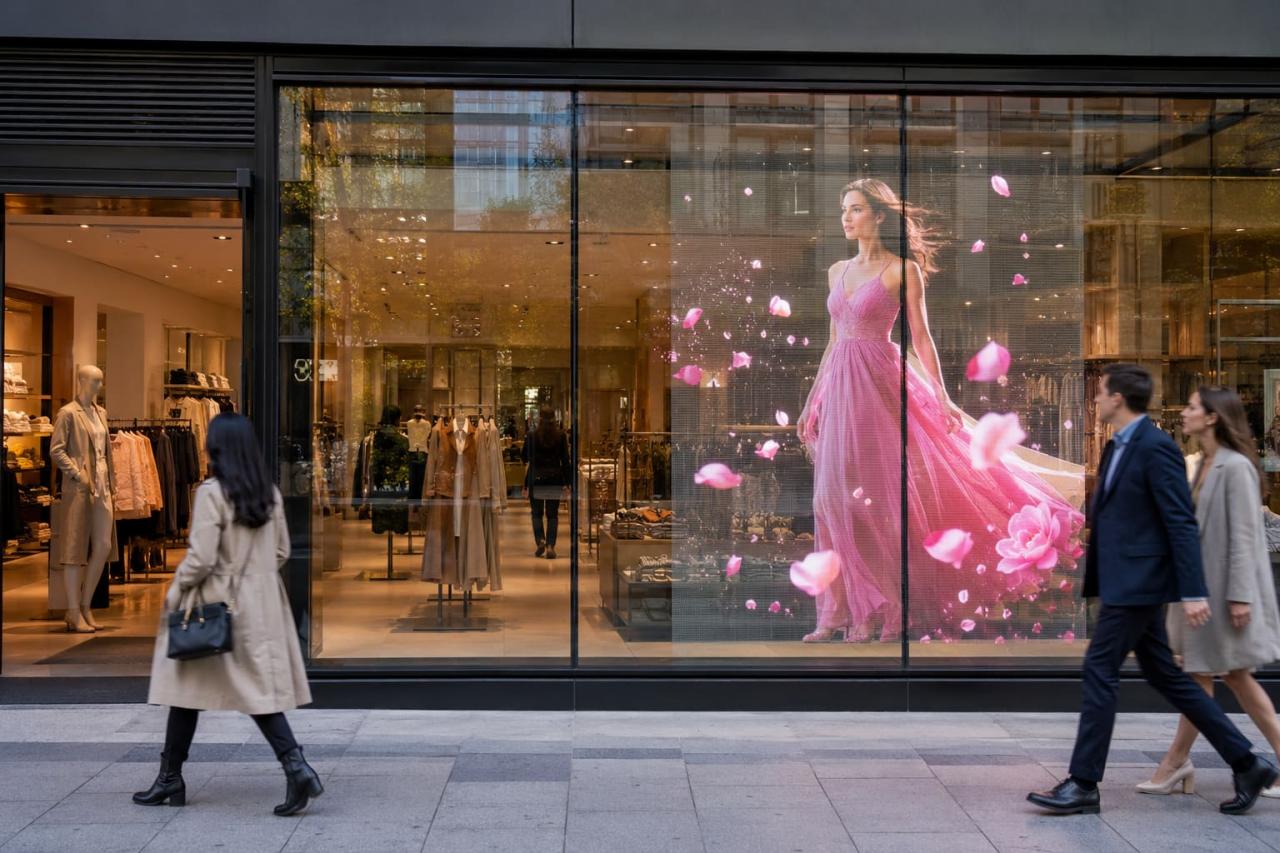
Transparent LED Display Types Fit Different Project Risks
Different transparent display structures solve different project challenges. Buyers should select the display type based on the application environment rather than solely on product appearance. Transparent LED panels provide a structured installation method for shopping malls, airports, commercial buildings, and indoor public spaces. They offer stable alignment and support larger display areas.
LED film screens focus on lightweight integration and visual consistency with glass surfaces. They can work well for storefront windows, creative installations, and locations where a thin appearance is important. Mesh-style transparent displays are often considered for larger outdoor surfaces where openness, wind conditions, and long-distance viewing are major factors. The buyer should confirm mounting methods, module replacement processes, cable routing, and heat management before making a decision. A solution that works well in a small sample area may require additional planning when applied to a large glass facade.
Procurement Questions That Prevent Costly Rework
A detailed installation plan can prevent unexpected changes after production begins. Before ordering, buyers should request technical drawings that show the display size, module arrangement, cable direction, controller position, and maintenance space. The actual display area should also be confirmed carefully. The total glass size may include door frames, structural supports, or areas that the screen cannot cover.
Important questions include:
- What content resolution does the display support?
- How does the system adjust brightness?
- How can technicians replace damaged modules?
- What installation conditions must be prepared?
- Does the screen size match the planned content ratio?
For custom projects, buyers should compare suppliers based on technical expertise, installation support, and application knowledge rather than relying solely on product images.
Common Mistakes in Transparent LED Display Projects
One common mistake is treating transparent screens like traditional indoor LED walls. Transparent displays interact with their surroundings, so the class background, lighting conditions, and viewing angles affect the final image quality. Another mistake is ignoring maintenance planning. Many transparent displays are installed in difficult locations, such as high glass facades or large atriums. Without proper access planning, future repairs may become expensive and time-consuming.
Content planning also affects performance. Small text, complex layouts, and low-contrast visuals may become difficult to read when combined with the background behind the glass. Buyers should also confirm local requirements before installing displays on public buildings, shopping malls, or commercial facades. Regulations may influence brightness settings, installation methods, and screen placement.

Transparent LED Display Needs Proper Project Planning
A Transparent LED Display can add digital value to glass spaces while maintaining visibility and architectural openness. However, the final performance depends on more than the transparency percentage. Buyers should evaluate installation conditions, brightness, pixel pitch, viewing distance, content design, and maintenance requirements before confirming a project. For glass windows, facades, or exhibition environments, reviewing real application examples can help buyers understand different installation methods. Projects such as StarLink demonstrate how transparent LED technology can be applied in commercial environments.
When planning a customized project, buyers can provide glass dimensions, installation photos, viewing distance, and operating requirements before contacting the supplier to ensure a more accurate solution. A well-planned Transparent LED Display project can reduce installation risks and create a better balance between digital content and the original glass environment.