
Transparent LED film for car showroom windows must do two jobs. It should let people see the vehicles inside and make current offers or launches visible from the street. A large printed graphic can cover the car; an ordinary opaque display can replace the view altogether. LED film adds moving content to suitable glass while leaving part of that view open.
The result depends on the particular window, the vehicle positions, the direction of sunlight, and the content shown. Before specifying a film, stand where customers actually approach the showroom. Identify which parts of the glass frame the cars and which parts can carry animation without competing with them. Then compare the proposed film with a real sample under the same daylight and evening conditions.
Plan Transparent LED Film for Car Showroom Windows
Photograph the facade from the sidewalk, the parking approach, and the nearest traffic-safe viewing point. Repeat the photographs after dark with the showroom lights on. Note where mullions, doors, vehicle silhouettes, overhead signs, and reflections fall within each view. A graphic placed directly across a car’s windscreen or front grille can undermine the very display it was meant to promote.
Mark a content area for each window bay rather than treating the entire facade as one screen. A portrait area beside the featured car may work for a model name or launch animation; a narrow strip above the sightline may work for a changing offer. Keep essential pricing or legal copy on a conventional, readable surface if pedestrians cannot read it at the intended distance.
Measure each glass pane and record its construction, accessible side, mounting restrictions, doors, cleaning route, and expected replacement access. The glazing contractor should confirm the existing glass and attachment method before anyone orders the film. The U.S. Department of Energy’s window performance ratings describe visible transmittance as a property of the window assembly. A film’s stated transparency is a different product measure; do not treat it as the finished window’s measured light transmission.
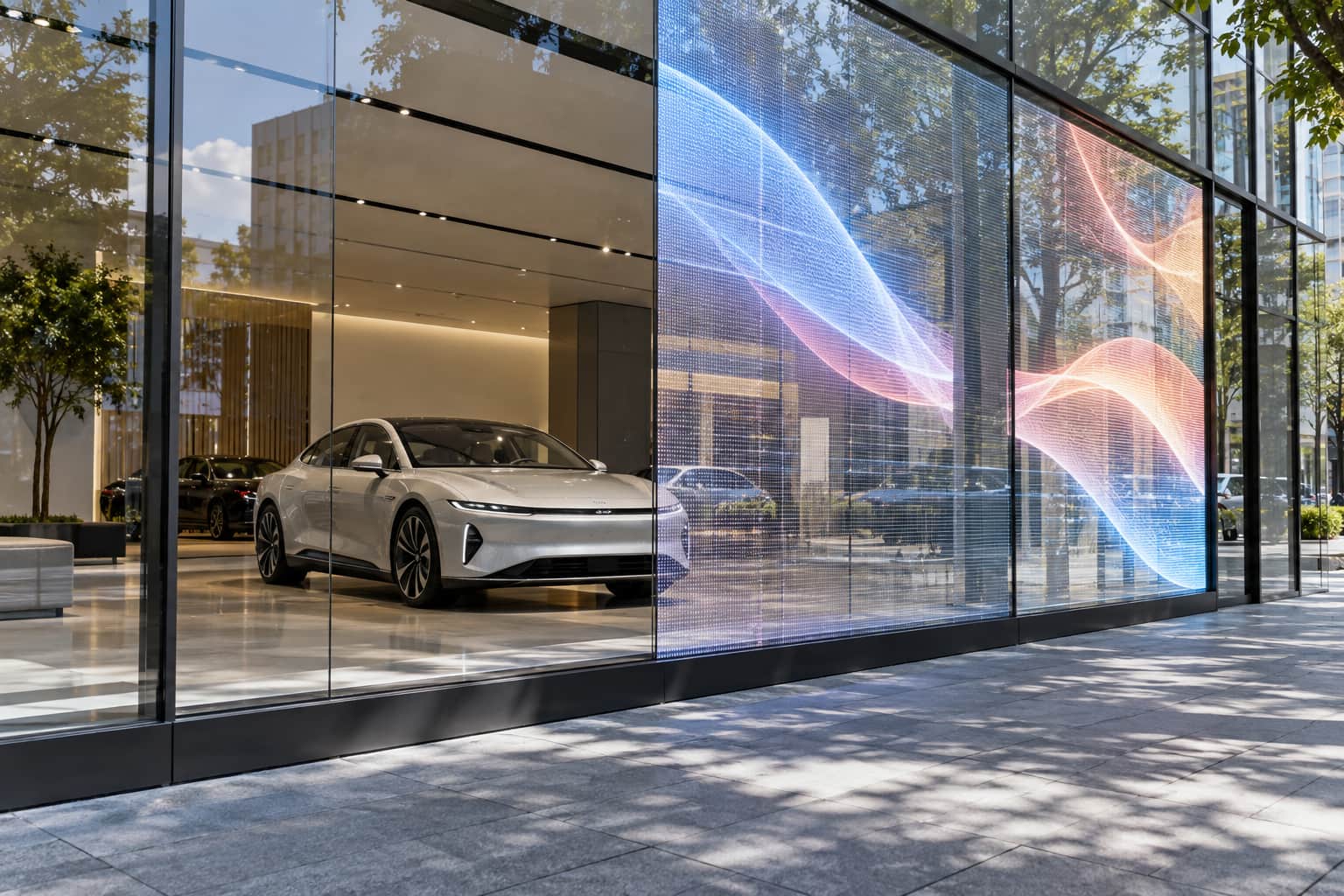
Compare StarLink and TF for Car Showroom Window Displays
JR Visual lists two film families within its transparent LED display range. Both can attach to suitable glass, but their published configurations serve different priorities. Select a specific model and review its datasheet; a series-wide claim cannot establish the performance of every pixel pitch.
| Decision point | StarLink | TF Series |
|---|---|---|
| Published pixel pitches | P2.5, P3.91, P6.25, P10 | P4, P4×8, P6, P8, P10, P16 |
| Published structure | Adhesive film modules; product page also describes a frame option | Flexible PET film for flat or curved glass |
| Transparency figures | Product table separates visual and physical transparency by model | Product table lists at least 85% transparency for the series |
| Showroom question | Does the chosen pitch carry the required detail at the planned viewing distance? | Does preserving a clearer view through the glass matter more than fine detail? |
The StarLink transparent LED film specification includes a finer P2.5 option. It may merit a sample test when customers stand close to the window and need more detail. Its product table also lists different brightness and transparency values for each model, so request the exact configuration instead of quoting the highest series value.
The TF transparent LED film page lists at least 85% transparency, a 3–5 mm thickness, and flat or curved glass applications. It may merit testing where the dealership wants to retain the sightline into the showroom across a larger area. Its wider pixel pitches require the content team to check text size and viewing distance with an actual sample.
You can’t choose either option based on transparency alone. When selecting transparent LED film for car showroom windows, ask JR Visual for samples of the proposed pitches. Compare both while looking through the installed material at the same car from the same position. Record the result with the screen off, with typical campaign content running, and at the brightest and darkest operating periods.
Test the Ad at Street Level
Prepare content for a showroom window: a vehicle outline, a short launch message, a changing color reveal, or a brief call to action. Use a dark background or isolated visual elements where the creative concept calls for the vehicle behind the glass to remain visible. Test dense full-screen content separately; the nominal transparency figure does not tell you how distracting a particular animation will be.
View the same sequence while standing still, walking past, and approaching from either side. Check whether reflections on the glass compete with the image, whether the vehicle remains recognizable, and whether the message can be read before the pedestrian passes the bay. Test from the street again after sunset, when the balance between screen brightness and showroom lighting changes.
Use a phone recording for a quick comparison, but base approval on direct viewing and the original test files. Automatic camera exposure can make two samples appear more similar or more different than they do in person. Keep the film model, settings, lighting state, content file, and camera position consistent for each recording.
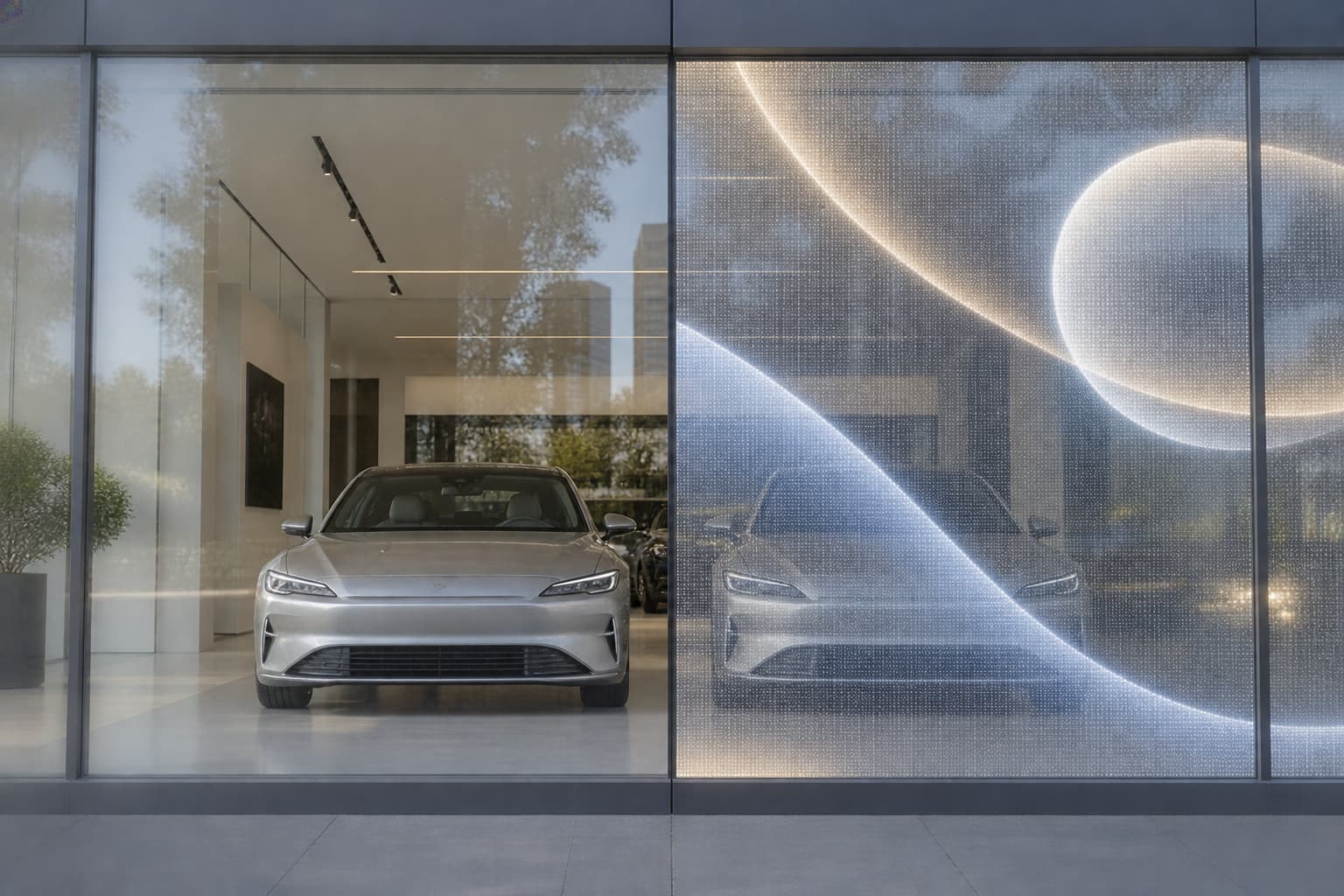
Install Transparent LED Film for Car Showroom Windows
The film can be thin, but the installation still needs controllers, power supplies, wiring, and accessible connections. Ask the installer to draw the full route before approving the visual layout. A clean glass mockup can hide a cable that later crosses the customer-facing view or conflicts with a door frame.
Confirm which side of the glass receives the film, how installers will prepare that surface, how they will finish the edges, and where maintenance staff can reach the electrical components. Check cleaning instructions against the dealership’s normal window-cleaning routine. A door, a removable pane, and a fixed facade bay may each require a different route and service plan.
For each proposed bay, send the supplier:
- Glass dimensions, photographs, and available installation side
- Typical pedestrian and vehicle viewing positions
- Daytime reflections and nighttime showroom lighting conditions
- Desired content area and examples of actual campaign files
- Proposed controller and power locations
- Glass access, cleaning, and service requirements
Request a layout drawing and a sample test for the exact selected film model. If the facade contains curved or unusually shaped panes, verify the allowable installation geometry and module layout against that model rather than assuming any film can follow any curve.
Can Transparent LED Film Advertise Without Hiding the Cars?
Yes, if the dealership plans the content around the vehicles and approves the result on its own glass. Keep the best car sightlines open, test the chosen film and pixel pitch at real viewing distances, and check the display in daylight and after dark. StarLink and TF offer different configurations; the right transparent LED film for car showroom windows is the model whose tested image, transparency, installation route, and service access fit the site.
Send JR Visual the window drawings, viewing positions, photos of the cars behind the glass, and sample campaign content. These inputs let the team propose and test a specific transparent LED film configuration instead of relying on a generic product image.