
Two transparent LED film quotations can cover the same area and still show different totals. Pixel pitch, control equipment, mounting, custom shaping, installation access, and service scope all affect the cost. A useful transparent LED film price therefore needs more context than a cost per square meter. Buyers should compare the complete system and confirm what each supplier includes before choosing an offer.
Why Transparent LED Film Price Varies Between Projects
Transparent LED film is normally configured around a specific glass surface. The supplier needs the active display dimensions, glass layout, viewing distance, ambient light, mounting method, content format, and installation environment. These details determine module quantity, pixel density, controller configuration, support materials, and labor. Quotations may also differ in whether they include the controller, frame, spares, shipping, commissioning, and on-site work. Give every supplier the same project brief and request an itemized commercial scope.
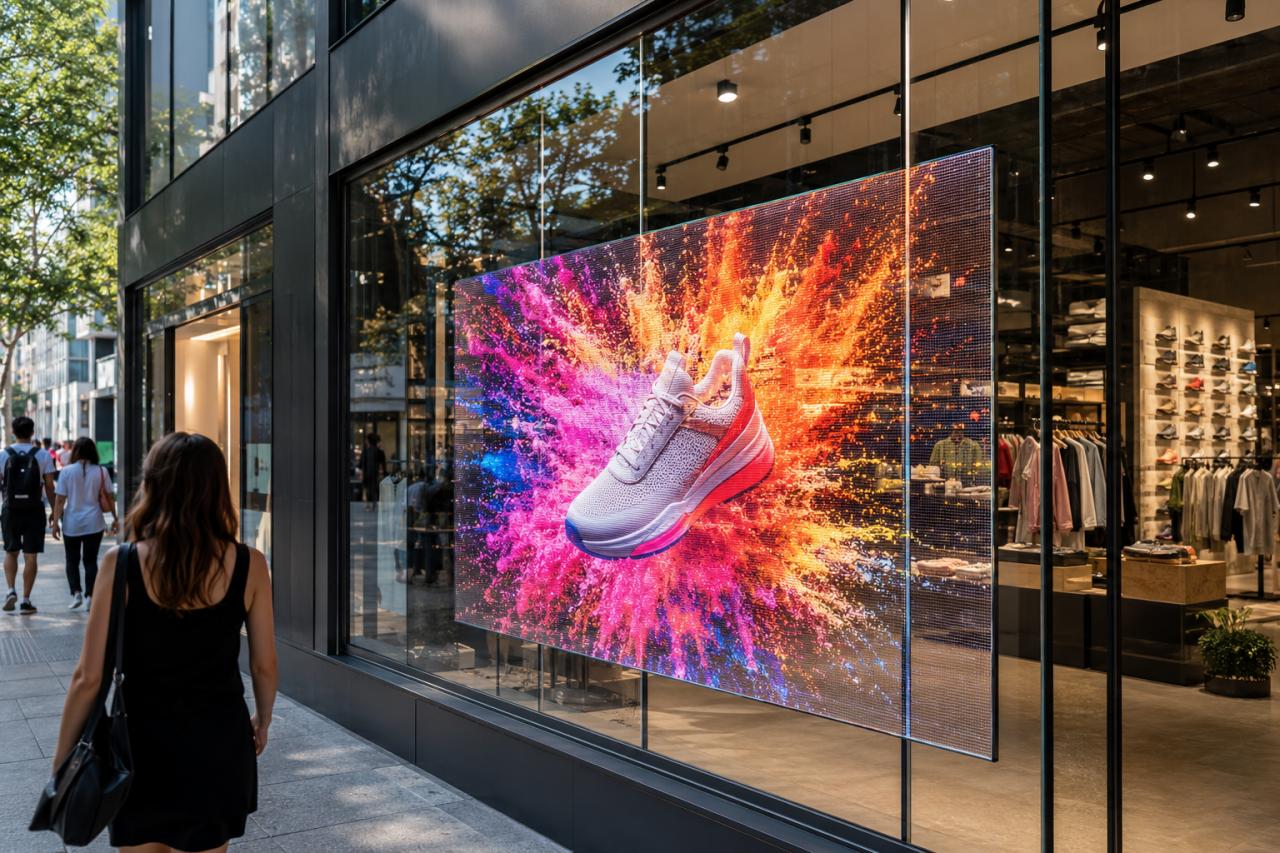
Seven Factors That Shape Transparent LED Film Price
The finished cost reflects the modules, performance requirements, glass conditions, control hardware, and project support.
1. Pixel Pitch and LED Density
A smaller pixel pitch supports finer detail at a shorter viewing distance but can raise module cost. Buyers should not automatically select the smallest pitch. JR Visual’s StarLink Transparent LED Film Display offers P2.5, P3.9, P6.25, and P10 options. It uses a 125 mm-wide module for P2.5 and a 250 mm-wide module for the other listed pitches. Ask for the final pixel resolution based on the active screen size and viewing distance.
2. Brightness and Ambient Light
A shaded window has different brightness requirements from a sunlit facade. Glass tint, reflections, content colors, and operating hours all influence visibility. StarLink offers brightness up to 7,000 nits. Buyers should confirm the configured brightness for the selected pitch instead of treating the maximum figure as the operating target. Rain or dust exposure also requires separate protection checks. The IEC explains how IP ratings grade enclosure resistance to solids and liquids.
3. Transparency and Image Visibility
Higher transparency preserves sightlines through the glass, while sufficient LED coverage keeps content readable. StarLink specifies a transparency rate above 50% and uses a two-in-one package that combines the LED lamp and driver IC. Request a product sample or project video recorded under lighting similar to the site. A percentage alone cannot show how reflections, interior lighting, and objects behind the glass will affect the image.
4. Screen Size and Custom Shape
A standard rectangular window is easier to plan than a curved wall, cylinder, corner, or glass surface divided by mullions. Special shapes may require additional engineering, cutting plans, wiring, and installation work. StarLink modules have a stated thickness of 1.8 mm and can be bent and cut for curved or special-shaped installations. Request a module layout showing dimensions, seams, cut positions, power zones, data routes, and inactive gaps before production.
5. Glass and Installation Method
Transparent LED film can be attached to glass or mounted on a frame. Direct attachment depends on glass condition, cleanliness, panel joints, and cable access. A frame adds materials but may suit surfaces that cannot accept direct attachment or projects that need easier removal. The installation quotation should define who prepares the glass, supplies access equipment, installs modules, routes cables, configures the controller, and tests the screen.
6. Control System and Content
The controller remains part of the project even when it appears as a separate line item. StarLink can operate with control hardware such as NovaStar and Colorlight devices. Total resolution, input sources, content scheduling, network access, and screen layout determine the required setup. Unusually wide or curved displays may also need custom content. Confirm the media player, software, cables, configuration service, and content canvas included in the quotation.
7. Spares, Logistics, and Support
Spare modules, connectors, and power components can reduce post-installation downtime. Custom-cut sections need a more specific spare plan than standard modules. Ask suppliers to separate packing, freight, insurance, duties, commissioning, training, warranty coverage, and technical support. The quotation should state which party pays to ship replacement components and which services require additional fees.
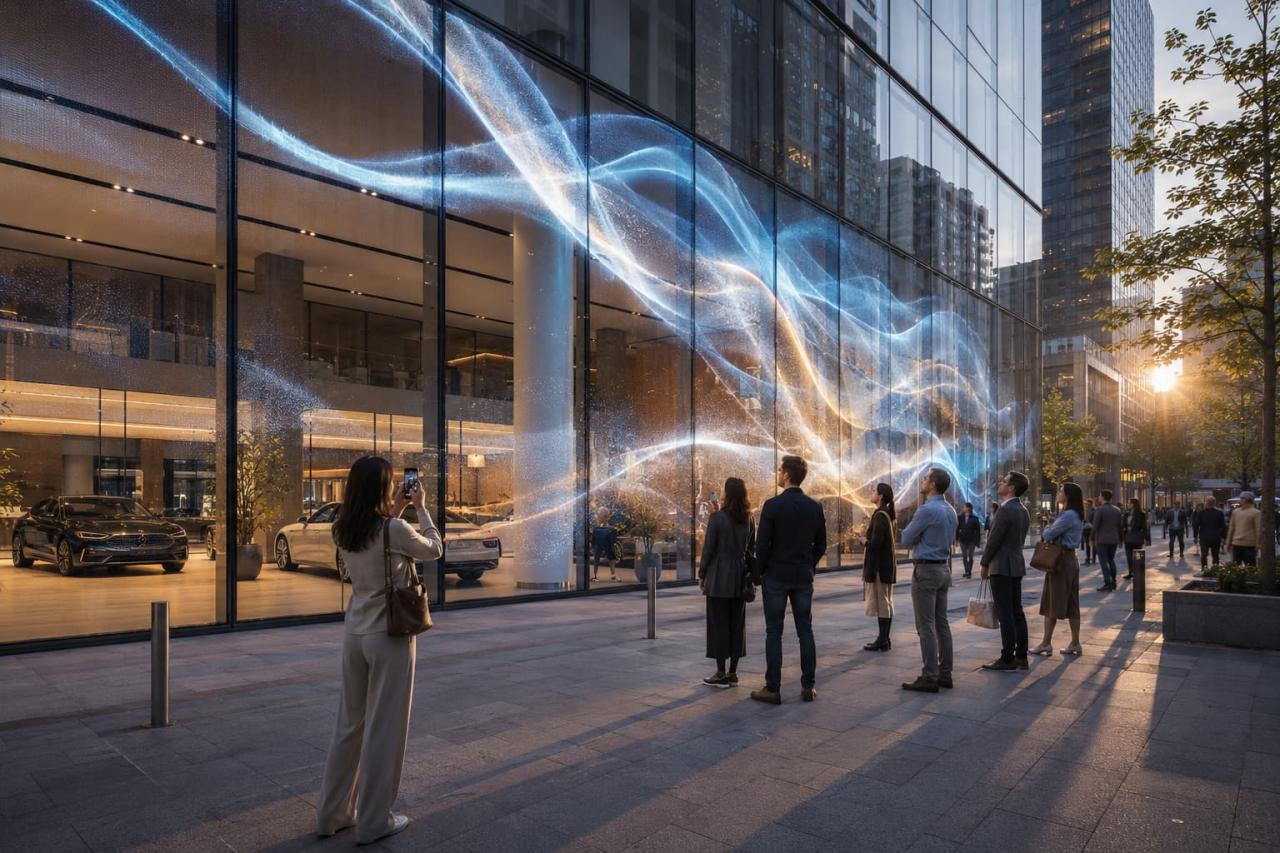
How to Compare Transparent LED Film Quotes Fairly?
Compare the delivered system, not the module price alone. Use the following cost structure:
Display modules + control system + mounting materials + power and data equipment + installation + commissioning + spares + logistics
Check these items line by line:
- Active display dimensions and total area
- Pixel pitch and final resolution
- Configured brightness and transparency
- Module dimensions, thickness, and quantity
- Direct-to-glass or frame-mounted installation
- Controller, player, cables, and power distribution
- Custom cutting and curved sections
- Spare parts, freight, installation, and commissioning
- Warranty terms, exclusions, and delivery schedule
A lower module rate can lead to a higher finished cost when equipment, service, or logistics are excluded.
Which Pixel Pitch Fits the Glass Display?
Pixel pitch should follow the viewing distance, screen size, and content detail. The table provides a starting point for discussing StarLink configurations.
| Pixel pitch | Typical selection situation |
|---|---|
| P2.5 | Close-viewed retail windows and detailed product content |
| P3.9 | Medium-distance storefront, showroom, and exhibition viewing |
| P6.25 | Larger glass surfaces using large text and bold graphics |
| P10 | Large-format installations viewed from a longer distance |
Final selection still requires a resolution calculation and content test. A large screen can have too few pixels for small text even when it covers the glass correctly.
Common Pricing Mistakes That Distort the Decision
Comparing only the price per square meter is the most common mistake. It ignores controllers, wiring, mounting materials, access equipment, commissioning, and freight. Buyers also create problems when they choose brightness without studying ambient light, approve a screen before calculating content resolution, or order modules without reviewing a layout drawing. Glass joints, doors, curved sections, and cable exits can disrupt the installation. Service descriptions also need detail. “Installation support” may mean remote instructions, basic documentation, or an on-site engineer. Ask the supplier to define the tasks, location, duration, travel expenses, and staffing included.
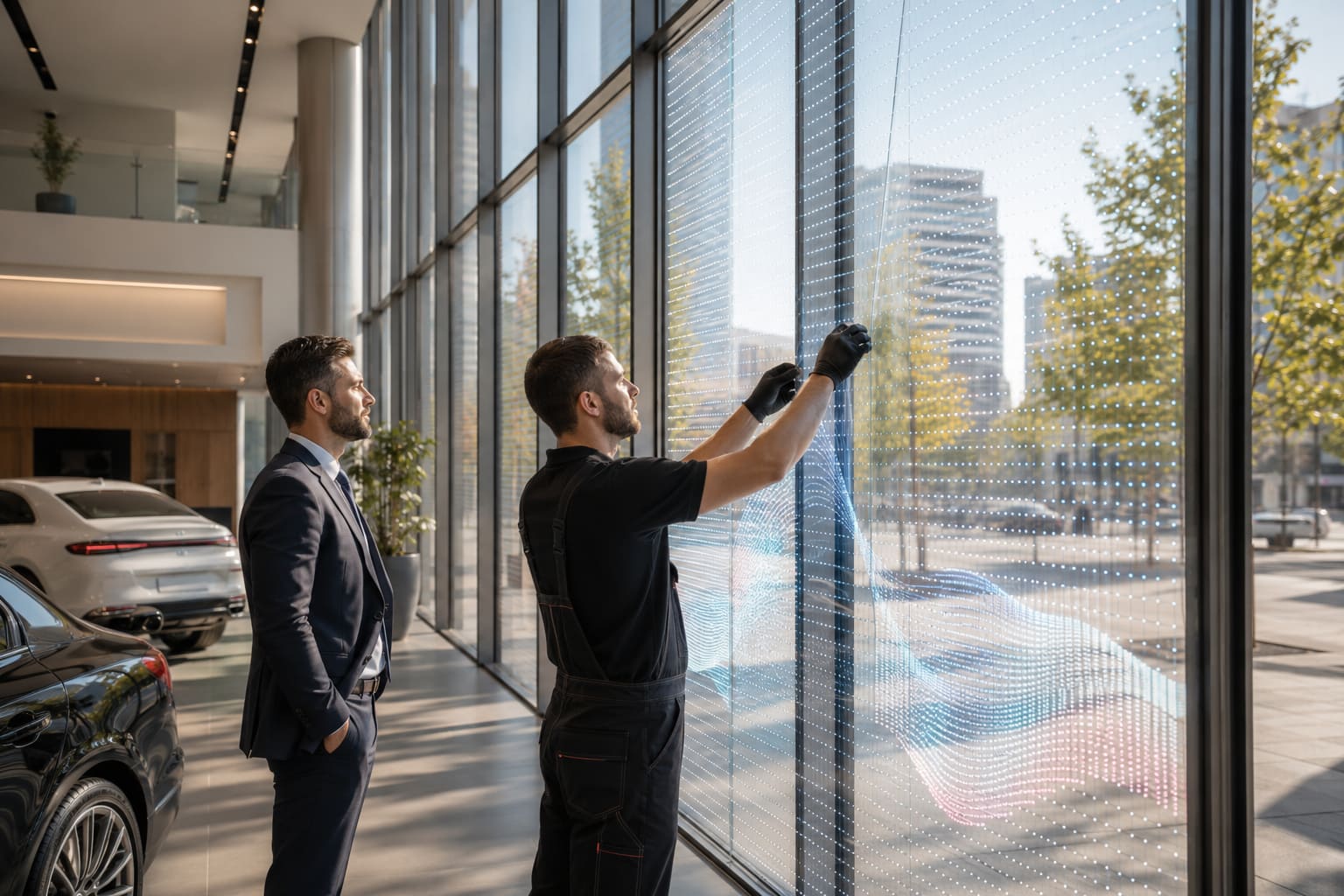
What Buyers Should Send for an Accurate Quote?
A complete request for quotation should include:
- Glass width, height, panel divisions, and clear active area.
- Photos and drawings showing edges, joints, and access points.
- Minimum and typical viewing distances.
- Ambient light and any exposure to rain, dust, heat, or sunlight.
- Content type, aspect ratio, input sources, and target resolution.
- Direct attachment or frame-mounting preference.
- Curves, cutouts, corners, doors, and other special shapes.
- Power, data, controller location, delivery destination, and project schedule.
For a StarLink project, ask the supplier to show how the selected P2.5, P3.9, P6.25, or P10 modules fit the glass. The proposal should identify module count, final resolution, brightness, transparency, controller, mounting method, and spare-parts plan.
A Useful Transparent LED Film Price Starts with Scope
The lowest module rate does not automatically produce the lowest project cost. A useful transparent LED film price connects the equipment to the viewing distance, glass dimensions, pixel pitch, brightness, transparency, installation access, control hardware, and service responsibility. Define the site, content, and operating conditions first. Then compare itemized offers on the same basis and test the proposed display under realistic lighting. This process helps buyers select a system that fits the glass, presents content clearly, and remains practical to install and maintain.