
A rotating screen adds mechanical movement to an LED display, so buyers must approve more than pixel pitch and cabinet size. The project also needs a defined motion envelope, engineered support, safe access, cable management, control logic, content timing, and an operating plan. A screen that looks correct while stationary can create safety, visibility, or maintenance problems once it starts rotating. A practical rotating LED display installation starts with the site conditions and intended audience. The display type, rotation angle, speed, screen shape, duty cycle, and content sequence should follow those requirements rather than being selected in isolation.
How Much Space Does a Rotating LED Display Installation Need?
Record the available width, height, depth, ceiling structure, floor loading, access route, nearby walls, doors, sprinklers, lighting fixtures, and public circulation. Then define the maximum swept volume of every moving screen position. The clearance drawing must include the display, support frame, drive system, cable path, service space, and a controlled separation zone. Buyers evaluating a rotating LED display should request drawings for both the parked and moving positions. A model that fits the architectural opening while stopped may conflict with another object during rotation.
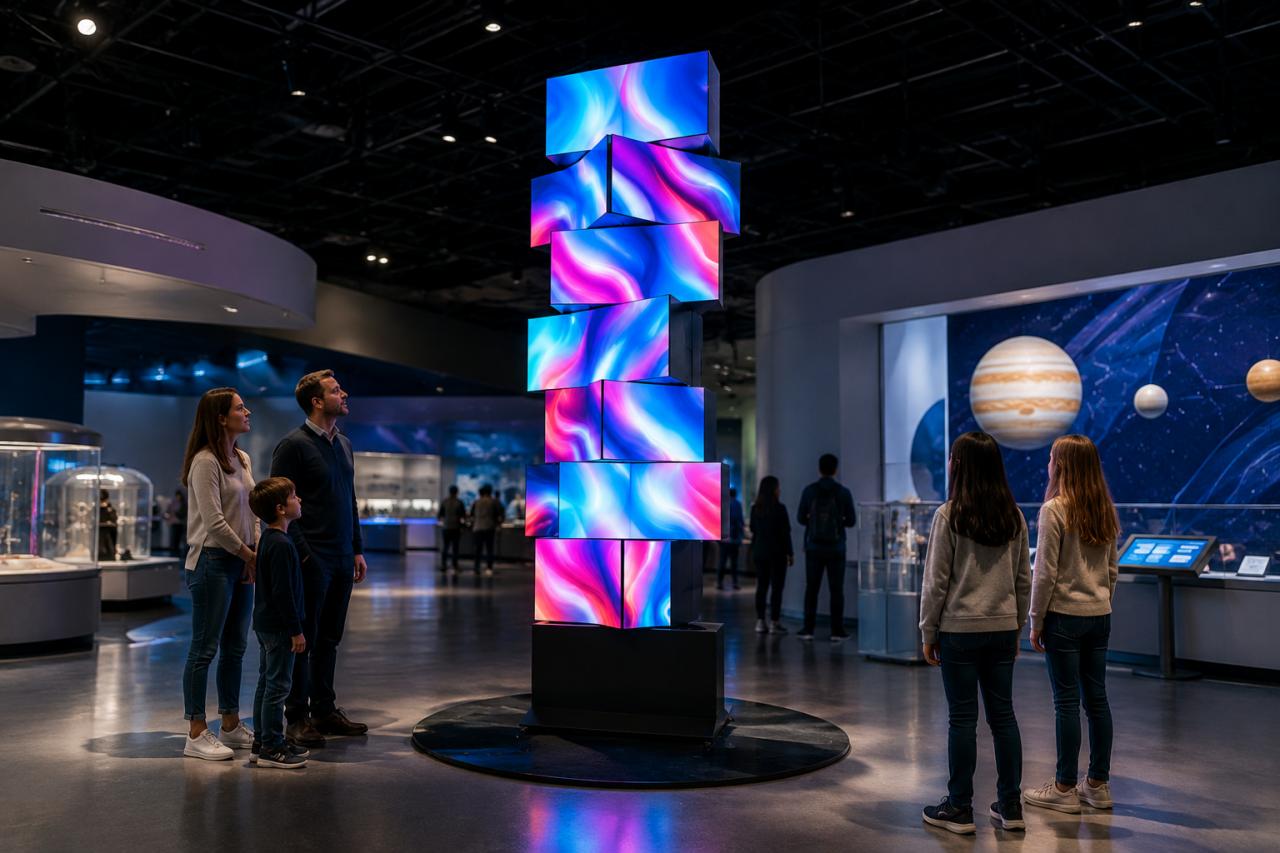
What Is the Right Rotating LED Display Viewing Distance?
Mark the primary audience zone, closest viewer, farthest viewer, side approaches, upper-level sightlines, and camera positions. A double-sided screen may support traffic from two directions, while a curved or multi-panel formation may create several useful viewing moments. The project team should decide which positions must show complete content and which positions may show transitional frames. The rotating LED display viewing distance affects pixel pitch, content detail, screen dimensions, rotation speed, and perceived flicker. Close viewers can see seams and motion more easily, while distant viewers need larger visual elements and longer hold times.
How Do You Keep People Safe Around a Moving Screen?
The moving structure must remain outside normal audience reach. Define barriers, floor markings, guarded zones, emergency stops, start-up warnings, and supervised access. The final arrangement should follow the engineered design and applicable local requirements. U.S. teams can also review OSHA machine guarding requirements when evaluating exposure to moving components.
Can the Structure Support a Rotating LED Display Installation?
Provide the engineer with the display weight, center of gravity, maximum offset during movement, acceleration, deceleration, dynamic load, vibration, duty cycle, and expected number of operating hours. Confirm how the drive frame connects to the building, truss, floor base, or custom structure. Check the support for the most demanding moving condition, not only the static parked load. Request a product-specific structural package for the rotating LED screen, including the finished display weight, drive-frame weight, center-of-gravity range, connection points, permitted motion profile, and service loads. Match these values to the actual project configuration rather than borrowing them from a stationary LED wall.
How Should You Plan Rotating LED Display Content Design?
The content producer needs the native resolution of each face, screen orientation, rotation direction, starting position, movement duration, pause duration, acceleration profile, and the timecode or trigger method. Content should include intentional transition frames so the audience does not see important copy while a panel is edge-on or moving through a poor angle. Test rotating LED display content design with the real motion sequence. A desktop animation cannot confirm motor timing, perceived brightness during movement, image continuity between faces, or camera artifacts. Use representative content and record the test from the intended viewing zones.
How Should Rotating LED Display Content Design Respond to Motion?
Document whether movement follows a fixed timeline, show-control cue, sensor, operator command, or media-server event. Define the response after a signal loss, power interruption, obstruction, or emergency stop. The system should return to a known state before the next sequence begins.
How Should Moving Cables Be Planned?
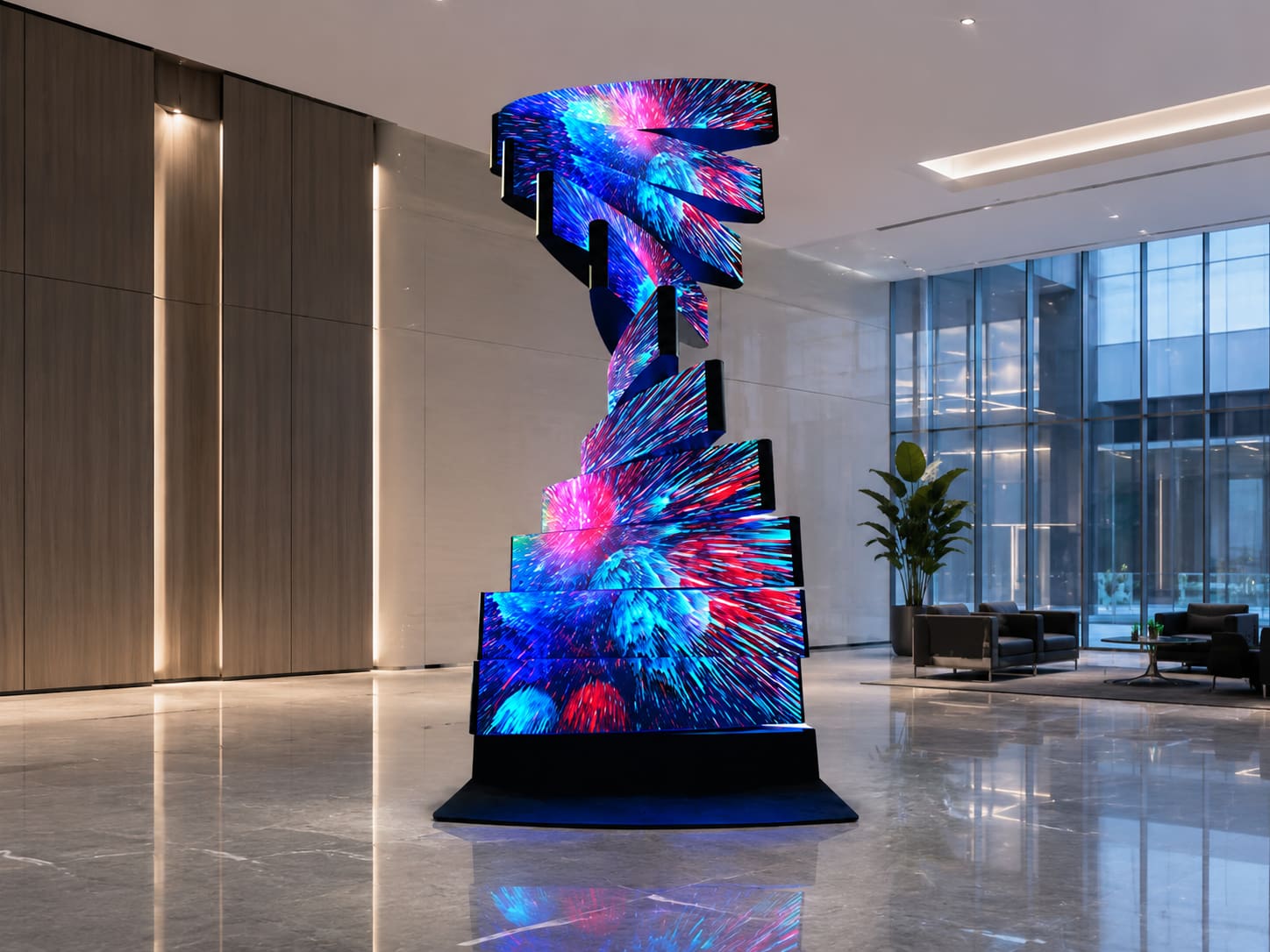
List normal and peak power, circuit protection, grounding, data distribution, cable types, connector locations, slack management, and the number of allowed rotations. Use a cable path designed for movement. Ordinary loose loops can twist, catch, fatigue, or enter the swept area. For the DNA LED screen, the system map should show which cables move, which remain fixed, where rotation is limited, and how power and signal reach both display faces. The buyer should also know whether the mechanism uses a managed rotation range or a rotary connection designed for repeated movement.
What Should a Rotating LED Display Maintenance Plan Include?
Request access to motors, bearings, transmissions, brakes, position sensors, fasteners, modules, power supplies, receiving cards, and moving cable assemblies. Record inspection frequency, lubrication requirements, wear limits, replacement procedures, spare parts, and the method for locking the mechanism during service. Rotating LED display maintenance should include both mechanical and electronic checks. A bright screen does not prove that its position feedback, brake, drive alignment, or cable system is healthy. Keep a movement log and investigate changes in noise, vibration, stopping accuracy, or current draw.
What Must Be Approved for a Rotating LED Display Installation?
| Approval gate | Evidence required before release |
| Space | Signed swept-envelope drawing and controlled zone |
| Structure | Project loads, calculations and connection details |
| Motion | Approved angles, speed, limits and stop positions |
| Content | Mapped files tested against the actual movement |
| Controls | Interlocks, emergency stop and recovery sequence |
| Service | Lockout method, access route and spare strategy |
Run repeated cycles using the final speed and sequence. Test normal starts, stops, emergency stops, signal loss, power recovery, and manual operation. Confirm that every programmed position remains repeatable and that the screen cannot enter an unapproved movement state.
What Should Buyers Send the Supplier Before Production?
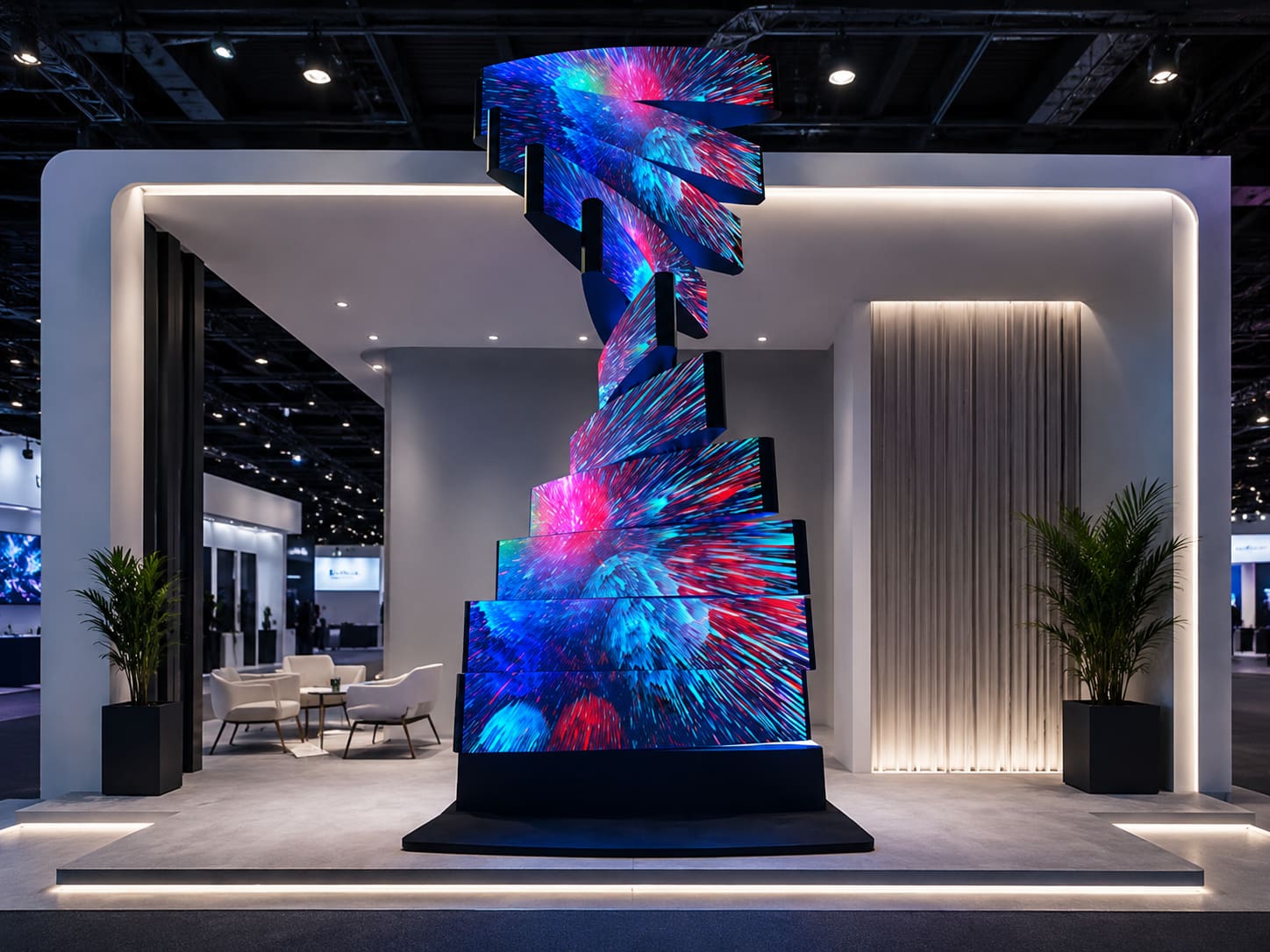
The RFQ should include site drawings, audience positions, intended rotation, operating hours, control method, content concept, support conditions, power, service access, installation dates, and local compliance requirements. The supplier response should identify every assumption that still needs approval. Do not release production from a visual rendering alone. Require coordinated mechanical drawings, the motion sequence, the final screen configuration, and the acceptance plan. Approve screen size, motor selection, rotation range, speed, stopping position, content timing, and safety clearance as one system.
How Should Buyers Test a Rotating Display Before Shipping?
Test the rotating display with the final or representative mechanical frame, controller, playback files, motion cues, and operating speed. Record repeated cycles and confirm stopping accuracy, image orientation, cable behavior, noise, vibration, emergency recovery, and service access before shipment.