
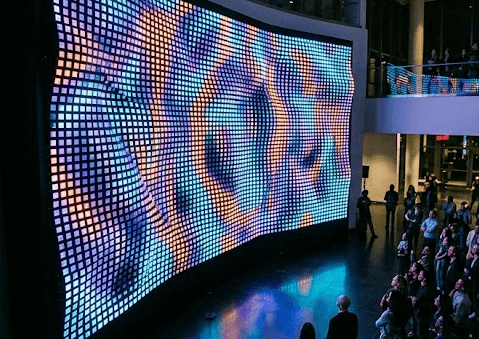
A kinetic LED display creates a stronger visual impact by combining digital content with real physical movement. Panels can rotate, lift, or transform into different shapes, creating dynamic effects that immediately catch people’s attention. In retail stores, trade shows, and showrooms, this type of display helps brands stand out and create more memorable experiences. Traditional LED screens, while still widely used, often blend into the background because audiences have become so familiar with standard digital displays.
What Makes Kinetic LED Display Different from Static Screens?
Attention capture is hardware-level, not content-level. A kinetic LED display triggers the brain’s orienting response through physical motion. Stopping power is built into the structure itself, not dependent on what’s playing on screen.
Engagement runs longer. Audiences who stop for a moving display stay through multiple content cycles. That extended attention builds stronger brand recall. In retail, events, and showrooms, this directly affects commercial outcomes.
One installation, multiple configurations. A kinetic advertising display reconfigures physically between campaigns without replacing hardware. A single investment serves a product launch, a seasonal campaign, and a brand push, each with a distinct visual result.
Fits spaces static screens cannot. Curved ceilings, open atriums, irregular floor plans and a kinetic LED display adapt where fixed-frame screens cannot.
The Technology Behind the Motion
Two product types achieve kinetic effects through different engineering approaches. Both fall under the kinetic LED display category, but the mechanics behind each are distinct. One relies on physical rotation driven by a transmission system. The other uses modular splicing to create 3D shape-shifting configurations. Understanding the difference is the first step toward choosing the right format for a specific space.
DNA Rotating LED Screen
The DNA Rotating LED Screen uses a mechanical transmission system to drive synchronized rotation of multiple panels. Pixel pitch options run from P1.2mm to P2mm. Panels shift through sequences of positions rather than spinning on a single axis. The result is the continuous flowing effect this format is known for.
3D Kinetic LED Screen
The 3D Kinetic LED Screen achieves its effects through modular splicing. Module sizes are 160×160mm at P1.98mm and 250×250mm at P1.9mm or P2.6mm. Modules connect and disconnect cleanly, so the same moving LED installation can be redeployed across venues without replacing hardware.
Kinetic LED Display Applications in Retail, Events and Showrooms
Retail environments present the clearest ROI case. Mall atriums and brand flagships are spaces where dwell time directly correlates with purchase consideration. A rotating kinetic LED display captures attention from every floor simultaneously. The same installation shifts from a holiday campaign to a product launch without structural replacement. Retailers get multiple visual identities from a single hardware investment.
Events and activations operate under different pressure. The display has seconds to create a memory. At trade shows, a kinetic display creates a category of its own. Physical motion isn’t a content variable; it’s a hardware variable. That distinction determines which stand people walk toward.
Corporate showrooms use a kinetic LED display for demonstration rather than interruption. The motion signals technological sophistication before a word is spoken. Visitors slow down, engage, and ask questions. For companies positioning as innovation leaders, that signal carries real weight with procurement managers.
Specs That Matter When Choosing a Setup
Pixel pitch determines minimum viewing distance. P1.2mm suits close-contact retail and showroom environments viewed from 1.2 to 2 meters. P2.6mm suits larger venues viewed from across a room. Mismatching pixel pitch to viewing distance is the most common procurement error.
Module size affects layout flexibility. Smaller 160×160mm modules approximate curves more precisely. The 250×250mm format suits larger rectangular configurations where installation speed matters more.
Screen type determines audience coverage. Double-sided configurations are non-negotiable where foot traffic approaches from multiple directions. A single-sided display in a corridor loses half its potential audience.
Mechanical components require periodic inspection. Build maintenance access into the installation design from the start. This avoids costly retrofitting later.
How to Match Kinetic LED Display to Your Space?
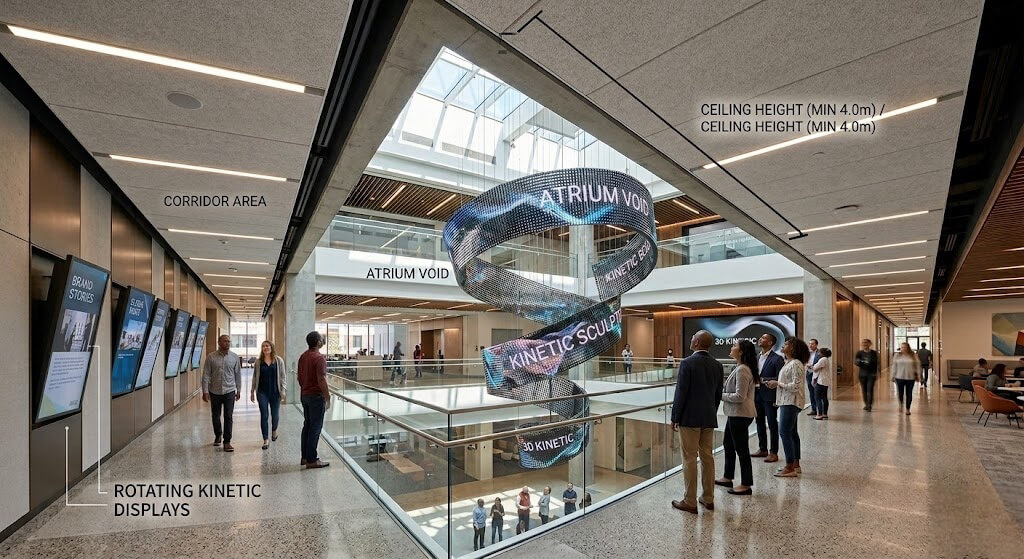
Corridor spaces suit rotating formats with double-sided coverage. Open atriums and exhibition halls suit 3D configurations that read from multiple angles. Rotating installations require a minimum ceiling height of 4 meters. Content timing follows audience speed. High-traffic retail works best with 3- to 5-second transitions. Showrooms support 8- to 12-second cycles. Start with the space and the audience, and the right kinetic LED display configuration follows naturally.