
A flexible LED display cost estimate depends on what the supplier will deliver: individual modules, an assembled screen, or an installed system. Screen area matters, but the shape, image requirements, supporting structure and installation scope also affect the budget. A useful quotation connects each charge to an agreed project requirement. For a curved retail wall or a column display, begin with the finished installation. Define what customers need to see, where they will stand and how the maintenance team will reach the equipment. These decisions give suppliers a common basis for pricing.
Start by Defining the Equipment Included in the Quote
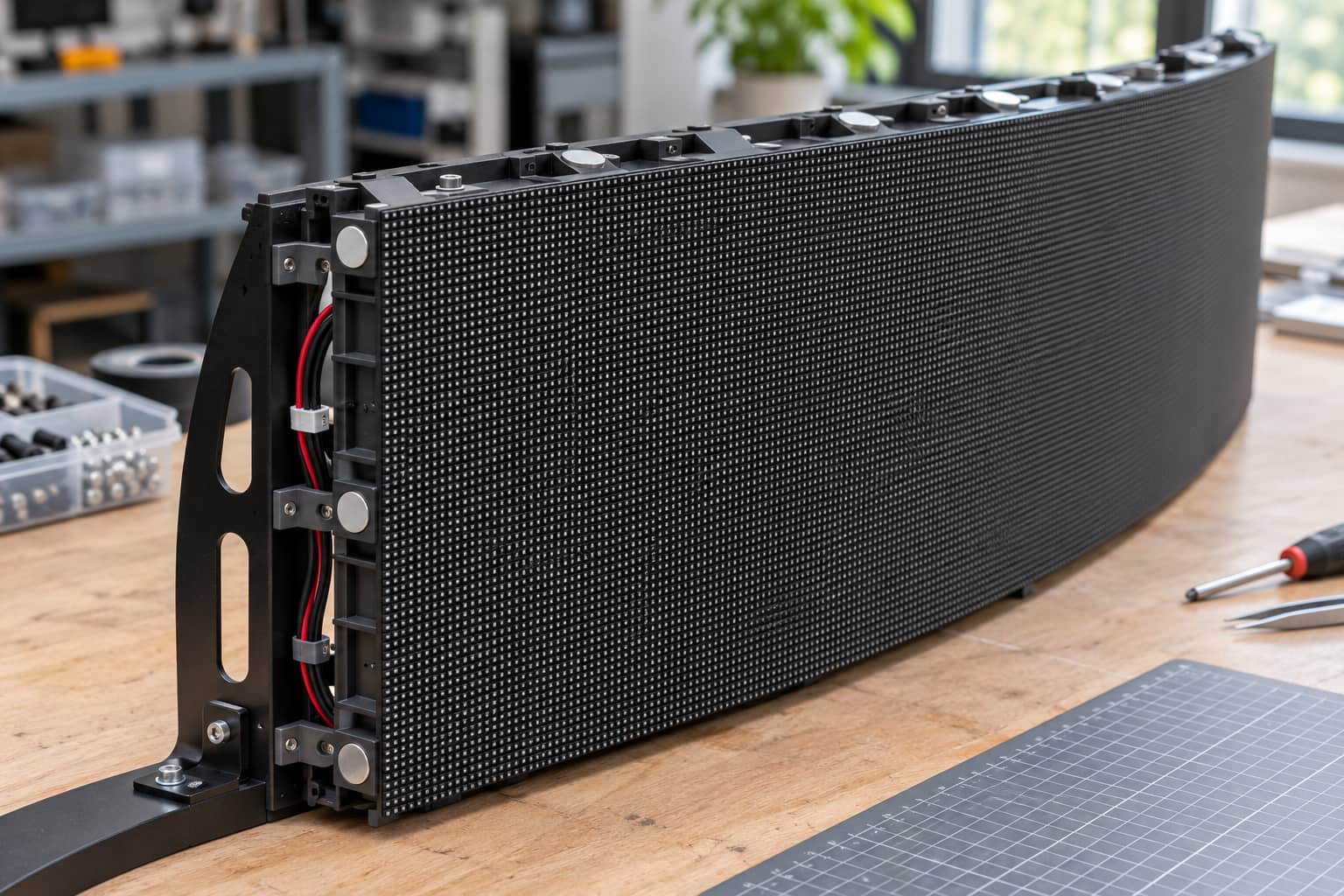
A module quotation covers a different purchase from a complete display quotation. Ask the supplier to list the LED modules, power supplies, receiving cards, processor, cables, mounting components and spare parts included in the offer. Then identify the services attached to that equipment. Design coordination, factory assembly, configuration, delivery, installation guidance and on-site commissioning may appear as separate items.
When reviewing flexible LED screens, use the available product range to establish possible configurations. Request a project-specific quotation after the supplier has reviewed the dimensions, operating environment and intended shape. Keep optional items separate from the base offer. This makes it easier to compare suppliers without treating an incomplete equipment package as a lower-cost finished system.
Screen Geometry Changes the Amount of Work
Two screens with similar display areas can require different structures and assembly plans. A simple curve, a full column wrap and a wave-shaped feature create different layout questions. Provide a dimensioned drawing showing the height, developed surface width, curvature and position of any openings. A front-view rendering alone may hide the depth or shape that determines the support arrangement.
Ask the supplier to show the proposed module layout over the drawing. This should explain the finished outline, module orientation, joints and any areas where the original concept needs adjustment. The comparison between a flexible LED screen for irregular shapes and a curved LED cabinet can help frame this decision. Choose the construction method around the required geometry, then compare the resulting scope. Avoid treating bendability as an unlimited design allowance. Confirm the proposed construction with the supplier before using a concept drawing as the basis for a purchase order.
Image Requirements Should Guide the Specification
A screen showing large moving graphics has a different task from one displaying product descriptions at close range. Tell suppliers what the audience must read and from which positions. Include representative content in the enquiry. Product names, prices, presentation slides and detailed photographs give the supplier more useful information than a request for “high resolution.” Ask each bidder to identify the proposed pixel pitch, finished pixel dimensions and content input arrangement. If different suppliers recommend different specifications, request an explanation tied to the same viewing task.
A finer specification may change the equipment and processing requirements. Approve it because it solves a visible project need, and ask for a demonstration when the benefit remains uncertain. Product pages such as the iSoft Indoor Flexible LED Module provide a starting point for discussing available configurations. The final selection still needs to match the complete installation.
Flexible LED Display Cost Should Include Site Work
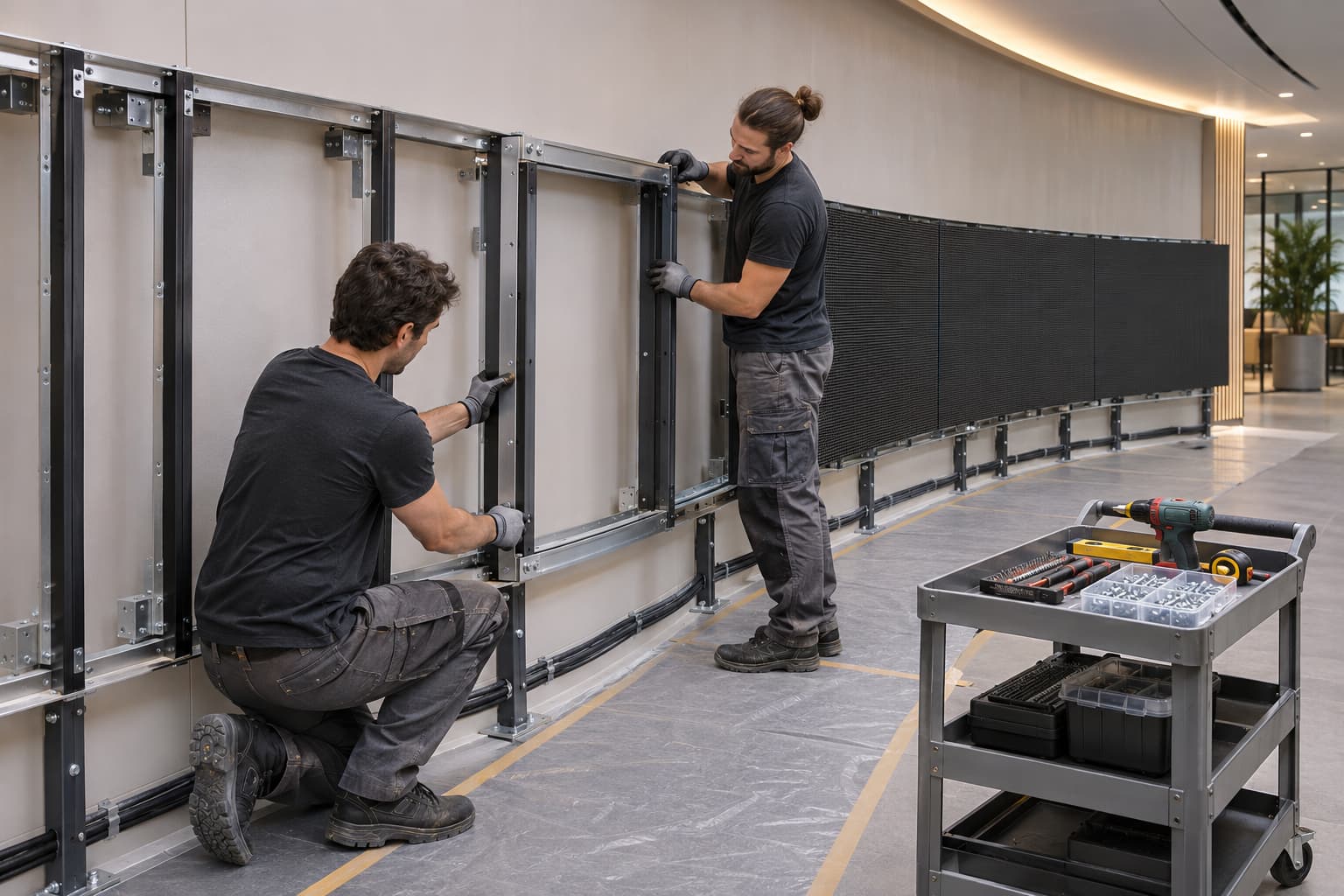
The display supplier may deliver equipment while a local contractor prepares the site. Unless the quotation explains that division, buyers can miss work that sits between the two parties. Ask who provides the supporting frame, mounting interfaces, local power distribution, cable routes and finishing around the screen. Confirm who checks the site measurements and who approves the final installation drawings.
Access also belongs in the discussion. Loading restrictions, delivery routes, working hours and the availability of lifting equipment can affect the installation plan. For projects combining several unusual display surfaces, creative LED solutions can help define the wider design scope. The quotation should then distinguish the screen package from the surrounding construction and integration work. Request a responsibility list before comparing totals. Every excluded item should have an owner and a separate budget allowance.
Compare Suppliers Using the Same Scope Sheet
A lower headline price becomes meaningful only after the equipment and responsibilities align. Put the following questions into a shared comparison sheet and ask each supplier to answer them.
| Quotation item | What to confirm |
|---|---|
| Display dimensions | Finished height, developed width, shape and drawing reference |
| Image specification | Pixel pitch, finished resolution and intended viewing task |
| Equipment package | Modules, power supplies, receiving hardware, processor and cables |
| Supporting construction | Frame design, fabrication, mounting components and finishing |
| Installation | Local labour, supervision, configuration and commissioning |
| Content | Mapping files, templates, sample playback and operator guidance |
| Spare parts | Part references, quantities, compatibility and storage instructions |
| Delivery | Packaging, destination, unloading responsibility and stated delivery terms |
| Support | Warranty scope, diagnostic process and responsibility for service costs |
Consider a hypothetical comparison. Supplier A offers display hardware only, while Supplier B includes a processor, frame and commissioning support. Their totals do not yet describe the same purchase. Ask Supplier A to price the missing items, or separate those items from Supplier B’s offer. Record any remaining differences rather than hiding them inside a general contingency allowance. Keep the comparison tied to one drawing revision. Otherwise, a later design change can make a previously completed price comparison unreliable.
Service Access Affects the Ownership Budget
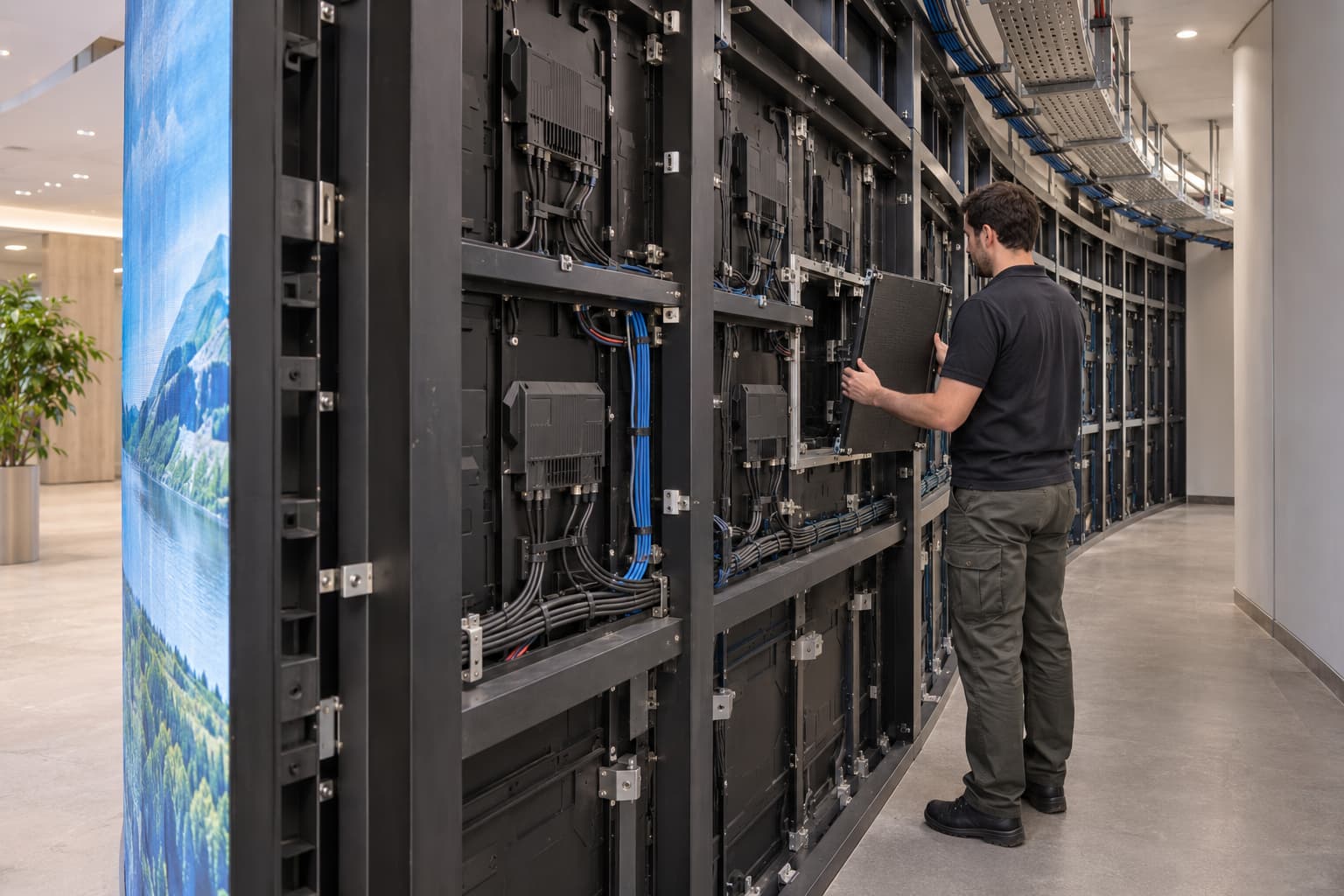
A screen can meet its visual brief while remaining difficult to maintain. Discuss access before the surrounding wall, ceiling or retail fixture reaches its final design. Ask how the team will remove a module, reach the power and signal components, and inspect the mounting arrangement. Confirm what tools, training and replacement references the supplier expects the operator to retain. Compare the proposed spare-parts packages as well. A list of quantities is more useful when it includes compatible part references and explains the replacement process.
For permanent installations, consider the cost of accessing the display during normal business operations. Ask the venue team about permitted maintenance hours and any equipment they would need to arrange. These questions help reveal ownership costs that a module price cannot explain.
Estimate Electricity Separately from the Purchase Price
Ask the supplier for power information for the proposed configuration and the conditions behind any operating estimate. Record the planned schedule and brightness settings used for that estimate. Power and energy are different measurements. The U.S. Energy Information Administration explains how watts and kilowatt-hours measure electricity: power describes a rate, while energy use also depends on time.
For budgeting, multiply a supported average power estimate in kilowatts by the planned operating hours, then apply the relevant electricity tariff. Identify the result as an estimate and retain its assumptions. Do not automatically use the maximum rated power as the expected daily average. Ask the supplier to distinguish electrical planning information from a representative operating estimate, and confirm which additional equipment the estimate includes.
Prepare a Brief That Suppliers Can Price
A quotation request should give every bidder the same information. Include the installation location, dimensions, intended content, viewing positions, operating schedule and proposed completion date. Attach site photographs and identify anything still awaiting confirmation. A clearly marked provisional dimension is easier to manage than an unlabelled assumption.
Use a revision number for the brief and drawings. When the design changes, ask suppliers to identify the effect on equipment, delivery and site work before updating the comparison. Before requesting a custom project quotation, decide who can answer technical questions and approve changes. A named project contact helps prevent different departments from giving suppliers conflicting requirements.
A Reliable Budget Covers the Complete Agreed Installation
The right budget is the amount required to deliver the agreed image, shape, installation and support scope. A price per square metre can support an early discussion, but it cannot resolve missing responsibilities or an unfinished design. Approve the purchase when you can explain what the price includes, what remains outside it and who will complete each outstanding item. Keep the quotation, drawings, specification and acceptance requirements together. If two offers still differ substantially, trace the difference to those documents. That gives the buyer a practical basis for choosing a proposal and negotiating changes without losing the intended result.